
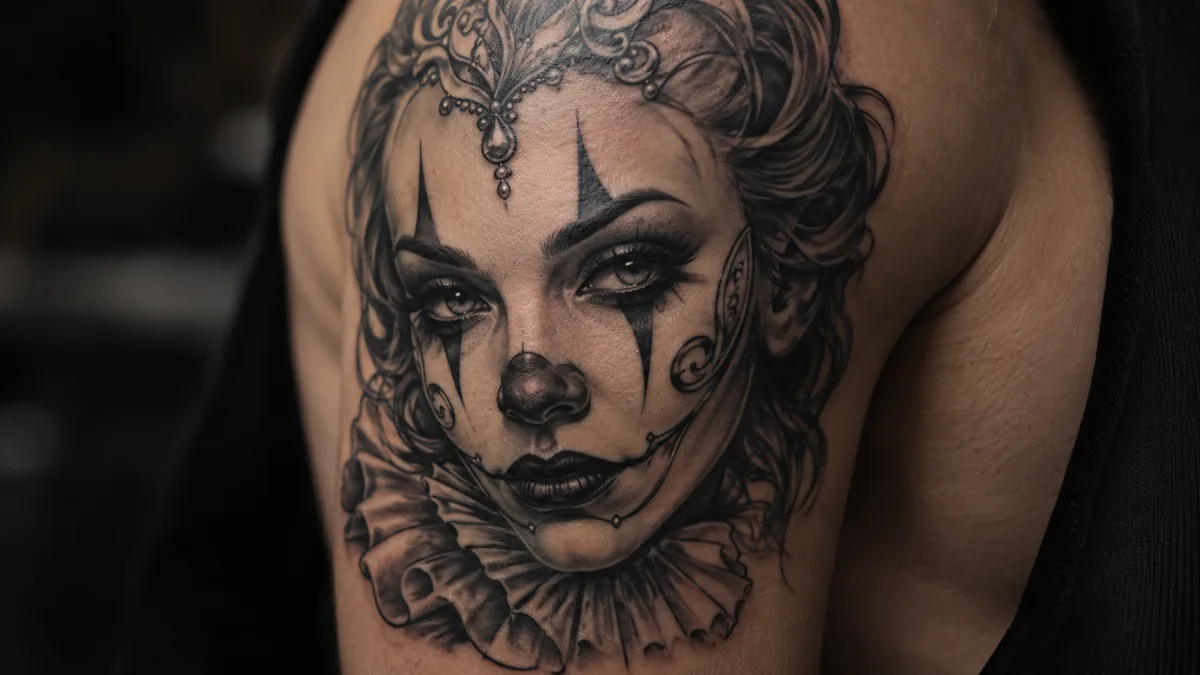
The payasa tattoo is a crying female clown, rooted deep in Chicano street culture. She laughs, she cries, sometimes both at once. The meaning is exactly what it looks like: life hits hard, you keep going anyway.
This isn’t just a cool-looking piece. It carries real weight, real history, real personal stories. Before you sit down in the chair, you should know what you’re putting on your body for life.
Core Meaning: Laugh Now, Cry Later
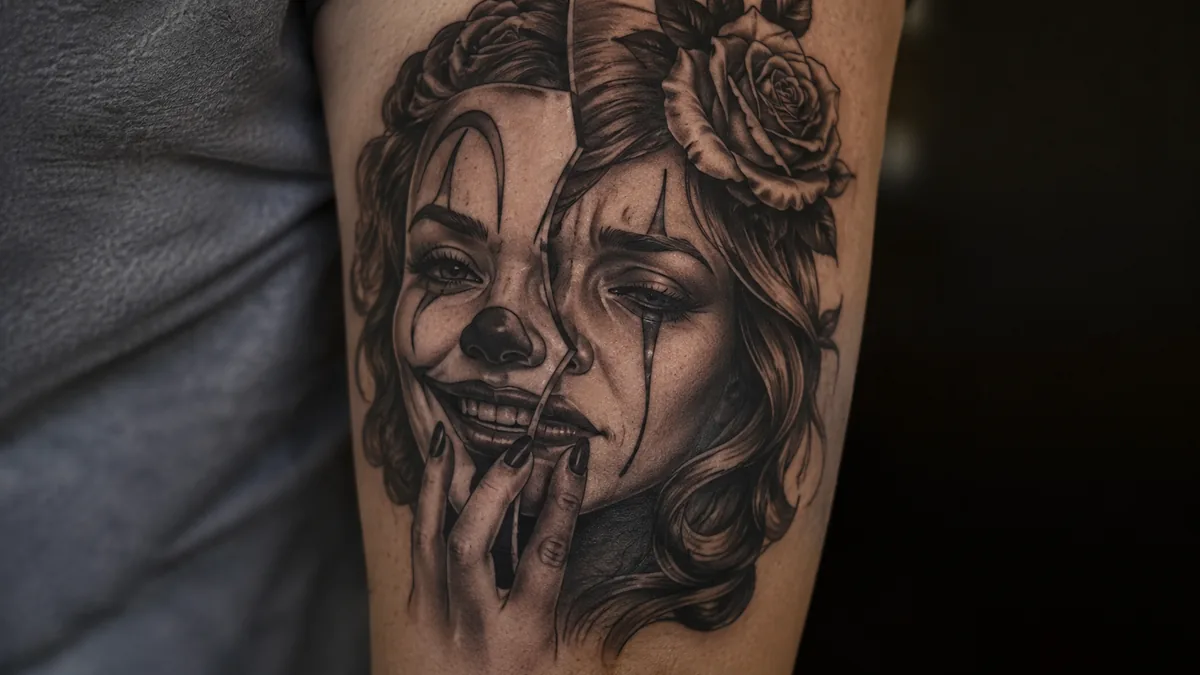
The payasa is the female counterpart to the payaso, the male crying clown. the payasa represents duality. Joy and pain living in the same body at the same time. That’s the whole message. You put on a smile for the world while carrying something heavy underneath. It’s about masking hurt, surviving anyway, and finding dark humor in hard circumstances.
A lot of people get the payasa after loss, after jail time, after a relationship that wrecked them. She’s not a victim though. She’s defiant. That painted face says you’ve been through the fire and you’re still here. That’s the energy the tattoo carries, and that’s why it resonates so hard with people who’ve lived rough.
Chicano Culture and Where It Comes From
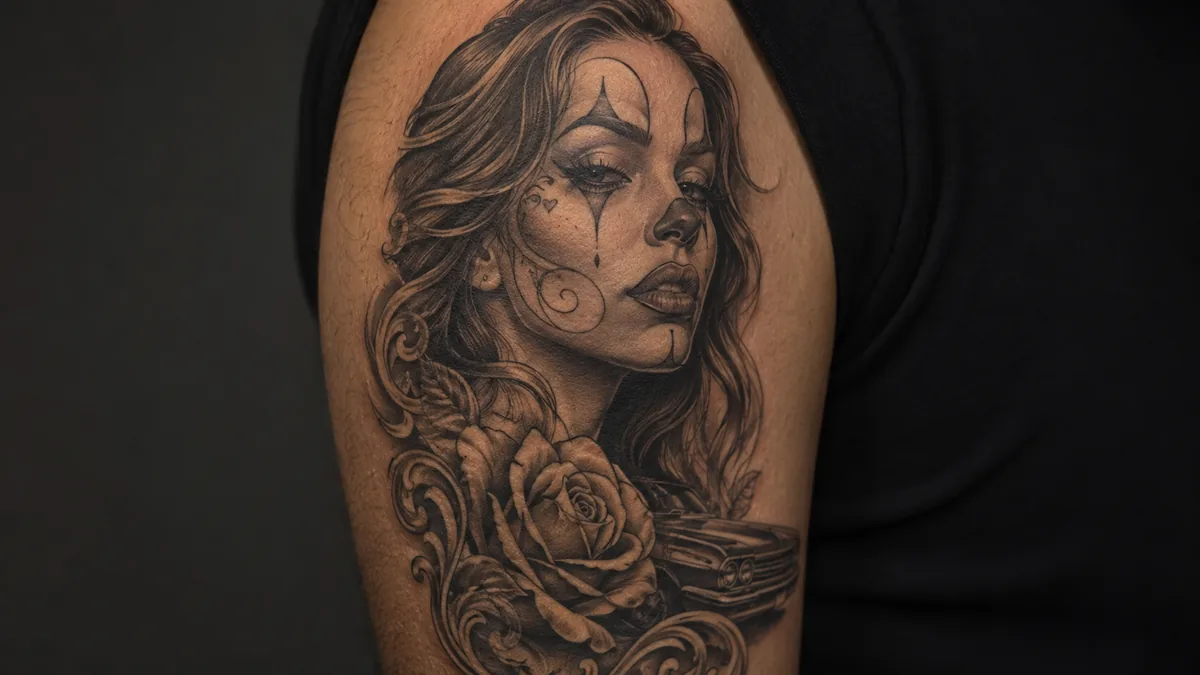
She laughs so the world never sees what broke her.
The payasa comes straight out of Chicano tattooing, which developed in East Los Angeles barrios from the 1940s onward. Chicano tattoo culture borrowed from Mexican folk art, Catholic iconography, prison tattooing, and pachuco style. The clown figure, both male and female, became a staple because it captured the barrio experience without needing a single word.
The crying clown face was never just decoration. In that cultural context it represented living between worlds, navigating systemic pressure, and holding onto identity under duress. You see it in old-school Chicano flash, on lowrider culture artwork, and in prison tattoo traditions across California and the Southwest. That lineage is real and it matters when you’re choosing to wear this image.
Laugh Now Cry Later: Paired vs. Solo Designs
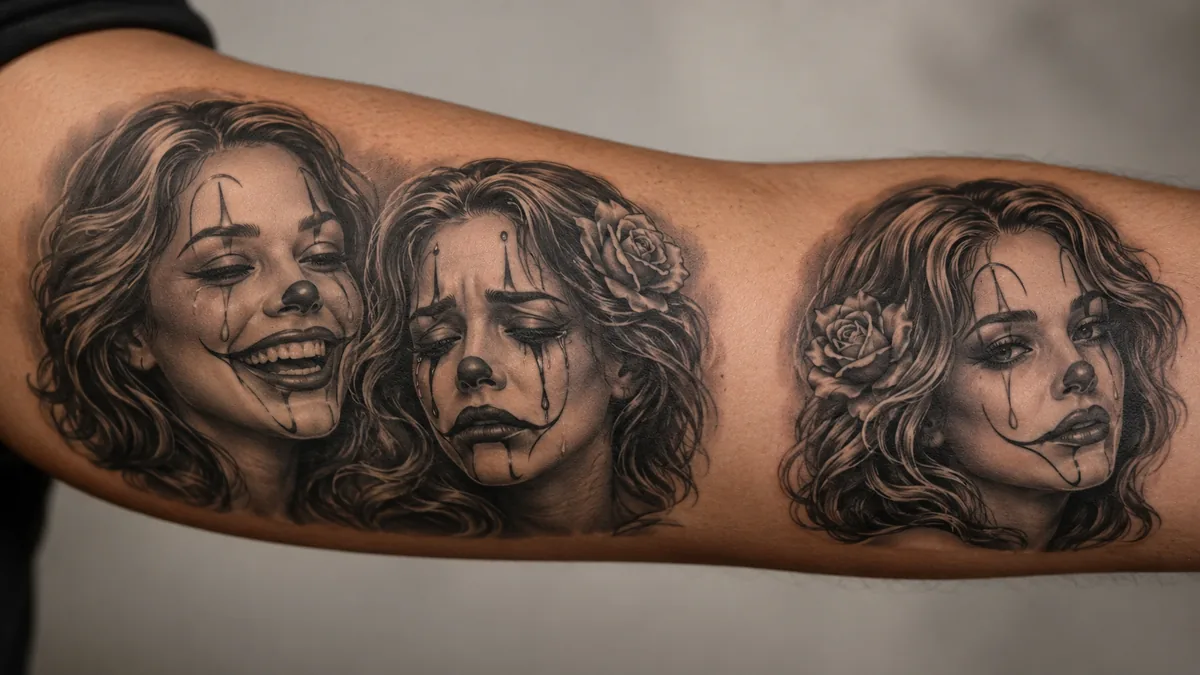
A lot of payasa tattoos are worn as a pair with the payaso, one laughing and one crying, or the same face split in two. That paired concept pulls directly from theater’s comedy and tragedy masks, but filtered through a distinctly Chicano lens. The two faces together say everything about duality without needing any text to back it up.
Solo payasa pieces hit differently. A single crying face reads as more personal, more intimate. It’s not a concept, it’s a confession. Solo laughing payasa pieces are less common but carry an edge of defiance, like nothing can touch me. Which version you go with changes the whole vibe of the tattoo. Think hard about what you actually want to say before you commit.
Style Variations: Black and Grey vs. Color
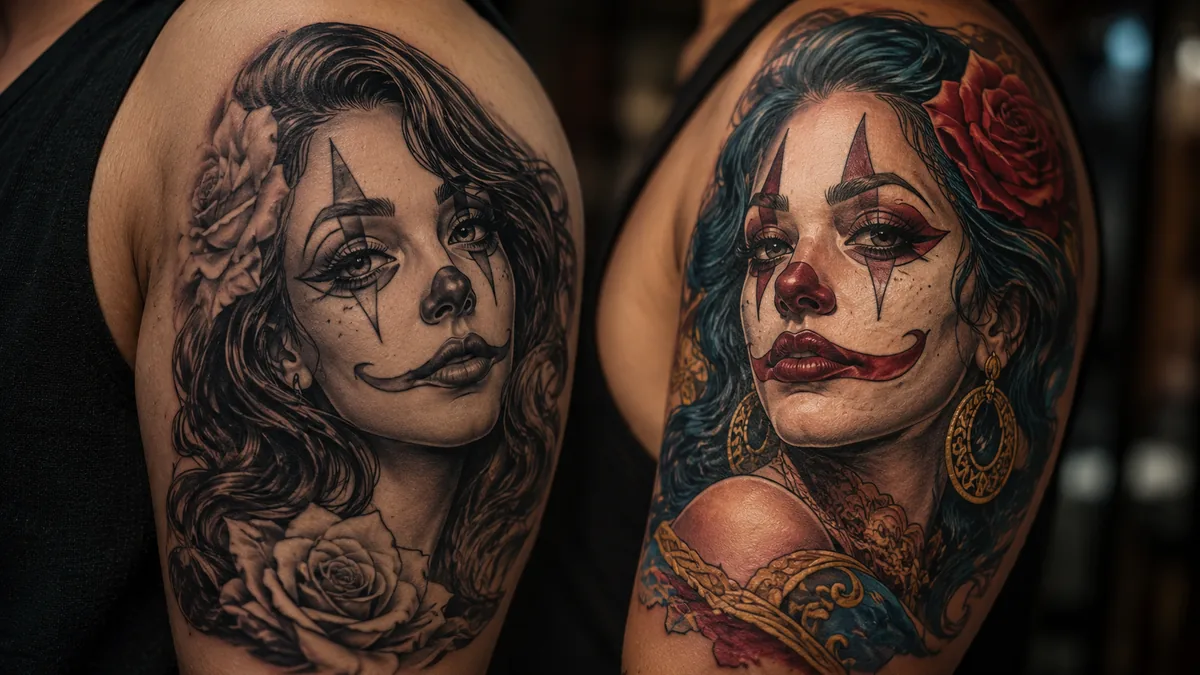
Traditional Chicano black and grey is the natural home for this design. Fine line work, smooth whip shading, soft gradients. Done right it looks clean, reads clearly from across the room, and heals beautifully on most skin tones. The monochrome palette also reinforces that somber weight. Heavy contrast on the face draws the eye straight to the expression, which is the whole point.
Color payasa pieces are a different animal. Saturated reds, greens, and yellows give her a more traditional tattoo flash feel, closer to old-school American or neo-traditional work. Some artists add rosary beads, roses, or detailed face paint patterns in full color. Both approaches are valid. What matters most is that the face reads clearly and the linework stays crisp because that expression is doing all the heavy lifting.
Best Placements and How the Tattoo Ages
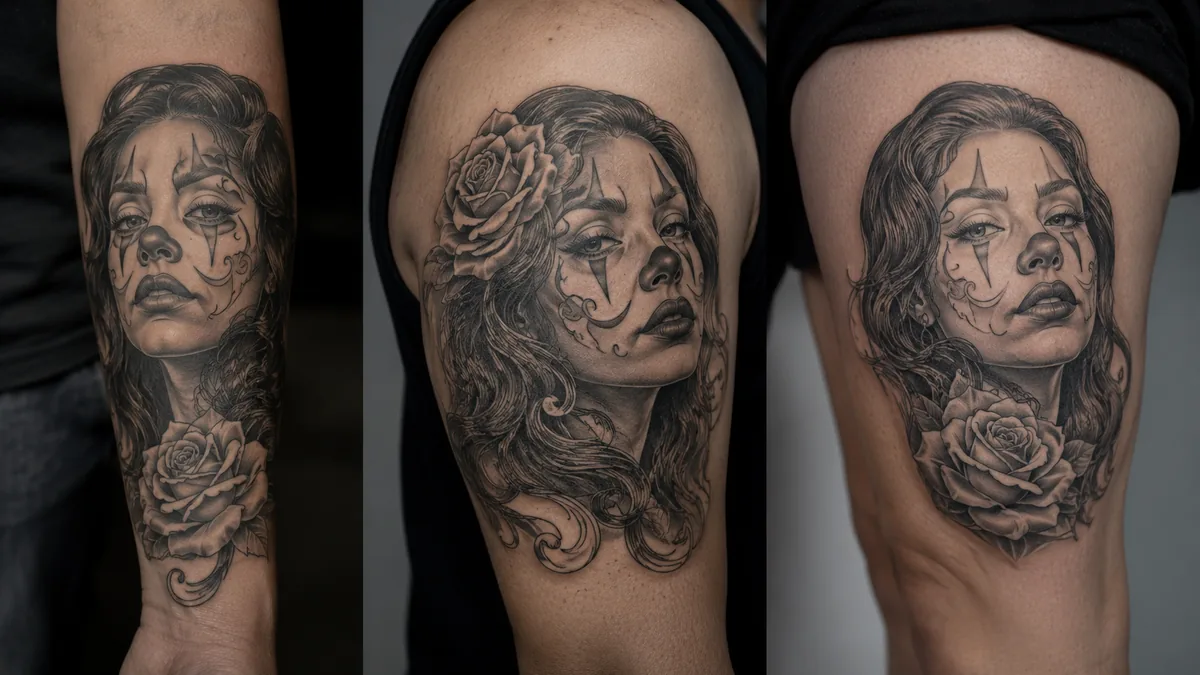
The thigh, upper arm, and chest are the top placements for payasa work. These are low-wear zones with good flat surface area, which means your linework holds, your shading stays clean, and the face keeps reading correctly over years. The upper arm is especially solid because it’s easy to show off or cover up depending on the setting, and the skin there heals consistently.
Avoid placing detailed face work on high-wear zones like hands, fingers, and the inner wrist if you want it to stay crispy long-term. Fine line details inside the face, the eyes especially, can blowout or blur over time on thin skin. On the thigh or chest with bold lines and solid shading, a well-executed payasa will still look sharp ten years from now. Bold will hold. That’s not just a saying.
Adding Script, Roses, and Other Classic Elements
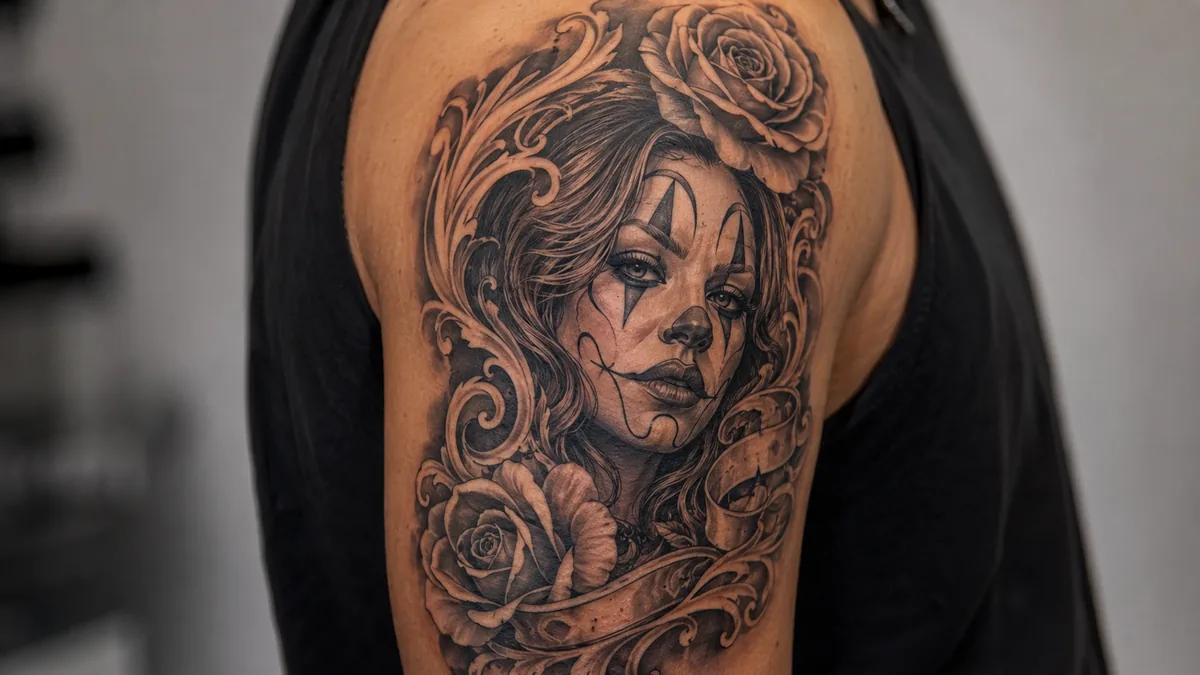
Payasa tattoos pair naturally with Chicano script, roses, spider webs, teardrops, and praying hands. A name in old English lettering underneath her face makes it personal and grounds it in a specific story. Roses add a layer of beauty-and-pain symbolism that reinforces the core message without feeling redundant. A single teardrop near the eye deepens the meaning within the same tradition.
Some people add a bandana, hoop earrings, or elaborate face paint patterns to the payasa to signal cultural pride more explicitly. Others keep her clean and simple, just the face and the expression. Simpler compositions often hit harder. Every element you add should earn its place. If it’s not adding meaning or visual balance, it’s just noise crowding out the main subject.
Who Gets This Tattoo and How to Make It Personal
The payasa resonates with people who’ve dealt with grief, trauma, loss, incarceration, or just the ongoing grind of a hard life. You don’t need to be Chicano to get it, but you should understand where it comes from and respect that lineage. Wearing someone else’s cultural symbol without any understanding of its history is a problem. Going in informed is the bare minimum.
To make it personal, bring your artist a specific reference for the expression you want. Crying, laughing, that caught-between-both look. Choose whether you want a name, a date, or supporting imagery that connects the piece to your own story. A good artist will push you to personalize the face slightly, the shape of the eyes, the style of the makeup, so it’s yours and not a copy-paste. That’s what separates a meaningful piece from a generic flash tattoo.









