The Spartan tattoo is one of the most requested warrior pieces in any shop. And it makes sense. The ancient Spartans weren’t just soldiers, they were the standard. Discipline over comfort, strength over softness, loyalty to something bigger than yourself. That’s what people are putting on their skin.
If you’re going with a full Spartan warrior helmet, a soldier mid-battle, or just the iconic lambda shield, the meaning stays tight. This is a tattoo about how you move through life, not just who you admire in history class.
The Core Meaning Behind a Spartan Tattoo
The Spartan tattoo stands for warrior spirit first. Courage, discipline, mental toughness, and the willingness to endure hard things without flinching. Those aren’t abstract ideas, they’re the actual Spartan ethos. Sparta ran one of the most brutal military training systems in the ancient world, and the men who came out of it were genuinely feared.
A lot of people who get this tattoo aren’t soldiers, and that’s fine. The symbolism transfers. It resonates with anyone who’s pushed through something hard, built themselves from scratch, or lives by a code. It’s about the internal fight as much as any external one.
Historical Background Worth Knowing
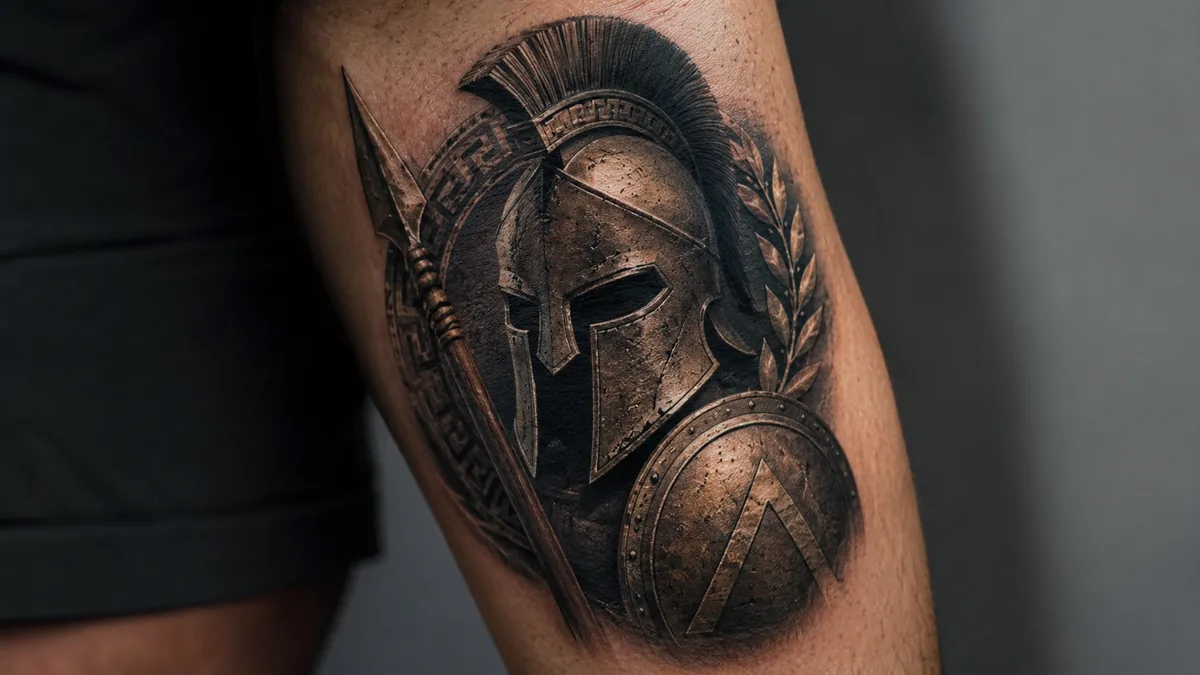
Spartans didn't train to fight. They trained so fighting was easy.
Sparta was a city-state in ancient Greece, and its warriors dominated classical warfare for centuries. Spartan men began military training called agoge at age seven. It was brutal by design. Spartan culture prized physical excellence, stoic discipline, and collective strength. The Battle of Thermopylae in 480 BC, where roughly 300 Spartans held the Persian army at a mountain pass, cemented their legacy as symbols of defiant courage.
That battle is the reason the Spartan image exploded in modern pop culture, especially after the movie 300 in 2007. That film introduced a whole generation to the aesthetic. But the symbolism predates Hollywood by about 2,500 years. The real history gives this tattoo genuine weight.
Popular Design Variations
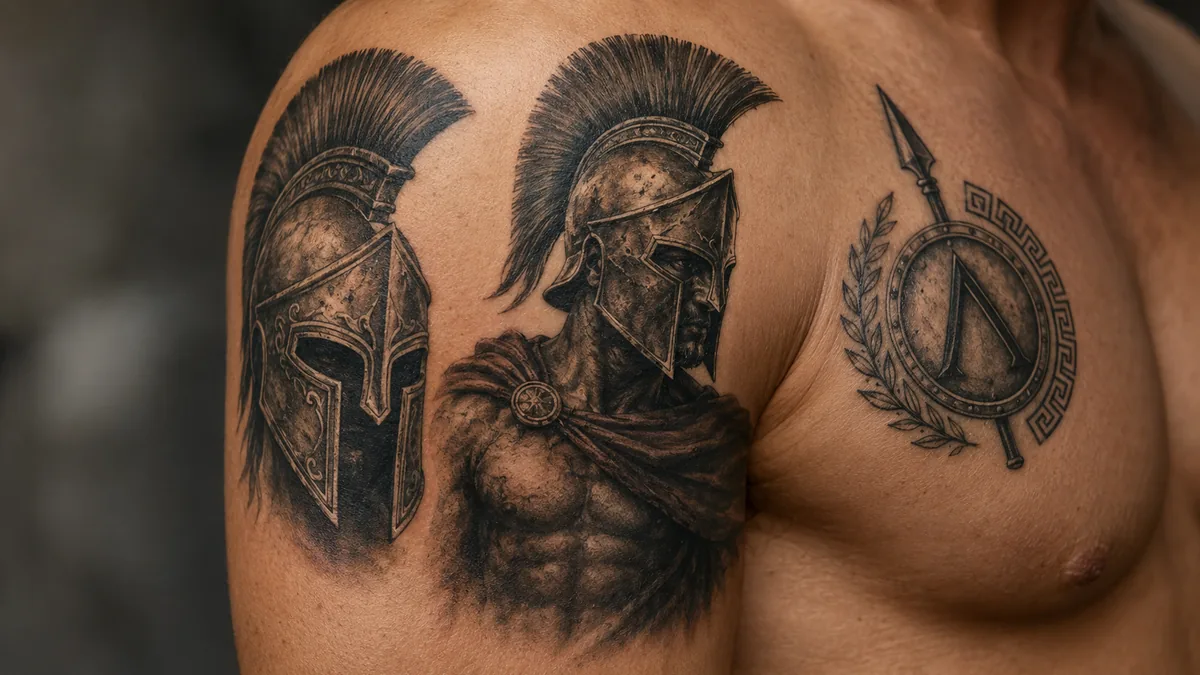
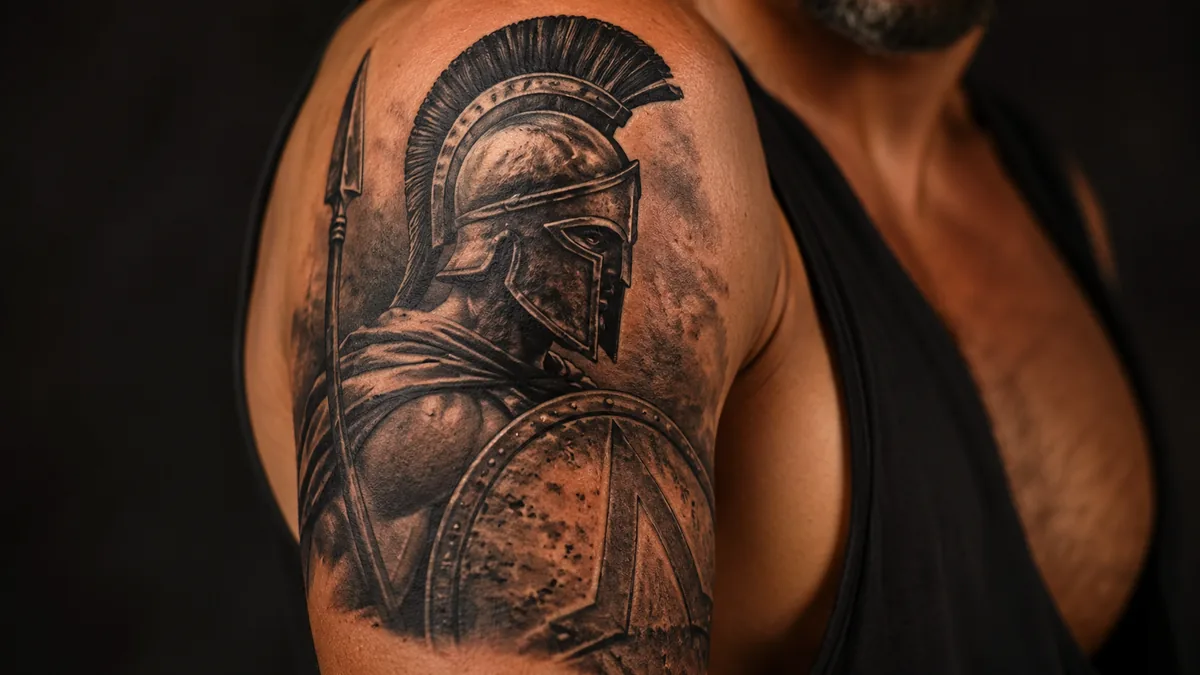
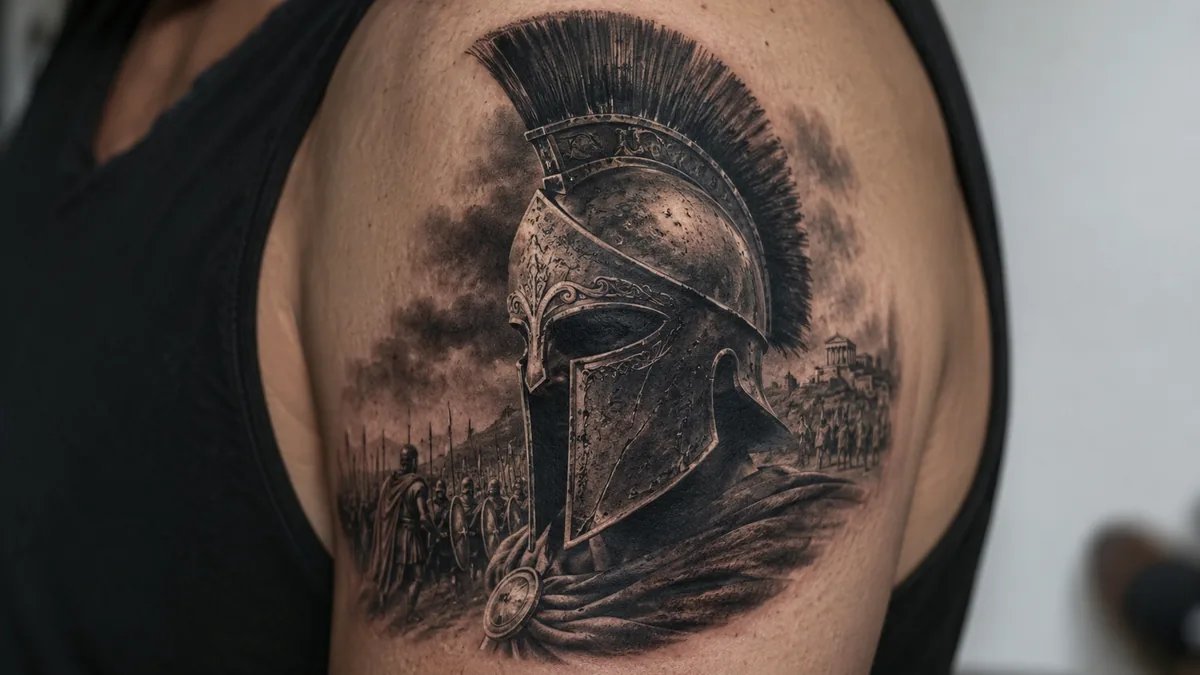
The Spartan helmet is the most common design, clean and immediately readable. You’ll see it realistic, stylized, or geometric. The full warrior portrait, usually in mid-battle stance with a spear and shield, is the bigger commission piece and gives an artist real room to work. The lambda symbol, a Greek letter that appeared on Spartan shields and stood for Lacedaemon, their region, is a minimalist option that still reads Spartan to anyone who knows.
Battle scenes, portraits of Leonidas, warrior profiles with the iconic plumed helmet, and skull-faced Spartan mashups are all popular. Some clients combine the helmet with quotes, usually something direct like “molon labe,” which translates to “come and take them.” It’s a real Spartan phrase. That phrase has its own following in military and Second Amendment circles, so know what you’re tying your tattoo to.
Black and Grey vs. Color
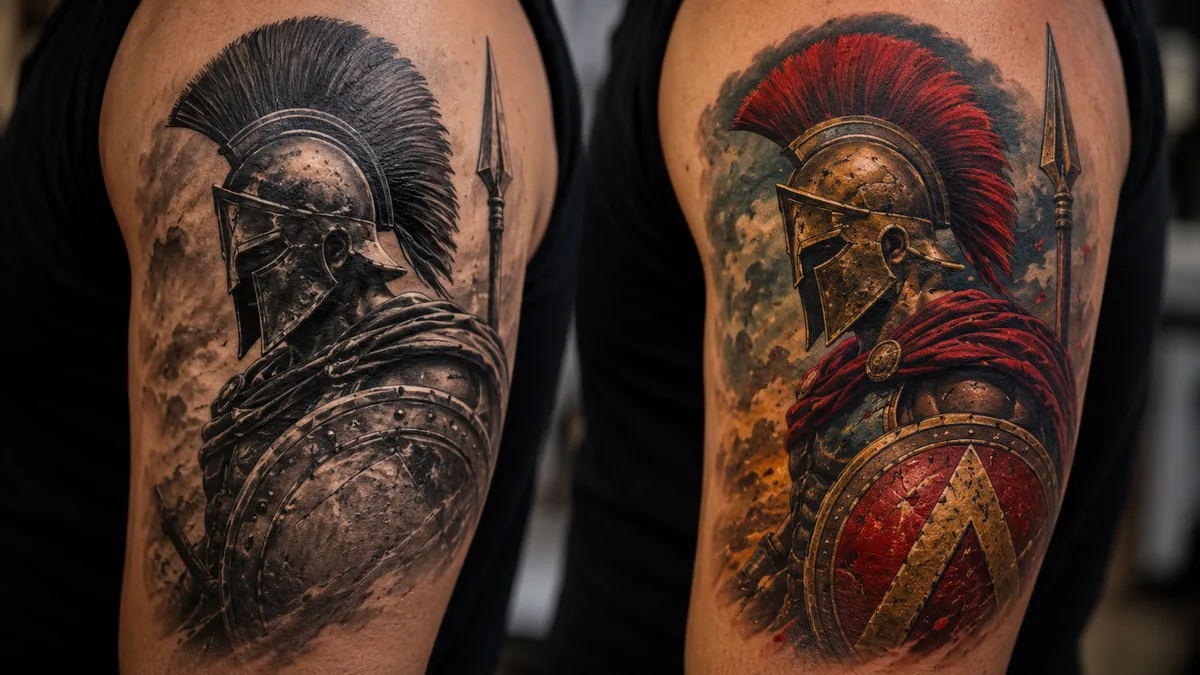
Black and grey is the dominant choice for Spartan work. The subject matter is serious and gritty, and black and grey whip shading handles the metal textures of a helmet, the worn leather of armor, and the shadow of a warrior’s face better than most color palettes. A skilled artist can get incredible depth here. Fine line works on smaller pieces, but for anything with real detail, you want an artist who can lay down solid black and grey with clean transitions.
Color can work if you’re going for a bold, almost illustrative look. Deep reds, bronze tones, and weathered gold on armor can look sharp when they’re saturated and the execution is clean. Just know that color needs more touch-up over time, especially in high-sun areas. A full-color warrior portrait done right is a statement piece, but it demands the right artist and a commitment to aftercare.
Best Placements and How It Ages
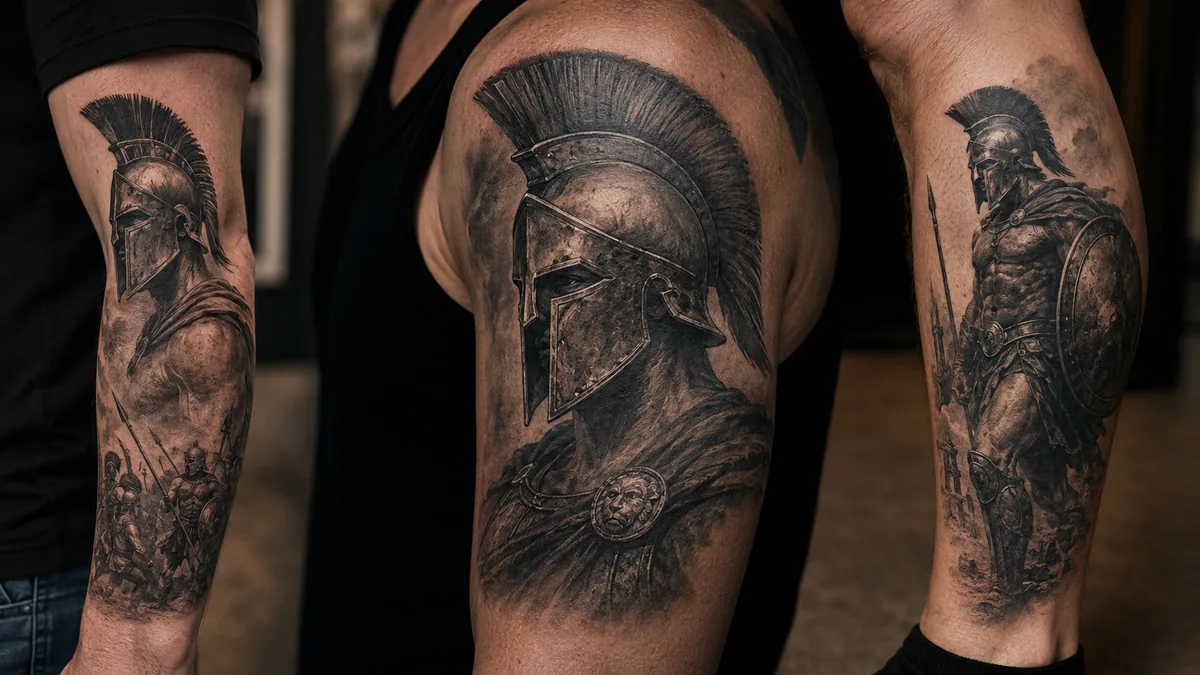
The upper arm and shoulder are the go-to spots for Spartan work. The shape of a helmet or warrior fits the space naturally, and muscle definition underneath gives the piece dimension. Chest and back placements work great for larger compositions, portraits, or full battle scenes. The thigh is underrated for this subject, lots of real estate and a surface that ages well.
Avoid placing fine-line Spartan work in high-wear or high-flex zones like the inner elbow or wrist if you want it to hold detail long-term. Bold, well-packed black in low-wear areas will hold for decades. Fine line detail on a knuckle or finger? That’ll blur fast. Placement matters as much as the design itself. Ask your artist straight up where your specific piece will age best.
Who Gets This Tattoo and Why It Stays Personal
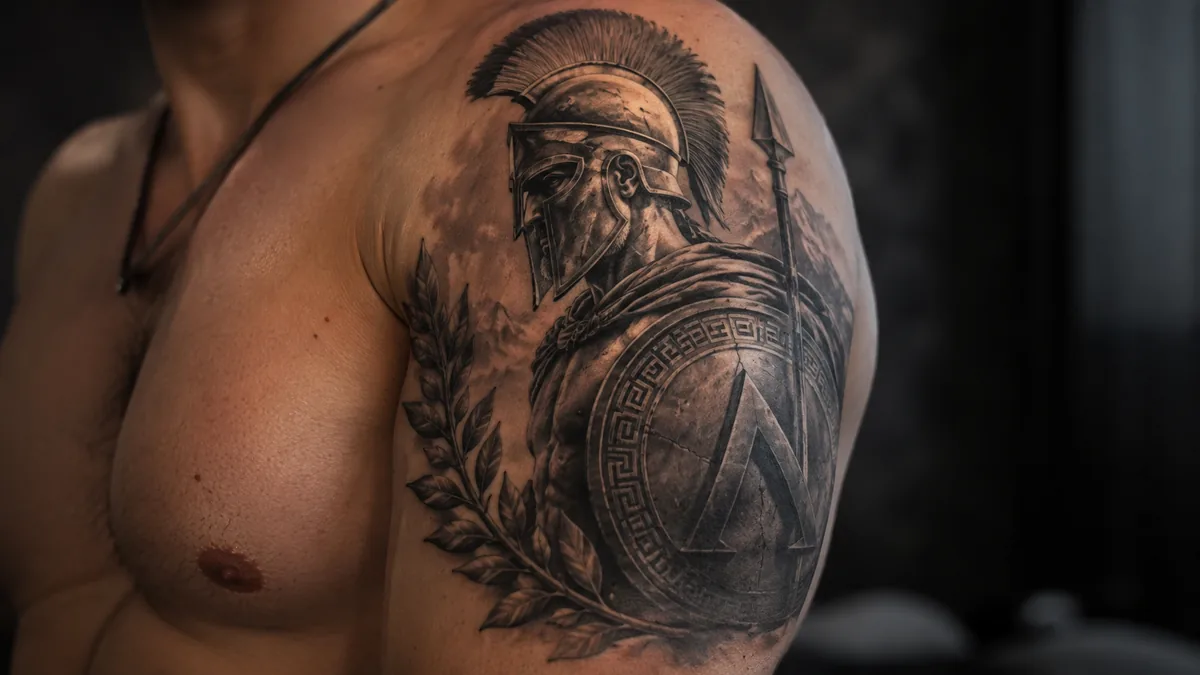
Veterans, active military, athletes, martial artists, and anyone who’s built a hard version of themselves tend to connect with this tattoo the most. That said, it’s not a gatekept symbol. If the meaning resonates, the tattoo makes sense on you. The Spartan figure represents a personal code, not a membership card.
The way you personalize it matters. Some clients add a birth year, a name of someone they’ve lost, or a phrase that means something specific to them. Others keep it purely aesthetic and historically accurate. Either way, talk to your artist about what angle you want to lead with before they draw anything. The best Spartan tattoos feel personal, not like a flash sheet pull.
Sizing and What Makes It Read Right
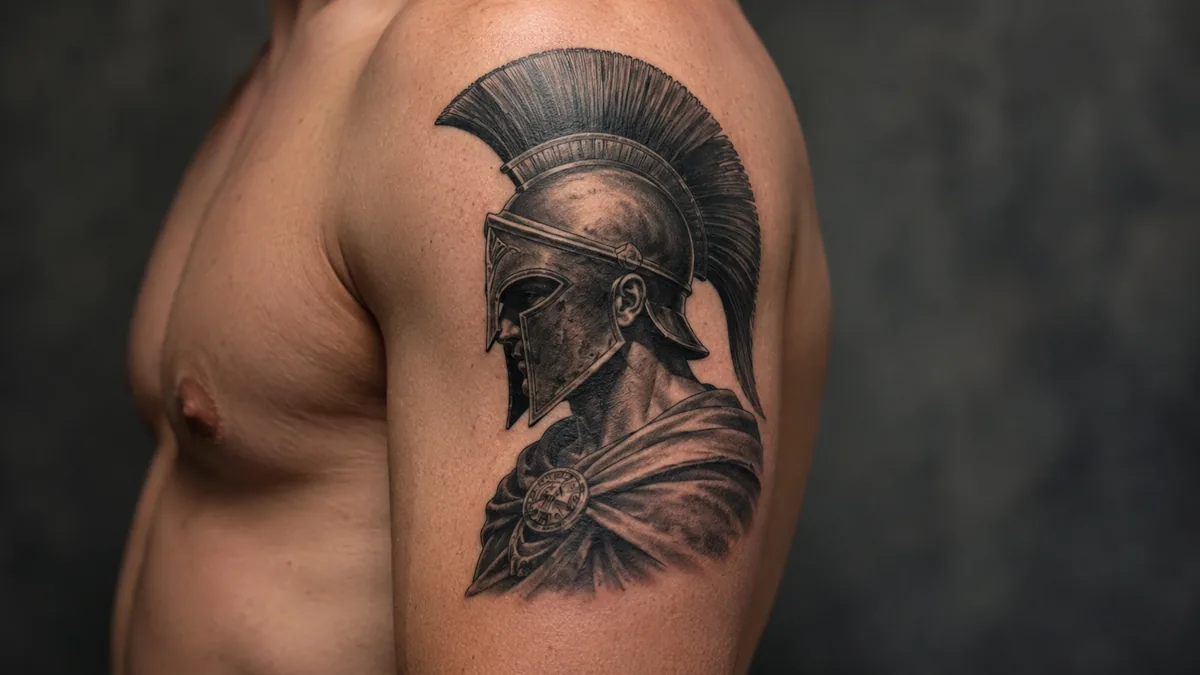
A Spartan helmet with real detail needs at least three to four inches of clean space to read properly from across the room. Go too small and the intricate plume, visor detail, and shading all compress into mud after a few years. Bold will hold. That’s not a suggestion, that’s physics. Thin lines packed into a tiny space will spread over time, especially on fleshy areas.
For a full warrior portrait or battle scene, bigger is almost always better. Your artist needs room to tell the story with the image. A piece that reads crispy and bold at two feet away is worth the extra real estate on your body. Don’t downsize a complex composition to save space. Scale it to where it actually works, or simplify the design to fit the size you want.