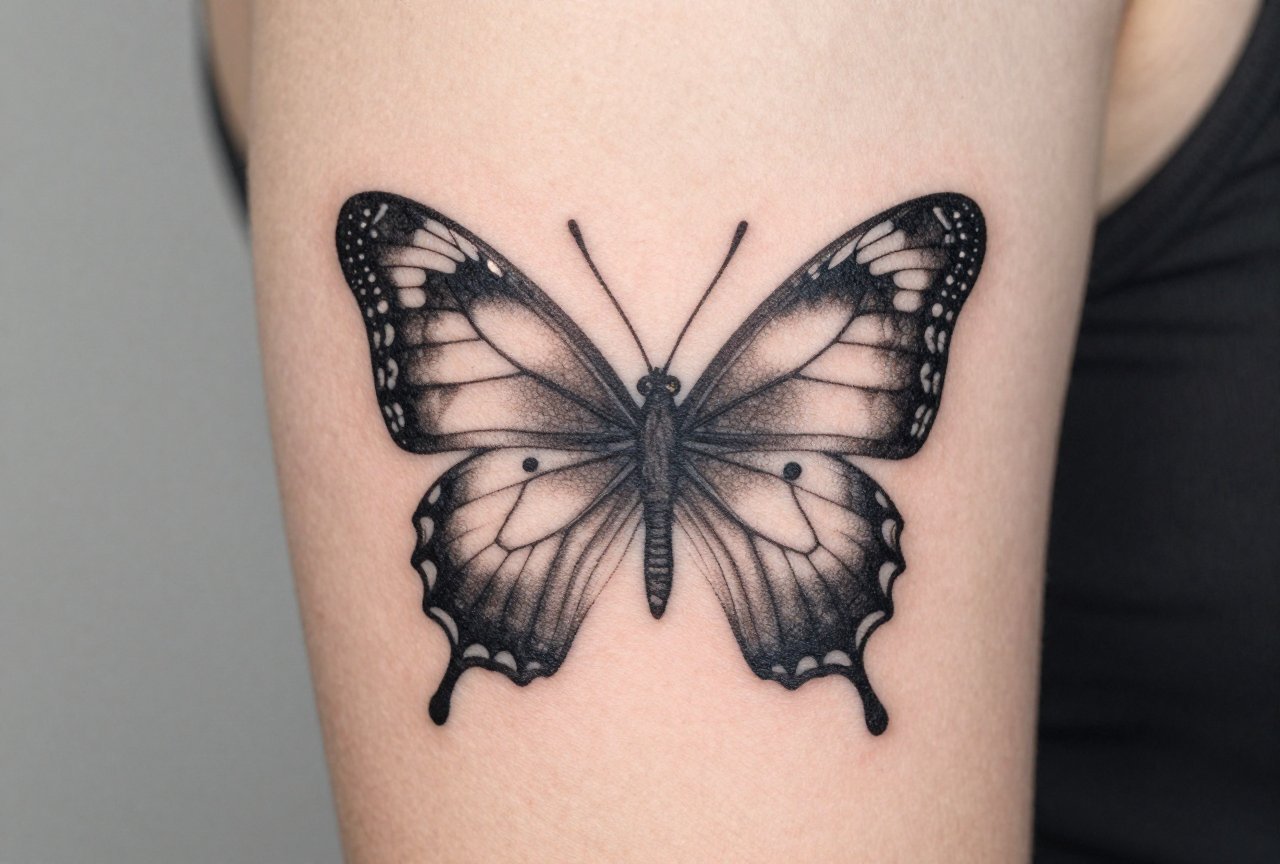
A butterfly tattoo on a woman most commonly represents change, freedom, and rebirth. It speaks to personal evolution, the courage to change, and the beauty that emerges from struggle. For many women, this design marks a significant life transition, a survived hardship, or an ongoing commitment to growth and self-discovery.
Symbolism and History
The butterfly carries layered meaning across cultures and centuries. Understanding its roots adds depth to this popular choice.
- Ancient Greek roots: The word “psyche” meant both “soul” and “butterfly,” linking the insect to the human spirit and its immortality.
- Christian tradition: Butterflies represented resurrection and the soul’s journey toward salvation, emerging renewed from the earthly cocoon.
- Japanese culture: Two butterflies symbolized marital happiness, while a single butterfly could represent the soul of a living or departed person.
- Aztec and Mexican heritage: Monarch butterflies were believed to carry the spirits of ancestors, particularly during Dia de los Muertos celebrations.
- Modern feminist reclamation: Many women have adopted the butterfly as a symbol of escaping confinement, whether societal expectations, abusive relationships, or limiting self-beliefs.
The metamorphosis from caterpillar to chrysalis to winged creature provides the core metaphor: confined or difficult beginnings do not determine final form. This resonates powerfully with women who have rebuilt their lives, changed careers, recovered from illness, or stepped into authentic identity after hiding their true selves for years.
Common Styles
The butterfly’s adaptability as a design makes it endlessly customizable. Each artistic choice shifts the emphasis of its meaning.
- Realistic monarch: Connected to migration, endurance, and Mexican heritage; often honors ancestors or family roots.
- Minimalist line work: Suggests quiet change, understated strength, and modern elegance.
- Watercolor splashes: Represents emotional release, creativity, and the messy-beautiful process of becoming.
- Geometric or mandala-infused: Blends natural change with spiritual order and cosmic connection.
- Butterfly with clock or date: Memorializes a specific moment of change, loss, or new beginning.
- Half-butterfly, half-woman: Celebrates feminine power and the ongoing, active nature of personal evolution.
- Broken or tattered wings: Acknowledges survived trauma while still claiming the ability to fly; increasingly chosen by survivors of abuse, addiction, or mental health struggles.
Color choice matters considerably. Black and grey can signal mourning, mystery, or timelessness. Oranges and yellows project joy and energy. Blues and purples often connect to spirituality, intuition, and calm. A single blue butterfly specifically references the butterfly effect, the idea that small changes create massive ripples across a system.
Placement Options
Placement on a woman’s body can subtly alter how the tattoo is experienced and interpreted.
- Shoulder blade or upper back: Suggests wings ready to unfold; private enough for personal meaning, visible when chosen.
- Wrist or inner forearm: A daily reminder of strength and change; easily shown or concealed.
- Behind the ear: Intimate, whispered symbolism; often marks a quiet, personal victory.
- Ribcage or side: Follows the body’s natural curves; can feel protective or deeply hidden, revealed selectively.
- Ankle or foot: Connected to forward movement, journey, and grounded freedom.
- Over scars: Reclaims the body, turning marks of pain into sites of beauty and survival. This is one of the most specific and meaningful placements.
Many women choose placement based on who needs to see the tattoo: themselves, a partner, or the world. A butterfly on the sternum, visible in a neckline, projects confidence. One on the hip or thigh remains private, a personal source of strength.
Who Gets This Tattoo
While anyone can wear a butterfly, certain life experiences draw women specifically to this symbol.
- Career changers or late bloomers: Women who started over professionally or discovered new passions later in life.
- Survivors of abuse or assault: The emergence from darkness into light mirrors their experience of reclaiming agency.
- Those in recovery: From addiction, eating disorders, or self-harm; the butterfly marks ongoing, daily change.
- Mothers: Sometimes paired with children’s names or birth flowers, representing the identity shift of becoming a parent.
- Transgender women: The butterfly powerfully encapsulates gender transition and the long-awaited emergence of true self.
- Women honoring lost loved ones: The butterfly as soul-messenger provides comfort and continuing connection.
- Entrepreneurs and creatives: Risk-takers who left stable paths to build something original and self-directed.
The meaning often evolves. A woman might get a butterfly at twenty to mark college graduation, then find at forty that it now represents surviving divorce and rebuilding from scratch. The tattoo grows with its wearer.
Related Symbols
Women drawn to butterfly imagery often connect to related symbols of change and resilience.
- Phoenix: More fiery and dramatic; emphasizes destruction and rebirth rather than gradual change.
- Dragonfly: Shares metamorphosis but adds adaptability, living in multiple elements; less romantic, more fierce.
- Lotus flower: Grows from mud to bloom; emphasizes beauty arising from difficult circumstances, rooted rather than airborne.
- Moth: The butterfly’s nocturnal twin; drawn to light through darkness, often chosen by those who found hope in depression.
- Snake shedding skin: Rawer, more primal renewal; less delicate, more dangerous in its change.
Some women combine symbols: a butterfly emerging from a lotus, or a phoenix and butterfly as companion pieces representing different chapters of the same story.
Finding the Right Artist
The butterfly is one of the most requested tattoo subjects in the world, which means the range of quality across artists is enormous. Before booking, identify which style resonates with you: realistic monarchs require a different skill set than watercolor butterflies, which require different expertise than bold traditional butterflies. Search specifically for healed work in your preferred style rather than just fresh photos.
For realistic butterfly work, look at how the artist handles wing transparency and iridescence. Those qualities are what make a realistic butterfly feel alive rather than flat. For fine line minimalist work, examine healed pieces to check whether the lines held crisp or spread over time. For watercolor technique, look at how the color sits in the skin after healing, which will look more muted than fresh work but should still have dimension and life.
Ask whether the artist has experience with scar coverage if that is your placement goal. Tattooing over scar tissue requires adjusted technique. An experienced artist will want to examine the scar in person and may want to wait until scar maturation is complete, typically one to two years after the injury, before tattooing over it.
Final Thoughts
The butterfly tattoo on a woman refuses to be one thing. It is delicate and durable, personal and universal, finished and forever becoming. Its enduring popularity comes not from simplicity but from depth, a shape that holds however much meaning a woman needs it to carry. Whether marking survival, celebrating change, or simply claiming beauty on her own terms, she wears proof that change is possible, visible, and worth the struggle.