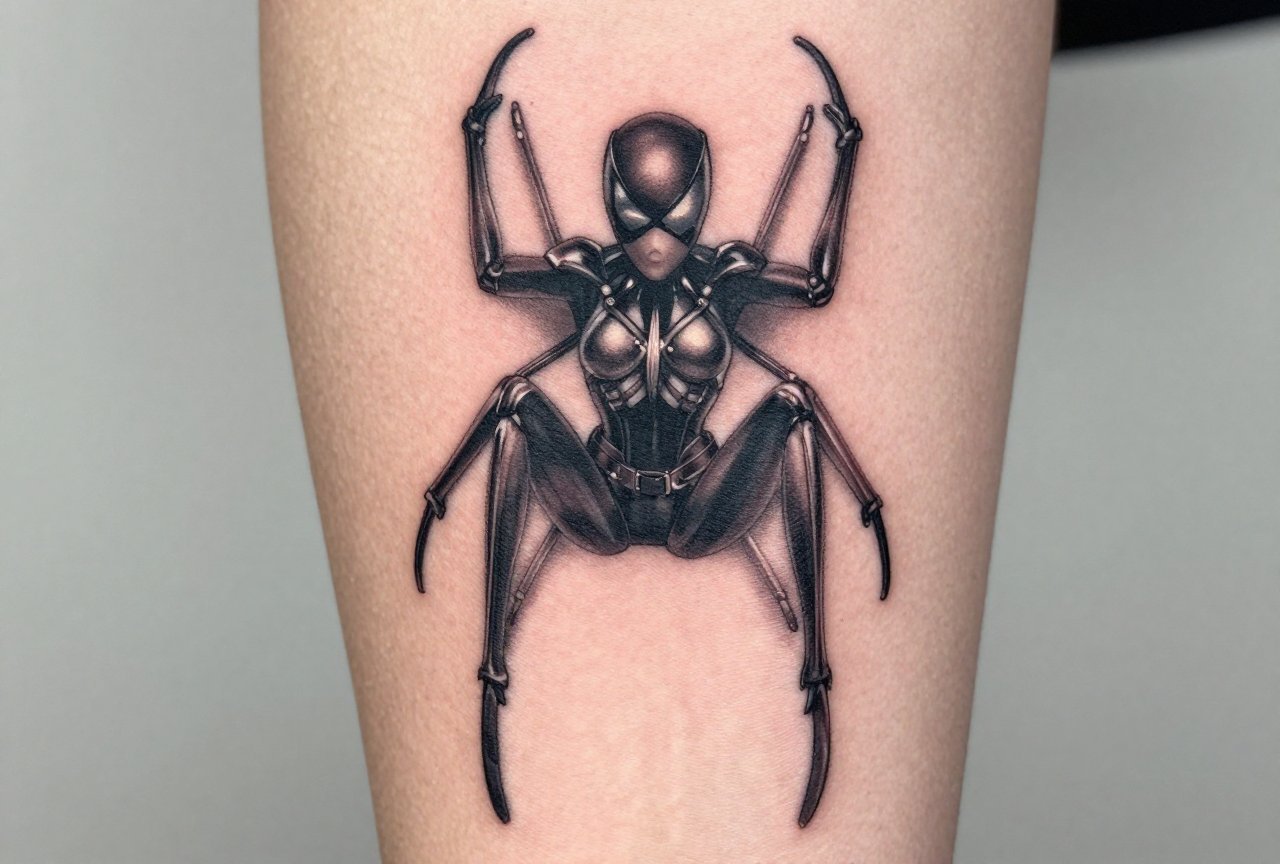
A realistic black widow tattoo isn’t just a spider slapped on skin. It’s a study in contrast, the glossy obsidian carapace, the unmistakable crimson hourglass, those impossibly slender legs catching light like wire. I’ve tattooed dozens of these over the years, and the good ones always start with the same question: do you want the beauty or the threat? Because this creature carries both. The realistic style demands you render every hair, every reflection, every anatomical truth of Latrodectus itself. Get it right and it’s stunning. Get it wrong and you’ve got a smudgy blob with too many legs.
Origins & History
From Medical Text to Flash Sheet
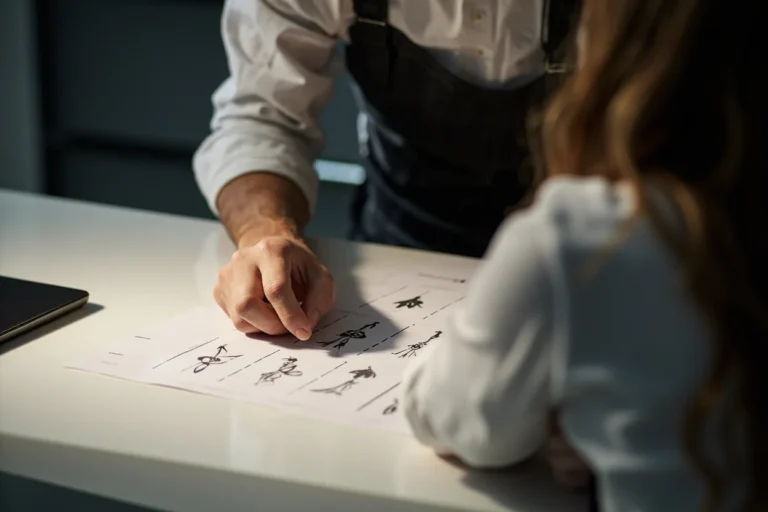
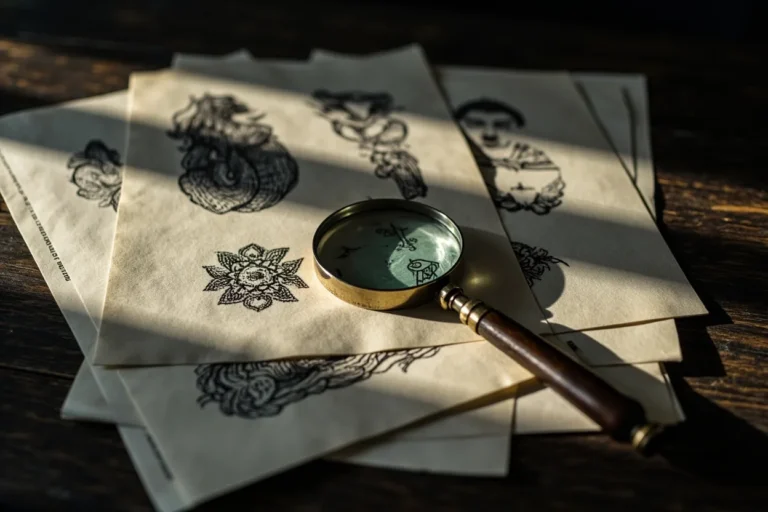
Black widow imagery crept into tattoo culture through two doors. The scientific illustration tradition, those meticulous 19th-century entomology plates, gave artists a blueprint for accuracy. Meanwhile, American traditional flash sheets of the 1940s and 50s stylized the spider into bold, readable icons, often paired with dice, skulls, or the word “danger.” I’ve got a 1950s acetate stencil in my shop drawer right now, black widow curled above a dagger. Chunky lines. Zero anatomy. Charming as hell, but not what we’re talking about here.
The realistic approach emerged as tattoo machines and needles got finer, as artists started studying photography and biology instead of just other tattoos. By the late 1990s, a few pioneers, guys like Bob Tyrrell and Paul Booth, were rendering insects with the kind of detail previously reserved for oil paintings. The black widow became a natural test piece. It’s small enough to finish in a session. Complex enough to separate technicians from artists.
Symbolism That Actually Matters
Clients tell me the same stories. Survived something. Female strength. The dangerous woman trope, reclaimed. One woman in my chair last year had escaped a decade-long marriage; the hourglass was her time, finally hers again. Another guy just thought they looked cool. Both are valid. I never judge the why, but I always ask. It shapes how I compose the piece, aggressive posture or elegant stillness, threat on display or beauty that happens to bite.
Key Characteristics & Motifs
Realistic black widow work lives or dies in the details. Here’s what separates the memorable pieces from the forgettable ones:
- Carapace sheen: That bulbous abdomen isn’t matte black. It’s oil-slick, purple-brown, catching highlights like a polished stone. I build it with concentrated black in the center, cooling to dark warm grey at the edges, then punch back in with opaque white for the pin highlights. One dot too many and it looks like a golf ball.
- The hourglass: On a real widow, this isn’t cartoon red. It’s coral, sometimes almost orange, often blurred at the edges by fine hairs. I see artists do a hard crimson triangle with a black outline and I want to scream. Soft. Fuzzy. Imperfect. That’s the goal.
- Leg architecture: Eight legs, two pedipalps, each segmented. The joints are where the realism happens, those tiny spines, the way light catches the cylindrical form. Thin lines. Steady hand. I’ve watched apprentices shake through a single leg for forty minutes.
- Web context: Some pieces float the spider alone. Others anchor it in silk. Dewdrops on webbing? Gorgeous. Also a commitment to maintenance, because those greys soften fast.
Color vs Black and Grey
The Red Problem
Here’s what I tell clients who want that hourglass to pop: red ages. Not badly, necessarily, but differently. Bright vermilion settles to a dusty rose within five years. The spider itself stays readable because the black holds, but that signature marking becomes a suggestion. I’ve got a ten-year healed photo in my portfolio where the hourglass is basically pink. Client still loves it. You need to know going in.
Black and Grey Longevity
Monochrome widows last longer, period. The form reads clearly without color dependency. You lose the immediate species identification, hourglass shape alone doesn’t scream “black widow” to casual viewers, but you gain a piece that looks intentional at year fifteen. I do a lot of these on clients who work corporate, actually. The spider becomes abstract, architectural, less literal threat and more shadow.
My personal preference? Split the difference. Black and grey body, muted crimson hourglass with no outline, let it settle into the skin like a bruise you chose. That’s the stuff that stays interesting.
Best Placements
I’ve put black widows on almost every canvas the body offers. Some work better than others.
- Forearm: Classic visibility, enough flat real estate for leg spread. The inner forearm hurts more but ages cleaner, less sun, less abrasion from desks and doorframes.
- Shoulder cap: The curve lets you wrap the web, let legs creep toward the collar. I’ve done pieces where two legs disappear over the bone, the spider clinging to the edge of visibility. Very effective.
- Thigh: Space for detail. Also space for swelling, which spider legs show brutally. First few days of healing, clients text me panicking that it’s blown out. Usually it’s just fluid. Patience.
- Behind the ear: Trendy. Tiny. I refuse anything under two inches for realistic insects, you lose the joints, the hairs, the whole point. Had a client walk out when I wouldn’t go smaller. Saw her “tattoo” six months later at a party. Looked like a squashed tick. No regrets on my end.
- Hand: Bold. Fast fade. The webbing between fingers, the constant washing, the sun exposure, I warn everyone. Some don’t care. The commitment itself is the statement.
Who It Suits
Not everyone. That’s honest. The black widow carries specific energy, dangerous femininity, controlled threat, the pretty thing that can end you. I’ve had clients request it as a couples piece with their boyfriend’s name. I decline those. The symbolism doesn’t bend that way.
It suits people who want edge without cliché. Who’ve outgrown the tribal phase, the font phase, the whatever’s-trending phase. Who can sit still for three hours of fine line work without checking their phone. The spider demands precision from both sides of the needle.
Skin tone matters practically, not aesthetically. On darker skin, I adjust my greywash values, lighter, more contrast, because the natural undertone does some of the shadow work for me. On very fair skin, I’m careful with those white highlights; they can heal to a hard, opaque dot that looks like scar tissue.
Modern Variations
Biomechanical Fusion
One of my regulars has a half-sleeve where the widow’s abdomen opens to reveal clockwork. Giger meets entomology. The realistic rendering of the actual spider makes the mechanical intrusion more disturbing. Takes a specialist, though. I don’t touch biomech, different discipline entirely.
Negative Space & Composition
Lately I’ve been experimenting with spiders rendered entirely in negative space, the black widow shape carved out of a saturated black field. The hourglass becomes the only positive red. Very graphic. Very dependent on the surrounding black healing solid. One patchy spot and the illusion collapses.
Multiple Specimens
Some clients want the lifecycle, egg sac, juvenile, mature female. Others want combat, two widows intertwined. These compositions need room. I did a back piece last year, three spiders descending a web that followed the spine. Six sessions. The client meditated through every one. That’s the commitment this style sometimes asks.
Choosing an Artist
This is where I get serious. Realistic insect work is a specialty. Not every portrait artist can render exoskeleton. Not every black and grey specialist understands arachnid anatomy. When you’re researching:
- Look for healed photos, not just fresh. That glossy black looks effortless on day three. At year two, you’ll see who actually understood value structure.
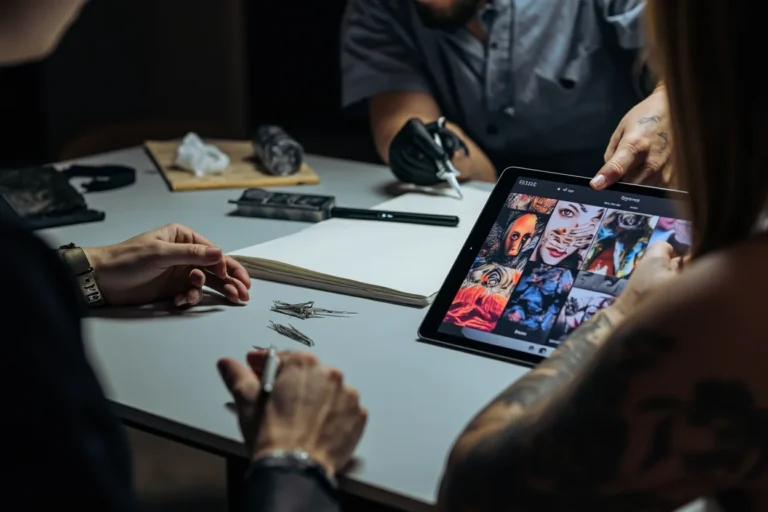
- Ask about their reference process. I keep a dead specimen in alcohol, macro photography books, and a folder of client-provided images. If they say “I can just look it up,” keep looking.
- Discuss needle grouping. Single needle for those leg hairs? Tight three for abdominal texture? They should have opinions, not just defaults.
- Budget realistically. A palm-sized realistic widow from someone who knows what they’re doing runs $400-800 in most US markets. Less, and they’re either fast (concerning for this detail level) or undercharging (concerning for their sustainability). More, and they better have the portfolio to justify it.
I turn down maybe one in three black widow requests. Wrong placement, wrong size expectation, wrong energy. Better a disappointed potential client than a permanent piece I can’t stand behind. The good artists you want will do the same.
Final Thoughts
A realistic black widow tattoo is a commitment to contrast, the soft and the hard, the beautiful and the lethal, the permanent mark that will outlast whatever motivation brought you to the chair. I’ve watched these pieces age across hundreds of clients. The best ones, the ones that still stop me in the shop years later, share a quality: they don’t try too hard. The spider simply exists, rendered with enough care that you half-expect it to move.
That’s the goal. Not shock. Not decoration. Presence. Something that belonged on your skin before you ever thought to ask for it.
If you’re considering one, sit with the image. Research your artist like you’re hiring for a job, because you are. And come prepared to be still. The spider doesn’t rush. Neither should its making.
Frequently Asked Questions
How long does a realistic black widow tattoo take to heal?
Surface healing runs about two weeks, but that glossy black will look cloudy for a month. The fine leg lines take longer to settle, I’ve seen them stay slightly raised for six weeks. Don’t panic if it doesn’t look perfect immediately; the contrast develops as the skin calms down.
Will the red hourglass fade faster than the black body?
Almost always. Red pigment particles are smaller and your immune system clears them quicker. That bright crimson softens to a muted rose within five years, sometimes sooner with sun exposure. I usually warn clients to expect the hourglass to become more of a suggestion over time.
Can you cover up an old spider tattoo with a realistic black widow?
Depends on the existing piece. Heavy black tribal or old traditional work? Probably not without laser first. Lighter, smaller pieces can sometimes be incorporated, I’ve turned old flash spiders into background elements, the realistic widow crawling past its cartoon ancestor. Bring photos to your consultation.
Why do some black widow tattoos look blurry after healing?
Usually three culprits: lines too fine for the placement (hands and feet are notorious), greywash packed too softly so it spreads during healing, or the artist worked too fast and the ink didn’t seat properly. The abdomen’s smooth gradients are especially vulnerable, one rushed pass and you’ve got a grey cloud instead of rounded form.
Related Style Guides
- Great Tattoo Ideas That Actually Work
- Unique Tattoo Ideas for Females
- Abdominal Tattoo Ideas for Every Body
- Explore more