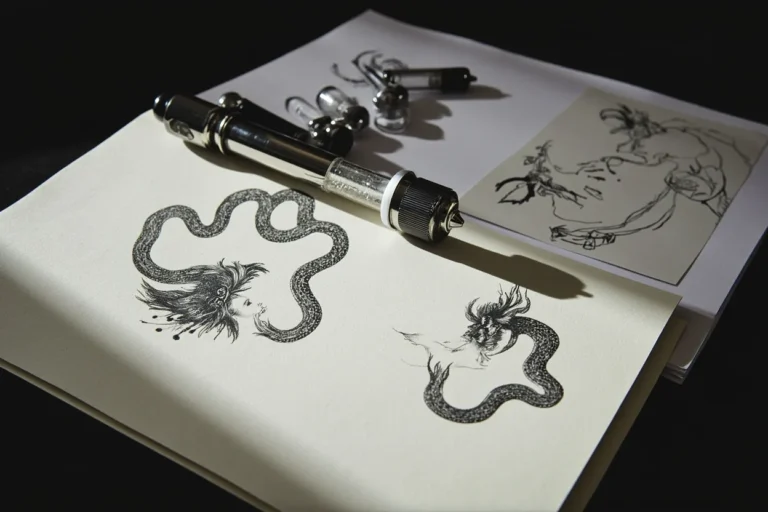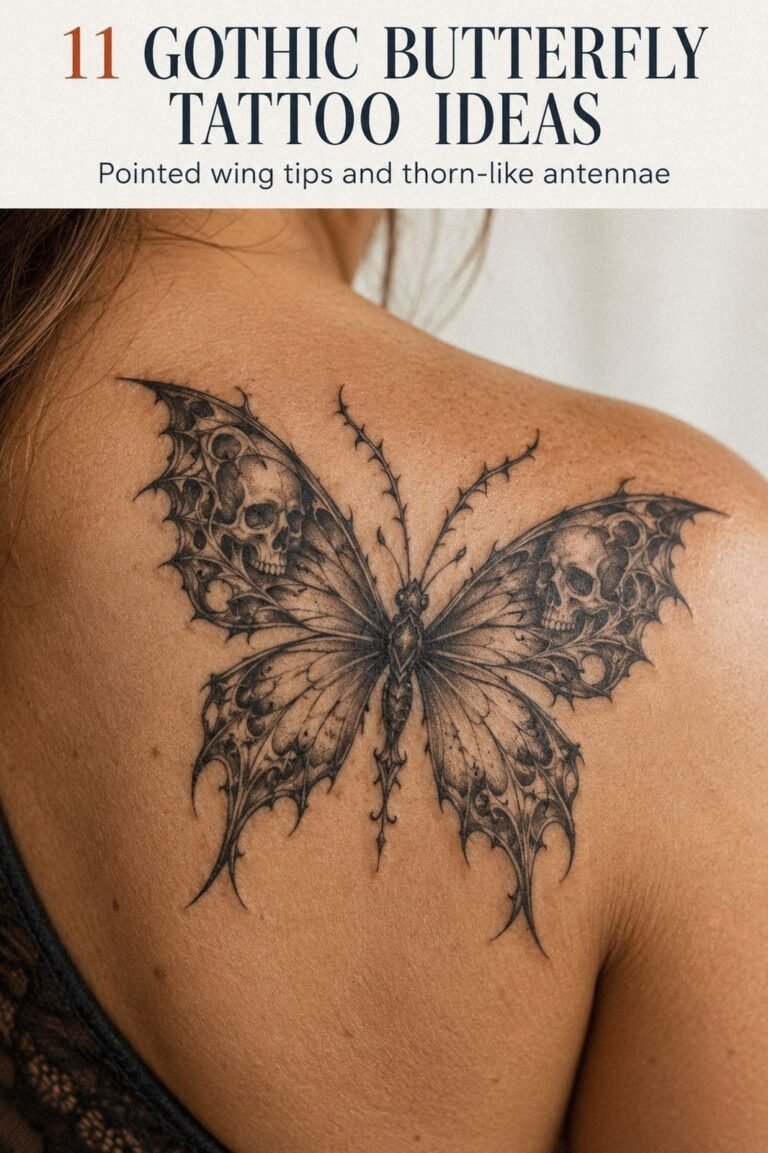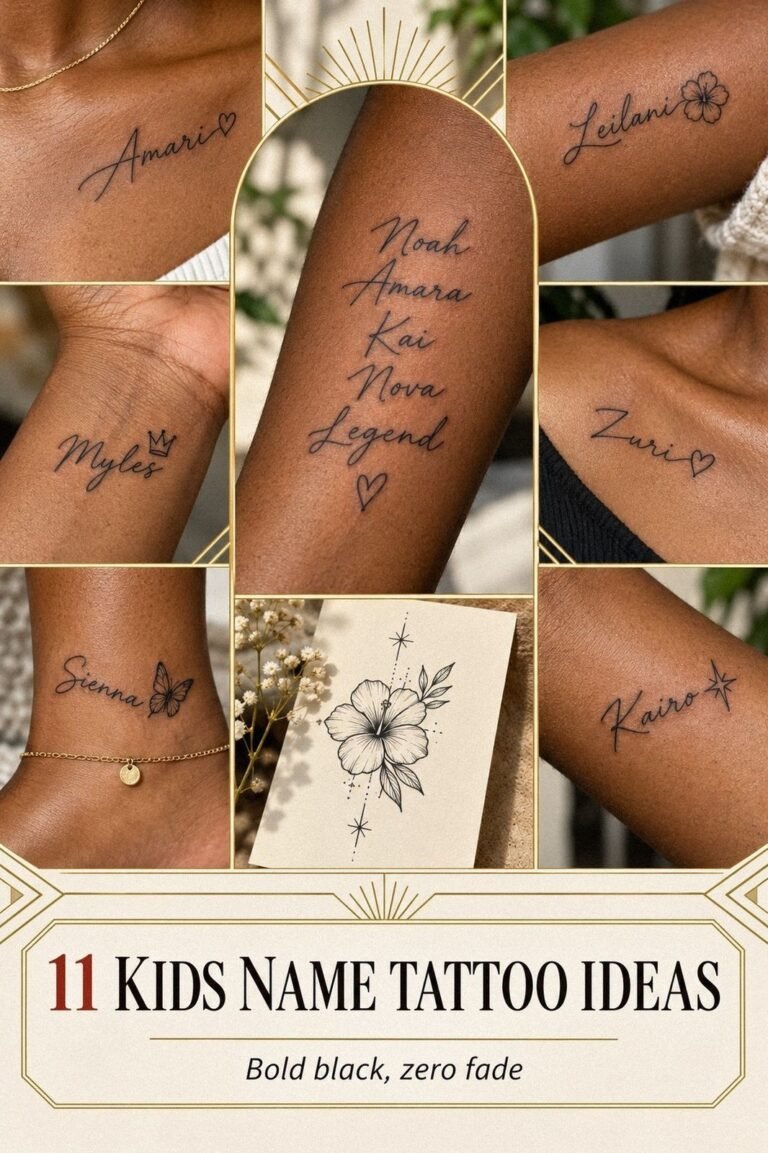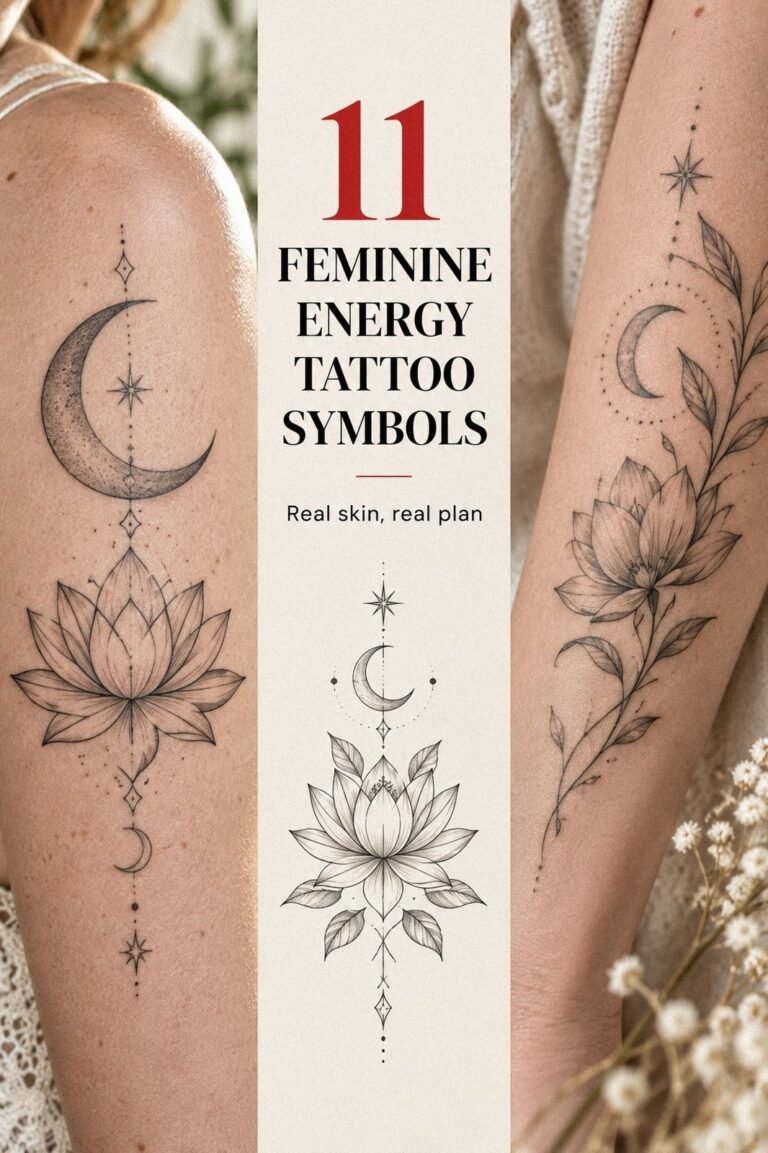
The tattooed tattoo is ink that depicts tattooing itself: needles, machines, ink bottles, traditional flash sheets, or skin being worked on. It means devotion to the craft, a love letter to the culture, or a marker of personal transformation through collecting art. I’ve done these on fellow artists and longtime clients alike, and they always carry more weight than the average piece.
Symbolism & History
This motif goes back to the early days of electric tattooing. Sailors and circus folks got tattooed hands holding machines, or simple needle designs, to show they were part of the life. It was insider language before Instagram made everything visible. I’ve tattooed a few of these on old-timers who remember when you had to earn the right to wear certain imagery.
Devotion to the Craft
For tattooers, this is the equivalent of a priest’s cross or a carpenter’s hammer. It says this isn’t a phase. I’ve got a machine on my own leg that I did during my apprenticeship, shaky lines and all, and I keep it because it reminds me where I started. Clients who get these often have sleeves, have sat for hundreds of hours, and want to commemorate the journey itself.
Collector Culture
Heavy collectors use this motif to signal membership. It’s like wearing a band shirt to the show, you’re not just passing through. I’ve had a guy with full back work get a small machine on his wrist because he said every piece told a story, but this one was about the storytelling itself. That lands differently than another skull or flower.
Common Variations & Styles
The design shifts hard depending on who’s wearing it and what shop culture they came up in.
- Traditional machine: Coils, tubes, bright colors. Bold lines hold. This is what I see most in American traditional shops.
- Hand-poke tools: Simple needles, sticks, thread. Often finer lines, more delicate. Appeals to people who’ve done stick-and-poke work or collected from that scene.
- Realistic machines: Rotary or pen-style gear, detailed shading. These age softer, fine detail can blur over time, especially on hands or arms that see sun.
- Flash sheet motifs: The classic “Tattooed Lady” banner, hearts with “Mother” being worked on, or a hand holding a needle. Nostalgic, readable from across a room.
- Abstract or conceptual: Ink splatters, skin cross-sections, the moment of needle meeting dermis. These tend to attract artists and designers who want something less literal.
I always tell clients: the more realistic and detailed, the bigger it needs to be. A photorealistic machine the size of a quarter will be a gray blob in five years. Line-based traditional work survives better at small sizes.
Best Placements
Where this goes changes the meaning and the practicality.
Visible Statement Spots
Hands, fingers, and forearms say “this is who I am.” I’ve tattooed machines on tattooers’ hands since they were already heavily committed to visible ink. The healing is rough, hands peel, crack, and see everything. Touch-ups are common. One artist I know has his machine on his thumb web, and it’s been gone over three times in ten years.
Personal, Hidden Areas
Ribs, upper arms under sleeves, thighs. These are for the wearer, not the viewer. I’ve done a few on ribs for clients who said the experience of being tattooed changed them, overcoming fear, marking survival, celebrating body autonomy. They didn’t need anyone else to see it daily.
One thing we see a lot in shops: people getting their first tattoo of a tattoo machine. I always ask if they want it because they love the culture or because they want to be a tattooer someday. The answer changes how I approach the design. Dreamers often want something aspirational; collectors want something that fits their existing story.
Who Chooses This Tattoo / Personal Meanings
The people who sit in my chair for this motif fall into clear groups, but the overlap is where it gets interesting.
- Working tattooers: Often their first self-done piece or a shop tradition. Marks the transition from apprentice to paid chair.
- Longtime collectors: The “full book” crowd who’ve run out of skin and want to honor the medium itself.
- People transformed by tattooing: Scar cover-up clients, survivors of illness or trauma who used ink to reclaim their bodies. The machine symbolizes that reclamation.
- Artists and illustrators: Drawn to the visual language, the history, the graphic quality of old flash.
A woman I tattooed a few years back got a small needle and thread on her inner arm after her last session finishing a mastectomy cover-up. She said the machine didn’t hurt her; it healed her. That’s not my language, I’m not a therapist, but I understood what she meant. The tool itself became the symbol.
Similar Symbols
If the tattooed tattoo doesn’t quite fit, these related motifs carry overlapping meaning.
- Paintbrushes, pens, chisels: Other tools of permanent or semi-permanent mark-making. Less specific to skin culture but similar devotion.
- Scissors, razors, straight blades: Barber and trade tattoos in the same family. Often mixed in traditional flash sheets.
- Hearts, banners, “Hold Fast”: Classic tattoo imagery that signals membership in the collector world without depicting the medium itself.
- Skin with holes, “cut here” dotted lines: More ironic, contemporary, sometimes body-modification adjacent. Appeals to a different crowd than the traditional machine.
I’ve had clients bring in references that blend these, machine plus heart, needle threading through skin like a sewing needle through cloth. The mashups work when the person has real connection to both elements, not just when they look cool.
Final Thoughts
The tattooed tattoo means what most good ink means: something specific to the person wearing it, grounded in a shared visual language that other insiders recognize. It can be shop pride, collector completion, aspirational dream, or personal milestone. I’ve watched it go from insider code to mainstream motif, which changes the weight but not the possibility. The best ones still come from real experience, hours in the chair, relationships with artists, skin that tells a longer story than any single piece could. If you’re considering this, know what chapter you’re marking. The design will follow.
Frequently Asked Questions
Does a tattooed tattoo mean I want to become a tattoo artist?
Not necessarily. Many collectors get this motif to honor their journey as clients, not to signal professional ambition. The meaning depends on your personal story with tattooing.
Will a detailed tattoo machine design age well on my hand?
Fine detail on hands tends to blur faster due to constant use and sun exposure. Bold lines and simpler shapes hold up better; expect touch-ups if you go intricate.
Is it bad luck to get a tattoo machine before I’m actually tattooing professionally?
There’s no universal rule, though some old-school artists side-eye it. Most modern shops don’t care. What matters is that your reason feels genuine to you.
Can I combine a tattoo machine with other symbols in one design?
Absolutely, and it often strengthens the meaning. I’ve combined machines with birth flowers, dates, and cultural motifs when the client has a clear story connecting them.
Related Tattoo Meanings
- Teddy Bear Tattoo Meaning: Comfort, Memory, and Childhood Inked
- Three Swords Tattoo Meaning: Symbolism, Styles What Artists Know
- Vegvisir Tattoo Meaning: The Norse Compass Explained
- Explore more