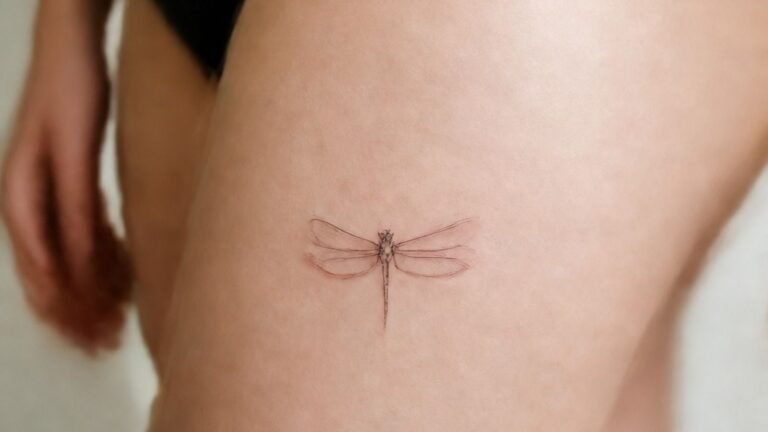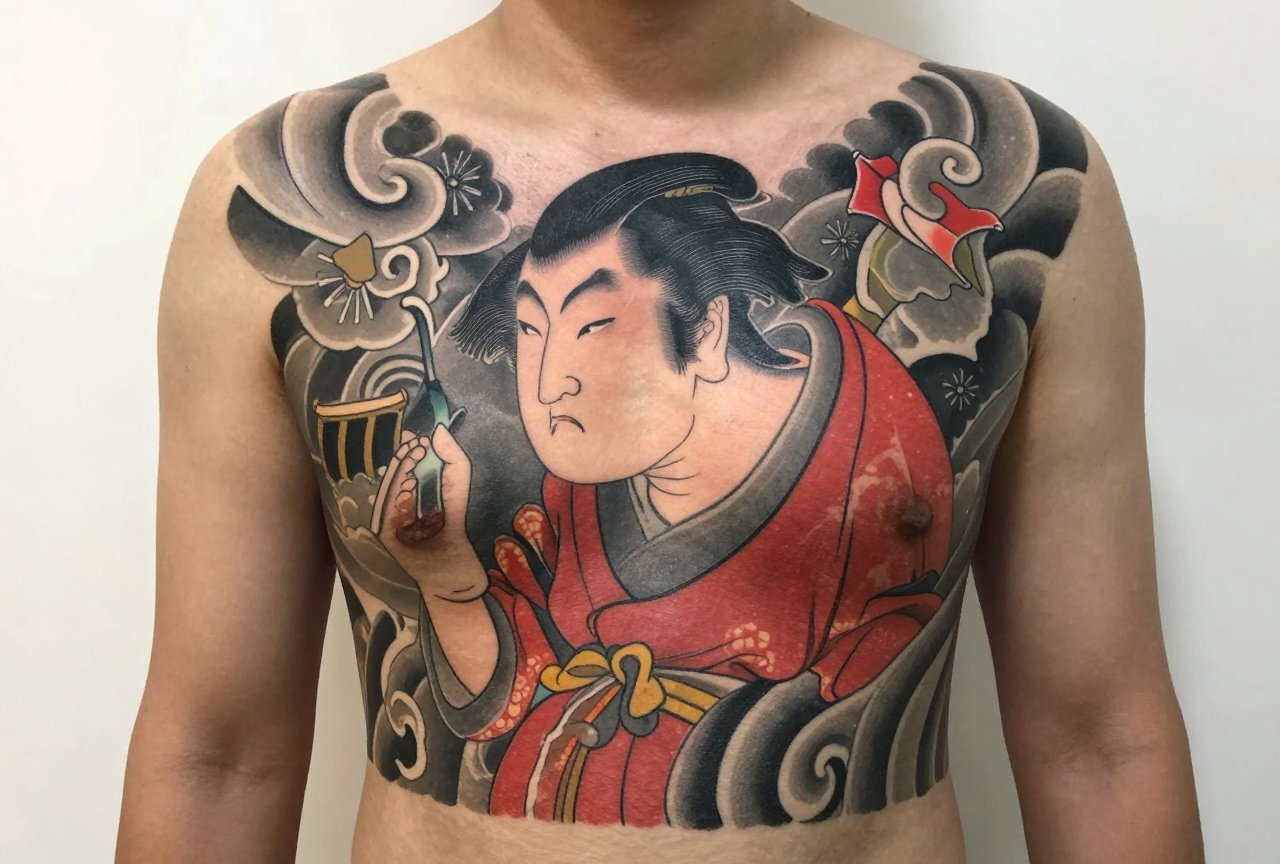
Traditional Japanese tattooing, what we call irezumi or horimono, isn’t just a style you pick off a flash sheet. It’s a discipline built on centuries of rules about flow, storytelling, and how images sit on a human body. I’ve watched clients sit for hundreds of hours on this work. The best traditional Japanese tattoo artists aren’t copying Pinterest boards; they’re working from a visual language that predates electricity. This guide is what I tell people who walk into my shop curious about koi, dragons, and the full back pieces they’ve seen in magazines.
Origins & History
Japanese tattooing goes back to the Jomon period, but the style we recognize today formed during the Edo period (1603-1868). Woodblock prints, ukiyo-e, directly shaped the imagery. You can see it in the flat color areas, the bold outlines, the way backgrounds of wind, water, and waves frame the main subject. Originally, tattoos marked criminals. By the 1800s, they became associated with yakuza and the working class.
I’ve had older Japanese clients in my chair who still remember grandfathers with hidden sleeves. The stigma persists in Japan today. Public baths and gyms still ban visible tattoos. This cultural weight matters. Good traditional Japanese tattoo artists respect that lineage, even when working outside Japan.
Tebori vs Machine
Tebori is hand-poking with a rod of needles, no machine buzz, no rubber grip. The rhythm is slower, the sound is a soft scratch. Some purists insist tebori is the only real way. I’ve tried it; the saturation differs. Tebori packs color more deeply and heals with a softer edge. Machine work is sharper, faster, more accessible. Most artists blend both now. If someone tells you they only do tebori, ask to see healed photos from five years back. Hand-poking is beautiful but unforgiving. Bad tebori stays bad forever.
Key Characteristics & Motifs
The rules are specific. Backgrounds aren’t filler, they’re essential. Waves, wind bars, cherry blossoms, maple leaves, clouds: these create the gakubori, the frame that holds the main image. Without it, the tattoo floats. I’ve seen Western artists miss this and slap a koi on a shoulder with no background. Looks naked. Wrong.
- Koi: Swimming upstream, transforming into dragons. Placement matters, koi move upward, never down.
- Dragons: Claw count signals origin. Japanese dragons have three claws; Chinese have four or five.
- Tigers: Represent wind, courage, protection. Often paired with bamboo or maple.
- Foo dogs (shishi): Guardian lions, usually placed on outer arms or thighs.
- Snakes: Rebirth, healing, protection. Wind through backgrounds dramatically.
- Oni masks and samurai: Storytelling elements, often memorial or protective.
- Peonies: The “king of flowers,” paired with lions, dragons, or alone as sleeve filler.
Each motif carries directionality. Koi rise. Dragons coil. Tigers descend. The artist has to map this against your body’s movement. In my chair, I make clients flex, twist, reach. A dragon that looks perfect standing still goes twisted when you lift your arm. Traditional Japanese tattoo artists plan for this.
The Background Language
Wind bars are those swirling lines people mistake for abstract decoration. They’re directional energy. Water spouts, foam patterns, falling petals, all follow the body’s muscle flow. A good background should read correctly from multiple angles. This is why Japanese work takes so long. We’re not just drawing; we’re engineering movement.
Color vs Black and Grey
Classic irezumi is saturated color: vermillion, teal, yellow, black. The palette comes from traditional pigments. Modern inks are safer, brighter, more stable. But the look remains, flat color areas, minimal shading within color fields, heavy black outlines.
Black and grey Japanese work exists, especially in Western adaptations. It reads more graphic, less decorative. Heals cleaner on darker skin tones sometimes. But purists want that color punch. I’ve done both. Color Japanese ages better than you’d think, the heavy outlining prevents the bleeding that kills softer styles. Black and grey can look muddy if the contrast isn’t aggressive enough.
Skin tone matters for color choices. On very dark skin, I push for bolder teals and deeper reds, avoid pastels entirely. Traditional Japanese tattoo artists with experience across skin types know this intuitively. Ask to see their healed work on someone who looks like you.
Best Placements
Japanese tattooing is fundamentally about the body suit. The full munewari (chest panel with back opening), donburi (full chest), gobu (half sleeve), shichibu (three-quarter sleeve), hikae (chest panel to shoulder), these are traditional units. You don’t just “get a Japanese tattoo.” You commit to a composition that respects these forms.
- Full back: The canvas. Dragons, phoenixes, massive scenes. Takes 50-100+ hours.
- Sleeves: Must connect to chest or back panel. Floating sleeves read as incomplete.
- Legs: Less common historically but fully accepted now. Koi and dragons work beautifully.
- Hands and feet: Traditional but socially loaded. Many artists won’t do visible hands on first-timers.
- Thighs and calves: Growing popularity, especially for clients who need coverage flexibility.
The back piece is sacred space. I’ve had clients cry during outlining, not from pain, from the weight of finally starting something they’ve wanted for twenty years. Traditional Japanese tattoo artists who do large work become almost like family. You spend years together.
Who It Suits
Not everyone. The commitment is real. Small, single-session Japanese tattoos often look like stickers, wrong scale, wrong context. You need skin real estate and patience.
Personality-wise, this suits people who value symbolism over spontaneity. The imagery is codified. You don’t get to invent new meanings for koi. The discipline appeals to martial artists, veterans, people who’ve rebuilt themselves. I’ve tattooed a lot of recovering addicts who identify with the koi’s upstream struggle.
Pain tolerance matters. Ribs, spine, sternum, inner arm, Japanese work hits all of it. The sessions are long. Four to eight hours isn’t unusual. Your artist needs you still. Fidgeting ruins lines.
Modern Variations
Western artists have adapted Japanese rules for decades. Some call it “Japan-inspired” or neo-Japanese. The imagery loosens, mixed mythologies, personal symbols, softer backgrounds. I see a lot of this in my shop. Clients want a koi but also their grandmother’s rose. The fusion can work if the artist understands why the rules exist.
Trash polka meets Japanese is a thing now. Black and grey realism with Japanese background elements. Not my taste, but valid. The danger is artists who use Japanese motifs without studying composition. A dragon without proper flow is just a lizard with extra steps.
Digital design tools changed planning. We can project, adjust, show clients mockups on photos of their actual bodies. Traditional Japanese tattoo artists in Tokyo still work from hand-painted reference. Both approaches produce stunning work. The tool matters less than the eye behind it.
Choosing an Artist
This is where people mess up. They find someone who “does Japanese” because they have a koi on Instagram. Wrong metric. Look for:
- Consistent background work across multiple pieces
- Healed photos, not just fresh
- Understanding of directional flow, ask them to explain why they’d place something specific on your body
- Apprenticeship or study with established Japanese artists
- Willingness to say no to bad ideas
I’ve turned down clients who wanted a small koi on their wrist. Not because I’m difficult, because it’ll look like a fish sticker and disrespect the form. Good traditional Japanese tattoo artists will redirect you. They might suggest a different placement, a different motif, or honestly tell you another style suits you better.
Travel for the right artist if you can. The big names, Horiyoshi III’s lineage, Filip Leu, Paul Booth’s Japanese work, Chris Garver, Henning Jorgensen, have waiting lists years long. But regional artists with solid training exist. Check their portfolios for backgrounds, consistency, and healed work. Ask about their training. Real answers sound specific: “I apprenticed under X for three years, spent six months in Osaka.” Vague answers mean vague skills.
Final Thoughts
Traditional Japanese tattooing is demanding, for the artist, for the client, for the skin itself. The best work I’ve seen took years, cost serious money, and changed how people carried themselves. There’s a reason Japanese body suits command respect in any shop worldwide. The discipline shows.
If you’re drawn to this, do the research. Save longer. Wait for the right artist. A cheap Japanese-style tattoo is a permanent mistake in a very expensive language. The good traditional Japanese tattoo artists know this, and they’ll make you earn it. That’s the point. The process is part of the protection.
Frequently Asked Questions
How long does a traditional Japanese sleeve typically take?
A full Japanese sleeve usually runs 40-60 hours across multiple sessions, spaced weeks apart for healing. Rushing destroys the work. I’ve seen clients take two years to complete complex sleeves with detailed backgrounds.
Why do some Japanese artists refuse to do certain designs?
Respect for tradition and technical honesty. Some motifs carry specific meanings or require minimum sizes to read correctly. An artist saying no usually protects you from a tattoo that won’t age well or violates compositional rules they were trained to honor.
Is tebori more painful than machine tattooing?
Pain is subjective, but tebori feels different, deeper, more resonant, less of the machine’s rapid vibration. Some clients find it more tolerable over long sessions. Others prefer the machine’s quicker completion. Neither is painless on ribs or spine.
Can I get a single Japanese motif without a full background?
You can, but it won’t read as traditional Japanese work. The background isn’t decoration, it’s structural. Without it, the tattoo lacks the style’s essential flow and framing. Artists might suggest neo-Japanese or a different style entirely for standalone pieces.
Related Style Guides
- Traditional Marine Tattoos: A Working Artist s Guide
- Traditional Portrait Tattoos: A Working Artist s Guide
- Traditional Religious Tattoos: Complete Style Guide
- Explore more