Traditional religious tattoos sit at the crossroads of devotion and rebellion. I’ve tattooed rosaries on forearms and Virgin Marys on chests for fifteen years, and I still find the style fascinating. Born from sailors, soldiers, and working-class faithful who wore their beliefs on their skin, these designs use bold lines, limited but saturated color, and instantly readable imagery. You don’t need to be Catholic, or even particularly religious, to appreciate the visual punch of a well-executed sacred heart or the quiet dignity of praying hands. But if you’re considering one, you should understand what makes the style work, where it holds up best over time, and what separates a meaningful piece from a trendy mistake.
Origins & History
Religious imagery in Western tattooing traces directly back to the early 1900s. Sailors getting cross tattoos on their backs believed it would prevent flogging, if you had the Lord’s symbol, no man would strike you. That mix of superstition, protection, and genuine faith built the foundation. Norman Collins, better known as Sailor Jerry, refined these designs in his Honolulu shop during the 1940s and 50s. He took Catholic iconography, stripped it to its essentials, and gave it the bold outlines and flat color fields that define American traditional to this day.
From Underground to Mainstream
For decades, religious tattoos carried stigma. Churches condemned them. Employers hid them. I have older clients who got their first crosses in basement shops with homemade machines, drinking whiskey to numb the pain. Now I tattoo priests, nuns, and theology students alongside bikers and punk kids. The cultural shift is real, but the visual language hasn’t changed much, and that’s the point. The style’s power comes from its stubborn consistency.
Key Characteristics & Motifs
Traditional religious work isn’t about subtlety. It’s about immediate recognition from across a room. The line weight is heavy, usually 7 to 14 round liners for outlines, with minimal shading. You want that cross to read clearly whether the person is tanned, pale, or aged fifty years.
Core motifs include:
- Sacred hearts, flaming, thorn-crowned, often with “Mom” or a name banner
- Praying hands, usually clasped, sometimes with rosary beads draped below
- The Virgin Mary, simplified face, blue mantle, serene expression
- Crosses and crucifixes, Latin, Celtic, or ornate variations
- Angels and cherubs, often memorial pieces, wings spread wide
- Scripture banners, curved ribbons with phrases like “In God We Trust” or personal dates
I tell clients: pick one focal point. These designs fail when they get cluttered. A sacred heart with too many elements loses the graphic impact that makes traditional tattooing powerful.
Color vs Black and Grey
This choice changes everything about how your tattoo ages and what it communicates.
The Classic Color Palette
Traditional religious color is specific: crimson red for hearts and blood, cobalt blue for Mary’s robes, golden yellow for halos and flames, forest green for leaves and accents. Black outlines hold everything together. I’ve watched these colors settle beautifully over ten, fifteen years. The red might soften to a dusty rose, but the structure remains. That’s the trade-off, slight color muting for lifelong readability.
Black and Grey Approach
Black and grey traditional religious work feels more somber, more memorial. It suits praying hands, crucifixes, and scriptural pieces. Without color, the line work must be absolutely precise, there’s no bright pigment to distract from a wobble. I do more black and grey religious pieces for clients over forty who want something that won’t look out of place with grey hair. It heals faster too, less scabbing, less chance of patchy color saturation.
Best Placements
Where you put a traditional religious tattoo matters as much as what you choose. These designs were developed for specific body parts.
- Forearms, the classic. Visible, readable, enough flat space for crosses and hearts. I tattoo forearm religious pieces weekly. They age well because the skin doesn’t stretch dramatically.
- Chest center, the “Jesus piece” placement. Sternum skin holds detail but be warned: it hurts. I’ve had grown men tap out on simple crosses here.
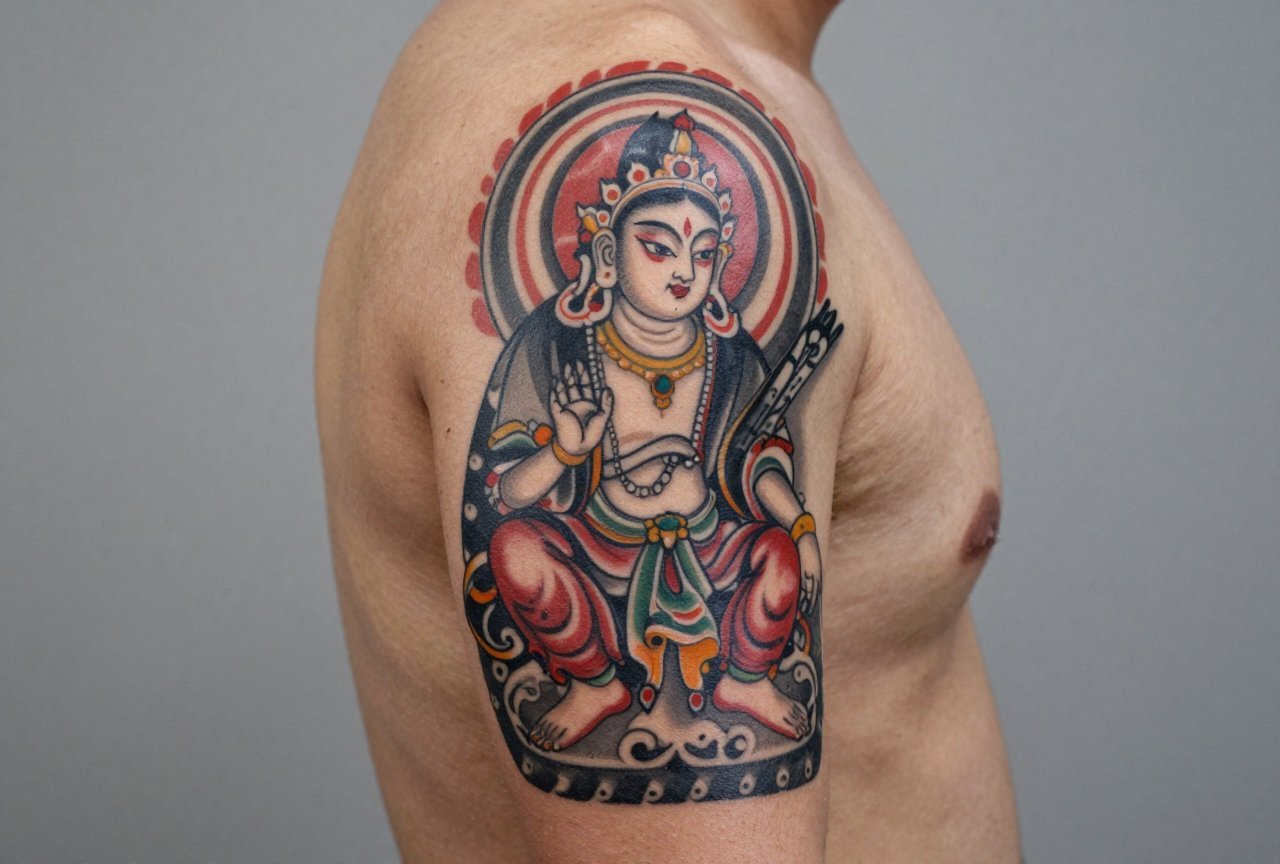
- Upper arms/shoulders, traditional for sailors, great for larger Mary or angel pieces. The deltoid curve frames faces beautifully.
- Hands and fingers, praying hands on the back of a hand, small crosses on fingers. These fade fast. I warn everyone: hand tattoos need touch-ups. The skin sheds constantly, the ink settles unevenly.
- Back pieces, full back crucifixion scenes, wings spanning shoulder to shoulder. These are commitments. I’ve done three in my career, each took fifteen to twenty hours minimum.
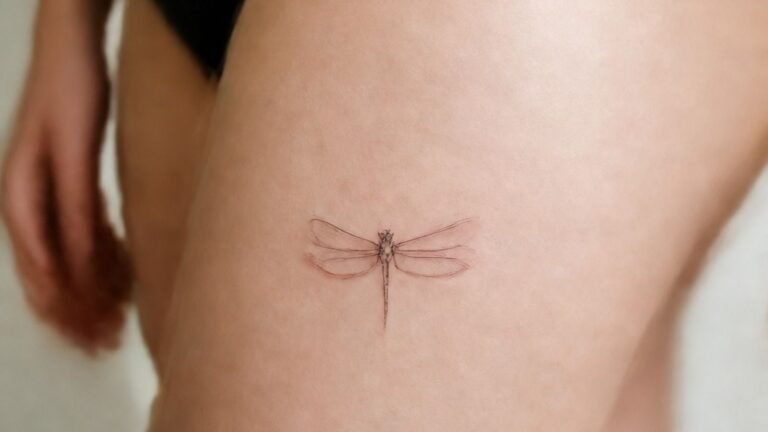
We see this a lot: clients want tiny religious tattoos behind the ear or on the ankle. Traditional style doesn’t shrink well. The lines blur together, the detail muddies. Go bigger than you think, or choose a different style.
Who It Suits
Not everyone. That’s honest shop talk. Traditional religious tattoos carry weight. If you’re deeply religious, the permanence makes sense. If you’re not, you need to be comfortable explaining your imagery for decades. I tattooed a sacred heart on a guy who just liked the aesthetic. Five years later he’s tired of people assuming he’s Catholic. That social friction is real.
The style suits people who:
- Want bold, readable work that won’t look dated
- Appreciate historical tattoo culture
- Have personal connection to the imagery, whether faith-based or familial
- Understand these designs are graphic, not photorealistic
I’ve turned away clients who wanted photorealistic Jesus faces in traditional style. Wrong tool for the job. Go to a realism artist, or trust the stylized approach.
Modern Variations
The style isn’t frozen. Contemporary artists are stretching traditional religious work in interesting directions.
Neo-Traditional Updates
Neo-traditional keeps the bold outlines but adds more dimension, more color gradients, more ornate decorative elements. I’ve seen stunning Virgin Marys with art nouveau framing, sacred hearts entwined with realistic roses. The religious core remains, but the execution gets more elaborate. These pieces need larger skin real estate to breathe.
Mixed Style Approaches
Some clients want traditional religious imagery with dotwork mandalas, geometric backgrounds, or watercolor splashes behind. I’m cautious about these. The traditional line work is designed to stand alone. Add too much and you lose the graphic punch. When it works, though, like a solid black traditional cross with a single geometric element, it creates something personal without diluting the style.
Choosing an Artist
This is where I get emphatic. Not every traditional tattoo artist handles religious imagery well. The iconography has specific conventions. Mary’s face has a particular structure. Sacred hearts have established proportions. An artist who does great eagles and pin-up girls might botch a praying hands piece because they don’t understand the religious visual grammar.
Look for:
- Portfolio with multiple religious pieces, not just one or two
- Clean, consistent line work in healed photos (not just fresh tattoos)
- Understanding of traditional color theory, no neon substitutes for classic red and blue
- Comfort with the subject matter. I’ve known artists who won’t tattoo religious imagery out of personal conviction. Respect that, find someone else.
Ask to see healed work from two years prior. Fresh traditional tattoos look almost identical between mediocre and excellent artists. The difference shows at year five, when the mediocre lines blow out and the excellent ones hold their structure. In my chair, I show clients my own five-year-healed photos. No secrets.
Final Thoughts
Traditional religious tattoos endure because they do something few styles manage: they communicate immediately, carry genuine emotional weight, and age with dignity. I’ve watched clients cry getting memorial crosses for parents. I’ve tattooed matching sacred hearts on couples who met at church. I’ve also done pieces where the client just loved the aesthetic and that’s fine too. The style doesn’t demand your belief, but it rewards your respect. Understand the history, choose the placement wisely, pick an artist who knows the visual language, and you’ll have something that looks as powerful at seventy as it did at twenty-five. The needle hurts either way. Might as well leave something meaningful behind.
Frequently Asked Questions
How well do traditional religious tattoos age compared to other styles?
They age exceptionally well because the bold outlines and limited color palette were literally designed for longevity. I’ve seen thirty-year-old traditional crosses that still read clearly, while detailed realism from the same era has blurred beyond recognition. The simplicity is the secret.
Do I need to be religious to get a traditional religious tattoo?
Not at all, but you should be prepared for the questions. In my experience, people will assume meaning behind a sacred heart or praying hands. If you’re getting it purely for aesthetics, that’s valid, just own your reasoning when asked.
Why do traditional religious tattoos use such specific colors?
The palette comes from historical limitations, old artists had access to certain pigments that held well in skin. Crimson, cobalt, and golden yellow became standard because they stayed visible. Modern equivalents exist, but the traditional colors still heal most predictably.
What’s the most painful placement for a traditional religious piece?
Sternum and ribs, hands down. The chest center over bone with thin skin makes even simple crosses intense. I’ve had clients sit fine for eight-hour back pieces but tap out on twenty-minute sternum work. Forearms and upper arms are much more manageable.
Related Style Guides
- Traditional Tattoo Artwork: A Working Artist s Guide
- Traditional Gypsy Tattoos: Style Guide
- Artistic Tattoo Designs That Actually Work on Skin
- Explore more