I’ve had a lot of guys in my chair over the years who want to wear their Italian roots on their sleeve, literally. Sometimes it’s a nonna’s handwriting, sometimes it’s a Roman legion sleeve that would make a history professor sweat. Italian tattooing carries this weird tension: it’s either deeply personal family stuff, or it’s loud, aggressive iconography that screams heritage pride. I’ve done both. I’ve also fixed both when someone went too cheap or too small. Here’s what actually works for men’s Italian tattoos, from someone who’s been putting this stuff into skin for over a decade.
Popular Styles
Classic Black and Grey Realism
This is what most guys actually end up with, and for good reason. Roman statues, Renaissance portraits, old-country scenes, they all read incredibly well in black and grey. The way light falls on marble, the deep shadows in a Caravaggio painting, that stuff translates beautifully to tattoo ink. I’ve done Michelangelo’s Pietà on a guy’s entire back. Took three sessions. The line work on Mary’s face had to be perfect because any wobble in the eyes kills the whole piece. Black and grey ages like a dream too. I’ve seen ten-year-old Italian heritage pieces that still look crisp because the artist understood contrast and didn’t go too light in the shadows.
Bold Traditional and Neo-Traditional
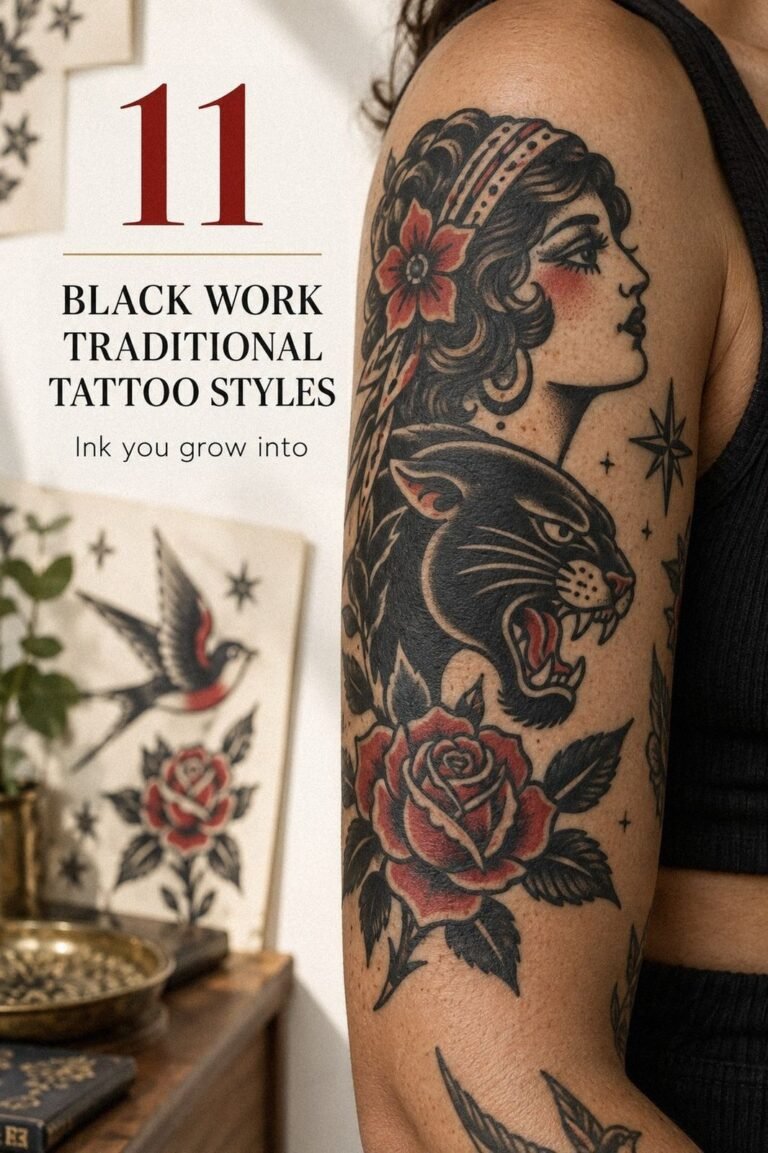
Not every Italian tattoo needs to look like a museum piece. Some of my favorite heritage work leans into American traditional or neo-traditional styling. Think thick black outlines, limited but saturated color palettes, imagery that’s readable from across a room. I’ve tattooed a lot of Italian flags wrapped around daggers, Roman helmets with banner scrolls, grapes and wine bottles in that bold sailor style. These heal fast, hold their lines, and you don’t need a massive canvas to make them work. A palm-sized traditional piece on the forearm often satisfies a guy more than an intricate half-sleeve that blurs together in five years.
Design Ideas
- Roman numerals and lettering: Birth years, family dates, Latin phrases. I’ve tattooed “Per aspera ad astra” on maybe fifteen guys. It means “through hardships to the stars.” Classic. But I always tell clients: script needs to be big enough. Tiny letters between the fingers or on the side of the foot? That’s a blob waiting to happen. Inner bicep or across the chest, minimum.
- Coat of arms and family crests: These can be incredible if sourced correctly. I had a guy bring in a hand-drawn crest his grandfather sketched before passing. We rebuilt it with proper heraldic colors, gave it weight and dimension. The alternative is grabbing some generic “Italian coat of arms” off a stock image site. Every artist I know has had to gently steer someone away from that.
- Religious iconography: Crosses, rosaries, the Madonna, hands in prayer. This runs deep in Italian culture, especially for guys with southern roots. I’ve done rosary beads wrapped around ankles, across forearms, dangling from hands. The key is making the beads look dimensional, not like a string of identical circles. Slight variation in each bead, proper shadow underneath. Otherwise it looks like a bracelet drawn by a child.
- Sicilian-specific imagery: Trinacria symbol, Mount Etna, ancient Greek influences. The Trinacria, that woman’s head with three legs bent at the knee, gets requested by Sicilian guys specifically. It’s complex, needs space, and the face has to be feminine but strong. I’ve seen it butchered by artists who didn’t understand the proportions.
- Food and wine (done right): This can be corny or it can be incredible. A wine bottle with a specific vintage label from a family vineyard? Beautiful. A generic pizza slice with “Mamma Mia” underneath? I’ve had to cover those up. The difference is specificity and execution.
Best Placements
Forearm and Calf
These are the workhorses for Italian heritage pieces. The forearm gives you length for banners, dates, vertical compositions like columns or saints. The calf offers that same vertical space but with more muscle movement, which can actually enhance certain designs, I’ve done a gladiator where the spear seems to shift when the guy flexes. Both areas heal relatively easily, though calves can swell like balloons for a few days. I warn guys about that. They never believe me until they can’t get their jeans on.
Chest and Back
For the big statements. Family crests across the chest, full-back religious scenes, Italian maps with specific regions highlighted. The chest hurts more than most guys expect, especially near the sternum and collarbone. I’ve had grown men tap out on a chest piece that was maybe two hours in. The back is more manageable pain-wise but it’s a commitment. A full Italian heritage back piece is twenty to thirty hours minimum. I’ve been working on one guy’s Roman history back piece for three years, session by session, and we’re maybe two-thirds done.
Upper Arm and Shoulder
The classic “I want to be able to cover it for work” placement. Roman helmets, crossed flags, lions with Italian colors, these all wrap nicely around the deltoid and cap out onto the upper arm. The skin here is generally good quality, not too sun-damaged if the guy’s younger, and the muscle padding makes for clean line work. I did a Veni Vidi Vici piece on a guy’s shoulder last year, the letters arcing over a Roman eagle. Simple, bold, healed perfectly.
Color Choices
Italian flag green, white, and red can look incredible or incredibly cheap depending on the shades. That bright primary red? It fades to pink faster than you’d think. I mix my reds with a touch of magenta or deep crimson for longevity. The green is tricky too, too bright and it looks like a sports team logo, too dark and it reads black in dim light. I tend toward an olive or forest tone for Italian heritage work.
Gold is another conversation entirely. Realistic gold, like on a Roman coin or crown, requires understanding how metal reflects. It’s not yellow. It’s brown shadows, cream highlights, maybe a touch of orange. I’ve watched artists try to tattoo “gold” with straight yellow and it looks like a child’s crayon drawing. Metallic effects in tattooing are about fooling the eye with contrast, not using metallic ink. That stuff doesn’t exist in any form I’d put in someone’s skin.
Most of my Italian heritage clients end up with limited color palettes. Black and grey with strategic red, or full color but restricted to three to four tones. The guys who want every color of the rainbow in their family crest usually get talked down. Restraint reads as sophistication in tattooing. Chaos reads as confusion, especially at a distance.
Tips for Choosing
- Research your actual heritage, not just “Italian”: I’ve had guys claim Sicilian roots then find out their people were from Milan. The imagery differs. Northern Italian heritage might lean toward Alpine scenes, Renaissance art, industrial history. Southern Italian or Sicilian work hits harder on ancient Rome, Greek influence, Catholic intensity, agricultural imagery. Know where you’re from before you pick the symbols.
- Size matters more than you think: That intricate Roman coin you love? It needs to be palm-sized minimum or the details vanish in five years. I tell clients to imagine their tattoo at ten years old, slightly blurred, slightly settled. Will it still read? If the answer’s no, we go bigger or simpler.
- Find an artist who does this work: Not every tattooer wants to do heritage pieces. Some specialize in Japanese, some in blackwork, some in portraits. Look at portfolios. If you don’t see Italian or European historical work in there, keep looking. I’ve turned down Roman soldier pieces because I knew another artist in our shop would execute it better. Good artists do that. Bad artists take every dollar that walks in.
- Consider the future: That “Italia” banner across your knuckles might feel right at twenty-two. At forty-two, interviewing for a job that requires shaking hands with conservative clients? I’ve covered plenty of hand tattoos. I’m not saying don’t do it, I’m saying understand what you’re choosing. Placement communicates as much as imagery.
Final Thoughts
Italian tattoos for guys run the full spectrum from subtle family dates to massive historical scenes that cover entire torsos. I’ve watched men cry in my chair getting their grandmother’s recipe in her handwriting. I’ve watched guys fall asleep through six-hour sessions on gladiator sleeves. The connection to heritage is real, and it deserves real artistry.
What I can’t stand is seeing someone walk in with a phone screenshot of a Pinterest tattoo they want copied exactly. That’s not your heritage. That’s someone else’s tattoo on your body. The best Italian work I’ve done started with a conversation, some research, maybe old family photos or documents. We build something that belongs to you specifically. That’s the whole point of wearing your history on your skin. It should be yours, not a template.
Take your time finding the right artist. Bring reference that’s meaningful, not just pretty. And trust the process, good tattoos aren’t fast, cheap, or painless. But fifteen years later, when that piece still reads clear and strong, you’ll know it was worth every minute and every dollar.
Frequently Asked Questions
Do Italian heritage tattoos have to be in color?
Not at all. Some of the strongest Italian pieces I’ve done are strictly black and grey. Roman sculpture, old photographs, architectural elements, those read beautifully without color. If you want flag colors worked in, that’s fine too, but it’s a choice, not a requirement.
How do I make sure my family crest tattoo is accurate?
Bring actual documentation if you have it. I’ve had clients bring immigration papers, old family Bibles, even hand-drawn sketches from relatives. Generic internet crests are often wrong or mixed up. A real artist will help you verify and adapt authentic imagery rather than just copying something random.
Will a detailed Roman soldier or statue tattoo age well?
Detail density is the key factor. Fine lines packed too tightly blur together over time. I always design these with enough negative space between elements, and I tell clients to expect touch-ups. A well-built Roman piece can look great for decades, but it needs proper initial sizing and ongoing care.
Is it okay to mix Italian imagery with other cultural elements?
I’ve done plenty of mixed heritage pieces, Italian and Irish, Italian and Puerto Rican, etc. The trick is finding visual harmony, not just cramming symbols together. A good artist will weave elements so they talk to each other rather than compete. Your mixed background is valid; your tattoo should reflect that integration honestly.
More Tattoo Ideas
- Brother Tattoo Ideas That Actually Mean Something
- Realistic Angel Tattoos: A Working Artist s Guide
- Joker Tattoo Meaning: The Wild Card, the Jester and Dark Humor as Armo
- Explore more