I’ve had clients fly straight from Keflavík to my chair still smelling of sulfur and glacier wind. Iceland does something to people. They come back wanting to wear that raw, volcanic feeling under their skin forever. After tattooing dozens of Nordic landscapes and listening to even more travel stories, I’ve learned what works as ink and what belongs in a photo album. The best Iceland tattoos aren’t postcards, they’re emotional shorthand for isolation, power, and the strange peace of standing somewhere that doesn’t care if you exist.
Popular Styles That Actually Work
Not every gorgeous Icelandic vista translates to skin. I’ve learned this the hard way after watching clients bring me screenshots of their iPhone panoramas. The magic happens when you distill that experience into something tattooable.
Blackwork Landscapes
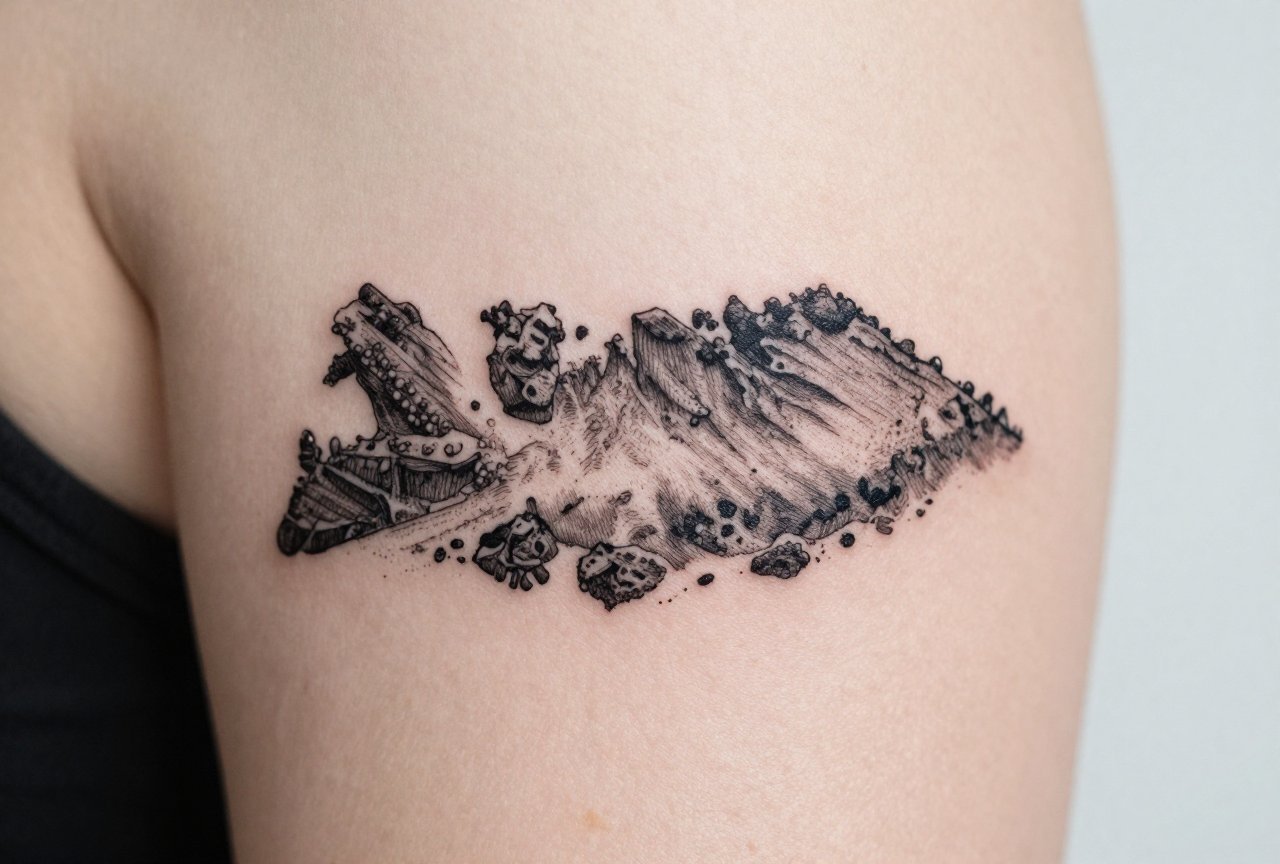
This is what I do most. Bold black silhouettes of Kirkjufell mountain, geometric waterfalls, volcanic ridges reduced to their essential angles. The trick is line weight variation, thick outlines for permanence, delicate interior lines that’ll soften beautifully over years. I’ve tattooed a minimalist Snæfellsnes peninsula on a woman’s forearm that still reads clearly five years later because we avoided fussy detail. Blackwork ages like a woodcut; it needs that graphic clarity.
Dotwork and Stippled Skies
For the Northern Lights, obviously. But here’s what I tell clients: stippled gradients look incredible fresh, and they settle into something softer, more atmospheric, after healing. Think aurora as suggestion, not literal green ribbons. I’ve done a shoulder piece where the sky was entirely dotwork fading into solid black mountains, healed, it looks like weather, like memory. The dots blur together slightly, which actually mimics how you remember the Lights, not how your camera captured them.
Norse and Runic Elements
Bindrunes, Elder Futhark, Vegvísir, the compass symbol that everyone calls “the Viking compass” even though it’s actually Icelandic folk magic from much later. I tattoo these carefully. Real runes carry weight; they shouldn’t be decorative gibberish. I’ve had clients bring me their grandfather’s name transliterated, or a personal bindrune they’ve researched. The best ones sit alongside landscape elements, runes carved into stone texture, or floating above a mountain like northern magic.
Design Ideas With Real Meaning
Shop culture truth: everyone wants something “unique” but brings the same Pinterest board. Here’s what I’ve seen translate to genuinely personal Iceland tattoos.
- Hraun (lava fields): Cracked geometric patterns, black on black, sometimes with subtle red undertones. Represents creation and destruction. I’ve done this as a sleeve filler that connects larger pieces.
- Glacier textures: Not literal icebergs, abstract blue-grey wash with white ink highlights that fade to skin tone. Risky, but stunning on the right complexion. I always warn clients: white ink yellows or disappears.
- Puffins and Arctic foxes: The fox especially, that impossible winter white. Works beautifully in fine line with strategic black accents for eyes and nose. I’ve tattooed one mid-transformation, summer grey giving way to winter white.
- Basalt columns: Reynisfjara’s hexagonal geometry makes incredible forearm bands or rib panels. The repetition tattoos cleanly and reads instantly as Iceland to anyone who’s been.
- Coordinates: Spare, numerical, sometimes combined with a small landscape element. The specific latitude of a moment, proposing at Goðafoss, surviving a storm at Landmannalaugar. I’ve done 64.9631° N on a collarbone with a tiny dotwork sun that never sets.
Best Placements for Nordic Ink
Where you put it changes how it lives. In my chair, I watch people touch their proposed placement unconsciously while describing their trip. That’s usually the right spot.
Arms and Forearms
Most common for good reason. Visible, easy to show the story, enough flat space for mountain silhouettes. The outer forearm handles long vertical compositions, waterfalls, fjord profiles. Inner bicep is softer skin, better for aurora gradients that need subtle shading. I’ve tattooed a full Icelandic coat of arms (the falcon-dragon-bull-giant quartet) on a forearm; the rectangular format fit perfectly.
Back and Chest
Your biggest canvas. Full volcanic ridge across shoulders, glacier tongue descending the spine. I did a back piece of Þingvellir’s rift valley, the actual continental divide, that used the spine as the tectonic split. Clever placements earn my respect. Chest works for symmetrical designs: twin ravens, mirrored runes, the two wolves from Norse cosmology if you’re blending Icelandic and broader Nordic.
Ribs and Sides
Painful. Worth it for the right person. The rib cage’s curve follows fjord silhouettes naturally. I’ve tattooed a single continuous line of a horse (Icelandic, obviously, with that distinctive shaggy mane) galloping along someone’s side. The movement of the body makes it alive. Healing’s tricky here, constant motion, hard to keep clean, but we see this a lot with travelers who want something private.
Color Choices: Arctic Reality
Black and grey dominate Nordic tattooing for practical reasons. They last. But Iceland has specific colors that work if you’re strategic.
- Glacier blue: Hard to get right. I mix a muted teal-grey that ages to something like ice shadow rather than bright tourist-brochure cyan. Works as accent, not field.
- Sulfur yellow and volcanic orange: Small doses. I’ve used these in geothermal pool steam, in lava glow at mountain edges. They fade warm, which suits the subject.
- Moss green: The actual color of Icelandic ground. Subtle, greyed, nothing bold. Perfect for small landscape accents that won’t look like Irish clichés.
- Blood red: Sparingly. The red of a sunset at 2 AM, or the literal iron oxide in hot springs. I’ve outlined a single raven in dark red on black, it read as black until the light hit it.
What I tell clients: pick one color, maybe two. The Arctic palette is restraint. Your glacier blue will compete with black; give it space.
Tips for Choosing Your Iceland Tattoo
After years of consultations, here’s what actually matters.
Research Beyond Instagram
The most popular “Iceland tattoo” images are copies of copies. The Kirkjufell silhouette everyone wants? It started as one photographer’s specific angle. I’ve tattooed it maybe fifteen times, but the best versions add personal elements, a specific hiking trail, the exact cloud formation from someone’s actual trip. Bring your own reference. Your fog, your light, your memory of cold.
Respect the Source
Runes aren’t decoration. Norse symbols carry cultural weight, and Icelandic magical staves (galdrastafir) specifically come from post-medieval manuscript tradition, not “Viking times.” I won’t tattoo Ægishjálmur or Vegvísir without talking through meaning with clients. Some symbols are associated with nationalist movements now. Know what you’re wearing. I’ve turned down work when someone couldn’t explain why they wanted a specific stave beyond “it looks cool.”
Plan for Aging
That delicate aurora photo you love? In ten years, it’s a greenish smear. I push clients toward bolder choices: the mountain outline, the strong rune, the graphic puffin. Fine detail in tattoos spreads; it’s physics, collagen, sun exposure. Iceland’s landscape is already about massive forces wearing things down, your tattoo should acknowledge that process, not fight it.
Consider the Artist’s Experience
Not every tattooer handles Nordic work well. Look for portfolios with healed photos, not just fresh ink. Ask about their experience with blackwork longevity, with dotwork aging. I’ve fixed too many “cheap Iceland tattoos” from vacation shops in Reykjavík. Some are decent; some are rushed tourist work. Your skin deserves better than a souvenir.
Final Thoughts
Iceland changes people. The tattoo should honor that change, not just document it. I’ve watched clients weep in my chair remembering specific moments, the silence of a lava field, the shock of a geyser, the impossible color of a hot spring. The best Iceland tattoos carry that emotional weight in simple, powerful imagery. Mountains don’t need to be photorealistic to remind you of mountains. Runes don’t need to be ancient to carry your personal meaning.
What I love about this work: every Iceland tattoo connects to a real journey, a real transformation. The island doesn’t care about your tattoo. But you will, every time you see it, every time someone asks. Make it honest. Make it bold enough to last. Make it yours, not a postcard.
I’ve got a client coming in next week for her second Iceland piece, a glacier terminus to match the volcanic ridge I did three years ago. Fire and ice, she says. The whole island in two appointments. That’s the dream.
Frequently Asked Questions
How do I make sure my Iceland tattoo won’t look like everyone else’s?
Bring your own photos and memories, not Pinterest screenshots. I always ask clients about their specific trip details, the light, the weather, a surprising moment, and build those into the design. The Kirkjufell silhouette is beautiful but common; your particular fog bank or hiking companion’s silhouette makes it singular.
Do Iceland tattoos have to be black and grey?
Not strictly, but black and grey ages most reliably. If you want color, I recommend one accent hue, glacier blue, sulfur yellow, or muted moss green, used strategically rather than as a full palette. The Arctic aesthetic is restraint, and your skin will thank you in ten years.
Is it disrespectful to get Norse runes if I’m not Scandinavian?
It depends on approach and research. I encourage clients to learn specific meanings rather than picking symbols for aesthetics. Some runes and staves carry cultural or even political associations you might not intend. A respectful consultation with an educated artist prevents problems.
What’s the most painful placement for a large Iceland landscape?
Ribs and sternum hurt most due to bone proximity and constant breathing movement. For big pieces, I often suggest outer thigh or upper back, enough flat space for composition, manageable pain, and good healing conditions. Forearms work well too but limit vertical scale.
More Tattoo Ideas
- Image Designs Tattoo Ideas
- Italian Tattoo Ideas for Guys
- Marilyn Monroe Tattoo Ideas That Actually Work
- Explore more