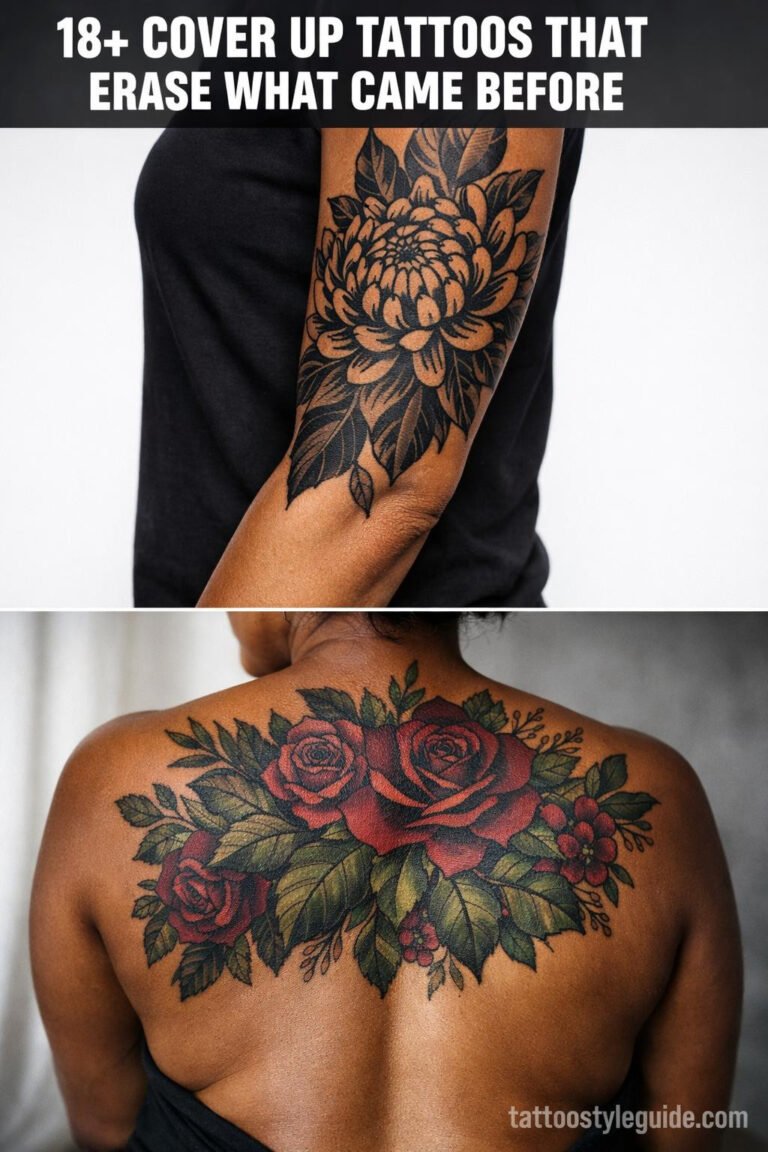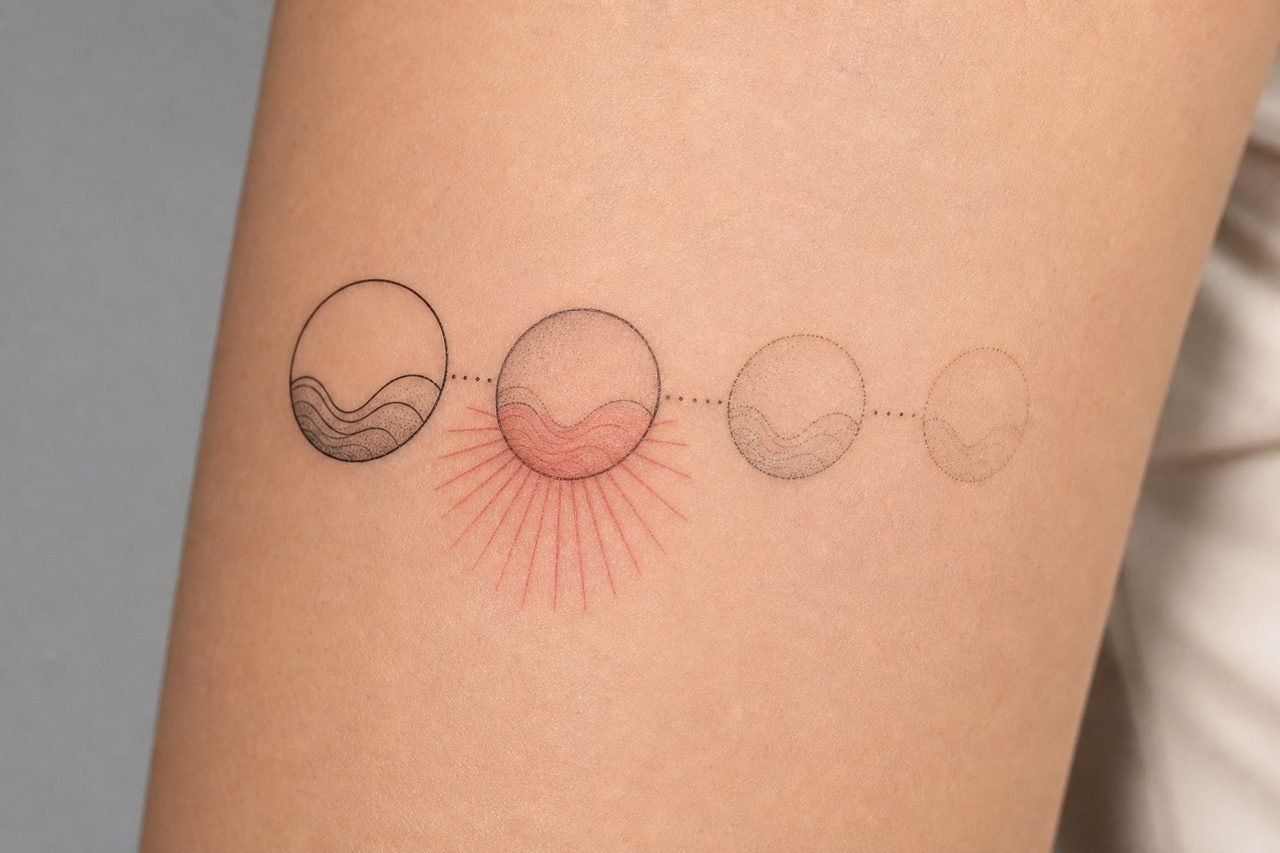
Red tattoo ink does not fade faster than other colors by nature. The pigment itself is stable, but red ink often shows fading sooner because it is frequently used for fine details, linework, and accent areas that receive less saturation than dark black or grey fills. When red is packed solid and placed well, it holds as long as any other color. The real factors are placement, sun exposure, ink quality, and how the tattoo was applied in the first place.
Why Red Sometimes Looks Faded
Thin Application and Detail Work
Red frequently carries decorative accents, small highlights, or thin linework that sits in the skin with less total pigment than a solid black tribal piece or a fully saturated color portrait. Less ink means less visual density, so even normal, gradual dispersion looks more dramatic. A single-pass red line next to a triple-packed black area will always lose the contrast battle first.
Contrast Tricks the Eye
Human vision is relative. A medium-bright red next to pitch black looks electric. That same red, six years later, still reads as red but no longer pops the same way against unchanged black. The red did not necessarily fade more; the surrounding black just stayed darker, creating the illusion of disproportionate loss. This optical effect trips up plenty of collectors who assume the red failed.
- Red used as background or fill tends to read as more stable than red used for fine lines or small dots
- Watercolor-style tattoos with scattered red splashes often appear to fade faster due to low initial density, not pigment failure
- Older red formulations, particularly certain reds from the 1990s and early 2000s, were genuinely less lightfast than modern alternatives
Placement Matters More Than Color
Where the red sits on your body determines its longevity far more than the pigment chemistry. Hands, fingers, feet, and elbows see constant friction, sun, and regeneration. A red rose on the top of the foot can look washed out in three years while an identical red rose on the outer thigh still glows at ten. This is placement biology, not color weakness.
High-Traffic Zones to Watch
Knuckles, palms, sides of fingers, and the heel of the foot shed skin rapidly and unevenly. Red in these spots often needs touch-ups regardless of how well it was applied. The inner lip and tongue, though rarely done in red alone, behave similarly due to mucosal turnover. If you want red to last with minimal maintenance, the upper arm, outer thigh, chest, and upper back are your safest bets.
Sun Exposure Is the Real Killer
Ultraviolet radiation breaks down tattoo pigment across the board, but the visual effect on lighter, brighter colors is more noticeable. A black tattoo can sun-damage significantly and still read as black. A red tattoo with equivalent damage shifts toward pink or orange, which looks like “fading” even if the total pigment loss is similar. Daily SPF on tattooed skin is not paranoia; it is the single most effective preservation tool you have.
Ink Quality and Formulation
Not all red inks are created equal. Modern professional-grade pigments use improved carriers and more stable organic or hybrid pigments than older generations. Some historically problematic reds contained mercury-based cinnabar or unstable organic compounds that degraded quickly or caused reactions. Reputable manufacturers have largely phased these out, but cheap or counterfeit inks still circulate. Your artist’s supplier matters.
- Iron oxide reds tend to be extremely stable but can shift slightly warm or brown over decades
- Naphthol and cadmium-based reds hold brightness well but require careful application to avoid overworking the skin
- UV-reactive or “glow” reds are a different category entirely and degrade on a completely separate timeline
If you are concerned about longevity, ask your artist what brand they use for red work. Established names like Eternal, Intenze, World Famous, and Dynamic have track records you can research. A hesitant or vague answer about ink sourcing is a red flag worth heeding.
Application Technique and Skin Response
Overworking vs. Proper Saturation
Red can be tricky to apply. Some artists, especially less experienced ones, pass over red areas too lightly or too many times, either leaving insufficient pigment or causing excess trauma that heals patchy. Proper saturation means the needle deposits ink at the correct depth in the dermis with efficient, confident passes. Red that is underworked heals soft and disappears fast. Red that is overworked scabs thick and drops out unevenly.
Skin Tone and Healing Variables
Red reads differently on different skin tones, and healing behavior varies too. On deeper skin tones, red can appear more subtle initially and may require slightly more saturation to achieve the same visual impact as on lighter skin. Post-inflammatory hyperpigmentation or hypopigmentation can also affect how the healed color is perceived. A skilled artist adjusts approach for the individual canvas, not just the design.
Touch-Ups and Long-Term Care
Red areas often benefit from a single touch-up around the one-year mark, especially if they were applied as detail or accent work. This is normal maintenance, not a failure. Many artists build a complimentary touch-up into their initial pricing, particularly for pieces where red plays a central role. After that, the same rules apply: moisturize, protect from sun, avoid prolonged soaking during healing, and do not pick scabs.
- Wait at least six weeks before assessing whether red needs a touch-up; early healing often looks dull
- Touch-ups on red typically require less time and cost than the original application
- Some artists prefer to re-saturate red at 8-12 months rather than overwork it initially
Key Takeaways
Red ink is not inherently prone to faster fading. The appearance of premature fading usually comes from thin application, high-contrast neighboring colors, poor placement choices, sun damage, or suboptimal technique. Solid red in a protected area, applied well with quality ink, lasts comparably to other colors. The maintenance is straightforward: choose placement wisely, verify your artist’s materials, protect healed work from UV, and budget for a potential touch-up if the red serves as fine detail. The color itself is not the problem; how and where it lives on your skin is.
Frequently Asked Questions
Should I avoid red ink if I want a tattoo that lasts forever without touch-ups?
No color lasts forever without some change, but solid red in a protected area like the upper arm or thigh can go decades looking strong. If you want zero maintenance ever, black-only work in low-friction placement is your safest bet, but red is not inherently disqualifying.
Does red ink hurt more or heal differently than black during the first two weeks?
Pain level depends on placement and your personal tolerance, not ink color. Red can sometimes appear more irritated during healing because the pigment is more visible through translucent scabs, but the actual healing process is the same. Follow your artist’s aftercare exactly.
Why did my red tattoo turn pink after a few months?
This usually means the ink was not saturated deeply enough, the area was overworked and healed patchy, or sun exposure began breaking down the pigment. A touch-up can often restore the original intensity if the skin has fully healed.
Are some people actually allergic to red tattoo ink?
Red reactions do occur more frequently than with some other colors, often linked to specific pigment compounds rather than red as a category. A reputable artist will discuss this if you have known sensitivities. Patch testing is uncommon in practice but worth asking about if you have a history of skin reactions.
Related Tattoo Guides
- Famous Tattoo Artists From Costa Rica You Should Know
- How Bad Does Laser Tattoo Removal Hurt? A Realistic Guide
- How Long After a Tattoo Can You Donate Plasma?
- Explore more