That first tattoo probably came with a cocktail of adrenaline and uncertainty. By now, the novelty has worn off, and you’re left with something more valuable: perspective. You know how your skin reacted, how the healing actually went, whether you still love looking at it. A second tattoo is where people start making smarter choices, better artists, better placements, better art. This is the one where you stop winging it.
Popular Styles for Round Two
First tattoos often play it safe: small, hidden, maybe a bit generic. The second one is where people branch out. Not because bigger is automatically better, but because you now have reference for what you actually enjoy seeing on your body long-term.
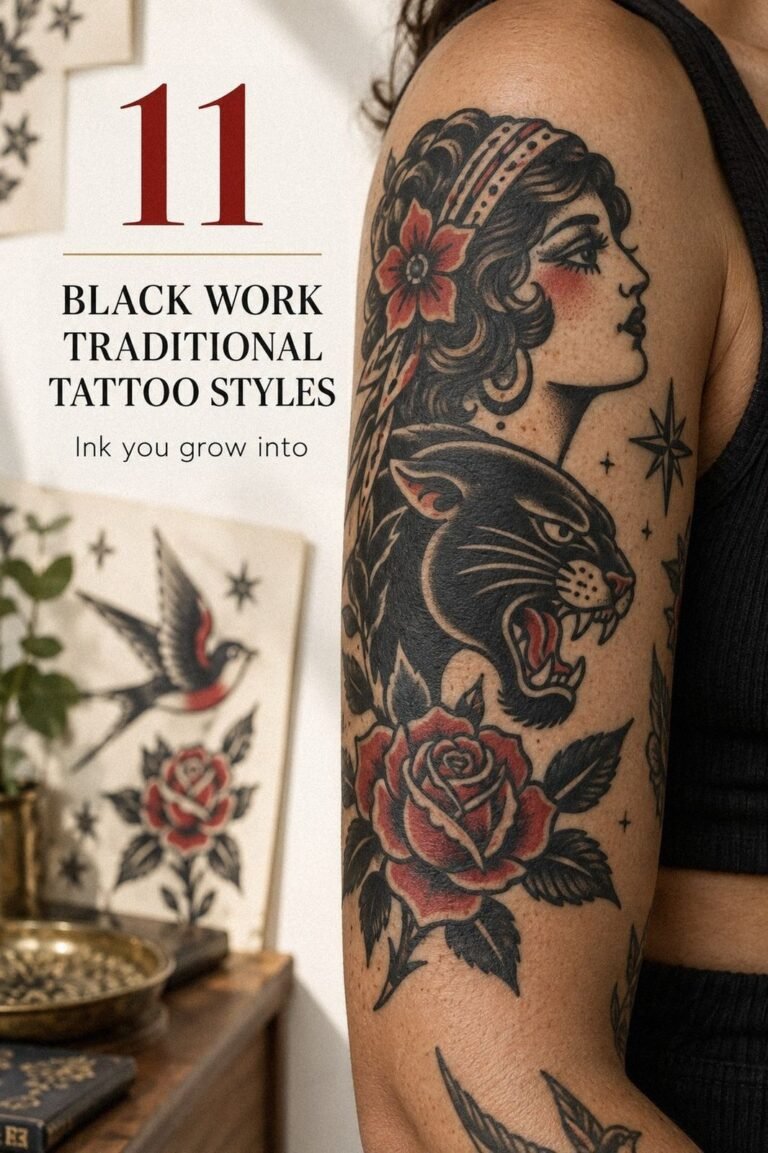
American Traditional
Bold lines, limited color palettes, imagery that’s been road-tested for decades. Traditional ages exceptionally well because the design principles account for ink spread and fading. A solid traditional piece at five years looks better than a delicate fineline piece at five months. If your first tattoo was something wispy that blurred, this style is the corrective. Eagles, daggers, roses, ships, classic motifs that hold their structure.
Black and Grey Realism
Portraits, animals, organic textures. This style demands an artist who specializes in it, not someone who “also does realism.” The second tattoo is often when people seek out specialists rather than convenient shop minimums. Realism works best at palm-sized or larger; smaller than that, and the detail collapses into mud over time.
Japanese (Irezumi)
Large-scale, narrative-driven, built to flow with the body’s contours. Not typically a second tattoo for most people, but if you’re ready to commit to a sleeve or back piece, this is the style that rewards that ambition. The imagery is codified, koi, dragons, cherry blossoms, waves, each carrying specific associations within the tradition.
Design Ideas That Make Sense
Specificity beats vagueness. “Something meaningful” is a starting point, not a design brief. The second tattoo is where you can get more personal or more technical, sometimes both.
- Complementary to the first: If your first was a small single needle piece, a bold traditional design nearby creates interesting contrast. Think of them in conversation, not matching.
- Covering different thematic ground: First tattoo was for someone else? Make this one purely for you. First was abstract? Go representational. The variety keeps your collection from feeling one-note.
- Technical showcases: Your first probably wasn’t your artist’s best work, you were nervous, maybe rushed, definitely cheaper. A second piece lets you prioritize craftsmanship: a perfect black fill, seamless color gradients, whip shading that actually whips.
- Functional cover-ups or additions: Maybe that first tattoo needs help. A second piece can integrate, extend, or distract from something you’re less happy with now.
Best Placements for Your Second
You know how your first spot healed, how it felt to sleep on, how it looked with your work clothes. Use that data.
Upper Arm / Outer Bicep
The sweet spot for second tattoos. Easy to show, easy to hide, relatively low pain, and the canvas is large enough for detail without committing to a full sleeve. Heals straightforwardly, minimal friction from clothing, easy to keep clean. This is where a lot of people start building toward a half or full sleeve intentionally.
Thigh
Massive canvas, moderate pain (inner thigh is sharper, outer is manageable), and private enough that you control visibility. Great for larger pieces you don’t want explaining at every family dinner. The skin here takes ink well and tends to age better than, say, the side of the ribs.
Forearm
High visibility, which is either a feature or a bug depending on your life. The inner forearm is softer skin that holds detail well but fades faster with sun exposure. The outer forearm is tougher, more durable, slightly more painful. Either way, this is a statement placement, make sure you’re ready for the conversation.
Back / Chest
These are commitment placements. Not ideal for a second tattoo unless you’re already certain about scale and have the budget for a specialist. The back, especially upper back/shoulder blade, is manageable pain-wise. The chest, particularly sternum and collarbone vicinity, is genuinely rough. Don’t learn that the hard way with a piece you can’t easily finish in one sitting.
Color Choices: What Holds Up
Black and grey is the safest bet for longevity. It ages gracefully, touch-ups are simpler, and every artist can execute it well. Color is where things get interesting, and risky.
Yellow and light green fade fastest. White ink turns yellowish or disappears entirely depending on your skin tone and sun habits. Red holds reasonably well but can shift toward pink or orange. Dark blue and purple are the durable colors. Teal and turquoise occupy a middle ground.
If your first tattoo was black only, adding color is a natural evolution. But add it where it makes sense, not for novelty. A traditional piece demands specific color relationships. A realism piece needs color to read correctly. A purely ornamental or geometric piece might not need color at all.
Skin tone matters practically, not aesthetically. Darker skin doesn’t show pastel or low-contrast colors well; saturated, bold pigments work better. Lighter skin shows everything but also shows fading faster. This isn’t about limitation, it’s about choosing the right tool for the surface.
Tips for Choosing Your Second Piece
You’re not a beginner anymore. Act like it.
- Wait until the first is fully healed and settled. Six months minimum, a year better. You need to see how that ink actually lived in your skin, not how it looked fresh.
- Budget for the artist, not the tattoo. Your first was probably shop minimum. Your second should be priced by the piece or hourly rate of someone whose portfolio you actually studied. Good work isn’t expensive; it’s an investment in not paying for cover-ups.
- Think in terms of future collection, not isolated pieces. Even if you only plan two tattoos, placement and style should consider negative space and overall flow. Collectors who plan sleeves from tattoo three regret the random scatterings from tattoos one and two.
- Get the design you want, not the design you can afford this month. Save. Wait. A second tattoo rushed because of budget constraints is how people end up with mediocrity adjacent to their first mediocrity.
- Consultation is non-negotiable. Walk-ins are for flash and established relationships. For a planned second piece, talk to your artist. Let them design for your specific body, not pull something from a folder.
Final Thoughts
The second tattoo is where the hobby becomes a practice. You’re choosing with experience now, not just desire. That doesn’t mean safe or boring, it means intentional. The people with the best collections aren’t the ones who got the most tattoos; they’re the ones who got the right next tattoo, every time. Your skin has limited real estate. The second piece sets the tone for if you’re building something coherent or accumulating randomness. Choose accordingly.
Frequently Asked Questions
How long should I wait between my first and second tattoo?
Minimum six months, ideally a year. You need to see how your first healed, settled, and aged before making decisions about placement, artist, and style for the next one. Fresh tattoos look very different from settled ones.
Should my second tattoo match my first in style?
Not necessarily. Contrast can be interesting, pairing a delicate first piece with bolder work creates visual range. What matters more is that each piece is well-executed on its own terms, not that they match like furniture.
Is it okay to get a second tattoo from a different artist?
Absolutely normal and often wise. Different artists specialize in different styles. Your first artist might be great for what they did, but someone else might be better for what you want now. Shop for the specific skill, not loyalty.
How do I know if I’m ready for a visible placement like forearm or neck?
If you’re asking, you’re probably not. Visible placements should feel inevitable, not daring. When you’ve genuinely stopped caring about certain people’s opinions, you’ll know. Until then, stick to coverable areas.
More Tattoo Ideas
- American Traditional Lady Head Tattoos: Complete Style Guide
- Geo Realism Tattoos: Style Guide
- Realistic Anchor Tattoos: Complete Style Guide
- Explore more