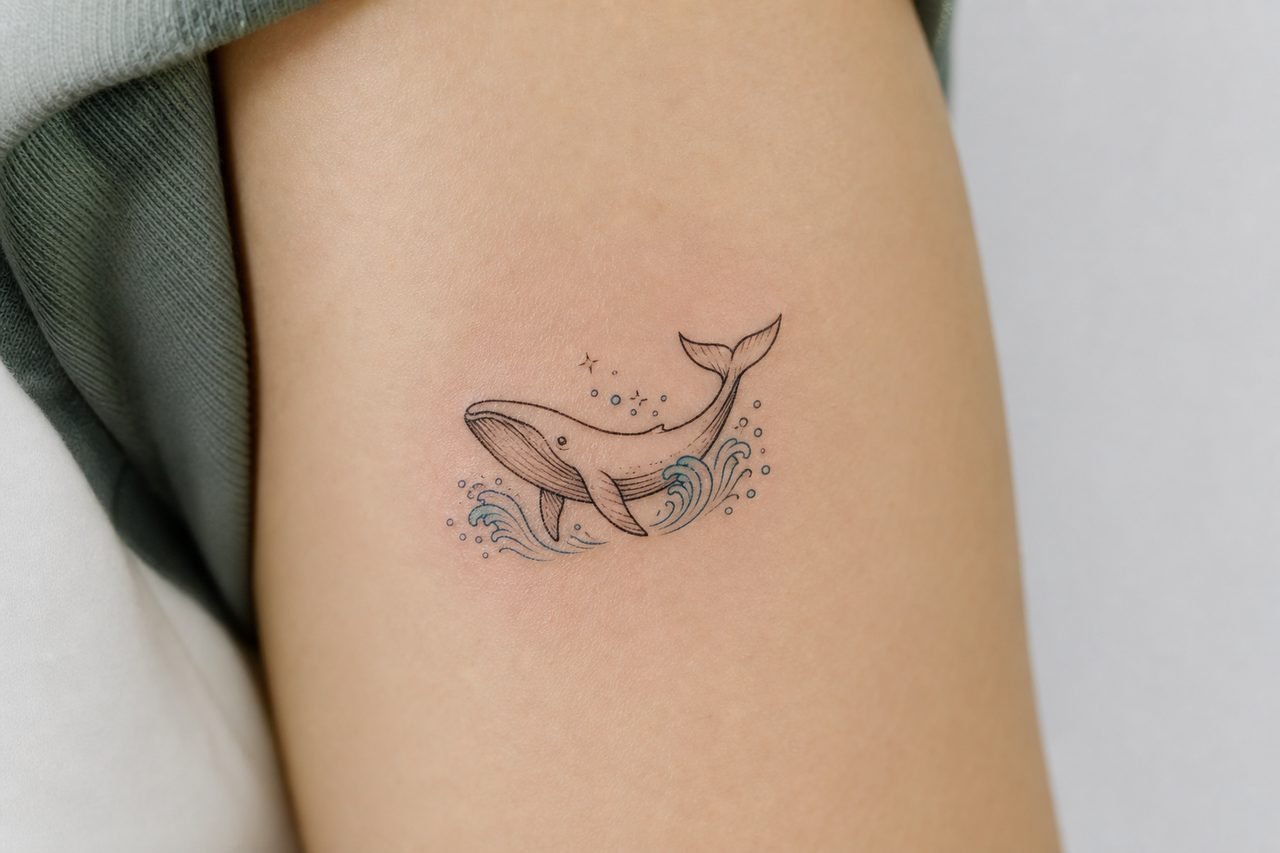
Small tattoos don’t have to mean black-only or minimalist. Color at a small scale demands precision, but the payoff is a piece that reads clean from across the room and rewards up-close inspection. The trick is knowing which palettes, subjects, and placements hold up when you’re working with limited real estate.
Popular Styles That Work Small
Not every style translates to two inches or less. Some techniques naturally compress better than others.
American Traditional
Bold outlines, limited color blocks, and high contrast make this the classic choice. Roses, swallows, and small banners stay readable for decades because the style was literally built for flash sheets. The thick black lines act as fences, keeping colors from bleeding into each other over time.
Neo-Traditional
More detail, more colors, but still anchored by strong linework. Small neo-trad pieces can handle subtle gradients and ornamental elements that would muddy a pure traditional piece. Think jeweled insects, small animal portraits, or decorative flowers with jewel tones.
Japanese-Influenced Miniatures
Small koi, cherry blossoms, or maple leaves work when the artist simplifies rather than miniaturizes. The key is preserving the graphic clarity of Japanese design, flat color areas, negative space, and deliberate asymmetry. Avoid trying to cram a full sleeve’s complexity into a palm-sized piece.
- Watercolor: High risk at small sizes. Without outlines, color migration becomes visible fast. Best reserved for artists who specialize in this specifically.
- Single-needle realism: Impressive fresh, but color realism without black anchoring tends to soften into haze within five to seven years.
- Dotwork with color accents: Black dots provide structure; scattered color dots or small color fields add pop without overwhelming the composition.
Design Ideas by Subject
Certain subjects naturally suit small color work. The best designs have clear silhouettes and don’t rely on fine detail for their impact.
Botanicals
Small flowers, poppies, peonies, wildflowers, thrive in color. Each petal can carry a different hue, and the natural gradient of real flowers gives artists a roadmap. Leaves in muted greens provide grounding. A single flower behind the ear or on the wrist reads as intentional, not shrunk-down.
Animals and Insects
Butterflies, beetles, and small birds carry built-in color patterns. A monarch’s orange and black, a blue morpho’s iridescence, or a ladybug’s red shell all translate to tattoo ink well. Fur texture doesn’t work small; scales, feathers, and carapaces do.
Other strong subjects:
- Food: Small fruits, peppers, or pastries. Their round shapes and saturated natural colors hold form.
- Objects: Vintage keys, matchbooks, small bottles. Man-made items with worn patina or labels give color somewhere to live.
- Celestial: Small planets, moons with color gradients, simple suns. The round shape is forgiving, and color can suggest atmosphere without detail.
Best Placements for Color
Color fades with sun exposure. Small pieces have less ink total, so placement matters more than with large work.
Protected Skin
Inner bicep, ribcage, upper thigh, and torso generally keep color truer longer. These areas see less direct UV, and the skin doesn’t stretch and contract as dramatically as hands or feet. A small colored piece on the inner arm can look nearly fresh for years with basic care.
Visible but Viable
Forearms, calves, and shoulders are compromises, visible, but you can cover them or use sunscreen. Color here will fade faster than protected spots, but the tradeoff is visibility. Small pieces on the outer forearm specifically tend to age well because the skin is relatively stable and the area is easy to moisturize.
Problem spots for small color:
- Hands and fingers: Constant use, sun exposure, and thick skin mean color drops out fast. Touch-ups are nearly guaranteed.
- Feet and ankles: Shoes rub, skin sheds heavily, and color often heals patchy. Blues and purples especially struggle here.
- Elbows and knees: Skin texture is rough, movement is constant, and small details blur quickly.
Color Choices and Aging
Not all colors age equally. Small tattoos have thin lines of defense, literally, so pigment behavior matters.
The Reliables
Black anchors everything. Beyond that, deep blues, forest greens, and burgundy reds tend to hold saturation longest. These darker pigments absorb more light, so they appear to fade slower than pastels. A small piece in navy, emerald, and crimson will outlast one in baby pink, mint, and pale yellow.
The Faders
White, yellow, and light peach are notorious for disappearing into skin tone within a few years. In small work, this can mean losing entire highlights or subtle transitions. If you want these colors, use them as accents in areas with black or dark color nearby, not as standalone elements.
Skin tone affects color choice significantly. On darker skin, jewel tones and saturated primaries show up better than muted or pastel shades. On very fair skin, even light colors can hold, but sun exposure becomes the bigger threat. Talk through specific pigments with your artist; experienced ones know which brands read true on which skin types.
- UV exposure: The single biggest color killer. No amount of quality ink outlasts daily unprotected sun.
- Healing quality: Small pieces heal faster, but scabbing still pulls color. Follow aftercare precisely; premature sun exposure during healing causes permanent dullness.
- Touch-up timing: Wait at least six weeks, often longer, before assessing if color needs reinforcement. Fresh tattoos always look brighter than settled ones.
Tips for Choosing Your Piece
Small and colored is a specific commitment. Here’s how to approach it without regrets.
Size Reality Check
Designs with too many elements become muddy when compressed. A good rule: if you can’t identify the subject from ten feet away, it’s too complex. Show your artist the space you want, not the design you found online. They’ll redraw for the actual dimensions.
Artist Selection
Look for healed photos, not just fresh work. Every tattoo looks bold the day it’s done. An artist who posts one-year-healed small color pieces is showing confidence in their aging. Ask specifically about their experience with the style you want, some excel at traditional but rarely do color realism, or vice versa.
Practical considerations:
- Budget for quality: Small doesn’t mean cheap. Color packing at small scale requires steadier hand control than large work. Low bids often mean rushed saturation.
- Plan for the long shape: Fingers, wrists, and other high-movement areas may need future touch-ups. Budget mentally and financially for this.
- Consider the collection: If you plan multiple tattoos, think about how this small color piece relates. A scattered random color palette across your body looks accidental; some coherence reads as collected.
Final Thoughts
Colored small tattoos reward good decisions more than big ones do, you can’t hide mistakes in sweeping coverage. Pick a style built for compression, colors that age honestly, and a placement that matches your lifestyle. The best small color work looks intentional the day you get it and stays readable because it was designed for the size it actually is, not shrunk down from something larger. Find an artist whose healed small work speaks for itself, then trust the process and protect the result.
Frequently Asked Questions
Do small colored tattoos fade faster than black ones?
Generally yes, color pigments, especially lighter ones, break down under UV exposure more visibly than black. Darker colors like navy and deep green hold much longer than pastels or white highlights.
How much should a small colored tattoo cost?
Prices vary widely by location and artist, but small color work often takes as long as larger black pieces due to precision demands. Expect to pay for the artist’s time and skill, not just square inches.
Can you do watercolor style in a small tattoo?
Watercolor without outlines is risky at small sizes. Color bleeding becomes obvious quickly, and touch-ups are difficult. Outlined subjects with watercolor-style washes behind them age more predictably.
What’s the best way to keep small color tattoos bright?
Consistent sunscreen on exposed pieces, moisturizing to prevent dry skin from dulling appearance, and avoiding soaking during healing. After that, accept that some softening over years is normal.
More Tattoo Ideas
- Goonies Tattoo Ideas for True Fans
- Small Butterfly Tattoos for Women: Ideas Placement
- Son Tattoo Designs for Dads
- Explore more