Colombian tattoo culture carries the weight of a country that has spent decades redefining itself. The imagery available to you is vast, tropical ecosystems, indigenous heritage, musical lineage, and the unmistakable yellow-blue-red of the flag. What separates a strong Colombian-themed piece from generic travel ink is specificity. A palm tree could be anywhere. A wax palm silhouetted against the Paramo de Cocora is unmistakably Colombia. This guide breaks down the visual vocabulary, technical decisions, and placement realities for anyone considering permanent Colombian iconography.
Popular Styles
Colombian subject matter adapts to several tattoo disciplines, but some styles handle the material better than others. The country’s visual identity relies heavily on saturated color, dense pattern, and natural forms, factors that should influence your style choice from the start.
Neo-Traditional and Illustrative
Neo-traditional work handles Colombian fauna exceptionally well. The Andean condor, jaguar, and pink river dolphin all carry enough natural drama to benefit from bold outlines and limited but intense color palettes. Illustrative styles, think scientific illustration meets tattoo, excel at botanical subjects: heliconia flowers, bromeliads, the national tree (the wax palm). These approaches keep imagery readable at smaller sizes and age more gracefully than hyper-realistic alternatives.
Blackwork and Geometric
Pre-Columbian motifs from the Muisca, Tairona, and Quimbaya cultures translate powerfully into blackwork. Goldwork patterns, especially the spirals and zoomorphic abstractions found in museum collections, simplify beautifully into tattooable geometry. This approach sidesteps the color-dependency of flag-based designs and holds up exceptionally well over decades. Line weight variation becomes critical here: too uniform, and the pattern flattens; varied, and the goldwork illusion holds.
Design Ideas
Specificity is your ally. The following categories offer concrete starting points that avoid the generic “Colombia souvenir” trap.
- Flag integration: The tricolor bands, yellow (double-width), blue, red, work as background fields, sleeve segments, or abstracted bars behind central imagery. Pure flag reproductions read as flat; integrating the colors into a larger composition solves this.
- Andean condor: Wings spread or perched, this national bird demands space. The feather detail requires either substantial size (thigh, back, chest) or deliberate simplification.
- Coffee culture: A coffee branch with fruit and flowers offers more visual interest than a cup. The botanical accuracy matters, real coffee cherries ripen unevenly, showing green and red simultaneously.
- Carnaval de Barranquilla: Marimonda masks, with their elongated noses and floppy ears, provide grotesque character. The pollera colora (traditional dress) patterns translate to ornamental work.
- Geographic specificity: The Caño Cristales river’s endemic Macarenia clavigera (the “liquid rainbow” plant) is identifiable to those who know. The Tatacoa Desert’s red rock formations. The Sierra Nevada’s snow peaks against jungle.
- Literary and musical reference: Gabriel García Márquez imagery, yellow butterflies, Remedios the Beauty ascending, resonates differently than direct portraiture. Vallenato accordion keys, or the silhouette of Joe Arroyo mid-performance.
Regional Symbols Worth Researching
Each Colombian department maintains distinct identity. Antioquia’s paisa culture (sombrero vueltiao weaving patterns, though technically from the Caribbean coast, have become nationally recognized). Valle del Cauca’s sugarcane fields. The Amazonian Leticia’s river dolphin mythology. A tattoo rooted in a specific region carries more narrative density than national generalization.
Best Placements
Colombian imagery tends toward the visually busy, multiple colors, layered elements, cultural references. Placement should accommodate this complexity rather than fighting it.
- Outer forearm: Ideal for flag-derived color bands or vertical compositions (wax palms, condor perched). Heals reliably, ages predictably, and offers natural viewing orientation when your arm rests at your side.
- Thigh: The canvas size suits full condor spreads, coffee branch compositions, or dense geometric patterns derived from indigenous goldwork. Less sun exposure than arm or calf, meaning color retention improves.
- Ribcage: The verticality matches Colombian geography, mountain-to-river compositions work here. Painful, but the concealment option matters for professional contexts.
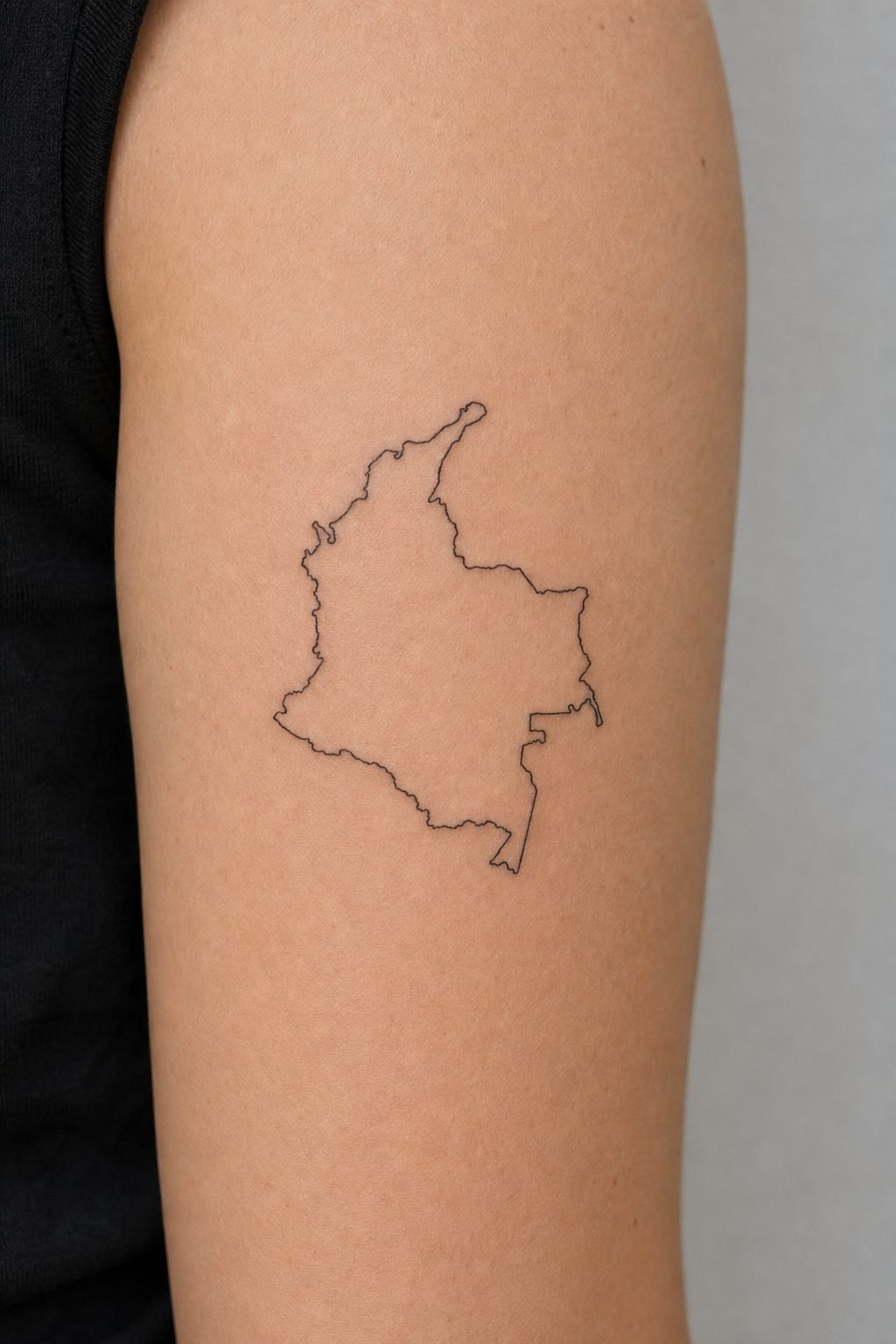
- Upper back/shoulder blade: Cartographic work (Colombia’s outline, specific departments highlighted) sits well here. The flat plane preserves geometric accuracy.
- Calf: Circular compositions, sombrero vueltiao patterns, marimonda masks, adapt to the muscle curve. Expect some distortion when flexing; design for the relaxed state.
Small, single-needle Colombian flag tattoos on wrists or behind ears exist, but the fine lines blur faster than bolder alternatives. If minimalism is your preference, consider the blackwork geometric approach to pre-Columbian patterns rather than attempting micro-color.
Color Choices
The Colombian palette is not subtle. Understanding how these pigments behave in skin helps you choose wisely.
The Tricolor Reality
Flag yellow (cadmium or golden yellow) is notoriously difficult. It requires a pale skin base to read true, and even then, it fades toward orange-brown within five to seven years. Blue (cobalt or royal) holds better but can muddy if the artist overworks the saturation. Red is the most stable of the three. Experienced artists will often shift the yellow toward a more orange-gold to ensure longevity, or replace large yellow fields with negative space (skin tone) bordered by yellow lines.
Natural Greens and Earth Tones
Colombia’s jungle and coffee-region imagery demands greens. Emerald and forest greens age reasonably well; neon or lime greens do not. For coffee plant work, the combination of deep green leaves with red-orange berry clusters and pale cream flowers offers natural contrast that doesn’t depend on the flag colors at all. Earth tones, sienna, ochre, raw umber, ground compositions and age with dignity.
Tips for Choosing
Research depth separates meaningful Colombian tattoos from tourist-adjacent mistakes.
- Verify cultural attribution: The sombrero vueltiao is Zenú indigenous craft, specifically from the departments of Córdoba and Sucre. Using it as generic “Colombian” imagery without acknowledging its origin is common but avoidable. Ask your artist to note the source if the design draws directly from indigenous pattern.
- Consider the political weight: Flag tattoos carry different connotations in Colombia than in diaspora communities. The same tricolor that reads as pride in Miami may read differently in Bogotá depending on current events and personal history. This isn’t a deterrent, it’s a reason to choose thoughtfully.
- Prioritize technical competence over thematic enthusiasm: A mediocre artist with Colombian heritage will produce worse results than a technically excellent artist who researches your references. Color saturation, line consistency, and healing instruction matter more than shared background.
- Plan for touch-ups: Bold color work, especially the yellows and bright greens common in Colombian nature imagery, requires maintenance. Budget and schedule for a refresh at five to eight years.
Final Thoughts
Colombia offers tattoo material that rewards the well-researched and exposes the lazy. The difference between a condor that looks like a turkey vulture and one that captures the species’ actual silhouette is reference quality. The difference between a generic palm and a Ceroxylon quindiuense (the wax palm, specifically) is botanical specificity. Your tattoo will live longer than most relationships; the time spent finding accurate reference, appropriate style, and technically capable execution is time that pays out daily. Colombian identity in ink works best when it’s particular, one region, one species, one song, one specific shade of mountain light, not when it tries to contain the whole country at once.
Frequently Asked Questions
Do Colombian flag tattoos fade faster than other color tattoos?
The yellow pigment commonly used for the flag’s top band is among the least stable tattoo colors. It requires pale skin to read true and typically shifts toward orange or brown within five to seven years. Blue and red hold considerably better. Many artists compensate by using a deeper gold-orange for longevity or by incorporating yellow as accent lines rather than filled fields.
Is it appropriate for non-Colombians to get tattoos of indigenous patterns like sombrero vueltiao designs?
The sombrero vueltiao originates with the Zenú people of Colombia’s Caribbean region. Using these patterns without acknowledgment of their source can flatten meaningful cultural heritage into generic decoration. If you’re drawn to this imagery, research the specific pattern’s origin and consider whether your design honors that context rather than erasing it.
How large does an Andean condor tattoo need to be for feather detail to read clearly?
At smaller than six inches in wingspan, condor feather detail begins to blur into indistinct texture. For recognizable primary feather separation and facial caruncle detail, eight to ten inches is more realistic. The outer thigh, upper back, or ribcage offer the necessary flat or gently curved surface area.
Can blackwork pre-Columbian patterns work on darker skin tones?
Blackwork derived from Muisca or Tairona goldwork patterns performs well across all skin tones because it relies on line weight and pattern density rather than color contrast. The critical factor is line boldness, thinner lines may heal into indistinctness on melanin-rich skin, so artists typically adjust toward slightly heavier weights while maintaining the pattern’s geometric precision.
More Tattoo Ideas
- Colombian Tattoo Ideas: Culture, Nature Symbolism
- Colored Small Tattoo Ideas
- Compass Tattoo Drawing Designs
- Explore more