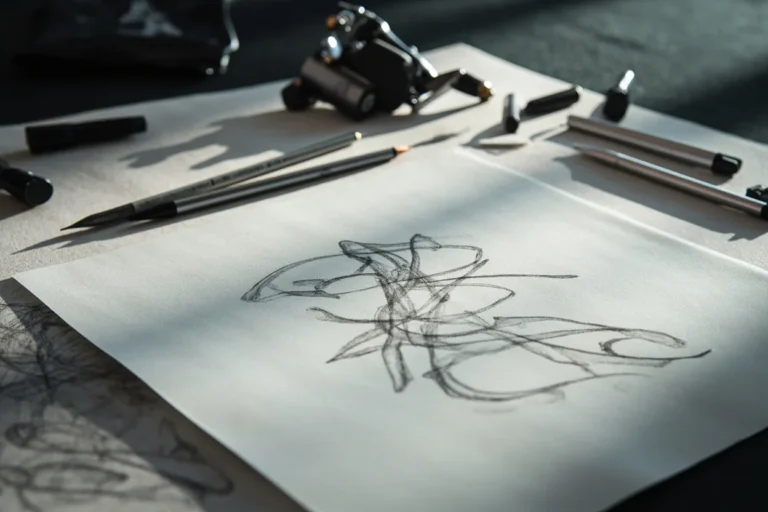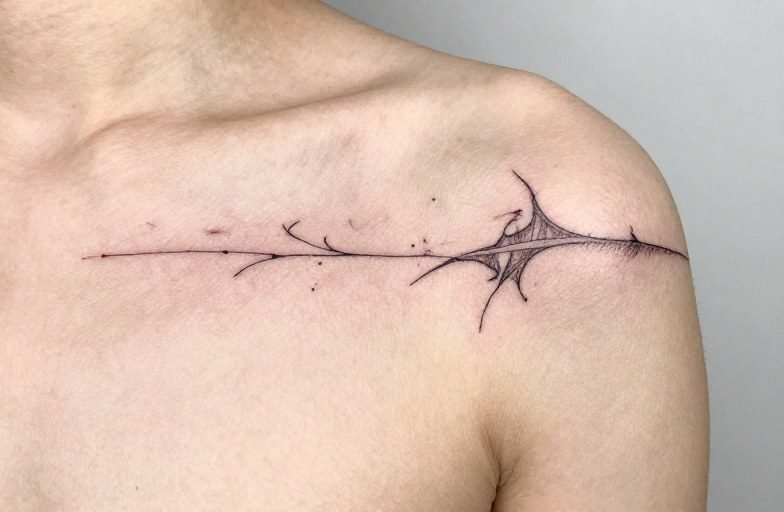
A tattoo depicting scar tissue, whether realistic keloid ridges, stylized stitch marks, or abstracted wound patterns, carries meaning rooted in survival, transformation, and the body’s own record-keeping. The image acknowledges that skin remembers what the mind sometimes tries to forget. For many, it becomes a way to reclaim narrative control over physical or emotional wounds.
Symbolism & History
Resilience and Survival Narratives
Scar imagery often functions as a visual declaration of endurance. The raised, irregular texture of keloid patterns in tattoo form references the body’s overcompensation in healing, collagen rushing to a breach, sometimes excessively. This biological reality mirrors psychological recovery: the process often leaves visible, permanent marks. People who have survived violence, serious accidents, or major surgeries sometimes choose this imagery to externalize an internal landscape of recovery.
The symbolism connects to older traditions of deliberate scarification in African, Melanesian, and some Indigenous Australian cultures, where raised keloid patterns indicated status, life transitions, or tribal belonging. Tattoo adaptations of these patterns are often linked to, though distinct from, these practices, and contemporary artists usually approach such references with explicit cultural consultation or avoid direct replication entirely.
Body Acceptance and Medical Trauma
For those with visible surgical scars, self-harm history, or skin conditions like hypertrophic scarring, a tattoo depicting scar tissue can paradoxically celebrate the same feature they’ve been taught to hide. The design might frame an actual scar, extend it into decorative pattern, or create fictional scar tissue where none exists. The meaning here is deliberately ambiguous: owning damage without necessarily disclosing its origin.
Common Variations & Styles
The visual approach dramatically shifts the tattoo’s emotional register. Realistic scar rendering requires specific technical choices that affect how the piece ages and reads from conversational distance.
- Realistic keloid simulation: Achieved through heavy whip-shading to create raised-looking shadows, sometimes with subtle white ink highlights for the “shiny” scar quality. Works best at larger scales (palm-sized minimum) where the gradient subtlety remains visible. White ink fades to yellowish or disappears entirely within 2-5 years, requiring touch-up strategy.
- Stitch/suture patterns: Clean line work in black or dark blue, often crossing a real scar or creating the illusion of one. The “stitch” line itself holds well; the “holes” (small dots or circles) tend to blur slightly over time as ink spreads in the dermis. Best executed with single-needle or tight 3-round liner configuration.
- Abstracted wound geometry: Patterned scar tissue, honeycomb burn patterns, repetitive cutting marks stylized into decorative bands, draws from visual languages of medical illustration and horror aesthetics. These designs age more predictably than realistic shading because they rely on consistent line weight and negative space.
- Biomechanical integration: Scar tissue rendered as torn synthetic skin revealing machinery beneath. Popularized through the 1980s-90s biomech movement (often linked to H.R. Giger’s influence), this variation speaks to alienation from one’s own body rather than acceptance of it.
Color Considerations
Fresh scar tissue in tattoo form uses pink, red, or purple tones to simulate inflammation. These colors fade fastest, reds often shifting to brownish or disappearing into skin tone. A scar tattoo meant to read as “healed” rather than “fresh” uses muted browns, grays, and olive tones that stabilize better. The choice between “fresh” and “healed” coloration carries its own meaning: ongoing versus resolved trauma.
Best Placements
Placement affects both visibility control and technical execution. Scar tissue tattoos require skin that holds detail well and interacts meaningfully with the body’s actual topography.
- Over actual scar tissue: Tattooing directly on or adjacent to raised scars presents technical challenges. Scarred skin has unpredictable texture and often rejects ink unevenly. Experienced artists typically test small areas first. The meaning intensifies through this literal layering, but the visual result may be less crisp than on unblemished skin.
- Forearms and calves: Flat, stable surfaces that allow for viewing at the wearer’s discretion. Long sleeves or pants conceal; short sleeves or skirts reveal. This toggle suits the scar theme’s inherent privacy negotiations.
- Ribcage and torso: Larger canvases for extensive scar-pattern work. The ribcage’s movement during breathing creates subtle distortion that can enhance or undermine the illusion of rigid scar tissue, depending on design intent.
- Hands and neck: High-visibility placements that refuse concealment. The statement here is unambiguous: this history is non-negotiable, publicly present. Line work in these locations blurs fastest due to thin skin and constant movement.
Who Chooses This Tattoo / Personal Meanings
The demographic is broader than often assumed. Medical professionals, surgeons, emergency nurses, sometimes wear stylized suture patterns referencing the intimacy of wound closure. People with autoimmune conditions causing visible skin changes (scleroderma, extensive psoriasis) use scar imagery to reframe their condition as patterned rather than pathological. Others have no personal trauma narrative at all; they’re drawn to the aesthetic’s transgressive charge or its medical-gothic visual vocabulary.
Age factors into execution and reception. Younger clients often request fresh, inflamed-looking scar simulations with brighter reds, visually arresting but technically impermanent. Older clients more frequently choose healed, muted palettes that integrate with existing skin texture and age gracefully. Neither choice is more “authentic”; they represent different relationships to time and visibility.
Gender patterns in placement differ subtly. Men more often choose scar imagery on arms and hands, integrating it with existing tattoo collections in visible, cumulative narratives. Women more frequently request torso placements that can be selectively revealed, or designs that frame rather than simulate actual surgical scars (mastectomy, C-section, hysterectomy). These are tendencies, not rules, shops report increasing crossover in recent years.
Similar Symbols
Related imagery occupies adjacent symbolic territory without identical meaning. Understanding distinctions helps clarify whether scar tissue is the right visual language for a given intent.
- Kintsugi (Japanese gold repair): Broken pottery mended with gold lacquer. Emphasizes beauty in repair rather than survival of damage. More decorative, less visceral than scar imagery. Gold ink in tattoos shifts unpredictably; some yellows hold, others fade to mustard or disappear.
- Phoenix or rebirth imagery: Transformation through destruction, but the destruction is past tense, overcome. Scar imagery keeps the wound present, ongoing, visible.
- St. Sebastian or arrow imagery: Martyrdom, endurance through repeated piercing. The wound is externally inflicted, often with religious or political framing. Scar tissue tattoos more frequently imply self-contained narrative, survival without necessarily requiring a named perpetrator.
- Skull or memento mori: Mortality awareness. Scar tissue references survival, not death; the body continuing despite breach rather than ending because of it.
Final Thoughts
Scar tissue as tattoo subject matter demands technical honesty and symbolic clarity. The image will age; white highlights fade, red “inflammation” muddies, precise line work softens. A good artist discusses this timeline explicitly rather than promising permanent illusion. The meaning, meanwhile, exists in the choice to render visible what culture prefers hidden, not to shock, but to refuse the pressure of seamless recovery. Whether the scar is real, imagined, borrowed, or abstracted, the tattoo asserts that damage and continuation can occupy the same skin simultaneously. That’s the specific, unclichéd core of this design’s persistent appeal.
Frequently Asked Questions
Will a scar tattoo look realistic on darker skin tones?
Realistic scar simulation requires careful tonal contrast rather than defaulting to light skin palettes. Skilled artists adjust highlight and shadow values to create the illusion of raised texture against the client’s specific melanin level. The technique differs but remains achievable across all skin tones.
Can you tattoo directly over raised keloid scars?h
Tattooing over keloid tissue is possible but unpredictable. Keloids contain dense, irregular collagen that may reject ink or cause further keloid growth in some individuals. Artists typically assess scar age (minimum 1-2 years old) and test small areas before committing to full coverage.
How do scar tattoos age compared to other realistic designs?
Scar tattoos relying on white ink for highlight effects fade faster than black-and-gray realism. The subtle gradients that create “raised” illusion blur sooner than bold line work. Designs with stronger outline structure and less dependence on white highlights maintain readability longer.
Is scar imagery considered appropriative of scarification cultures?
Direct replication of specific cultural scarification patterns without lineage or permission raises concerns. However, generic scar tissue imagery, surgical, accidental, or abstracted, doesn’t carry the same cultural weight. Consultation with artists from relevant traditions helps navigate specific pattern origins.
Related Tattoo Meanings
- Chucky Tattoo Meaning: Horror, Rebellion Dark Playfulness
- Jailhouse Tattoo Meanings: Symbolism, Styles, and Placement
- Nigerian Tattoos and Meanings: Symbolism, Culture Design
- Explore more