
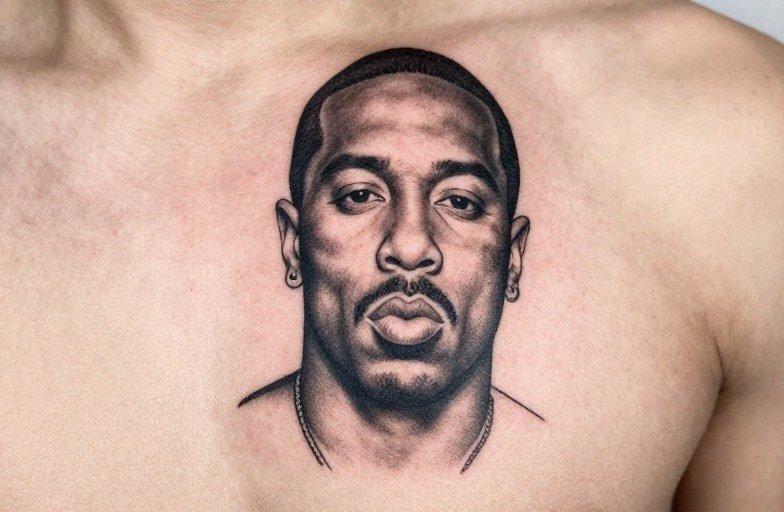
The Puff Daddy tattoo refers to a design built around a puffed-up, inflated cartoon figure or cloud-like character, often drawing from hip-hop culture’s playful nicknames and graffiti’s bubble-letter tradition. Most commonly, it depicts a stylized, swollen silhouette or a puff of smoke with attitude, sometimes literal, sometimes a nod to the rapper’s era of excess and confidence. The meaning ranges from self-made swagger to a reminder not to take yourself too seriously.
Symbolism & History
From Street Name to Skin
The nickname “Puff Daddy” itself carries weight. Sean Combs adopted it in the early 1990s, and it quickly became synonymous with bravado, reinvention, and unapologetic self-promotion. Translating that energy into tattoo form means capturing something inflated, literally or figuratively. The puffed chest, the swollen cloud, the character that takes up more space than it should. That visual exaggeration is the whole point.
Some trace the tattoo’s visual roots to East Coast graffiti culture, where bubble letters and fat, rounded characters dominated subway cars and brick walls. The “puff” aesthetic, soft edges, exaggerated proportions, bold outlines, translates naturally from spray paint to skin. Others link it to classic cartoon imagery: the big bad wolf huffing and puffing, or vintage animation characters that inflate when angry or proud.
What It Actually Represents
- Confidence bordering on arrogance: The inflated form suggests someone who fills a room, who won’t shrink themselves.
- Resilience: A puffed-up figure can take hits without collapsing, think bounce-back energy, not fragility.
- Playful self-awareness: Choosing a cartoonish, swollen design acknowledges the absurdity of ego while still celebrating it.
- Transformation: Smoke, clouds, and inflated forms all suggest states of change, not fixed identity.
Common Variations & Styles
Character-Based Designs
The classic version shows a full figure, sometimes humanoid, sometimes abstract, with exaggerated proportions. Think round torso, stubby limbs, a head that seems too small for the body. New School style dominates here: thick black outlines, saturated color gradients, exaggerated expressions. The eyes might be narrowed in confidence or wide with cartoon surprise. Teeth are often gold or diamond-studded in homage to hip-hop jewelry culture.
Smoke and Cloud Motifs
Another direction abandons the figure entirely for a stylized puff of smoke or cumulus cloud with personality. These designs often incorporate faces in the negative space, two dark spots for eyes, a smirk formed by the cloud’s natural curves. Greywash shading creates depth and movement, though solid black silhouettes with white highlights read cleaner long-term. The cloud version ages better than fine-line alternatives; blurry edges become part of the atmospheric effect rather than a flaw.
Lettering Integration
Some designs incorporate “Puff Daddy” or “P. Diddy” text directly, rendered in bubble letters or graffiti-inspired scripts. The lettering itself becomes the inflated form, each letter puffed and rounded. This works best at larger sizes where the letterforms don’t collapse into illegibility as the tattoo settles and spreads slightly over years.
Best Placements
Size matters with this design. The rounded, inflated forms need room to breathe; cramming them into tiny spaces loses the impact and can blur the soft edges into indistinguishable blobs.
- Outer bicep or upper arm: The cylindrical shape complements the puffed torso or cloud form. Enough flat surface for detail without the distortion of a highly curved area.
- Thigh: Front or side thigh offers substantial real estate for a medium-to-large piece. The muscle’s natural fullness echoes the design’s inflated quality.
- Chest, upper pectoral: A broad canvas where the figure can spread across the muscle’s natural contour. Avoid the sternum’s center if the design relies on perfect symmetry, bone proximity makes sitting still more painful and can affect line crispness.
- Calf: The gastrocnemius provides a rounded, prominent surface that suits the design’s dimensional quality. Shading here holds well, though expect some fading on the inner calf from friction against the opposite leg.
Small placements, wrists, behind the ear, fingers, generally disappoint with this subject. The detail required for expression and the soft gradients that sell the “puffed” illusion need space. Micro versions often heal into vague grey smudges within five years.
Who Chooses This Tattoo / Personal Meanings
The Hip-Hop Generation
For those who came of age during Bad Boy Records’ dominance, the Puff Daddy tattoo can be straightforward nostalgia, a permanent nod to the soundtrack of their youth. But it’s rarely pure tribute. Most collectors blend that nostalgia with personal narrative: the era when they started hustling, the confidence they had to fake until it became real, the reminder that presentation is power.
The Self-Deprecating Achiever
There’s a particular type who chooses this design ironically and earnestly simultaneously: someone who knows they’re full of themselves, who owns it, who finds the cartoon inflation funny because it’s true. The design works as a wink at their own ego, a way to celebrate ambition without the heaviness of traditional “power” imagery like lions or crowns.
Cloud and Smoke Enthusiasts
Separately, some collectors simply respond to the visual of smoke with personality, unrelated to the rapper entirely. They might be drawn to the transient nature of clouds, the way something insubstantial can still command attention. For these wearers, the “puff” is about presence without permanence, making a mark without claiming to be fixed or final.
Similar Symbols
If the Puff Daddy concept resonates but doesn’t quite fit, several related directions offer similar energy with different specifics.
- Stay Puft Marshmallow Man: The Ghostbusters icon shares the inflated, rounded form and pop-culture reference point. More explicitly playful, less tied to hip-hop identity.
- Classic graffiti throw-ups: Bubble letters without the figure, focusing purely on the inflated letterform aesthetic. Simpler, more graphic, easier to scale down.
- Smoke with no face: Abstract, atmospheric shading without the cartoon character. Mature, less literal, more open to interpretation.
- Biggie Smalls portrait or crown: For those specifically drawn to the Bad Boy era, the Notorious B.I.G. imagery offers more direct hip-hop lineage with established tattoo conventions.
- Inflated money bag or other objects: The “puffed” treatment applied to symbols of wealth rather than figures. Same visual language, different focal point.
Final Thoughts
The Puff Daddy tattoo occupies an interesting space between joke and statement, between specific cultural reference and broadly applicable attitude. Its strength is that visual inflation, taking up room, refusing to be small, doing so with enough style that the arrogance becomes charming. Its weakness is that same specificity; the reference can date, the cartoon style can feel tied to a particular moment in tattoo fashion.
Long-term, the designs that hold up best emphasize bold structure over trendy detail. Thick outlines, limited color palettes, strong silhouettes. The puff-of-smoke-with-a-face version often ages better than the full character because the atmospheric quality accommodates natural ink spread and fading. The full figure requires crisper maintenance to keep reading as intentional rather than blurred.
Choose this if you connect to the energy, confidence as performance, ego as humor, presence as policy. Avoid it if you’re seeking subtlety or timeless neutrality. The Puff Daddy tattoo is loud by design, and that’s exactly the point.
Frequently Asked Questions
Does a Puff Daddy tattoo always reference the rapper?
Not necessarily. While the name connects to Sean Combs, many designs focus on the visual concept of an inflated, confident figure or stylized smoke cloud. The hip-hop association adds context but isn’t required for the tattoo to work.
How well does the cloud or smoke version age compared to a character design?
Atmospheric smoke designs typically age better because soft edges and greywash shading naturally accommodate ink spread and slight fading. Detailed character versions with fine lines and small features tend to blur and require more touch-ups over time.
What’s the minimum size for this design to stay readable?
Plan for at least four to five inches in the largest dimension. Anything smaller loses the inflated proportions and facial features that make the design distinctive, often healing into indistinct grey patches within a few years.
Is this tattoo more common in certain tattoo styles?
New School dominates, with its bold outlines, exaggerated proportions, and bold color saturation. Some traditional and neo-traditional artists adapt the concept with heavier black and limited color, but the playful distortion is fundamentally suited to New School’s cartoon-influenced approach.
Related Tattoo Meanings
- Robin Tattoo Meaning: Hope, Renewal Personal Memory
- Pentagram Tattoo Meaning: Symbolism, Styles What to Know
- Gorilla Tattoo Meaning
- Explore more









