
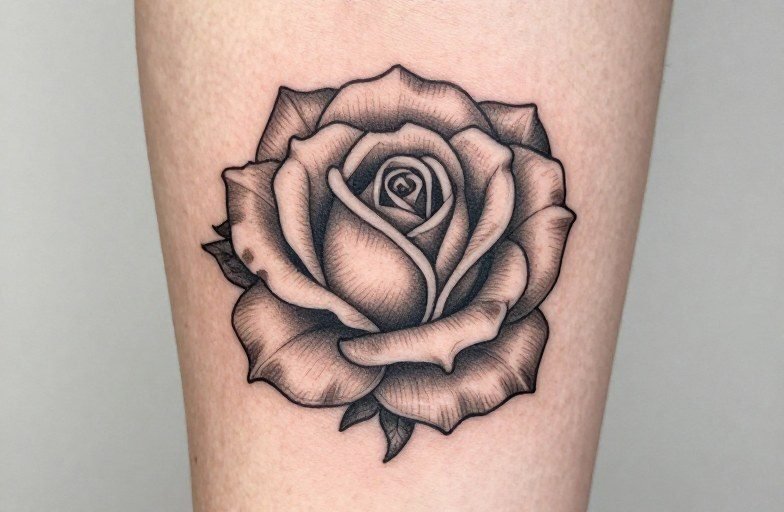
The Amber Rose face tattoo depicts the model and activist’s distinctive shaved head, strong brows, and full lips, usually rendered in photorealistic black and grey or stylized neo-traditional color. It carries layered meaning: celebration of body autonomy, rejection of conventional beauty standards, and unapologetic feminine power. For many wearers, it functions as a permanent statement of self-ownership and visible defiance of judgment.
Symbolism & History
From Public Figure to Iconic Image
Amber Rose built her public persona on refusing to apologize for her sexuality, her body, or her past. The face tattoo derived from her image inherits that stance. Unlike celebrity portraits that simply admire fame, this one often signals alignment with specific values: sex positivity, anti-slut-shaming advocacy, and working-class-to-wealth narrative. The shaved head in the tattoo is crucial, it’s the visual signature that separates her from generic pin-up imagery and roots the design in deliberate, non-conforming choice.
Feminist and Autonomy Readings
The tattoo resonates particularly with women and femmes who’ve faced public or private policing of their appearance and behavior. Rose’s 2015 SlutWalk, which the tattoo sometimes references directly through accompanying text, cemented this political reading. The face becomes a symbol of reclaimed narrative, someone who controls her own image, profits from it, and refuses shame. That said, meanings vary significantly. Some wearers connect to her Philadelphia roots and hustle narrative; others to her openness about mental health struggles and past relationships with high-profile figures.
- Body autonomy and refusal of external judgment
- Sex positivity and anti-shaming stance
- Working-class ascent and self-made identity
- Visibility as a bald woman in beauty culture
- Mental health openness and survival narrative
Common Variations & Styles
Photorealistic Black and Grey
The most technically demanding approach attempts accurate likeness through smooth greywash transitions, fine detail in brows and lip texture, and careful capture of her head shape. This style demands an artist skilled in portrait fundamentals: proper reference lighting, understanding of facial planes, and patience with subtle value shifts. At 3-5 inches minimum for legibility, these pieces need clean, untanned skin to age well. Over time, the soft grey tones blur faster than bold lines; expect touch-ups around year 3-5, especially on high-movement placements.
Neo-Traditional and Stylized Color
Some artists simplify the image into bold outlines, limited color blocks, and graphic shapes, often adding roses, banners, or decorative frames. This approach sacrifices likeness for symbolic punch and ages more gracefully. The color palette typically pulls from her actual presentation: warm skin tones, dark brown or black for hair/brows, strong red or pink lips. A stylized version allows more creative interpretation: surrounding her with actual amber-colored roses, integrating SlutWalk text, or placing her in traditional tattoo motifs like decorative mirrors or perfume bottles.
- Single needle or fine line: delicate, fast-aging, best for small scale
- Blackwork silhouette: high contrast, bold from distance, longest clarity
- With script: “Muva,” “SlutWalk,” or personal phrases added
- Combined with roses: literal play on her name, traditional tattoo motif
Best Placements
Portrait tattoos need flat, stable skin to prevent distortion. The Amber Rose face, with its strong vertical axis from shaved crown to chin, suits placements that preserve that orientation.
Thighs offer the most real estate for detail and sit on relatively stable muscle. Outer thigh shows easily; inner thigh stays more private. Both locations heal straightforwardly with loose clothing.
Upper arms, front or side deltoid, work for medium sizes visible in sleeveless wear. The cylindrical shape requires the artist to design for slight curve, not fight it. Avoid wrapping the face around the arm; it distorts features.
Calves provide flat bone-backed skin that holds detail well, though pants coverage means less visibility. Ribs and sternum are possible but painful and prone to stretching with weight fluctuation; the face’s verticality actually suits the sternum’s narrow space if scaled appropriately.
Hands, neck, and fingers are poor choices for this specific image. The detail required doesn’t survive at small scale, and the political charge of the tattoo amplifies any professional or social friction from highly visible placement.
Who Chooses This Tattoo / Personal Meanings
Demographics and Motivation
The typical wearer skews female, often Black or mixed-race, frequently with personal experience in sex work, stripping, modeling, or other appearance-based industries where they’ve faced moral judgment. The tattoo functions as solidarity marker and personal armor. Men who choose this design usually do so with explicit political framing, allyship with feminist causes, or identification with Rose’s class narrative rather than sexual persona.
Individual Interpretation Over Universal Meaning
No single meaning dominates. One wearer might emphasize Rose’s public feud with Kanye West and subsequent independence as business owner. Another focuses on her baldness as cancer-survivor solidarity or alopecia visibility. The tattoo’s power lies in its specificity, it’s not a generic “strong woman” symbol but a particular person with documented controversies, failures, and reinventions. That friction makes it more interesting than safer iconography.
- Former or current sex workers reclaiming narrative control
- Bald women or those with shaved-head history
- Philadelphia natives connecting to hometown figures
- Survivors of public shaming or relationship trauma
- Entrepreneurs identifying with her business pivot to app and fashion
Similar Symbols
Several tattoo motifs occupy adjacent symbolic territory. The Rose of No Man’s Land, traditional design honoring WWI nurses, shares the name and some feminist reclamation but lacks contemporary specificity. Frida Kahlo portraits offer similar unibrowed, unconventional-beauty symbolism with more established art-world credibility. Josephine Baker portraits connect similar era-crossing, sexuality-policing, and Black-woman-iconography threads.
For pure visual approach, Tupac or Biggie portraits parallel the hip-hop-culture, working-class-hero narrative but with masculine coding. Aaliyah portraits share the beauty-industry-complexity and tragic-loss layers. None quite replicate the sex-work-specific, anti-shame politics that Rose’s image carries.
Traditional pin-up faces offer visual similarity without the political weight; they read as retro aesthetic rather than contemporary statement. The Amber Rose tattoo’s specificity is its point, wearers want the controversy and contradiction built in, not sanitized.
Final Thoughts
The Amber Rose face tattoo works best when chosen with full awareness of its baggage: the controversies, the ex-partners, the SlutWalk criticisms, the reality-TV arc. It’s not a neutral beautiful-woman portrait. The technical execution demands either significant greywash skill or deliberate stylization that sacrifices likeness for longevity. Placement should respect the image’s need for flat, stable skin and reasonable scale. Most importantly, the wearer should know why this specific face, not a safer icon, belongs on their body, because that specificity is exactly what the tattoo communicates to those who recognize it.
Frequently Asked Questions
Does the Amber Rose tattoo always have political meaning?
Not always. Some wearers simply admire her business trajectory or find her visually striking. However, the image carries political weight whether intended or not, given her public advocacy. Most people who recognize it will read sex-positive or feminist symbolism into the design.
How big should this tattoo be for the face to read clearly?
Minimum three inches in the longest dimension, preferably four to five. Her shaved head and strong features help recognition at smaller sizes than some portraits, but lip detail and brow structure still need room. Smaller than three inches, the face becomes generic.
Will a photorealistic version age well?
Black and grey portraits soften significantly over five to ten years. The smooth gradients that create likeness are most vulnerable to blur and sun damage. Stylized versions with bolder lines and simplified shapes hold their graphic impact much longer with less maintenance.
Is this tattoo more common in certain regions or communities?
It appears most frequently in major cities with strong hip-hop and Black tattoo culture, Atlanta, Los Angeles, Philadelphia, Houston. The SlutWalk’s Los Angeles origins and Rose’s Philadelphia roots create geographic concentration, though social media has dispersed the image widely.
Related Tattoo Meanings
- Ant Tattoo Meaning: Hard Work, Teamwork Quiet Strength
- Squirrel Tattoo Meaning: Resourcefulness, Play Preparedness
- Fenrir Tattoo Meaning: Norse Wolf Symbolism Style Guide
- Explore more









