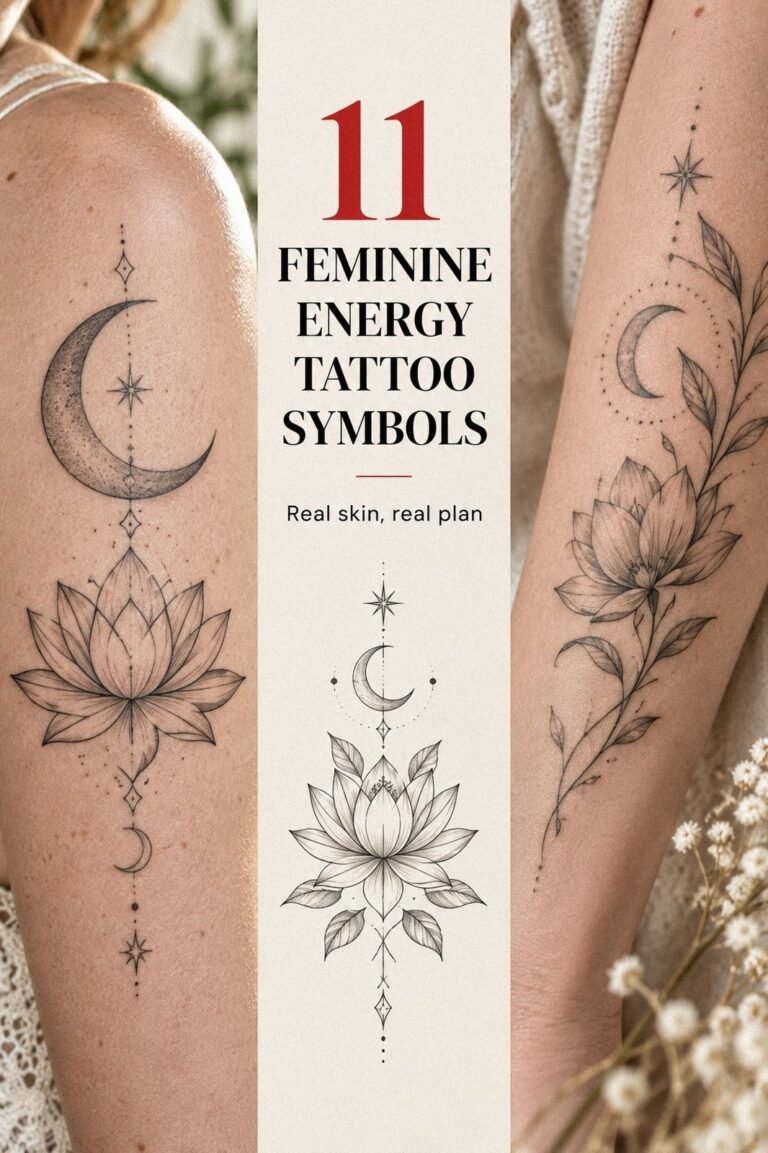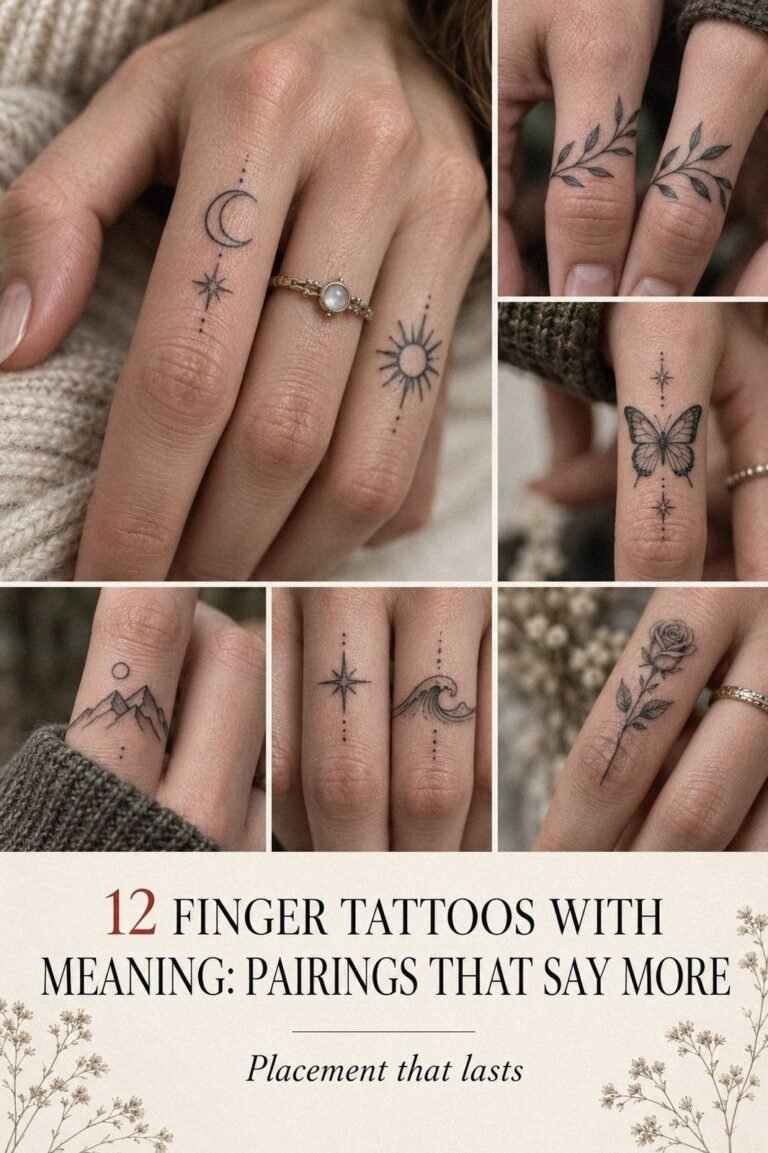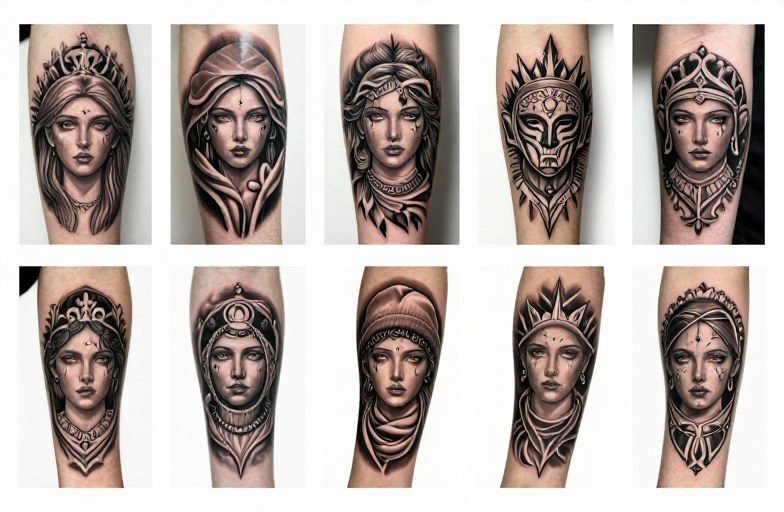
A meanings list tattoo gathers multiple symbols, words, dates, or small icons into a single composition, essentially a catalog of what matters to you, rendered in ink. Think of it as a visual index: names in a column, a string of coordinates, a row of tiny objects, or a scroll of text. The meaning isn’t hidden; it’s literally spelled out, yet the arrangement and selection reveal priorities, relationships, and private hierarchies that a single image cannot.
Who Chooses This Tattoo
People drawn to list tattoos usually have several things to say, not one. Parents with multiple children. Travelers who’ve collected coordinates. Readers with favorite quotes. The format appeals to those who find narrative in accumulation rather than in a single emblem.
Commemorative vs. Aspirational Lists
Commemorative lists look backward: dates of loss, names of the living or dead, places you’ve stood. Aspirational lists face forward, languages to learn, goals, virtues you’re pursuing. The emotional weight differs. Commemorative pieces tend toward tighter spacing, smaller text, more permanent-feeling placements. Aspirational lists often leave room, anticipating additions. Plan for this if you expect the list to grow; a sleeve filling with stamps or a rib panel with space below the last line handles expansion better than a tightly packed forearm block.
The Collector Mentality
Some collectors use list tattoos to consolidate. Instead of fifteen separate small tattoos scattered over years, they gather symbols into one framed piece. This can unify a patchwork collection or serve as a centerpiece that explains the surrounding work. The list becomes a legend for the rest of the body.
Design Tips & Pairings
Legibility is the central challenge. A list fails if it can’t be read, yet dense text or tiny icons blur over time. The solution lies in contrast, spacing, and restraint in selection.
- Typography hierarchy: Vary font weight or size to create visual rhythm. All-caps sans-serif for headers, delicate script for details, or a single consistent typeface with spacing variations. Mixing more than two fonts usually looks chaotic.
- Negative space: Lists need breathing room. Tight packing might look good fresh but ages into a gray blob. Aim for space between lines equal to or greater than line height.
- Framing devices: Scrolls, book pages, film strips, or simple ruled lines contain the list and signal “this is intentional.” A frame also protects against the tattoo looking like random scattered elements.
- Icon integration: Small symbols between text entries, tiny anchors, birds, or geometric marks, break monotony without overwhelming. Keep them simple: 3-5mm detail max for longevity.
Color vs. Black and Gray
Black and gray ages most predictably for text-heavy work. Color can code categories, red for family, blue for places, but requires maintenance. Consider: will you return to touch up color coding in five years? If not, stick to black with perhaps one accent color used sparingly.
History & Cultural Roots
The impulse to catalog is ancient, but the tattooed list has specific precedents. Sailor tattoos of the 19th and early 20th centuries often included multiple elements, ship names, ports, dates, accumulated across the body in a loose autobiographical sequence. These weren’t always formally “lists,” but the additive logic matches.
Religious traditions offer clearer parallels. Medieval Ars Moriendi and prayer books presented virtues, vices, or saints in numbered, illustrated sequences. Buddhist prayer wheels and Catholic rosary beads function as tactile lists of prayers or mysteries. The tattooed list secularizes this: a rosary without religion, a prayer wheel turned personal.
Modern list tattoos emerged more visibly in the 1990s and 2000s alongside the rise of literary tattooing, quotations, poetry lines, full passages. The list format is often linked to this movement, though it draws equally from graphic design’s influence on tattooing: clean typography, grid systems, the aesthetics of print brought to skin.
Best Placements
Lists need length. Vertical lists suit ribs, spine, outer forearm, or calf. Horizontal lists work across collarbones, upper back, or wrapping the wrist. The body’s natural lines should complement the list’s direction; fighting anatomy creates distortion.
- Ribs: Long vertical space, painful, private. Ideal for deeply personal content you don’t display constantly. Text here spreads slightly with breathing; plan for slightly larger font than you’d use on forearm.
- Forearm: Readable, visible, socially flexible. Outer forearm offers flat canvas; inner forearm curves and twists, distorting text when the arm moves.
- Spine: Dramatic vertical axis, but skin movement and proximity to bone make precise lettering challenging. Best for short lists or spaced single words.
- Upper back/shoulder blade: Broad, relatively flat, concealable. Good for framed lists or grid arrangements. Healing requires sleeping adjustments for several weeks.
- Thigh: Expansive, less painful, easily hidden or shown. Excellent for longer lists, though outer thigh skin can tighten and shift with muscle use.
Scale and Aging Considerations
Small text blurs. As a practical guideline, lowercase letters need minimum 6-7mm height for long-term readability; uppercase can go slightly smaller. Lines thinner than 0.5mm (single needle or very tight round liner) tend to spread or drop out. Shading behind text helps it pop as skin texture changes with age, but too much shading competes with legibility. Test your design: hold it at arm’s length, glance once. If you can’t read it immediately, revise.
Mythology & Folklore
Lists appear across mythic traditions as tools of fate and order. The Norse Prose Edda catalogs dwarves in a rhythmic, name-listing passage. Greek epic poetry, Homer’s catalog of ships in the Iliad, uses accumulation to convey scale and gravity. These aren’t tattoos, but they establish the list as a form suited to matters of weight: who was present, who matters, what endures.
Some trace the visual tradition of list-making to illuminated manuscripts, where marginalia and decorated capitals turned catalogs into art. The Book of Kells intertwines text and image so completely that reading becomes visual experience. Contemporary list tattoos sometimes echo this: a name becomes a small portrait, a date sprouts a tiny landscape. The boundary between list and collage blurs.
The Book of Life and Death
Multiple traditions imagine divine lists. The Egyptian Book of the Dead, though not a list in the modern sense, presents spells and declarations to be recited. Jewish tradition holds that names are inscribed in the Book of Life. Tattooed lists of names or dates can unconsciously invoke these frameworks, mortal attempts at permanence, private books of the living.
Religious & Spiritual Angles
Explicitly religious list tattoos exist: the Ten Commandments, the Seven Deadly Sins paired with virtues, the names of the Twelve Apostles. But the format itself carries spiritual resonance beyond content. Listing is an act of attention, of claiming significance through enumeration.
Buddhist practitioners sometimes tattoo yantras or sacred geometry in sequences. The Sak Yant tradition of Thailand often combines multiple elements, geometric patterns, Pali script, animal figures, into a single sacred composition that functions as a list of protections and blessings. These are consecrated, not merely decorative, and the order matters.
Secular Spirituality
Many list tattoos operate in a secular spiritual register: gratitude lists, daily affirmations, the names of people who “saved” you. The form borrows from religious precedent, litany, prayer list, roll call of saints, without doctrinal content. The act of inscribing, of carrying on skin, supplies the ritual quality. Whether this constitutes appropriation or evolution depends on specific content and context; a list of yoga poses differs from adopting consecrated Sak Yant without understanding.
The Bottom Line
A meanings list tattoo succeeds when the collection justifies its form. Random assembly looks like clutter; intentional curation reads as coherence. The technical demands are specific, legibility, spacing, aging, placement, yet manageable with planning. Choose what belongs, design for how it will look in ten years, and let the accumulation speak. The list doesn’t need to explain itself to everyone; it needs to hold together for you, permanently indexed, permanently present.
Frequently Asked Questions
How small can text be in a list tattoo and still age well?
Lowercase letters need at least 6-7mm height for long-term readability; anything smaller risks blurring into illegibility within a few years. Lines should be no thinner than 0.5mm, and generous spacing between entries prevents them from merging into a gray block.
Can I add to a list tattoo later, or should I plan the full composition now?
You can add, but planning helps. Leave intentional negative space or choose a frame that accommodates expansion. Scattered additions without forethought often look disjointed; a unified typeface and consistent spacing keep additions coherent.
Do list tattoos hurt more than other designs?
Pain depends on placement, not design. Ribs, spine, and inner bony areas hurt regardless of content. Long sessions of fine linework can feel more tedious than bold shading because the needle stays in delicate skin longer, but this varies by individual tolerance.
What’s the best way to choose what belongs on a meanings list?
Start with more than you need, then cut ruthlessly. Fifteen items rarely carry equal weight. Group by category, rank by significance, and consider whether each entry still matters when imagined five years forward. The edit is the design.
Related Tattoo Meanings
- Music Notes Tattoo Meaning: Symbols of Sound, Memory Identity
- Words Two Meanings Tattoo Meaning: Double Meaning Word Ink
- World Is Yours Tattoo Meaning: Scarface Legacy Modern Ink
- Explore more