Traditional tattooing, American Traditional, Old School, whatever name you prefer, runs on rules. Thick black outlines. Saturated, limited color palettes. Flat shading instead of smooth gradients. The style emerged from sailor culture and circus sideshows, built for visibility and longevity before “longevity” was a marketing buzzword. The coolest traditional tattoos don’t break those rules; they execute them with confidence. This guide covers what separates a strong traditional piece from a watered-down imitation, from needle behavior to where the ink sits best on your body.
Linework & Technique
The heartbeat of traditional work is the bold line. Not “kind of thick”, thick enough to hold, consistent enough to read from across a room. Artists typically run 7 to 14 round liners for outlines, sometimes pushing to 18s for major contours on large pieces. The goal isn’t delicate; it’s declarative.
Line Weight Hierarchy
Strong traditional tattoos use multiple line weights with purpose. The outer contour gets the heaviest stroke. Interior details, like the division between a snake’s scales or the folds in a banner, drop to lighter weights. This creates automatic depth without relying on shading tricks. When every line competes at the same weight, the image flattens into a coloring-book mess.
Whip Shading and Flat Fill
Shading in traditional work is almost always whip shading: the needle flicks out at the end of each stroke, creating a tapered edge. No smooth black-and-grey gradients here. Color fills sit flat and even, packed solid with mag shaders or curved mags. Skin showing through a “complete” fill is a fixable mistake, not a stylistic choice.
- Black ink: usually solid carbon-based blacks, not soft greywash series
- Color saturation: packed until the skin looks slightly overworked, then left to settle
- Stipple and texture: reserved for specific effects, never as a default shading method
Cost & Sessions
Traditional tattoos can be deceptive in pricing. The style looks simple, which tempts artists to quote low or clients to expect flash-level speed. A clean, palm-sized traditional piece with solid fill and tight lines often takes longer than a similarly sized black-and-grey portrait with soft shading.
What Drives the Price
Experienced traditional artists charge for the certainty of the result. Heavy saturation means more passes, more ink load, more time. A dense traditional sleeve requires serious endurance from both parties. Hourly rates vary widely by region and artist reputation, but expect traditional specialists to sit at the higher end, their work doesn’t hide mistakes behind softness.
Session Planning
Small pieces: often one shot, under two hours. Larger work gets mapped in sections. Because traditional relies on bold structure, artists frequently establish all outlines in early sessions, then return for color and black fill. This prevents the “floating” look of partial traditional pieces where only the outline exists. Healing between sessions matters more here than in softer styles; saturated areas need the skin fully settled before adjacent work proceeds.
Modern Variations
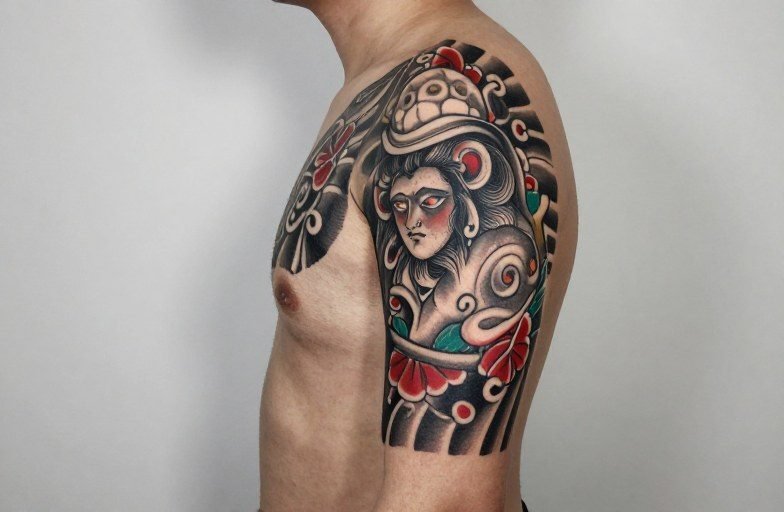
The traditional revival of the last two decades has produced legitimate sub-styles, not just lazy reinterpretations. Neo-traditional pushes subject matter into more illustrative territory, portraits of animals, women, or objects rendered with traditional line rules but expanded color theory and more complex composition. Japanese traditional fusion borrows body suit layouts and background elements (wind bars, waves) while keeping American Traditional line behavior.
Some shops specialize in “traditional with a twist”, think softer color palettes, muted teals and dusty roses replacing the classic red-yellow-green-black quartet. This isn’t automatically lesser work, but it drifts from the style’s core strengths. The coolest traditional tattoos usually commit to the classic palette or make a deliberate, complete departure, not a hesitant middle ground.
Subject Matter Evolution
Classic imagery, anchors, swallows, pin-up girls, daggers through roses, persists because it works structurally. Modern subjects (smartphones, brand logos, internet memes) rarely translate well; the style demands timeless, readable shapes. When you see a successful contemporary traditional piece, the subject usually echoes classic themes even if the specifics are new: a raven instead of an eagle, a switchblade instead of a cutlass.
Color vs Black and Grey
Traditional tattooing was built on color. The original sailors and soldiers wanted their work visible, and limited technology meant limited palettes that had to pop. Black and grey traditional is a later development, often associated with Chicano black-and-grey influence crossing over.
When Color Wins
Classic palettes, true red, sailor jerry yellow, dark green, navy blue, heavy black, age with remarkable consistency. These pigments have decades of track records. The contrast between warm and cool colors creates automatic visual interest without complex technique. For pieces that need to read clearly at small sizes or from distance, color traditional is hard to beat.
Black and Grey Traditional
This approach demands even cleaner linework because there’s no color distraction. Shading becomes the entire color story, so whip shading must be precise and consistent. The best black and grey traditional feels almost like woodblock printing: stark, graphic, immediate. It suits larger pieces where the bold negative space becomes part of the composition. On the downside, poorly executed black and grey traditional ages into muddy confusion faster than color, since there’s no hue variation to rescue readability.
- Color traditional: better for small scale, classic imagery, maximum longevity
- Black and grey traditional: demands larger size, cleaner execution, stronger composition
- Mixing both in one piece: common and effective when planned, chaotic when accidental
Best Placements
Traditional tattoos reward flat, stable skin. The style’s bold outlines and flat fills don’t flex gracefully around complex anatomy. A traditional rose on a bicep stays recognizable for decades; the same design stretched across knuckles and finger webs often distorts beyond recognition within a few years.
Proven Locations
Outer upper arms, forearms, calves, thighs, chest panels, and upper backs carry traditional work beautifully. These areas offer relatively flat planes, minimal daily movement distortion, and enough real estate for the style to breathe. The classic “half sleeve” of traditional flash, multiple unrelated pieces collected over time, works specifically because the outer arm accepts this approach.
Placement to Approach Carefully
Hands, feet, ribs, and throats present problems. Hand skin sheds and regenerates faster, blurring heavy lines. Ribs move constantly with breathing, stretching fills unpredictably. Throats have thin, tricky skin that doesn’t hold saturation evenly. None of these are impossible, but they require artists who understand the specific compromises and won’t promise traditional perfection where the canvas fights back.
How It Ages
This is where traditional tattooing earns its reputation. Done properly, it outlasts almost every other style. The heavy black outlines create permanent boundaries that keep color from migrating into muddy pools. The limited palette avoids the faded-watercolor look that plagues gradient-heavy work. Even after decades of sun and skin change, a traditional piece usually remains readable as what it was.
The 10-Year Reality
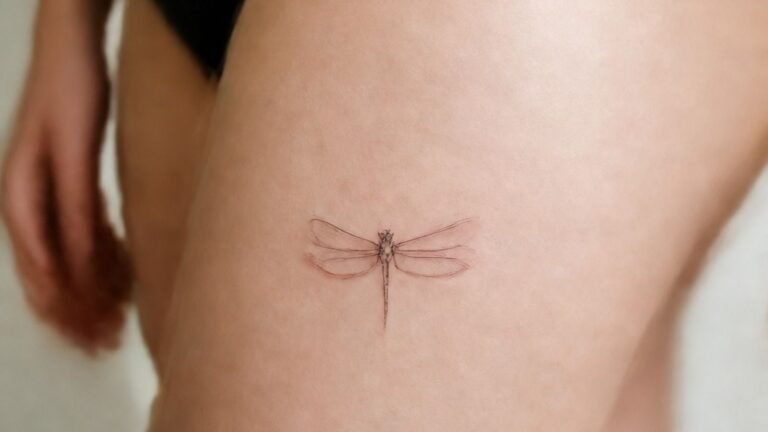
Blacks soften to charcoal. Reds settle to dusty rose. Yellows often fade most dramatically, sometimes to cream or near-invisible depending on the specific pigment and the person’s skin chemistry. But the structure, the outline, the basic shapes, persists. Compare this to fine-line work, where the entire image can become suggestion rather than statement, or watercolor styles that depend on delicate color relationships that simply don’t survive.
Maintenance and Touch-Ups
Traditional pieces need refreshment less often than most styles, but they do need it eventually. The bold lines make touch-ups straightforward: an artist can follow existing structure rather than reconstructing lost subtlety. Color refreshment every 10-15 years keeps the piece vital. Sun protection extends this timeline significantly; unprotected traditional work on frequently exposed skin (forearms, hands) ages faster than covered work.
What to Remember
The coolest traditional tattoos succeed because they respect the style’s constraints. Thick lines, saturated color, readable imagery, and appropriate placement aren’t limitations to escape, they’re the architecture that makes the work last. Choose artists who specialize in this specifically, not illustrators who “can do traditional too.” Look at healed photos, not just fresh work. The style’s simplicity is deceptive; executing it well demands technical discipline that only shows up over time. Commit to the rules, choose timeless subject matter, place it where your skin lives quietly, and you’ll have something that stays cool long after trendier styles have blurred beyond recognition.
Frequently Asked Questions
Do traditional tattoos hurt more than other styles?
The heavy saturation and multiple passes can mean more needle time on the same area, but pain varies more by placement and individual tolerance than by style. The real factor is that traditional artists often work faster and more aggressively, which some people find easier than prolonged gentle sessions.
Can I mix traditional and realism in the same tattoo?
Mixing styles within a single piece usually weakens both. Traditional needs its bold structure; realism needs its subtle gradients. Adjacent pieces in different styles on the same limb can work, but blending them into one image tends to satisfy neither approach.
How do I find a true traditional specialist?
Look for portfolios heavy in healed traditional work, not just fresh photos. Ask about their apprenticeship background, many strong traditional artists trained under specific lineages. Flash availability matters too; artists who design and sell their own flash sheets usually live in the style deeply.
Is sailor jerry flash still relevant for modern traditional tattoos?
Classic flash designs remain structurally sound and culturally significant, but direct copying without adaptation can feel like costume. The best modern traditional artists study those foundations, then create original work that honors the same principles of bold line, limited palette, and readable imagery.
Related Style Guides
- Colombian Tattoo Ideas: Culture, Nature Symbolism
- Interesting Tattoo Ideas That Actually Hold Up
- Cool Tattoo Ideas That Age Better Than Trends
- Explore more