The fastest ways to hide a tattoo without makeup are strategic clothing choices, accessories like watches or bracelets, and understanding how to use your own body positioning to your advantage. For a more permanent solution, tattoo removal or a cover-up by a skilled artist are the only routes that actually eliminate the need for daily concealment. Here are every practical option, from quick fixes you can do today to the longer-term commitments.
When to See a Professional
Sometimes hiding a tattoo isn’t enough, and the situation calls for professional intervention. Knowing when to book a consultation versus when to throw on a long sleeve can save you stress and money.
Cover-Up Artists vs. Removal Specialists
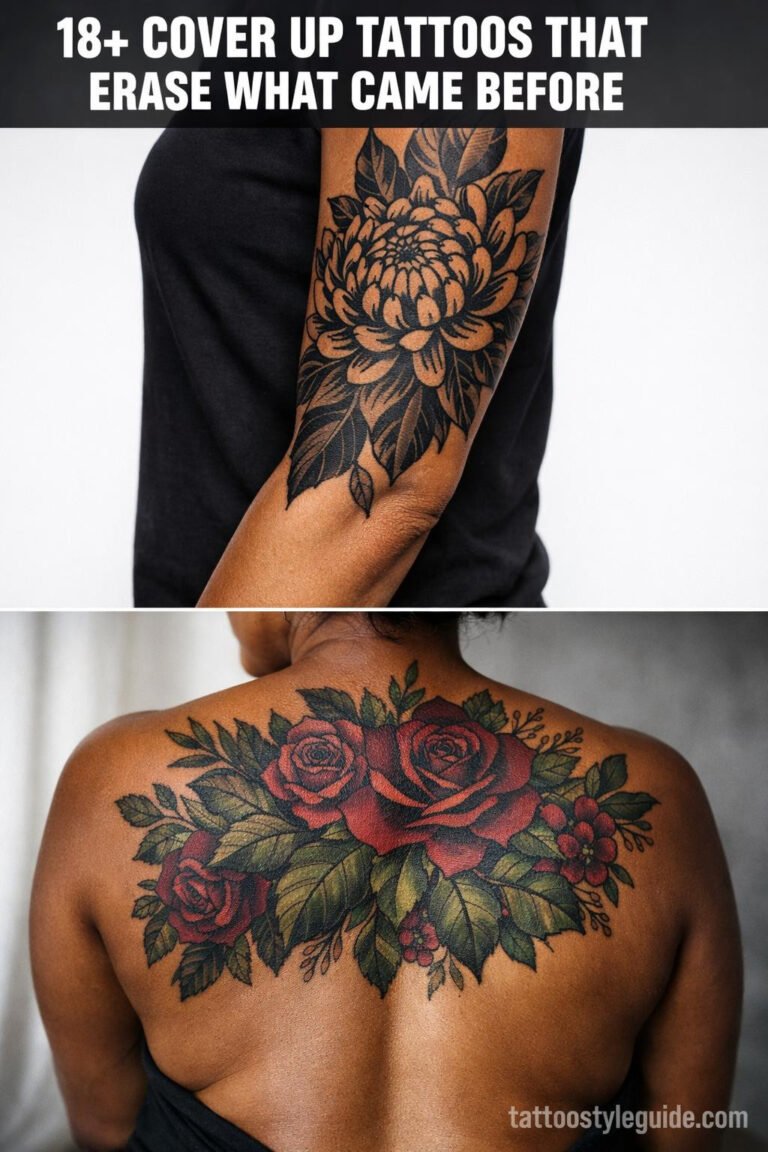
A cover-up artist reworks your existing tattoo into something new, using dark, saturated designs to mask the old ink. This works best when the original tattoo is faded, small, or poorly saturated. Black and grey tribal, heavy florals, and Japanese-inspired designs are common cover-up workhorses because they pack enough density to bury what’s underneath. See also: 14 Beautiful Mehndi Design Front Hand That Hold Up.
Laser removal breaks down ink particles so your lymphatic system can flush them out. Multiple sessions are required, usually 6 to 12 for professional tattoos, more for amateur or heavily saturated work. Complete removal is rare; most people achieve significant fading that makes a cover-up easier or the tattoo less noticeable in casual glance.
When Concealment Becomes Untenable
- The tattoo is on your face, neck, or hands and conflicts with your employment or legal situation
- The design carries associations you no longer want attached to you
- Daily hiding causes skin irritation from constant covering or adhesive use
- The tattoo is raised, scarred, or discolored in ways that draw attention regardless of concealment
Consultations are usually free. Bring clear photos, be honest about your budget and pain tolerance, and ask to see healed photos of their cover-up or removal work, not just fresh tattoos under perfect lighting. See also: Depressed Tattoo Meaning: Symbolism, Design & Aging.
The Direct Answer
Clothing and accessories are your immediate, non-makeup tools. The effectiveness depends entirely on placement, size, and your willingness to adjust your wardrobe or daily habits.
Clothing Strategies by Placement
Arms and forearms: Long sleeves are obvious, but roll-down compression sleeves (like athletic arm warmers) work in casual or athletic settings without looking like you’re hiding something. Watches with wide bands, stacked bracelets, or sweatbands cover wrist tattoos. For inner forearm pieces, position your arm so the design faces inward during meetings or photos. See also: Dogwood Flower Tattoo Meaning: Resilience, Faith & Renewal.
Hands and fingers: Rings can mask small finger tattoos. Gloves are situation-dependent, fingerless gloves draw more attention than they deflect. For formal settings, hand positioning in pockets, clasped in front, or holding objects becomes a practiced habit.
Neck and throat: High collars, turtlenecks, and scarves are standard. In professional settings, a well-fitted button-down with the top button fastened covers most throat placements. Hair length matters here, shoulder-length or longer hair obscures nape tattoos naturally.
Legs and ankles: Pants, obviously. Ankle tattoos vanish under socks and boots. For summer or athletic contexts, compression sleeves designed for calf support double as cover.
Torso and ribs: These are the easiest to hide, any shirt covers them. The challenge arises only in situations requiring partial undress: swimming, medical appointments, intimate situations.
Accessories and Positioning
Strategic body positioning is underrated. Sitting with crossed legs hides calf or ankle work. Leaning forward with elbows on a table obscures forearm tattoos from across the room. Hand-in-pocket stance becomes second nature with practice.
Bandages or athletic tape can pass as injury coverage in short-term situations, but repeated use irritates skin and raises questions. Transparent medical film (like Tegaderm) is sometimes used for fresh tattoos but looks suspicious on healed work and peels at edges.
Aftercare Essentials
Ironically, the best way to ensure a tattoo is hideable later is to heal it properly now. Poorly healed tattoos scar, blow out, or discolor in ways that make them harder to conceal and nearly impossible to remove efficiently.
Healing for Long-Term Concealment
During the initial 2-4 week healing window, keeping a tattoo covered is already necessary for protection. Use this period to observe how the design sits on your skin, how it catches light, and whether it bleeds through thin fabrics. This informs your later concealment strategy.
Scarred or raised skin catches light differently than flat, healed tattooing. Keloid-prone individuals should discuss this with their artist before placement, some areas scar more visibly, making future hiding harder regardless of technique.
Protecting Concealed Tattoos
- Constant friction from tight clothing fades ink faster, rotate concealment methods to avoid the same pressure points
- Sun exposure through fabric still degrades tattoo pigment; UV-protective clothing helps preserve saturation
- Moisture trapped under synthetic concealment fabrics can cause irritation; natural fibers breathe better for all-day coverage
A faded tattoo is often easier to hide than a fresh, saturated one, but it’s also harder to remove or cover up if you choose that route later.
Realistic Expectations
No concealment method is perfect. Understanding the limitations prevents panic when someone notices anyway.
What Clothing Can’t Fix
Large tattoos on visible areas (hands, neck, face) cannot be reliably hidden without obvious, consistent coverage that becomes part of your recognized appearance. A person who always wears gloves stands out differently than a person with visible hand tattoos, both draw attention, just different kinds.
White and pastel inks, UV-reactive tattoos, and scarification pieces behave differently under various lighting conditions. Some seemingly hidden tattoos become visible under fluorescent lights, camera flashes, or when skin flushes during exercise or emotional response.
The Social Reality
Most people are not studying your skin for hidden artwork. Effective concealment is usually about avoiding specific contexts, formal photography, professional meetings, family gatherings, rather than maintaining absolute secrecy. The mental burden of constant hiding often exceeds the practical difficulty.
Ask yourself honestly whether the energy you’re spending on concealment outweighs just addressing it directly: explaining the tattoo, pursuing removal, or accepting that it’s visible.
Cost Factors
Free concealment methods have ongoing costs in time, wardrobe limitations, and mental load. Paid solutions vary dramatically.
Immediate and Ongoing Expenses
Clothing: Building a concealment-compatible wardrobe costs whatever your standard clothing budget allows. Quality long sleeves in breathable fabrics run $30-80 per piece. Specialized compression sleeves are $15-40.
Accessories: Wide watches, stacked bracelets, scarves, these add up if purchased specifically for concealment rather than worn anyway. Budget $50-300 for a versatile set.
Professional Solutions
Cover-up tattoos: Typically larger and more complex than the original, so expect to pay more than your first tattoo cost. Small cover-ups start around $200-400; extensive work runs into thousands. Multiple sessions are common for large pieces.
Laser removal: $200-500 per session, with most tattoos requiring 6-12 sessions spaced 6-8 weeks apart. Total cost often reaches $2,000-5,000. Amateur tattoos sometimes require fewer sessions; professional work with dense black or certain colors (teal, yellow) resists removal.
Consultations for either are usually free. Get multiple opinions. A removal specialist who also sells cover-up referrals may have conflicting incentives.
What to Expect Step by Step
The process follows predictable stages, if you’re going temporary or committing to a permanent solution.
Daily Concealment Routine
- Assess the day’s requirements: which situations require hiding, for how long, under what conditions (heat, physical activity, photography)
- Select clothing based on tattoo placement; test in mirror from multiple angles, including seated and reaching positions
- Check lighting conditions where you’ll be, natural light, fluorescent, flash photography, since some tattoos show through differently
- Have backup coverage: a jacket in the car, a scarf in your bag, sleeves that can roll down
- At day’s end, inspect skin for irritation from friction or trapped moisture
Professional Route Timeline
For cover-ups: Consultation and design phase (1-4 weeks), first session (2-6 hours), healing (2-4 weeks), possible additional sessions for saturation or detail. Total timeline: 2-6 months for completion.
For removal: Consultation and patch test, first session (15-30 minutes), healing and lymphatic processing (6-8 weeks), repeat. Total timeline: 1-2 years for significant fading, longer for complete removal attempts.
During removal, the tattoo often becomes more visually prominent temporarily, frosting (white reaction to laser), blistering, darkening before lightening. Plan concealment accordingly.
Final Word
Hiding a tattoo without makeup is entirely doable for most placements, but it’s a skill that improves with honest self-assessment. Some tattoos and some lives simply don’t align long-term, and that’s valid information too. The method you choose, clothing, accessories, removal, or cover-up, should match your actual daily reality, not an idealized version of it. Be specific about where you go, who sees you, and what you can sustain. Temporary concealment buys time; use it to decide whether you need a permanent solution, or just a permanent plan.
Frequently Asked Questions
Can I swim or exercise while hiding a tattoo with clothing?
Swimming is difficult, wet fabric clings and becomes transparent. For exercise, moisture-wicking compression sleeves work better than cotton, but remove them promptly afterward to prevent irritation. Fresh tattoos should never be submerged in water regardless of concealment needs.
Do certain tattoo colors show through clothing more than others?
Black and dark saturated colors are most visible under light fabrics. White ink and pastels are less noticeable on light skin but can become prominent when skin flushes. UV-reactive inks are invisible in normal light but glow under blacklight, which clothing doesn’t block.
How do I explain always wearing long sleeves in summer?
Consistent concealment builds its own reputation. People notice patterns more than individual choices. Sun sensitivity, skin conditions, or personal preference are acceptable deflections. The more casually you treat it, the less others will press.
Can I get a tattoo in a place that’s easy to hide from the start?
Absolutely. Upper arms, upper back, thighs, and ribs are standard “hidden” placements. Discuss this explicitly with your artist, they can adjust size and orientation to maximize coverage options. Consider your typical wardrobe and professional requirements before committing to placement.
Related Tattoo Guides
- How to Make a Tattoo Gun Without a Motor: A Practical Guide
- How to Prep Skin for a Tattoo: A Complete Guide
- How to Treat Tattoo Pimples: A Practical Healing Guide
- Explore more