
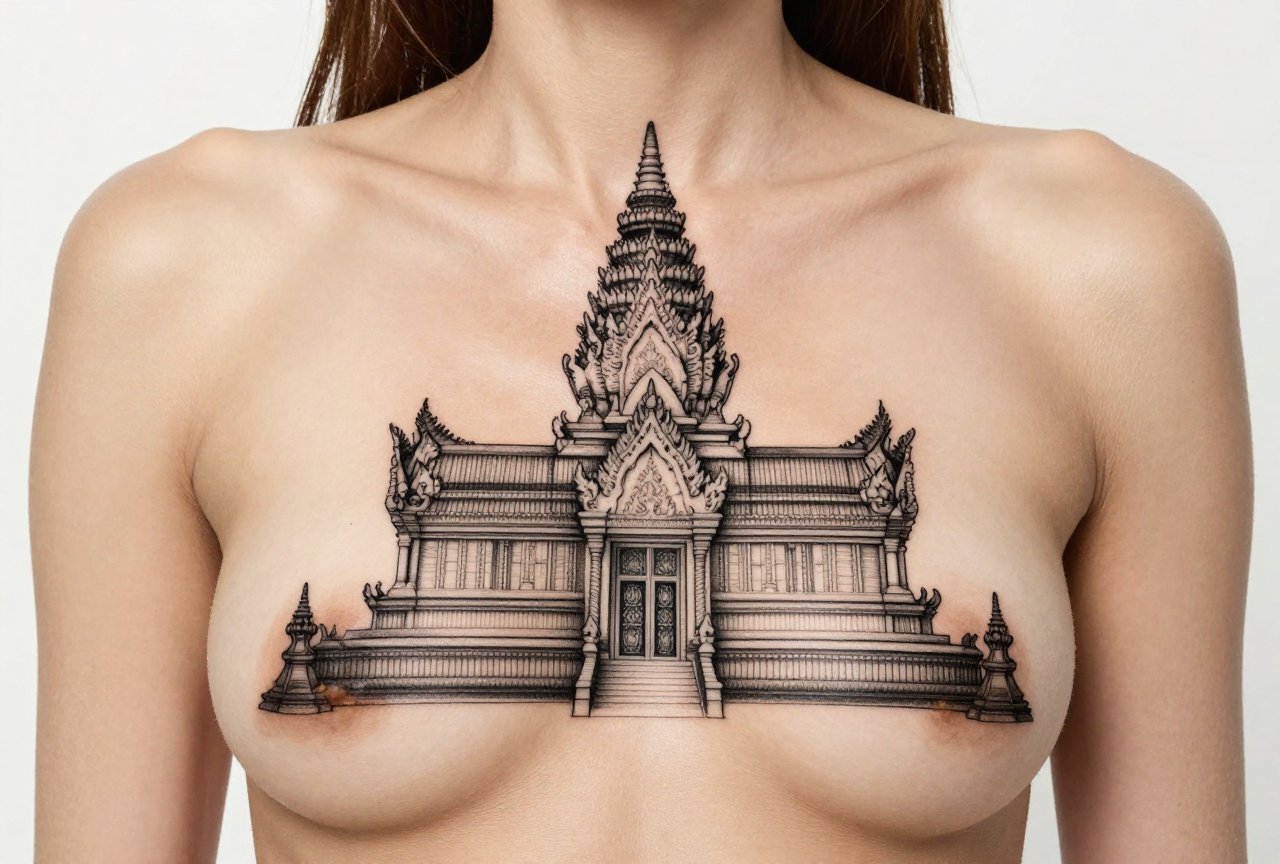
Angelina Jolie’s Cambodian tattoo is a Sak Yant, a sacred hand-tapped blessing created by Buddhist monks and Ajarn masters. The specific design she wears is typically the Yant Phutson or a variation of protective yantra, meant to shield the bearer from harm, attract good fortune, and channel spiritual energy. It’s not just decorative, it’s a living blessing that carries weight in Thai and Khmer tradition.
Symbolism & History
The Roots of Sak Yant
I’ve watched clients sit for hours in bamboo chairs across Southeast Asia while monks chant and tap these designs into skin with a long needle and rod. The practice predates modern tattooing by centuries. Sak Yant blends Buddhist, Hindu-Brahmin, and animist traditions, it’s not purely Cambodian, though Jolie received hers in that region. The Khmer empire spread these geometric spells across what we now call Thailand, Cambodia, and Laos. Each line, each spiral, each tiny character carries layered meaning that monks study for years to master.
The ink itself often contains blessed ingredients, charcoal, snake venom in some traditional recipes, herbs, even a drop of the master’s own blood in certain lineages. I’ve had clients bring back photos from temples, wide-eyed, asking if I can replicate the look. I always tell them: the magic isn’t in the visual. It’s in the ceremony, the intention, the ongoing relationship with the blessing.
What the Symbols Actually Mean
- The five lines (Hah Taew): Often the most recognizable Sak Yant. Each line carries a specific blessing, popularity, protection from evil, good fortune, success, and charisma. Jolie’s design may incorporate these or similar linear prayers.
- The tiger (Suea): Power, authority, fearlessness. I’ve tattooed tigers on fighters, bouncers, people who need to project strength. The Sak Yant version differs from decorative tiger tattoos, it’s more geometric, more spell than portrait.
- The Gao Yord (nine peaks): Represents the nine sacred peaks of Mount Meru in Buddhist cosmology. Ultimate protection. Often placed at the nape of the neck, which is where Jolie reportedly has hers.
- Khmer script: The Pali or ancient Khmer characters woven through the design are actual chants, mantras, or abbreviated sutras. They’re not random. A real Ajarn can read them.
Here’s what I tell people in my chair: wearing this without understanding it is like wearing a military medal you didn’t earn. Not illegal, but it sits weird with people who know.
Common Variations & Styles
Hand-Tapped vs. Machine
Authentic Sak Yant is hand-tapped with a khem sak, a long metal rod with a needle at the tip, struck rhythmically into the skin. The sound is distinctive: a soft, rapid tok tok tok like rain on bamboo. The pain is different too. More diffuse, more vibration than the sharp bite of a coil machine. Healing takes longer, often with more scabbing and a raised, textured quality that some masters consider part of the blessing’s power.
I’ve done machine-rendered versions for clients who want the aesthetic but can’t travel to Southeast Asia. The visual can be close. The texture never is. Line work in Sak Yant has a specific wavering quality, partly the hand technique, partly the ink formula, partly the master’s breathing and focus during the chant. Machine lines are too uniform, too controlled.
Modern Interpretations
We see this a lot in Western shops: clients bring reference photos of Jolie’s tattoo, or David Beckham’s, or some influencer’s, and want “something like that but different.” The results vary. Some artists study the tradition seriously, travel, apprentice. Others just copy the geometry without the grammar. I’ve watched beautiful pieces that technically replicate the visual language but feel hollow, and simple pieces where the wearer has done the spiritual homework and carries it with genuine respect.
Styles that emerge from this cross-cultural exchange:
- Neo-traditional Sak Yant: Bolder lines, more saturated black, sometimes color added, purists hate it, but it ages better on some skin types
- Fine-line geometric: Popular with women clients, delicate and precise, often placed on ribs or behind the ear
- Hybrid Buddhist imagery: Combining yantra geometry with lotus, Buddha eyes, or temple architecture
Best Placements
Jolie’s placement, high on the back, near the shoulder blade or nape, follows traditional rules. Sak Yant has hierarchy. Certain designs belong above the waist, some below. The back is considered noble, protected, close to the heart. I’ve tattooed similar placements on dancers who need the ink hidden for costume changes, on office workers with strict dress codes, on people who simply feel the back holds their personal armor.
Other placements I see:
- Across the shoulder blades: Classic for larger designs, spreads with movement, visible in tank tops, hidden in professional wear
- Side of the ribs: Intimate, painful, personal. The stretch and compression here means lines can warp over time; I warn clients about this
- Forearm or wrist: More visible, more vulnerable to sun and abrasion. The blessing becomes public, which changes its function
- Crown of the head: Reserved for the most sacred designs, rarely done in Western shops, requires shaving
Skin matters. Darker skin carries black ink differently, sometimes warmer, sometimes with a blue undertone. The raised texture of hand-tapped work shows more on some bodies than others. I always do test dots, talk through how it’ll sit in five years, ten, twenty.
Who Chooses This Tattoo / Personal Meanings
The Spiritual Seekers
In my chair, I’ve heard the full range. Some clients have practiced Vipassana meditation for years, want the yantra as external manifestation of internal work. Others just got back from Bali with a yoga certification and want “something meaningful.” I don’t judge, but I do ask questions. The tattoo lasts longer than the vacation high.
People drawn to this design often share traits: they’ve experienced something they can’t explain, they want protection without religion’s institutional weight, they admire Jolie’s humanitarian work and want to channel that energy. One client, a trauma surgeon, got a simplified Gao Yord after a mass casualty event. Said she needed something older than her fear.
The Cultural Tourists
This is trickier. White celebrities wearing sacred Khmer and Thai imagery has sparked real debate. I’ve had Southeast Asian clients express exhaustion at seeing their grandmother’s protection spells reduced to “exotic” back decorations. Others feel pride that the tradition spreads. There’s no clean answer. I tell clients: research the master who’d give you this authentically. Learn their name. Understand what they’d ask of you, often dietary restrictions, behavioral codes, annual renewal ceremonies. Then decide if you’re wearing the tattoo or entering a relationship.
Similar Symbols
If the full Sak Yant feels too heavy, too appropriative, or too spiritually binding, related imagery exists:
- Unalome: The spiral path to enlightenment, simpler, more universally recognized, less culturally specific
- Lotus with geometric stem: Retains the mathematical precision of yantra without the sacred binding
- Mandala: Hindu-Buddhist geometric meditation tool, more decorative flexibility, less ritual obligation
- Custom script in Pali or Sanskrit: A word or phrase that holds personal meaning, rendered in traditional calligraphy
I’ve guided clients toward these alternatives when their connection to the tradition felt thin. Better a genuine lotus than a hollow yantra. The skin knows. Or at least the person living in it does.
Final Thoughts
Angelina Jolie’s Cambodian tattoo opened a door. Thousands walked through it, some with respect, some with cameras, some with genuine spiritual need. I’ve tattooed the aftermath for fifteen years, the beautiful pieces where the wearer grew into the meaning, the cover-ups where the impulse faded, the careful reproductions by clients who spent months studying before sitting in my chair.
What does it mean? Protection. Blessing. A technology of spirit encoded in skin and geometry. But meaning, finally, is what you build through living with the mark. The monk’s chant starts the engine. You drive it.
If you’re considering this path, don’t start with the image. Start with the question: what are you actually asking for? The tattoo will answer honestly, if you’re ready or not.
Frequently Asked Questions
Do I need to be Buddhist to get a Sak Yant tattoo?
No, but you should understand what you’re receiving. Many monks will give the blessing to sincere seekers of any background. The key is respect and willingness to follow any rules the master gives you, which might include dietary restrictions or behavioral guidelines.
How much does a traditional hand-tapped Sak Yant cost?
In Thailand or Cambodia, donations are typically expected rather than fixed prices, often 1,000 to 3,000 baht for temple work, more for famous Ajarns. Western artists charging machine-rendered versions may ask $200-600 depending on size and detail.
Why does my Sak Yant look blurry after healing?
Traditional Sak Yant ink often heals with a slightly raised, softer edge than machine tattooing. This is normal and sometimes considered part of the blessing’s power. However, heavy blowout or fading usually means the artist lacked experience with this specific technique.
Can a regular tattoo artist fix or touch up my Sak Yant?
Technically yes, but many practitioners consider this spiritually sensitive. Some masters believe only the original artist or another ordained practitioner should alter the design. If you need touch-ups, discuss the spiritual implications with your master first.
Related Tattoo Meanings
- Yant Tattoo Meaning
- Sak Yant Tattoo Meaning
- Aqua Tofana Tattoo Meaning: Poison, Power, and Rebellion
- Explore more









