Marvel’s Avengers have dominated screens for over a decade, and that staying power shows up in tattoo shops regularly. The challenge isn’t finding reference material, it’s choosing a design that won’t look like a sticker slapped on skin. Comic-inspired tattoos need careful translation: bold lines that hold, color that ages predictably, and compositions that fit actual body contours. Here’s what works, what doesn’t, and how to make an Avengers piece feel like yours without falling into generic territory.
Popular Styles That Actually Translate
Not every artistic approach suits superhero subject matter. Some styles collapse under the weight of detail; others thrive with it.
American Traditional
Thick black outlines, limited color palette, heavy shading, this style was built for readability at distance. Captain America’s shield or Iron Man’s helmet rendered trad-style hold up for decades. The constraints force simplification, which is exactly what skin needs. Too many tiny details blur together after five years; trad avoids that trap by design.
Black and Grey Realism
Portraits of Robert Downey Jr. or Chris Evans demand this approach, but the skill threshold is brutal. Skin texture, ink spread, and healing variables all fight fine detail. If you’re committed to a realistic Tony Stark portrait, budget for an artist who specializes in celebrity portraits specifically, not just “realism” generally. Ask to see healed photos from six months prior, not fresh work.
Neo-Traditional and Illustrative
These styles split the difference: bolder than realism, more detailed than traditional. Thor’s hammer crackling with stylized lightning, or Black Widow’s hourglass symbol wrapped in decorative filigree, this is where many Avengers pieces find their sweet spot. The illustrative approach lets artists interpret rather than copy, which typically yields stronger tattoos.
- Watercolor backgrounds: risky for longevity, often fade patchy
- Minimalist line art: clean for logos and symbols, ages well if lines are thick enough
- Japanese-inspired: unconventional for Marvel subject matter but can work for battle compositions
- 3D or hyper-realistic: generally avoid; looks dated quickly, hard to touch up
Design Ideas Beyond the Obvious
Everyone requests the A-logo, the shield, the arc reactor. Consider these alternatives that carry more visual weight and personal specificity.
Character-Specific Motifs
Thor’s Mjolnir or Stormbreaker. Hawkeye’s arrowhead collection. Scarlet Witch’s hex energy rendered as geometric bursts. These read as Avengers-adjacent without screaming franchise. They’re conversation starters rather than billboards.
Compositional Scenes
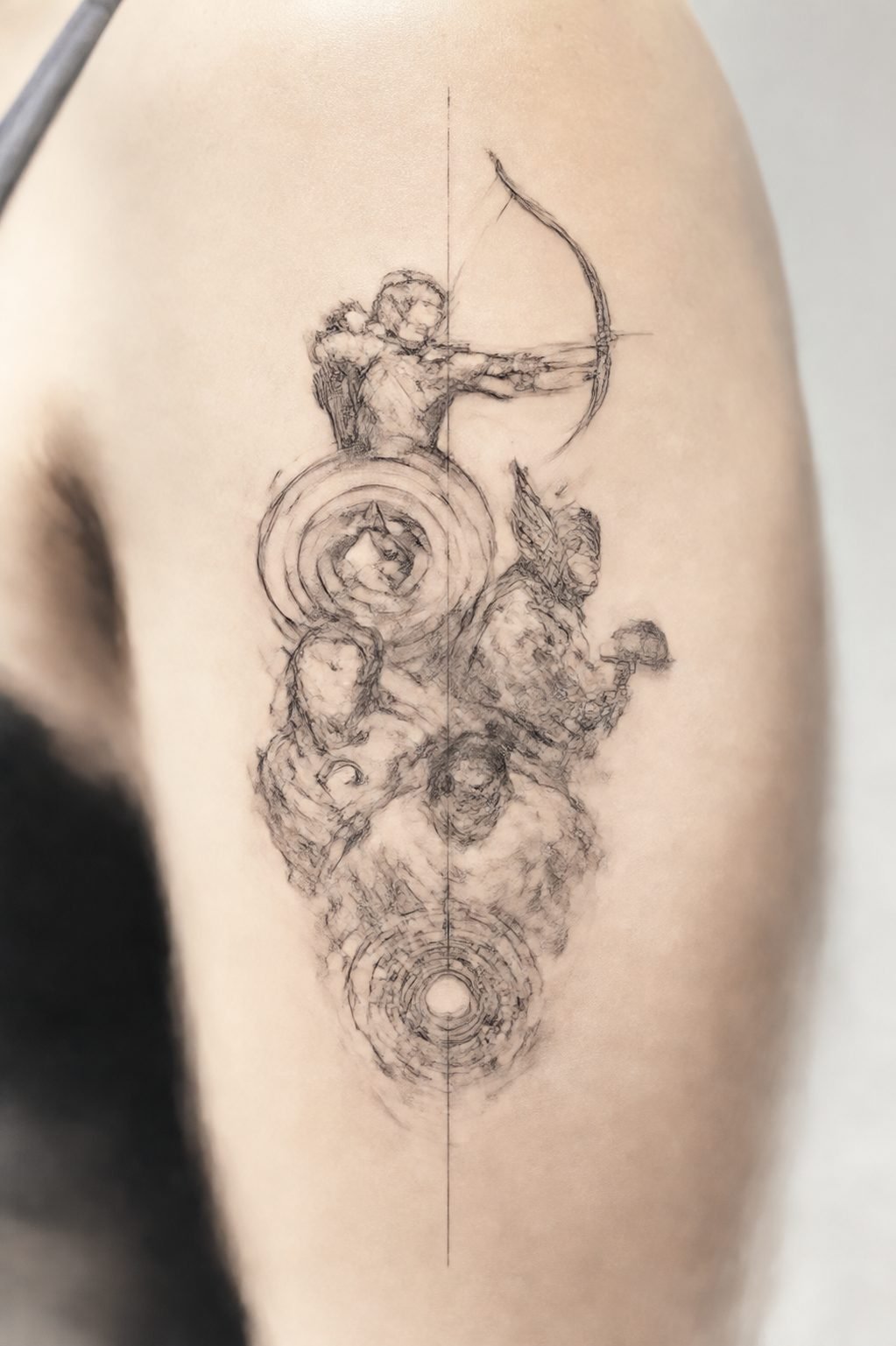
The Avengers circle shot from 2012. The portals sequence from Endgame. These demand serious real estate, full thigh, full back, or dedicated sleeve space. The circular composition of the original team shot actually suits shoulder caps and round muscle groups naturally. Work with anatomy, not against it.
Quote Integration
Short phrases paired with visual elements: “I love you 3000” with a small arc reactor, or “Whatever it takes” with fragmented Avengers logo. Typography choices matter enormously, script fonts age poorly, bold sans-serif holds better. Keep text minimal; five words maximum for readability at size.
- Infinity Stones as a color-gradient band wrapping a forearm
- Ant-Man’s ant silhouette series, scaling from thumb to wrist
- Thanos’s gauntlet in profile, stones as actual gemstones (color realism challenge)
- SHIELD or Hydra logos as background texture elements
- Stark Industries tech patterns as sleeve filler
Best Placements for Avengers Work
Superhero imagery carries inherent boldness. Placement should match that energy or deliberately contrast it.
Forearms and calves offer the most flexibility for medium-sized pieces, shields, single characters, weapon-focused designs. These areas heal relatively predictably, show well, and allow for future expansion into half or full sleeves.
Shoulder caps and chest panels suit circular compositions: the team assembled, shield designs, or explosive action moments. The natural curve of the deltoid frames round imagery without forcing distortion.
Ribs and sternum demand simpler designs. The skin stretches, breathes, and shifts constantly; fine detail warps here. A clean Captain America shield center-chest works. A detailed Iron Man suit breakdown does not.
Hands, fingers, and feet present problems for any tattoo, but especially color-heavy Marvel work. Ink falls out unpredictably, touch-ups are frequent, and the cultural association with these placements has shifted, what read as committed fan expression now often scans differently.
Scale Considerations
Small Avengers tattoos (under three inches) generally fail. The logo becomes illegible, character faces become smudges, detail disappears. Minimum effective size for a recognizable shield: four inches diameter. For a readable character portrait: six inches minimum height. These aren’t arbitrary preferences; they’re constraints of human skin and pigment physics.
Color Choices and Aging Reality
Marvel’s palette is iconic: Cap’s red-white-blue, Iron Man’s hot rod red and gold, Hulk’s gamma green. But ink doesn’t stay where it starts.
Red is notoriously unpredictable. Some brands hold vibrantly; others fade to muddy pink or spread into surrounding skin. Yellow and white require dense saturation to read as anything but skin tone after healing. Blues and greens generally age most reliably.
Black and grey Avengers pieces sacrifice some immediate recognition but gain longevity. A greyscale shield with subtle blue wash reads as Captain America without gambling on bright pigments. Stark’s gold becomes metallic grey shading; still identifiable, more durable.
White ink highlights on dark skin: often marketed heavily, rarely delivers. The white sits visibly for months, then typically settles into translucent scar-like texture. If your artist pushes white as a selling point, push back with questions about their healed results.
For full-color pieces, expect touch-ups. Not a possibility, an inevitability. Budget for a session at 2-3 years to refresh saturation, especially in sun-exposed areas. SPF is non-negotiable maintenance, not optional care.
Tips for Choosing Your Design
The gap between loving a movie and wearing its imagery for life is significant. Here’s how to cross it thoughtfully.
Reference Quality Matters
Bring multiple images: the movie still you love, the comic panel that hits different, the pose that captures something. But understand that direct screenshot reproduction rarely makes the best tattoo. Your artist needs interpretive room to solve problems of light, dimension, and skin movement that cameras don’t face.
Artist Selection Over Design Perfection
The right artist raises mediocre reference; the wrong one destroys perfect reference. For Avengers work, seek artists with demonstrated experience in either comic illustration style or the specific realism approach you want. Generalists who “do everything” often do nothing exceptionally. Portfolio review should show healed work, not just fresh Instagram posts.
Consider the Marvel Context
This universe continues expanding. New actors, redesigned costumes, rebooted continuity. Tattoos based on specific film moments anchor you to 2019 forever. Symbolic or stylized approaches weather franchise evolution better than photorealistic portraits of performers who will age, leave roles, or be replaced.
- Wait six months after a film’s release before committing to its imagery
- Prefer elements that existed across multiple films or comics eras
- Avoid actor likenesses unless you’re prepared for the uncanny valley of aging ink
- Discuss cover-up or modification possibilities before starting, franchise fatigue happens
Final Thoughts
An Avengers tattoo done well joins personal significance with technical craft. The best pieces I’ve seen weren’t the largest or most detailed, they were the most considered. A small, perfectly executed shield with twenty years of clean aging beats a sprawling back piece that blurs into colored mush. Respect the medium. Skin has rules, and superhero subject matter doesn’t exempt you from them. Choose an artist who understands both the source material and the canvas, give them space to interpret, and commit to the maintenance that serious color work demands. The result won’t just reference the films, it’ll hold the weight they carried for you.
Frequently Asked Questions
Will an Avengers tattoo look dated in ten years?
Stylized or symbolic designs age better than specific actor portraits or single-film moments. Choose timeless iconography over trending imagery, and the piece stays relevant regardless of Marvel’s future direction.
How much does a full-color Avengers sleeve typically cost?
Quality comic or illustrative sleeves generally run $2,000-4,000+ depending on artist rates, geographic location, and session count. Rush jobs cost less upfront and significantly more in corrections later.
Can I combine Avengers elements with other tattoo styles?
Absolutely, Japanese background elements framing Western characters, or traditional tattoo motifs integrated with Marvel symbolism, create unique pieces. The key is finding an artist fluent in both visual languages.
Is black and grey or color better for Avengers tattoos?
Black and grey ages more predictably and requires less maintenance. Color captures the iconic palette but demands sun protection and eventual touch-ups. Your lifestyle and commitment to upkeep should guide this choice.
More Tattoo Ideas
- Marvel Tattoo Ideas That Actually Work
- Basic Angel Tattoo Designs: Ideas Style Guide
- Botanical Tattoo Designs: Style Placement Guide
- Explore more