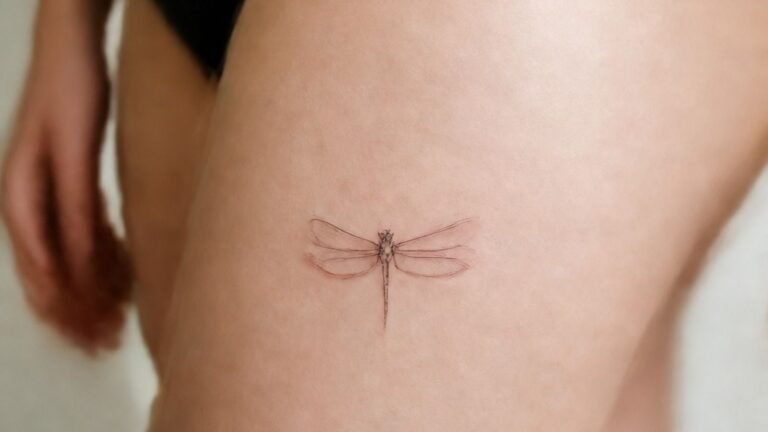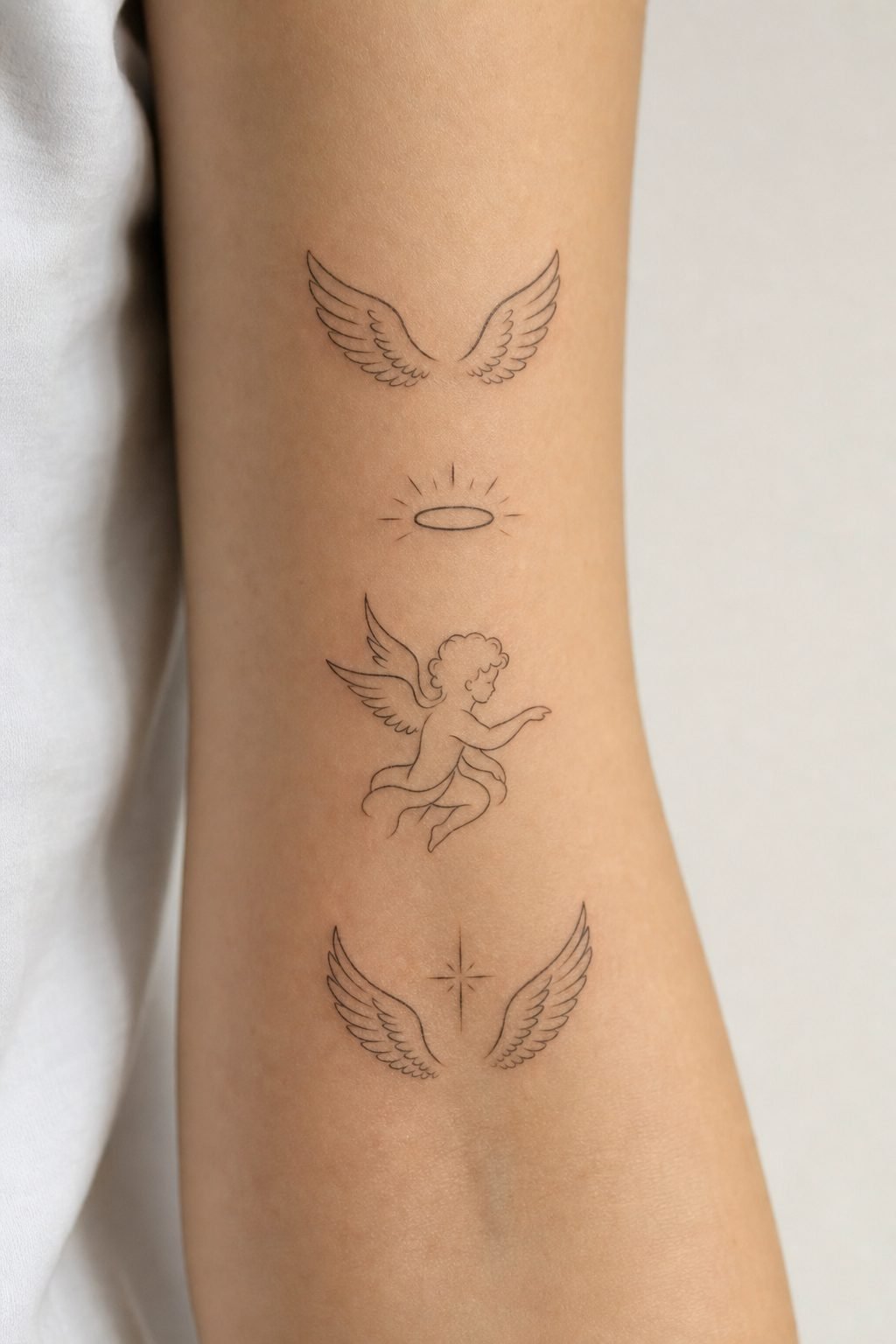
Angel tattoos carry weight. Not necessarily religious weight, though they can, but visual weight. Wings, halos, draped robes: these elements need room to breathe, and bad design choices turn elegant concepts into muddy silhouettes within a few years. The best basic angel tattoos understand restraint. They pick one or two iconic elements and execute them cleanly, rather than cramming every celestial symbol into a single piece.
Popular Styles That Actually Work
Not every style suits angel imagery. The flowing lines of wings and robes demand specific approaches to read clearly at different sizes and over time.
Line Work and Minimal Approaches
Single-needle and fine-line angels have surged, but the risk is real. Wings need sufficient line weight to avoid blurring into soft tissue within two to three years. A minimal angel, just outline, no fill, works best at medium sizes (four to six inches) with strategic negative space. Think a simple profile with extended wing, or a pair of hands in prayer with a small halo above. The key: every line must serve the silhouette. Extra interior detail in fine-line pieces rarely ages well; it closes up and becomes visual noise.
Black and Gray Shading
This remains the most reliable approach for basic angel designs. Smooth whip shading builds feather texture without the commitment of dense black fill. Soft gray wash behind the figure creates atmospheric depth, mist, clouds, implied light source, without competing for attention. For a classic look, consider the old-school religious approach: heavy black in the robe folds, graduated gray in the wings, high contrast around the face. It photographs well, heals predictably, and still reads clearly at fifteen years.
- Stipple shading: slower to apply, holds crisp texture longer than smooth gradients in small pieces
- Smooth black-and-gray wash: traditional, forgiving on healing, versatile across skin tones
- Heavy black silhouette with minimal interior detail: bold, readable from distance, lowest long-term risk
Design Ideas With Staying Power
Basic angel tattoos fall into recognizable categories. Each carries different technical demands and aging characteristics.
Guardian Figures
A single angel in profile or three-quarter view, often with one wing extended forward as if shielding. These work well on ribs, outer thighs, or upper arms, areas with enough flat surface to preserve the wing’s geometry. The face matters enormously here; simplified features age better than attempted realism at small sizes. Many effective guardian pieces omit the face entirely, turning the figure slightly away or hooding it, letting posture and wing position carry the intent.
Wing Pairs
Spread wings across the upper back remain iconic for good reason. The shoulder blades provide natural structure; the wings anchor to the spine and extend toward the deltoids. Symmetry is technically demanding, any asymmetry in the stencil becomes glaringly obvious once mirrored. For a smaller commitment, single wings on forearms or calves offer flexibility. They can stand alone or eventually connect to a larger piece. Feather grouping matters: too many individual feathers drawn too small, and the whole wing becomes a soft gray blob. Aim for clear primary feather shapes with implied detail between.
Cherubs and Putti
Small, rounded, less anatomically precise, these suit tighter spaces and softer aesthetic goals. Wrists, behind ears, along collarbones. The chubby proportions forgive some line spread, but the face remains vulnerable; a tiny cherub face with attempted realism often heals into something unsettling. Better to stylize: simple dot eyes, minimal mouth, focus on the body and wings.
- Praying hands with halo: compact, readable at small sizes, works on forearms and calves
- Angel number sequences (111, 444, etc.): text-based, minimal wing integration, highly personal
- Fallen or broken-wing variants: narrative through posture, not extra symbols
Best Placements for Angel Imagery
Angel designs need specific anatomical considerations. Wings require flat planes; figures with vertical orientation suit limbs and torso sides.
The upper back remains the classic wing placement for coverage and natural wing-to-body proportion. A full back piece allows proper feather scaling, each primary feather visible and distinct. For smaller wings, the upper chest (pectorals, extending slightly onto shoulders) creates a framed, almost armor-like effect.
Vertical figures, standing angels, ascending or descending poses, fit the outer thigh, calf front, or rib cage. The rib cage presents challenges: breathing movement distorts the image, and the curved surface complicates straight-line elements like sword shafts or column edges. Many artists prefer the flat anterior thigh or outer calf for standing figures.
Smaller basic angels suit the inner forearm, upper arm (bicep or outer), and ankle. These areas limit size but offer consistent visibility for personal meaning and straightforward aftercare. One placement to reconsider: the side of the neck. Angel wings here rarely achieve proper feather detail at necessary scale, and the high-visibility commitment doesn’t match the typically personal nature of basic angel designs.
- Upper back: maximum wing spread, symmetrical potential, covers well if needed
- Outer thigh: excellent for vertical figures, manageable pain, good healing environment
- Inner forearm: medium-sized pieces, visible, relatively flat surface
- Upper arm/bicep: traditional, easy to expand into larger work later
Color Choices: When to Stay Black
Most basic angel tattoos benefit from black and gray. The subject matter, stone, clouds, feather texture, aged skin, reads naturally in monochrome. Color introduces complexity without always adding clarity.
That said, selective color has its place. A single gold halo. Subtle blue in robe folds. Flesh tones in cherub faces, though these require experienced color mixing to avoid healing muddy or orange. Watercolor-style backgrounds behind otherwise black-and-gray figures have become common, but the technique demands an artist who understands how those washes settle and fade. Poorly executed, it looks like a spill. Well executed, it suggests atmosphere without defining it.
White ink highlights on black-and-gray angels can create effective light-source illusion, rim light on wings, glow around halos, but white fades fastest and often yellows. Consider it a temporary enhancement, not a permanent feature.
Tips for Choosing Your Design
Reference material matters, but Pinterest and Instagram show fresh tattoos, not healed ones. Ask your artist for healed photos of similar work. Look specifically at how wing edges softened, whether facial details survived, if the gray wash stayed smooth or developed patchy spots.
Scale honestly. A detailed angel face the size of a quarter will not hold. Neither will individually drawn feathers at tiny sizes. Simplify before shrinking. If you want something palm-sized, choose a single symbolic element, halo, pair of wings, simple silhouette, rather than a full figure.
Consider the long-term context. A basic angel on your forearm at twenty-five reads differently at fifty-five. This isn’t about judgment; it’s about whether the design’s visual language, its softness, its symbolism, its placement, will continue to feel appropriate to you. Basic designs age better precisely because they avoid trend-specific styling. A clean black-and-gray wing from 2010 looks similar to one from 2024. A watercolor-splashed angel with geometric mandala background does not.
- Prioritize silhouette clarity over interior detail
- Request healed photos, not just fresh portfolio shots
- Allow adequate size for your chosen detail level
- Match style to your broader tattoo collection if you plan multiple pieces
- Discuss aging explicitly with your artist, how specific lines and shading will settle
Final Thoughts
Basic angel tattoos succeed through subtraction. The imagery is already loaded, wings, halos, upward gazes carry centuries of association. Your job isn’t to add more symbols; it’s to choose which few elements matter and render them cleanly. Find an artist whose healed black-and-gray work you can examine, trust their guidance on minimum size and detail level, and let the form speak without excessive ornament. The best angel tattoos feel inevitable, like they were always meant to occupy that specific skin.
Frequently Asked Questions
How small can an angel tattoo be before details blur?
Most basic angel figures need at least four inches of height to preserve facial features and wing structure. Single wings or halo-only designs can shrink to two or three inches, but full figures with multiple elements require more space than social media close-ups suggest.
Do angel tattoos have to be religious?
Not at all. Many people choose angels for memorial purposes, personal protection symbolism, or simply the aesthetic appeal of wings and classical figure drawing. The imagery functions independently of specific faith for most wearers.
How do angel wings heal on the upper back?
The upper back heals relatively well, good blood supply, minimal friction from clothing, easy to keep clean. The main challenge is sleeping position; you’ll need to avoid lying directly on fresh work for two to three weeks, which side-sleepers manage more easily.
Why do some angel tattoos look muddy after a few years?
Usually oversaturation: too many gray tones packed too tightly, or excessive fine lines in feathers that blur together. Black-and-gray pieces need breathing room. Sparse, confident shading ages better than dense, tentative fill.
More Tattoo Ideas
- Colored Small Tattoo Ideas
- Compass Tattoo Drawing Designs
- Gorgeous Tattoo Ideas: Styles, Placements, and Design Tips
- Explore more