
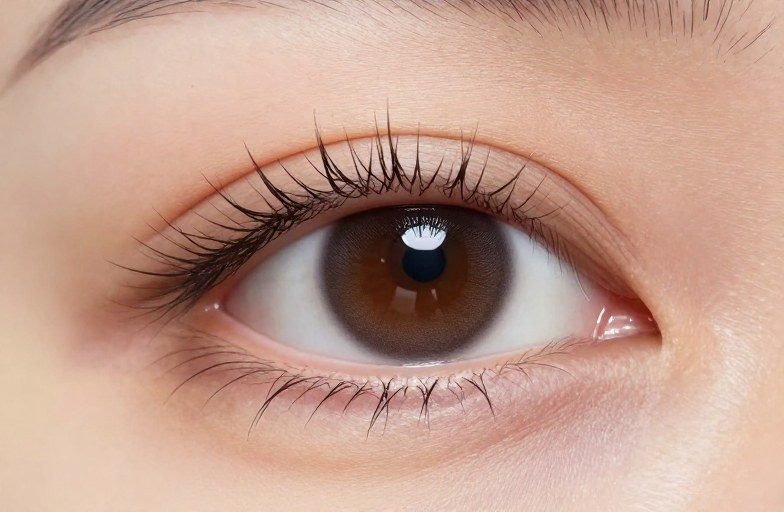
An eyelid tattoo typically signals something meant to stay private until the wearer chooses to reveal it. The meaning clusters around themes of hidden knowledge, unblinking vigilance, and personal mantras worn like a secret. Because the design only appears when eyes close, it creates a deliberate reveal, something the world sees only in moments of rest, intimacy, or performance.
Symbolism & Core Meaning
The core symbolism hinges on concealment and selective disclosure. Unlike a forearm piece that broadcasts immediately, an eyelid tattoo waits for a specific gesture: the blink, the closed eye in a photograph, the moment of sleep. This conditional visibility makes it a natural symbol for inner resolve, private grief, or commitments that don’t require external validation.
The Unblinking Eye and Its Inverse
Some designs play on the eye itself, teardrops, dots, or small symbols placed at the outer corner. These draw on older visual languages where eye markings signified watchfulness, mourning, or lived experience. When the design sits on the lid rather than beside it, the symbolism inverts: the tattoo hides behind the eye’s function, visible only when sight pauses. This creates a metaphor for interior vision, the kind of seeing that happens when external eyes shut.
Words as Self-Command
Text on eyelids, single words, short phrases, numbers, functions differently than decorative imagery. The wearer reads it in the mirror each morning, sees it when applying makeup, encounters it during every blink. Common choices include reminders of mortality, names of the dead, or personal prohibitions. The meaning here isn’t communicative; it’s corrective, a tattoo that speaks inward.
Common Variations & Styles
Placement and style options for eyelid tattoos are narrower than most areas, but the constraints have produced recognizable approaches.
- Upper lid, text facing outward: Words read correctly when the eye closes; others see it, the wearer feels it. Most common for short phrases or Roman numerals.
- Lower lid, text facing inward: Readable to the wearer in a mirror; truly private. Often used for single words or small symbols.
- Upper lid, decorative line: A thin black or colored line following the lash line, sometimes extending to a small wing. Mimics permanent eyeliner but with heavier pigment load.
- Corner accents: Small dots, stars, or symbols at the inner or outer canthus. Less invasive, faster to execute, lower risk of blowout.
- Full lid coverage: Rare, technically demanding. Usually solid black or a small centered image. High risk of uneven healing due to skin movement.
Line Work vs. Shading Realities
Clean single-pass lines survive best on eyelids. Shading, especially whip-shading or soft gradients, tends to blur within months because the skin here is among the thinnest on the body and moves constantly with every blink and expression. Bold, graphic choices, thick lines, solid blacks, high contrast, age more predictably than delicate ornamental work.
Who Chooses This Tattoo
The demographic isn’t as narrow as outsiders assume. You’ll find this placement on musicians who want stage-specific visuals, on people marking survival of specific events, and on those who simply ran out of more conventional canvas. The unifying thread isn’t subculture affiliation but a particular relationship to privacy: the desire to carry something visible to self, controllable in its disclosure.
Professional and Social Considerations
Unlike neck or hand tattoos, eyelid work hides in most professional contexts. This makes it appealing to people in conservative fields who still want extensive tattooing. The catch: once known, it becomes memorable. Colleagues who see it once won’t forget. The tattoo thus functions as a kind of social test, who gets to know, and when.
How It Ages on Skin
Eyelid skin turns over rapidly and stretches with age. What looks precise at twenty-five may feather at the edges by thirty-five. The constant motion, blinking occurs roughly 15-20 times per minute, means ink settles and migrates differently than on static skin.
The Blowout Problem
Thin eyelid skin offers little resistance to needle pressure. Ink can spread laterally into surrounding tissue, creating soft, blurred edges rather than crisp lines. Experienced artists adjust machine speed, needle depth, and hand pressure specifically for this area; even then, some spread is common. Black ink shows this least; lighter colors display blowout most obviously.
Fading Patterns
Expect significant fading within two to five years. The eye’s exposure to light, the thinness of the dermis here, and regular rubbing during sleep or makeup removal all accelerate pigment loss. Touch-ups are more frequent than for most placements, and each pass risks additional scar tissue. Many long-term wearers settle into a softer, less defined version of the original design.
Design Tips & Pairings
Successful eyelid tattoos account for the eye’s shape in both open and closed states. A design that looks centered with eyes shut may drift or distort when they’re open. Artists typically map placement with the client seated upright, eyes moving through natural ranges of motion.
- Keep it small: The available canvas is smaller than most people estimate. Designs that look tiny on paper often need further reduction.
- Account for curvature: Flat designs warp on the eyelid’s convex surface. Slight bowing or following the natural arc reads better than imposed geometry.
- Consider the brow: Heavy brows cast shadow; light or sparse brows leave the area more exposed. This affects visibility and healing sun exposure.
- Pairing with face tattoos: Eyelid work connects naturally to tear trails, cheekbone pieces, or temple work. Without adjacent tattooing, it can look isolated; with too much, the face becomes unreadable. The balance is personal but worth planning.
Aftercare Specifics
Standard tattoo aftercare doesn’t fully apply. You can’t avoid touching the area, you blink involuntarily. Sleep position matters more than for most tattoos; back-sleeping reduces friction for the first week. Avoid eye makeup until fully healed, typically ten to fourteen days. Any swelling that affects vision warrants immediate medical attention, not just artist consultation.
Color vs Black and Grey
Black and grey dominates eyelid tattooing for practical reasons. Black ink maintains definition longest; grey wash fades to muddy unpredictably on thin skin. Color work is possible but riskier, reds and yellows can look inflamed during healing, complicating assessment of proper recovery. Blues and greens settle better but still fade faster than black.
White Ink Considerations
White ink on eyelids rarely stays white. It yellows with skin oils and sun exposure, often settling into a faint, uneven cream tone. Some artists use white as highlight only, never as primary design element. The appeal, subtlety, near-invisibility, usually diminishes within a year.
Final Word
An eyelid tattoo means what the wearer loads into it, but the placement itself carries inherent symbolism: the hidden, the inward-turned, the chosen moment of revelation. The technical realities, rapid fading, blowout risk, demanding aftercare, mean this isn’t a decision to make on impulse. Go in understanding that the crisp image you receive will soften, that touch-ups are part of the commitment, and that the meaning you assign needs to survive that physical change. The best eyelid tattoos hold their weight not in the precision of the line but in the deliberateness of the placement.
Frequently Asked Questions
How painful is getting an eyelid tattoo compared to other placements?
Most people rate it among the most painful tattoo locations. The skin is extremely thin, the area is sensitive, and the vibration from the machine transmits directly to the eye socket. Numbing agents are sometimes used but can complicate swelling assessment.
Can an eyelid tattoo be removed or covered up?
Laser removal on eyelids is limited due to proximity to the eye itself; protective eye shields are mandatory but don’t eliminate risk. Cover-up options are severely restricted by the small canvas and existing blowout. Think of this as essentially permanent.
Why do some eyelid tattoos look blurry right away?
Immediate blurriness usually indicates blowout, ink spreading beneath the skin surface due to thin tissue or overwork. Some swelling-related distortion resolves during healing, but true blowout does not. Proper artist technique minimizes but cannot fully eliminate this risk.
Do eyelid tattoos affect vision or eye health long-term?
When done correctly, the tattoo sits in skin layers above the eye’s functional structures. However, infection during healing, allergic reactions to ink, or improper aftercare can cause complications affecting the eye. Any persistent redness, vision changes, or unusual discharge requires ophthalmological evaluation.
Related Tattoo Meanings
- Medusa Assault Tattoo Meaning: Symbolism Design Guide
- Felix the Cat Tattoo Meaning: Luck, Mischief Nostalgia
- Female Inuit Tattoo Meaning: Lines of Resilience and Identity
- Explore more









