A Gaara-inspired tattoo centers on the kanji 愛, read “ai,” meaning love. On the character it carries a harder story than the word suggests: self-love forged in loneliness, pain that hardens into protection, and a slow turn toward redemption. As a tattoo idea it borrows the symbolism, not the character.
Quick answer: A Gaara tattoo usually means love directed inward first, then outward. The kanji 愛 stands for love that survives rejection and isolation, becomes self-respect, and eventually grows into love that protects others. Most people wear the standalone kanji or the idea behind it, not the copyrighted character.
Gaara is one of the most recognizable figures in the Naruto series, and the single character carved on his forehead does a lot of quiet work. It is not a clan crest or a rank. It is the kanji for love, placed where everyone can see it, on a person the world decided not to love. That tension is exactly why people get tattoos built around it.
This guide stays on the meaning, the calligraphy and the design choices. It does not reproduce the character or any copyrighted artwork. What carries over into ink is the symbol and the emotional reading behind it.
What the kanji 愛 actually means
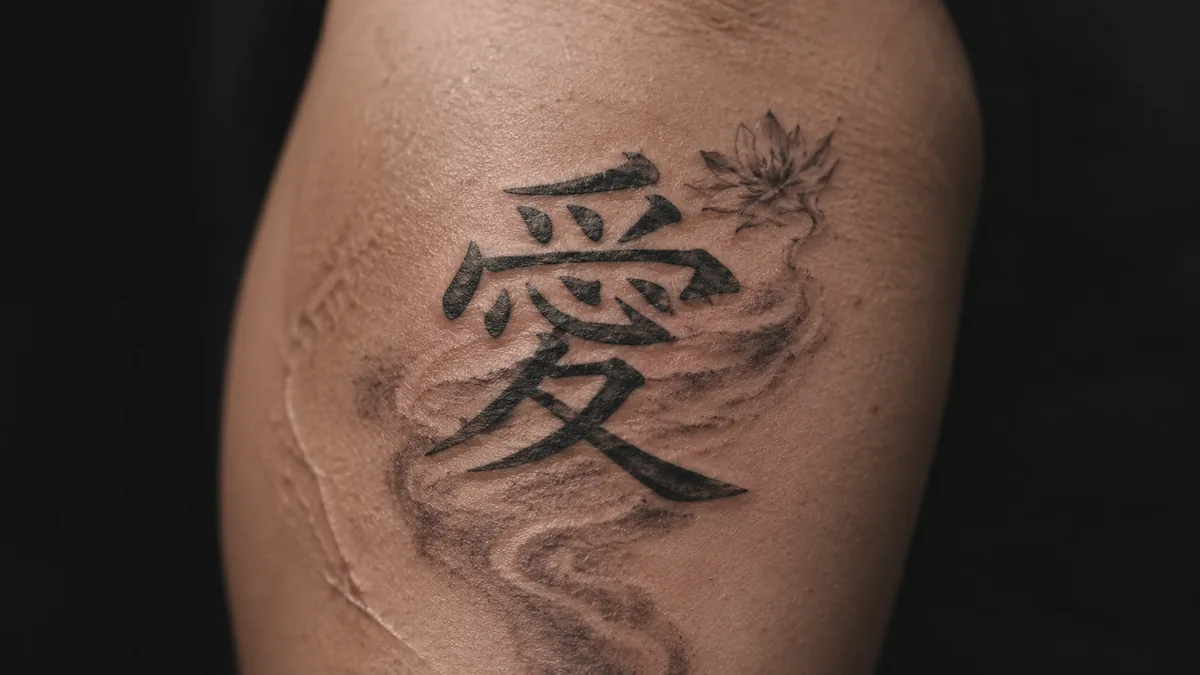
愛 is the standard Japanese kanji for love, read “ai.” It covers deep affection in a broad sense, not only romantic love. In its traditional written form the character contains 心, the element for heart, sitting in the middle of the strokes. That buried heart is part of why the character feels heavier than a simple word. The emotion is built into the structure.
In Naruto, the meaning is deliberately twisted at first. Gaara was feared and pushed away from early childhood. After a betrayal by someone he trusted, he decides he will live only for himself and carves 愛 into his own forehead as a vow: a person who loves only himself. The same character that means warmth becomes, for a while, a label for isolation.
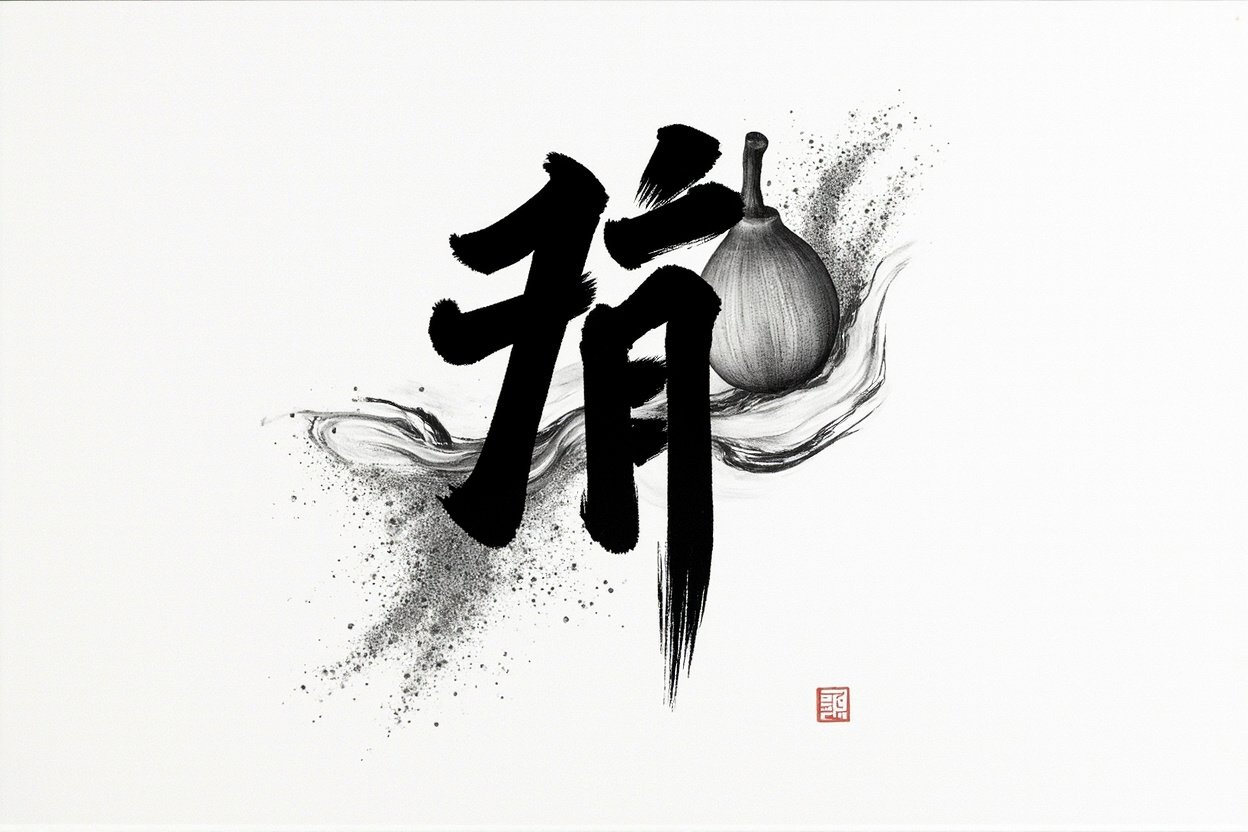
Artist brief: Ask for the kanji as a confident single brushstroke composition, not a printed font. The character should read as painted, with deliberate thick and thin strokes. If you want the harder edge, request slightly sharpened stroke ends rather than soft sumi-e tapering.
Why people choose a Gaara-inspired tattoo
He wrote "love" on his own skin because nobody else would give it to him.
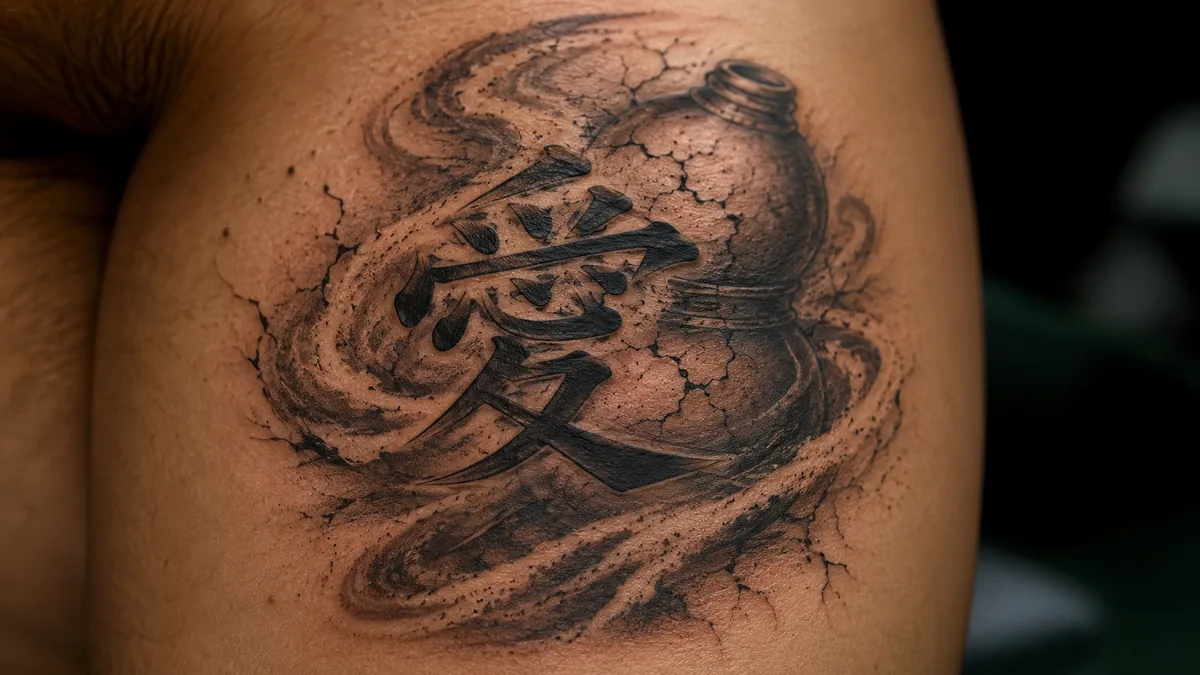
The appeal is rarely cosplay. It is the arc. The character starts as someone shaped by neglect and ends as a protector who carries the same mark with the opposite meaning. People who connect with that usually want one of a few specific readings.
| Meaning angle | Who tends to choose it | Best placement | Risk to avoid |
|---|---|---|---|
| Self-love after rejection | People who rebuilt worth on their own terms | Inner forearm, ribs, upper arm | Treating it as a quote rather than a vow |
| Pain transformed into purpose | Survivors of grief, isolation or burnout | Sternum, back of arm, shoulder | Over-decorating until the meaning blurs |
| Protection of others | Parents, carers, anyone who guards a circle | Chest near the heart, forearm | Tiny placement that loses the brush feel |
| Loneliness made visible | People who want the scar, not the gloss | Temple area, behind ear, hand | Highly visible spots booked impulsively |
| Redemption and second chances | People marking a turning point | Upper arm, calf, back | Skipping a native speaker proofread |
Get the calligraphy right before anything else
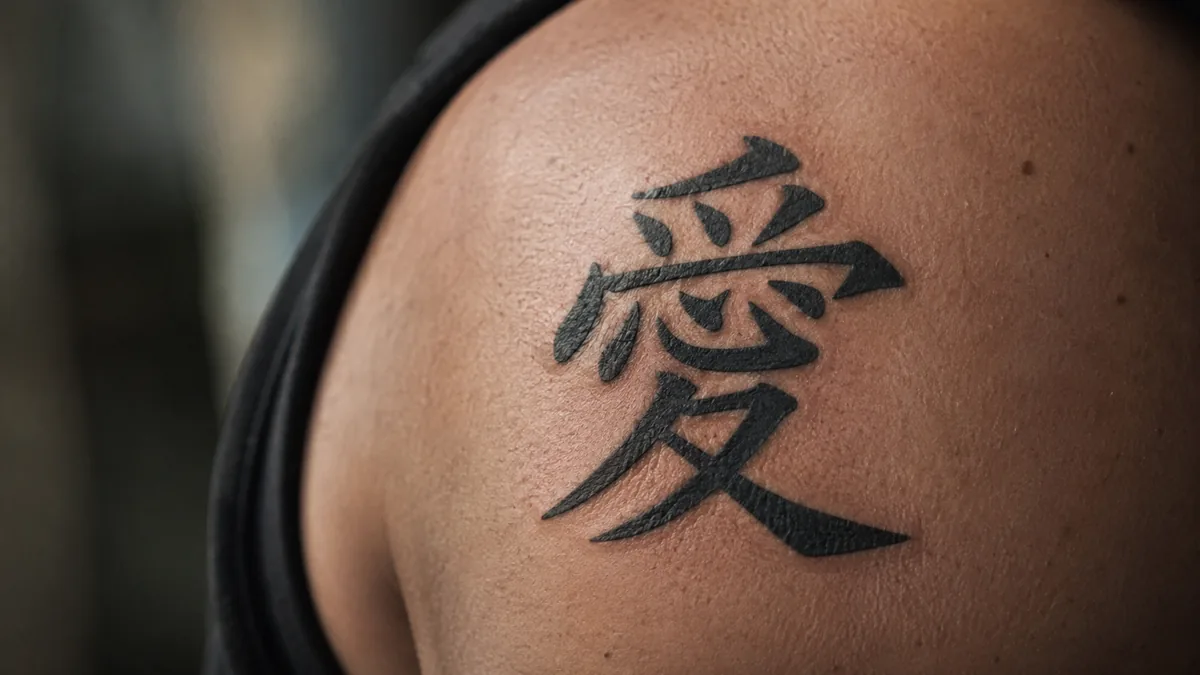
A kanji tattoo lives or dies on accuracy. 愛 has a fixed stroke order and a specific structure, and a sloppy or mirrored version is obvious to anyone who reads Japanese. Before booking, confirm three things. The character is correct and complete, the proportions follow real calligraphy rather than a stretched computer font, and the stroke weight looks painted instead of outlined.
If you want depth, ask your artist for a brushed sumi-e treatment. Authentic Japanese ink work, including the broader irezumi tradition, treats brush dynamics as the whole point. You can read more on how that style handles linework and density in our irezumi Japanese traditional tattoo guide. For non-character Japanese motifs that pair well with a single kanji, the Japanese tattoo ideas collection is a good starting point.
Design directions that respect the source without copying it
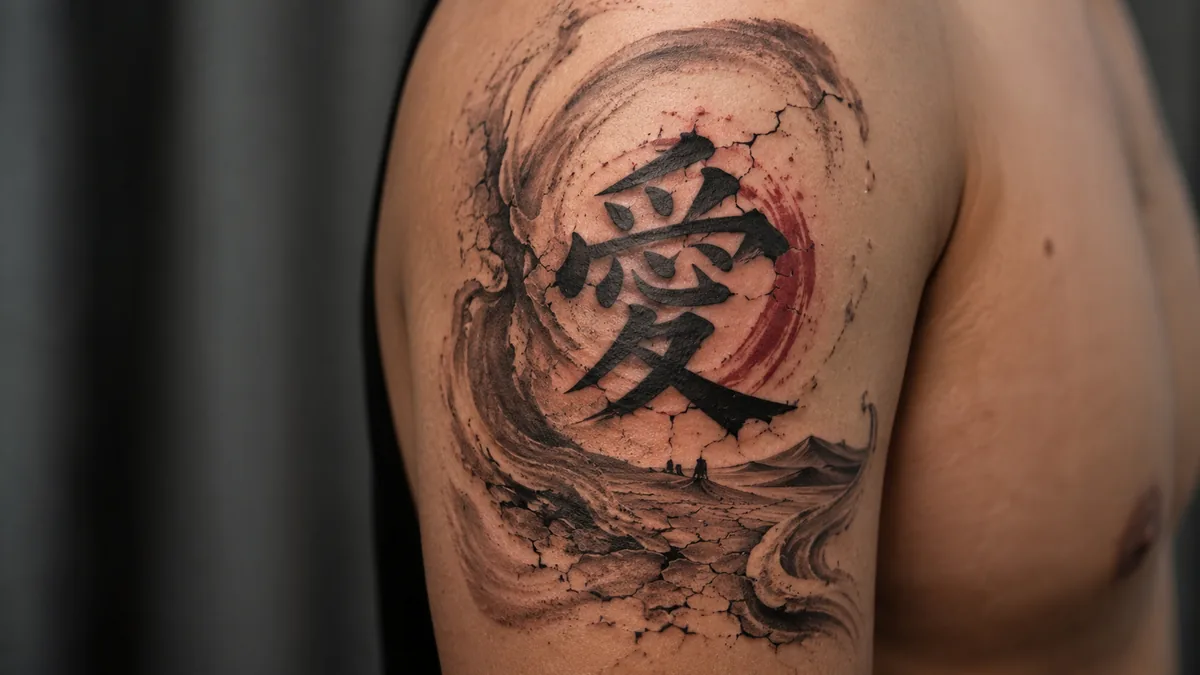
The strongest Gaara-inspired pieces lean on symbolism rather than the character himself. A few directions hold up well over time.
The clean kanji approach keeps 愛 alone on the skin as a single confident brushstroke. It ages well because there is no fine detail to blur, and it reads instantly. This is the most faithful nod to the forehead mark without reproducing the character.
The sand-and-gourd approach borrows the desert and protection symbolism instead of the face. Drifting sand grains around the kanji, or a simple gourd silhouette beside it, signals the source to anyone who knows it while staying fully original. Sand also gives the tattoo movement, which suits the “pain in motion toward purpose” reading.
The scar approach treats the kanji as if carved rather than printed, with slightly raised or sharpened stroke ends. It is the closest match to the loneliness reading, since the original mark in the story is self-inflicted. It works best in placements where a harder, rawer look fits the wearer.
Note on copyright: The kanji 愛 itself is public and free to wear. The Naruto character, his exact facial design and official artwork are protected. Keep your reference to the symbol, the calligraphy and original sand or gourd elements, and you stay on safe ground.
Placement and size that match the meaning
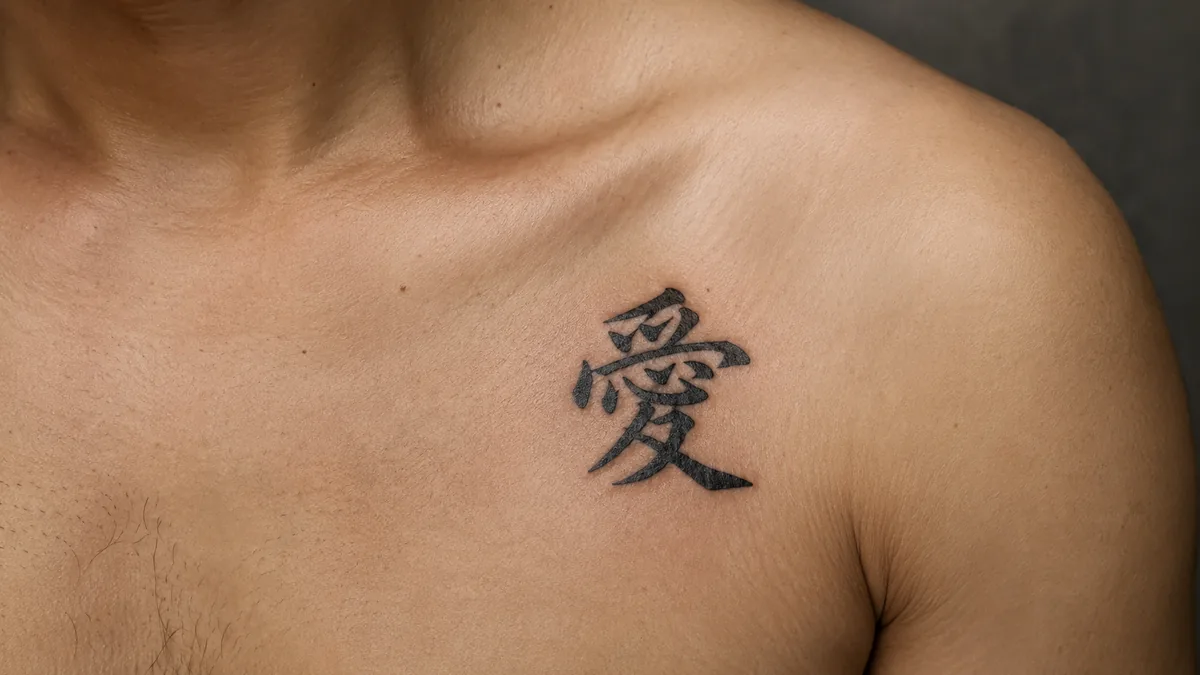
A single kanji is flexible, but the meaning you want should steer the spot. If the tattoo is about self-love and you want it for yourself, inner forearm and ribs keep it personal and easy to revisit. If it is about protecting others, near the heart on the chest reinforces the reading. If you want the loneliness or scar interpretation, more visible spots like the temple, behind the ear or the hand carry that exposed feeling, though they demand more commitment and fade faster.
Size matters more than people expect with brush characters. Too small and the thick-to-thin transitions collapse into a blob during healing and over the years. Give the strokes room to breathe. If you are weighing options, the tattoo placement chart breaks down how each spot handles detail, pain and longevity.
How a Gaara tattoo compares to other Japanese meaning pieces
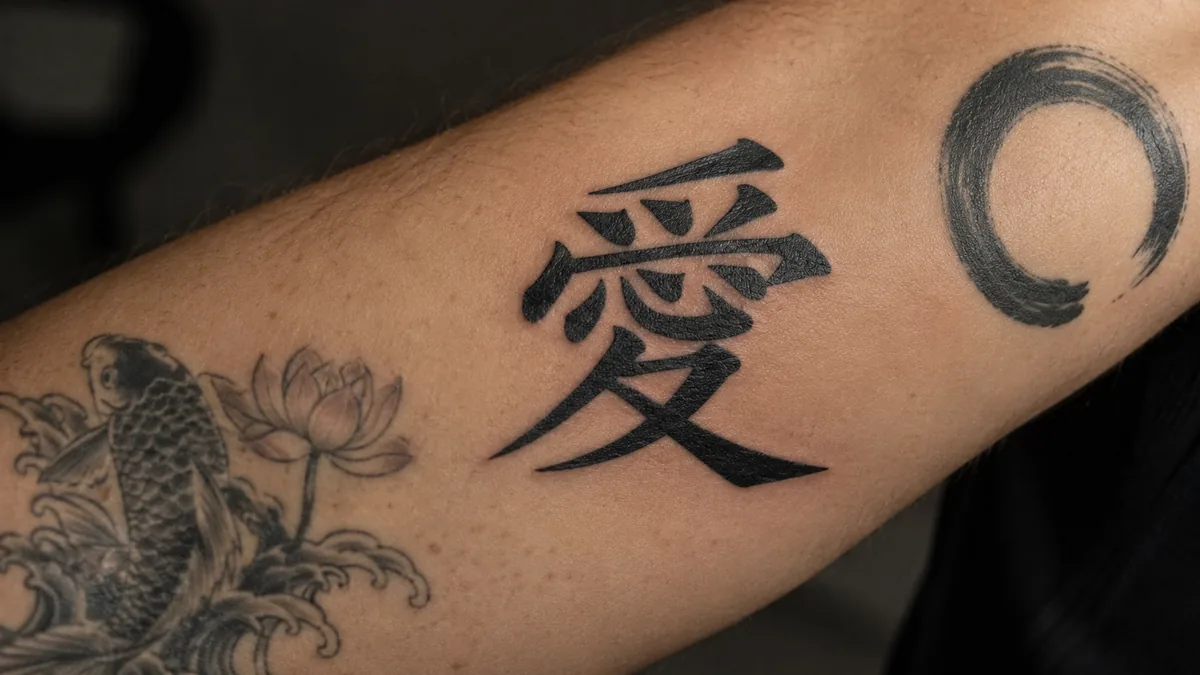
People who like the kanji-as-symbol idea often look at other Japanese motifs that carry a single strong meaning. A koi fish tattoo reads perseverance and transformation through struggle, which sits close to the redemption angle. A dragon tattoo leans toward strength, protection and wisdom. The difference is that a kanji states the meaning outright in language, while an animal motif implies it. A Gaara-inspired piece is unusually direct because the word is the image.
How to make it genuinely yours
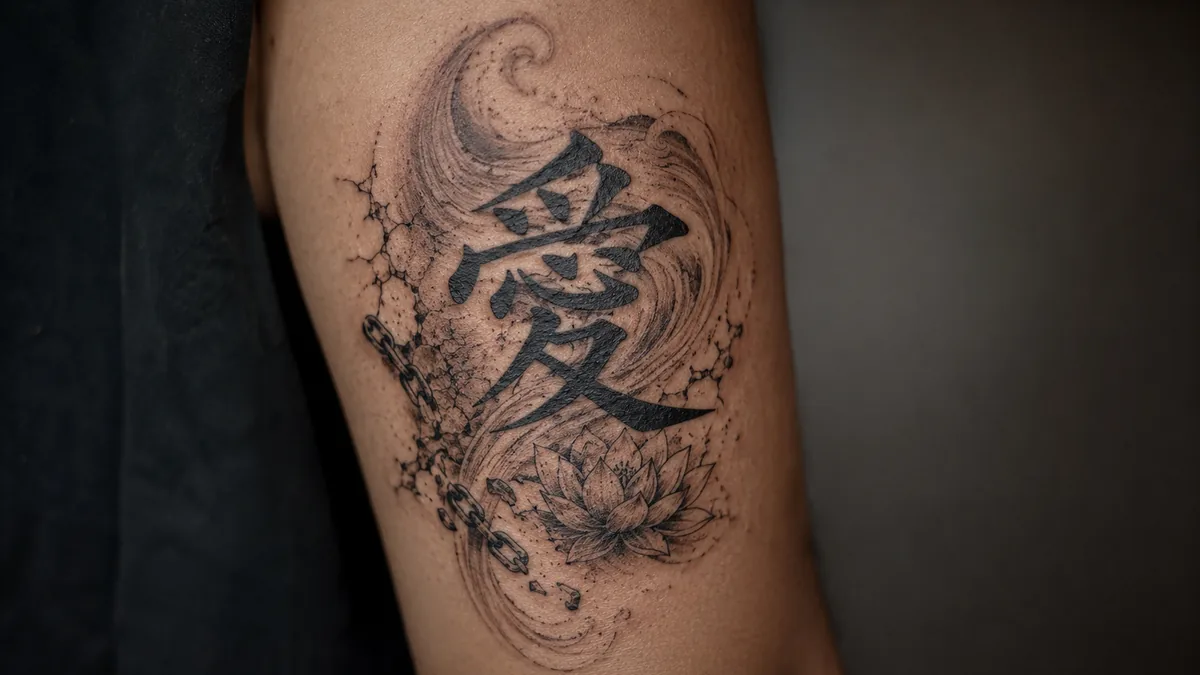
The best version of this tattoo is not a copy of a screenshot. Decide which reading you actually carry, self-love, transformation, protection or the scar, and let that choose your placement, your stroke style and whether you add sand, a gourd or nothing at all. A native-speaker proofread on the character is non-negotiable. After that, the meaning does the rest, because the whole point of 愛 in this story is that the symbol never changes while the heart behind it does.
Reader questions before you book
What does a Gaara tattoo mean?
It means love, written as the kanji 愛. In the source story it begins as self-love born from loneliness and rejection, then transforms into love that protects others. Most people wear it for that arc from isolation to purpose.
Is it disrespectful or copyright infringement to get a Gaara tattoo?
Wearing the kanji 愛 or original sand and gourd elements is fine, since the character is public. Reproducing the official character design or artwork is where copyright applies, so keep your piece to the symbol and original motifs.
Where does a Gaara-inspired kanji tattoo look best?
Inner forearm, ribs and chest near the heart suit the personal and protective readings. Temple, behind the ear and hand suit the harder scar reading but demand more commitment and fade faster.