The Garden of Eden packs more visual symbols into one scene than almost any other narrative in Western art. Snake, apple, fig leaves, two naked figures, a tree, maybe a flaming sword or angel at the gate. For tattooing, that density is both the opportunity and the trap. Pile too many elements into one design and you get a muddy biblical illustration. Edit wisely, though, and you can build something that reads clearly from across a room and still rewards closer inspection. Here’s how collectors and artists are approaching Eden on skin right now.
Popular Styles
American Traditional
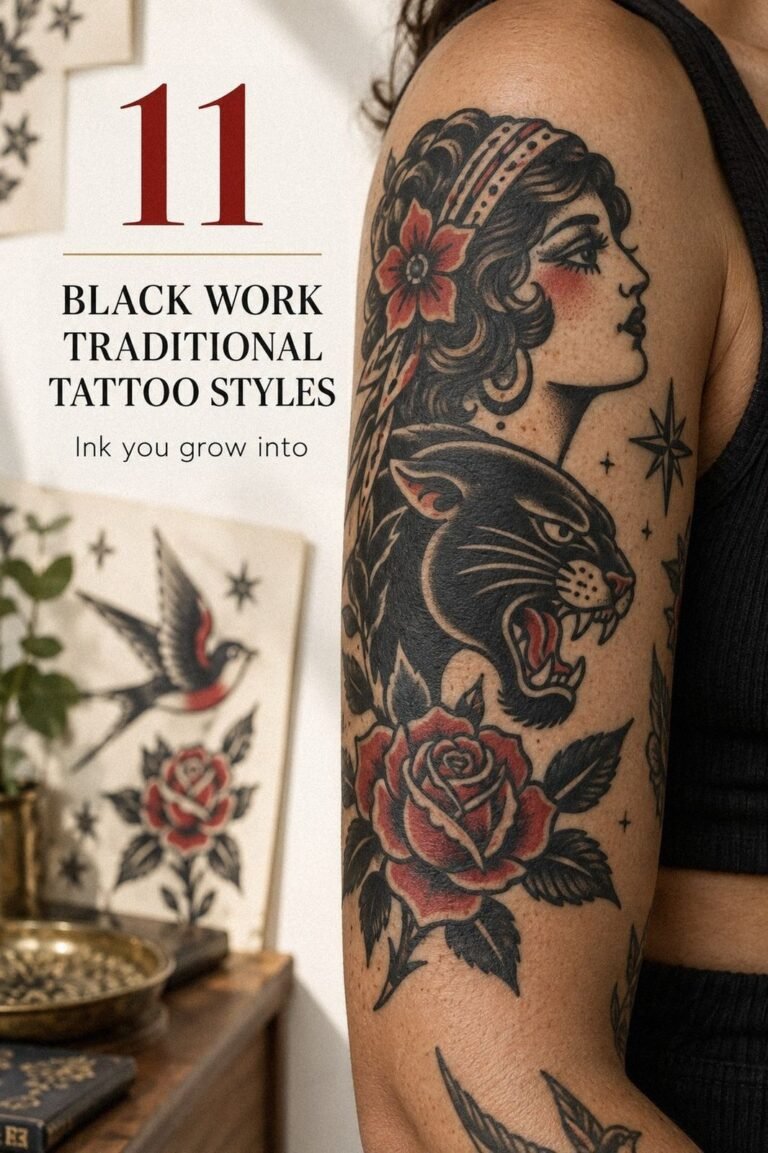
Bold lines, limited color palette, readable at small sizes. The traditional approach works because it forces hard choices. You get the snake coiled around the tree, the apple, maybe Eve’s hand reaching. No facial features, no soft garden background. The flat reds and greens age predictably, and the heavy black outlines hold up for decades. Traditional Eden pieces often read as more “tattoo” than “illustration,” which suits people who want the reference without looking like they’re wearing a painting.
Black and Gray Realism
Photorealistic serpent scales, dramatic chiaroscuro on the Tree of Knowledge, skin rendered in soft graphite tones. This style demands space, usually a full forearm, thigh, or back panel. The risk is mush: without enough contrast, gray-wash foliage turns to gray soup in five years. Strong artists solve this by pushing darks darker than reference photos suggest, especially in the snake’s eye sockets and the hollows of the tree bark. The result can feel cinematic, almost Caravaggio-like.
Neo-Traditional and Ornamental
Thicker line weight than traditional, more color freedom, decorative elements like Art Nouveau vines or stained-glass borders. The snake becomes patterned, almost jewel-like. The apple might be a pomegranate, split open to show seeds. These designs often incorporate ornamental frames, useful if you want the Eden imagery contained within a larger sleeve or chest piece.
- Linework: Single-needle detail for delicate leaves and serpent scales; best on inner biceps or ribs where the skin stays relatively stable
- Etching style: Cross-hatched black ink mimicking old woodcuts; excellent for the “fall of man” narrative sequence
- Japanese influence: The snake rendered as a dragon-like creature, the garden as a ukiyo-e landscape; rare but striking when executed well
Design Ideas
The Serpent as Central Focus
The snake carries the most visual weight in Eden iconography. Coiled around the forearm, it creates natural movement with the muscle structure. Wrapped through a sleeve, it can connect disparate elements, skull, flower, flame, into a coherent narrative. Some collectors choose the serpent alone, severed from context, relying on the apple in its mouth or the forked tongue to signal the reference. The snake’s head placement matters enormously: facing the viewer feels confrontational, while profile reads more decorative.
The Tree of Knowledge
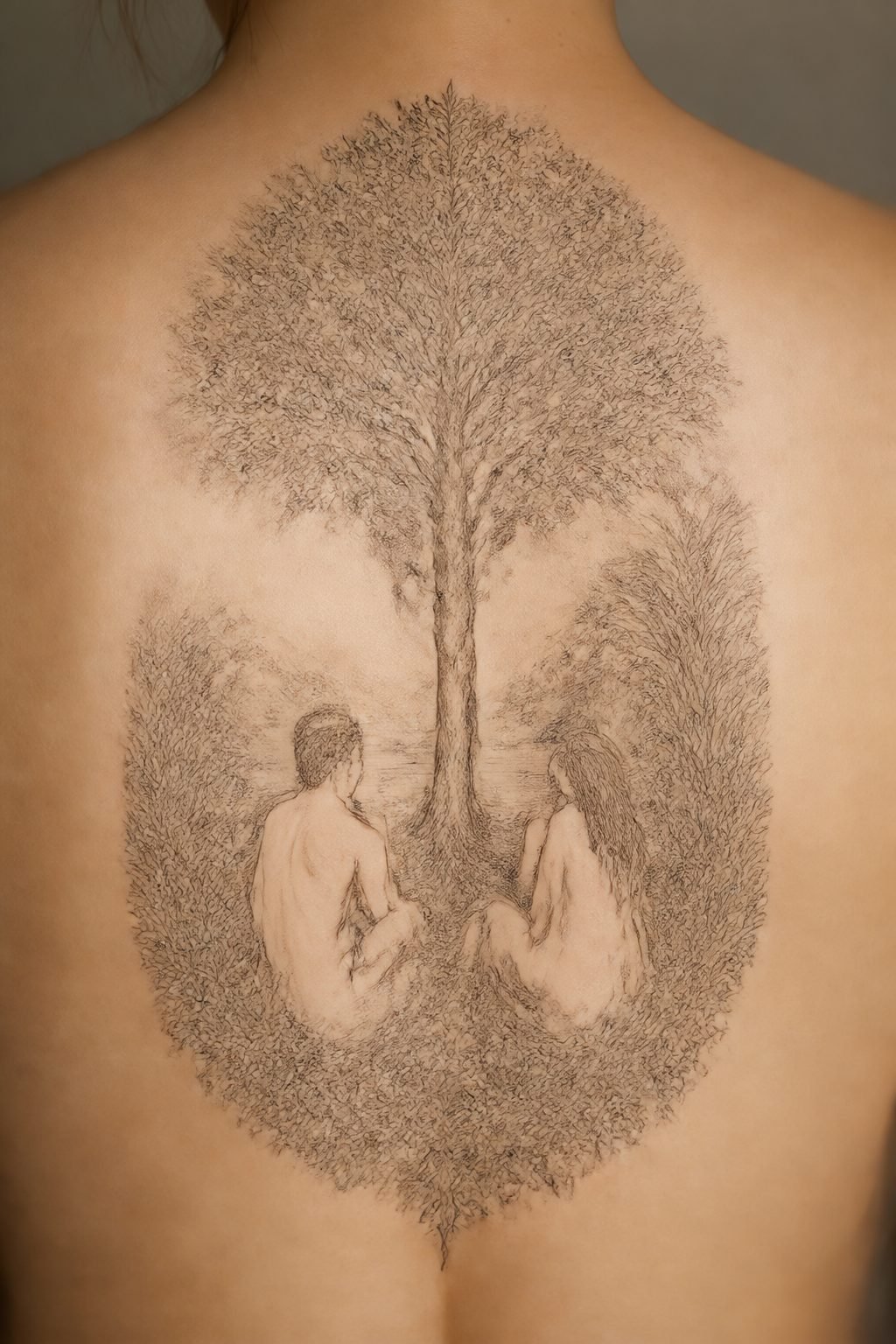
Tree tattoos face a structural problem. Trunks want vertical space; branches want to spread. The back, along the spine, solves this naturally. A calf wrap can work if the roots wrap the ankle and canopy reaches the knee. For smaller pieces, artists often isolate a branch with two apples and a single snake, letting negative space suggest the larger tree. Roots visible in the design add gravity, literally and thematically.
Adam and Eve
Figures are the hardest element to execute well. Two naked bodies in a small tattoo become ambiguous shapes; at large scale, they become portrait work requiring serious technical skill. Common solutions: silhouettes, partial figures (hands meeting, backs turned), or the moment of covering themselves with leaves. The latter gives the artist something to render besides skin on skin.
- Flaming sword: Often placed at the wrist or ankle, suggesting the expulsion, the barrier between Eden and the world
- The apple alone: Surprisingly versatile; can sit in a hand, float with a bite taken, or split to show the interior structure
- Pairing with other imagery: Skull in the roots (memento mori), butterfly on the apple (transformation), lock and key (forbidden access)
Best Placements
Eden imagery has natural affinities with certain body geography. The snake follows limbs. The tree wants verticality. Two figures need bilateral symmetry or intentional asymmetry.
Forearm: The classic snake wrap, visible, readable, enough length for narrative development. Outer forearm for display; inner for intimacy. The inner forearm’s thinner skin and frequent movement means lines need to be slightly heavier than you’d think.
Ribcage: The garden scene laid flat across the floating ribs, the tree rising toward the armpit, roots trailing toward the hip. Painful, slow to heal, but the canvas is unparalleled for horizontal compositions. Expect multiple sessions.
Thigh: Front thigh offers the most stable large surface on the body. Skin here doesn’t stretch or compress dramatically with weight fluctuation. A full garden scene, complete with figures, can live here at scale. The inner thigh is softer, more private, and the pain increases substantially.
Back: Full back pieces allow the tree to grow along the spine, roots at the sacrum, canopy across the shoulder blades. Side panels can hold Adam and Eve, or the angel with the sword. This is commitment territory, expect 20+ hours and a significant budget.
- Behind the ear: Single apple, tiny snake coil; surprisingly popular, heals well with proper aftercare
- Hand: The snake’s head emerging between knuckles, apple on a finger; bold, visible, accelerates fading
- Chest: Centered tree with symmetrical framing; the sternum’s thin skin makes color saturation challenging
Color Choices
Eden offers a built-in palette: green, red, brown, gold. The question is how to use it so the tattoo doesn’t look like a produce section in five years.
Green: The most problematic color in tattooing. Bright emerald fades to murky olive; yellow-based greens turn grayish. For foliage, artists often mix multiple green tones or substitute deep teal, which holds better. Black and gray leaves with selective green accents can outlast full-color saturation.
Red: The apple demands attention. Blood red, crimson, vermillion, each ages differently. Darker reds (crimson, burgundy) maintain longer than bright cherry. Some artists outline the apple in heavy black and fill with red-wash, creating depth without relying on the red alone for structure.
Skin tones: For Adam and Eve, the temptation is to render realistic flesh. This ages poorly; pink and peach pigments are notoriously unstable. Many artists now use implied skin, shadow, line work, minimal fill, rather than attempting Caucasian or any specific skin tone in ink.
Gold: The forbidden fruit as golden apple, the light of Eden, the angel’s radiance. Yellow ink is finicky. Some artists use white with a yellow stencil effect, or let the natural skin tone carry the “light” while surrounding it with saturated darks.
Tips for Choosing
Start with the element that matters most to you, not the scene. If it’s the snake, find artists who specialize in reptile rendering. If it’s the narrative moment, look for compositional strength in their portfolio, not just technical polish.
Consider how the tattoo will read without explanation. A stranger seeing your forearm should recognize the apple, the snake, or the tree. If nothing registers without a five-minute lecture, the design needs editing. This doesn’t mean dumbing down, Caravaggio’s “Temptation of St. Matthew” is instantly readable because the elements are clear, not because it’s simple.
Think about aging in your specific skin. Darker complexions: plan for heavier black reliance, test how green and red heal in your skin specifically. Very fair skin: colors stay brighter but black can look harsh; consider gray-wash for softer elements. Freckled areas: the background texture competes with fine detail.
Budget for the artist, not just the hours. A mediocre Eden piece at half price is still mediocre. This is dense, symbol-heavy imagery that rewards technical precision. The snake’s scales, the tree’s bark texture, the subtle curve of the apple, these separate competent work from exceptional.
Final Thoughts
The Garden of Eden endures in tattooing because it offers recognizable symbols with flexible meaning. You don’t need to be religious for the imagery to resonate, knowledge, consequence, temptation, exile are universal experiences. The best Eden tattoos don’t try to include every element from Genesis. They choose one or two, render them with conviction, and let the viewer complete the story. Whether that’s a snake wrapped around your wrist or a full back piece of the expulsion, the power is in the specificity of your particular design, not in the generality of the theme.
Frequently Asked Questions
How much should I expect to pay for a Garden of Eden tattoo?
A small single-element piece runs $200-400. Full sleeves or back panels with multiple figures and complex color work typically range from $1,500 to $4,000 depending on the artist’s rate and your location. Book consultations with artists whose portfolios show strong work in your preferred style rather than hunting for discounts.
Will a colorful Garden of Eden tattoo fade quickly?
Reds and greens are the fastest-fading colors, especially in high-sun exposure areas like forearms and hands. Blacks, deep blues, and teals hold longer. Plan for touch-ups every 5-8 years if you want to maintain original vibrancy, or design with aging in mind from the start.
Can I combine Garden of Eden imagery with other themes?
Absolutely. Common pairings include skulls for memento mori, roses for beauty and pain, or geometric frames for contrast. The snake also works well in larger Japanese-inspired sleeves or traditional Americana collections. Discuss integration strategy with your artist so elements feel connected, not collaged.
Is the ribcage too painful for a detailed Garden of Eden piece?
The ribcage is among the more painful placements due to thin skin directly over bone, and Eden imagery often requires dense detail. Many artists recommend breaking the work into multiple shorter sessions rather than marathon sittings. If pain is a significant concern, consider the outer thigh or upper arm instead.
More Tattoo Ideas
- 500 Tattoo Designs for Ladies: Real Shop Inspiration
- Awesome Tattoo Ideas for Women
- Miami Tattoo Ideas: Ink That Matches the City
- Explore more