
The Gaara tattoo is one of those pieces that actually means something. It centers on the kanji ai, which translates to “love” in Japanese. That single character sits on Gaara’s forehead in Naruto, and the story behind why he put it there is what gives this tattoo its weight.
People aren’t getting this piece because they think kanji looks cool. They’re getting it because Gaara’s arc hit them somewhere real. Trauma, isolation, learning to value yourself anyway. That’s the conversation this tattoo starts every single time.
What Gaara’s Tattoo Actually Means
The kanji for ‘love’ means love in Japanese, but Gaara’s version carries a darker edge. In Naruto, he carves it into his own skin after deciding he’ll love only himself, because everyone else tried to kill him. That’s not romantic love. That’s survival. That’s what happens when a person hits rock bottom and makes a choice to exist anyway.
So the core meaning here is self-love forged out of pain. Not the comfortable spa-day kind. The kind where you’ve been through something brutal and still decide your own life is worth protecting. That’s why this tattoo resonates so hard with people who’ve dealt with trauma, mental health battles, or growing up feeling like an outsider.
The Kanji Outside the Anime
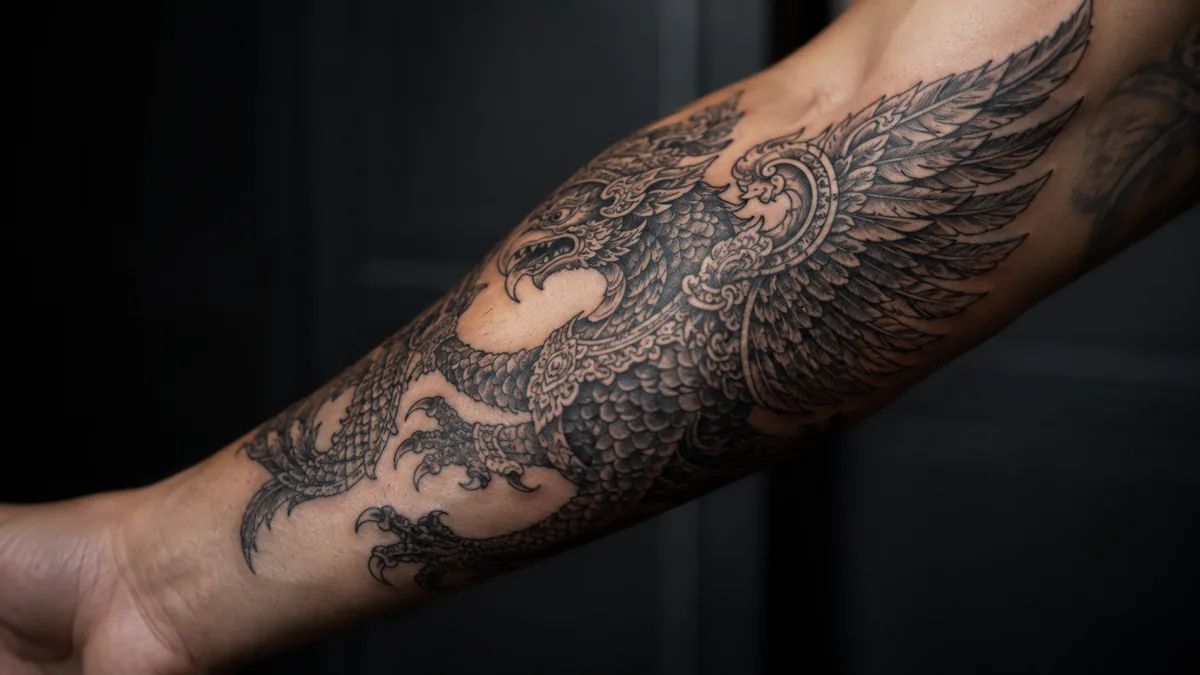
A claw does not ask permission, it takes hold.
Even without the Naruto context, the ai kanji is one of the most recognized characters in Japanese culture. It represents love, compassion, and deep care. It’s used in everyday Japanese language for everything from romantic love to parental devotion. The character has real cultural weight, not just anime weight.
That dual layer is what makes this tattoo work for people who want depth. You can explain it as a Naruto tribute if someone asks. You can also just say it means love and leave it at that. The personal meaning sits underneath either answer, and that’s the part that actually matters.
Redemption and Transformation Readings
Gaara doesn’t stay the villain. He transforms from a feared, isolated killer into the Kazekage, a leader who protects the people who once feared him. That arc is the other major reason people get this ink. It signals personal transformation. The idea that who you were doesn’t lock in who you become.
A lot of people getting this piece have their own before-and-after story. Addiction recovery, surviving abuse, climbing out of a hard period of mental illness. The kanji becomes a marker for the version of themselves that came out the other side. That’s solid emotional grounding for a permanent piece.
Design Variations: Minimalist to Full Portrait
The standalone kanji is the most popular option. Clean, simple, reads from across the room, and ages well when sized right. You want at least two inches tall with proper line weight so the internal strokes don’t bleed together over time. Going too small on complex kanji is how you end up with a blob in five years.
Full Gaara portrait pieces are the other major direction. Black and grey works best here, with sand texture shading around the figure. Some clients add the gourd he carries, the tailed beast seal, or a scene from a specific episode. Neo-traditional with thick outlines also holds up great long-term because bold will hold.
Color vs. Black and Grey
Black and grey is the safer bet for longevity, especially on the kanji alone. The contrast stays crisp, heals nice, and decades from now the character is still going to read clean. A lot of artists do it in solid black with a dark red accent, which nods to how it appears on Gaara without committing to a full color piece.
If you want color, red is the obvious choice to match the source material. Saturated red can look sharp fresh out of the shop, but red ink fades faster than black and needs consistent UV protection. A watercolor wash as a background behind solid black kanji can look great and lets you add color without building the whole piece in unstable pigment.
Placement and How It Ages
Inner forearm is the most common placement. It’s low-wear compared to hands or fingers, gets less sun than the outer arm, and there’s enough real estate to size the kanji properly. Clients can actually see it every day, which matters when the piece has personal significance. Pain level here is moderate, nothing spicy.
Upper back and high chest are strong alternatives for larger compositions or something more private. Avoid the outer arm without sunscreen discipline, and skip hands and feet if you care about longevity. Those are high-wear zones where fine lines blur and color fades fast. Inner forearm, upper back, high chest: those are where crispy lines stay crispy.
Who Gets This Piece and How to Make It Yours
Naruto fans are the obvious base, but this piece pulls a wider crowd. People processing trauma, folks who’ve done serious inner work, anyone who’s had to build their own self-worth from scratch. Clients are usually not chatty about the backstory, but the reason runs deep every time.
To personalize it, think about what part of Gaara’s story lands hardest for you. If it’s the transformation angle, a split composition showing isolation versus protection reads strong. If you want to mirror the forehead placement spiritually, put the kanji somewhere you see it daily. Talk to your artist before you sit down. The best pieces always come out of that conversation.









