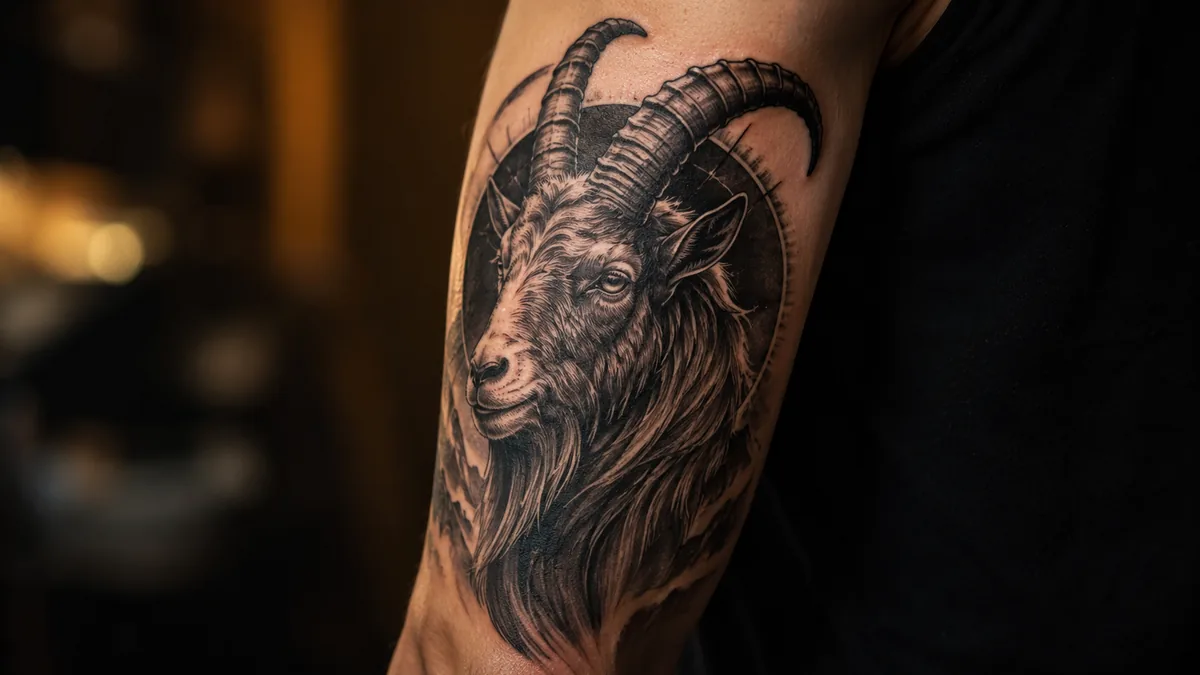
The goat tattoo covers a lot of ground. Depending on who you ask, it represents stubborn determination, sure-footed confidence, or being the greatest of all time. Sometimes all three at once. That range is exactly why it works.
People get goat tattoos for real, personal reasons. Some tie it to astrology, some to mythology, some to athletic legacy. It’s one of those pieces that reads differently depending on the design, and a good artist will help you dial in which version speaks to you.
Core Meaning: Determination and Sure-Footed Ambition
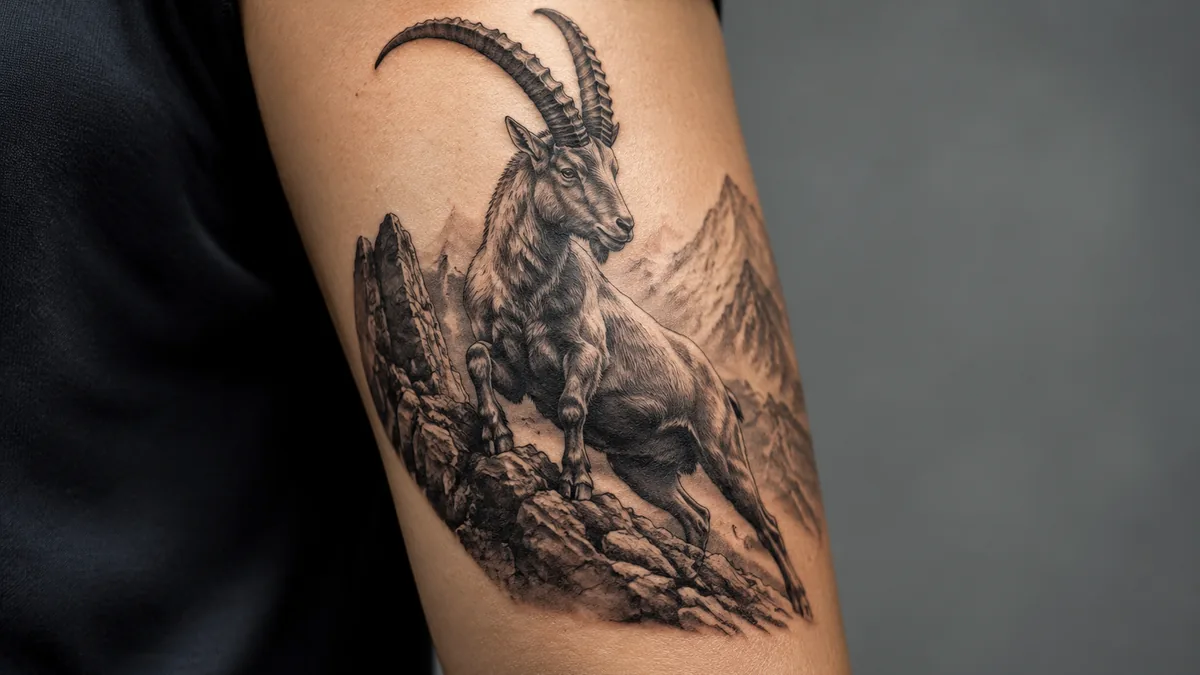
The goat’s core symbolism comes straight from how the animal actually behaves. Mountain goats climb terrain that would stop most creatures cold. That translates directly into the tattoo: resilience, persistence, the ability to grind through obstacles without slipping. It’s a piece about not stopping, even when the path looks impossible.
Beyond raw toughness, goats also carry connotations of independence and stubbornness in a positive sense. You know what you want, you’re not easily redirected, and you make your own path. That blend of toughness and self-direction makes the goat a solid choice for anyone who’s pushed through something hard and come out the other side still standing.
The GOAT Meaning: Greatest of All Time
The goat doesn't ask permission to reach the top of the mountain.
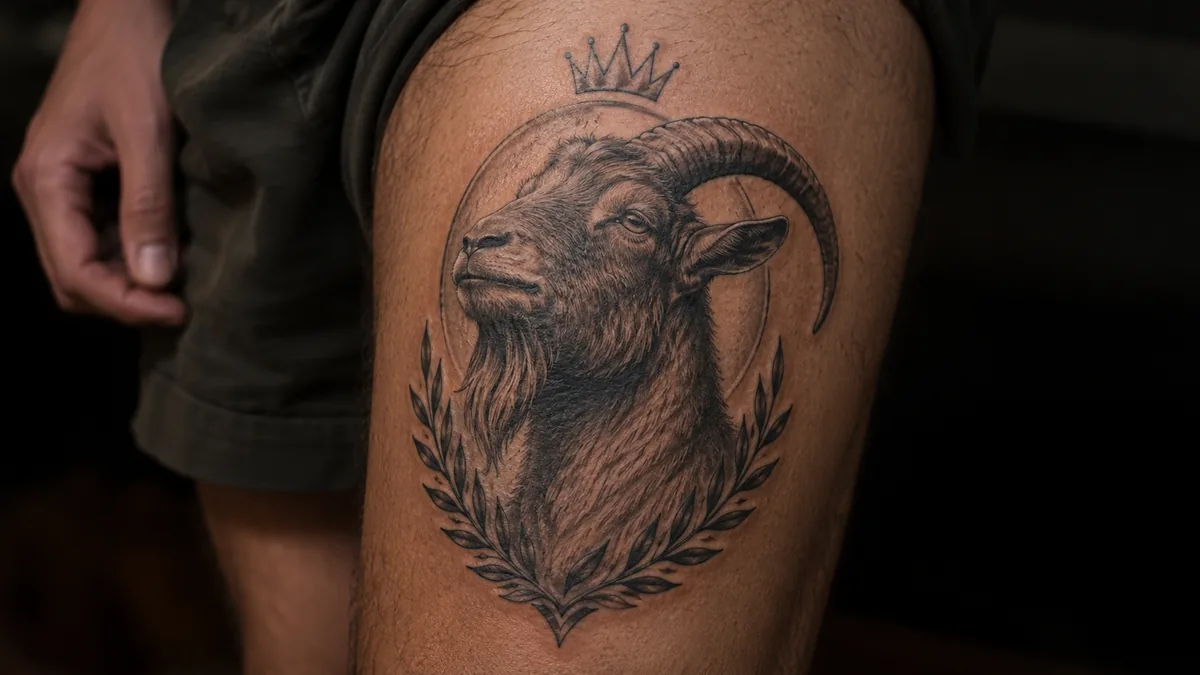
This one is straightforward. GOAT as an acronym, Greatest of All Time, has worked its way into tattoo culture in a big way, especially among athletes and sports fans. A goat tattoo on a running back, a boxer, or a basketball player almost always carries this reading. It’s a declaration, not a question.
The design usually leans into it visually. A crowned goat, a goat with jersey numbers, or a goat paired with a sport-specific element makes the GOAT meaning explicit. Without those cues, the piece reads more broadly. If that’s your intention, talk to your artist about how to make the reference clear without being literal or corny.
Capricorn and Astrological Symbolism
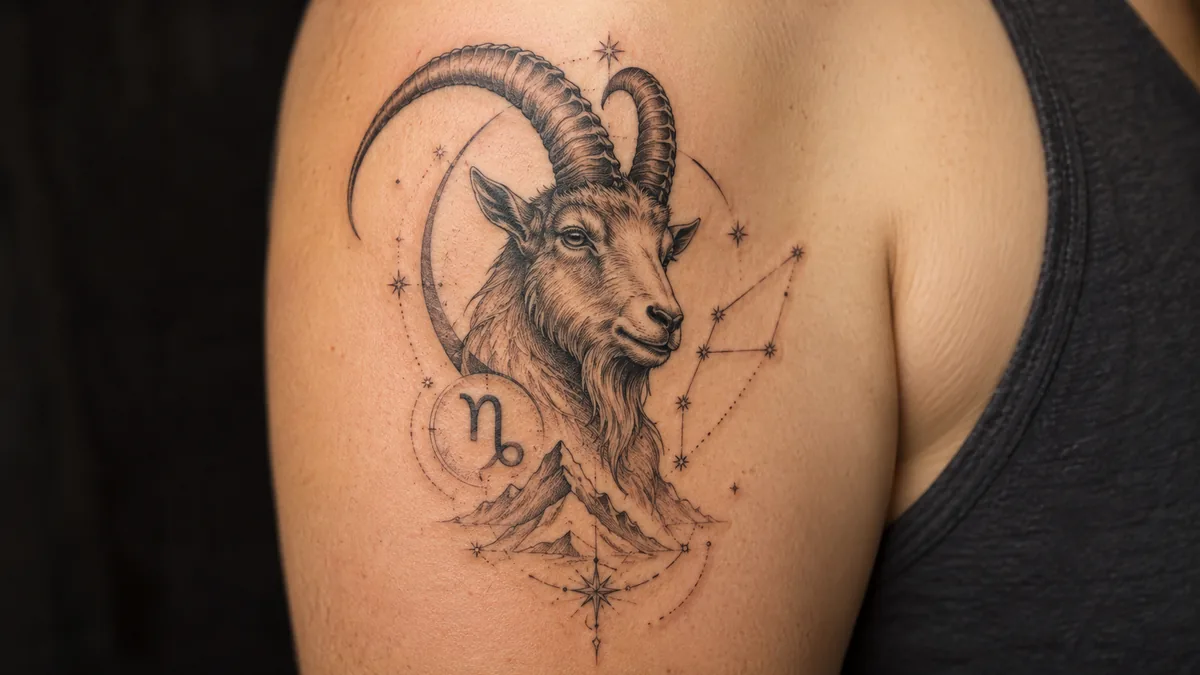
Capricorn, the zodiac sign spanning late December through late January, is represented by a sea-goat, a mythological creature that’s half goat, half fish. Capricorns getting a goat tattoo is extremely common. The sign is associated with discipline, ambition, practicality, and long-term thinking. Those traits line up tightly with the goat’s natural symbolism, which makes the piece doubly loaded with meaning.
Astrological goat tattoos often incorporate the Capricorn glyph, constellation lines, or the sea-goat silhouette with a fish tail. A clean geometric goat head paired with constellation dots is one of the most requested versions right now. It reads quietly to a stranger, but anyone who knows astrology gets it immediately.
Mythological and Cultural Roots
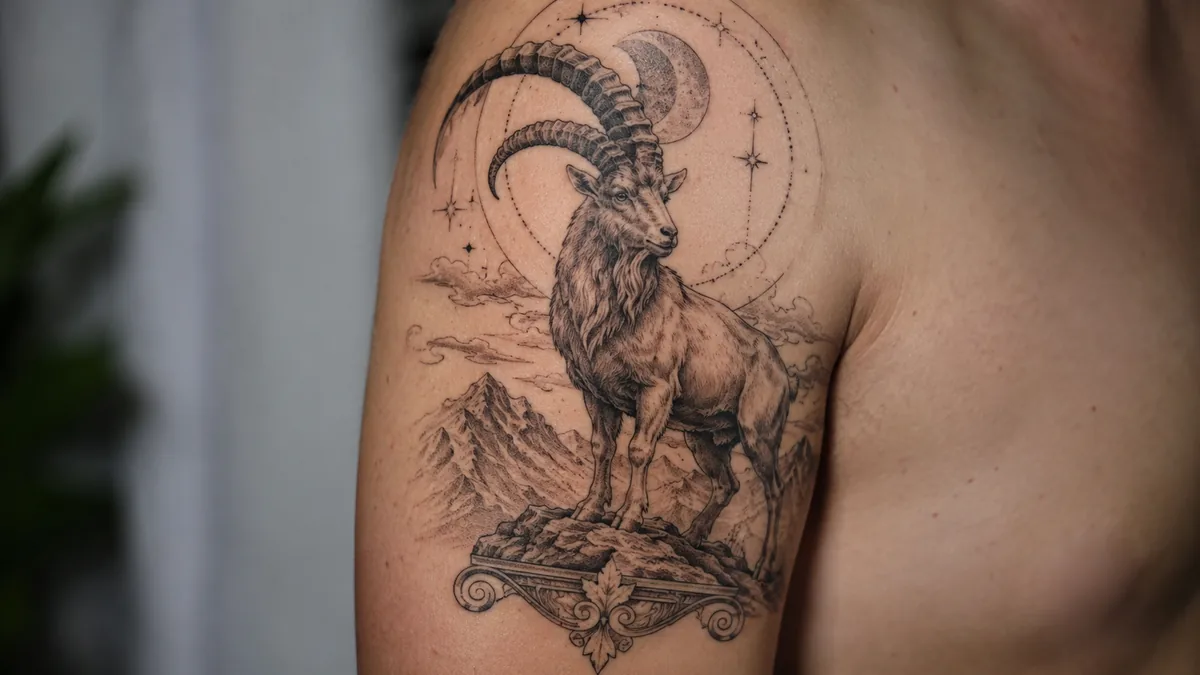
In Greek mythology, the goat shows up in real, documented ways. Amalthea was the goat who nursed Zeus. Pan, the god of the wild, had goat legs and horns. Satyrs carried goat features. These aren’t invented connections: goats were genuinely woven into Greek religious and mythological life as symbols of fertility, abundance, and wildness. The cornucopia itself originates from Amalthea’s horn.
In Norse tradition, Thor’s chariot was pulled by two goats, Tanngrisnir and Tanngnjostr, which he could slaughter for food and then resurrect. That cycle ties the goat to themes of regeneration and sacrifice. Across West African and Caribbean religious traditions, the goat carries spiritual weight in ritual contexts. These backgrounds give a goat piece depth if you’re drawing on a specific cultural lineage.
Design Styles and Variations
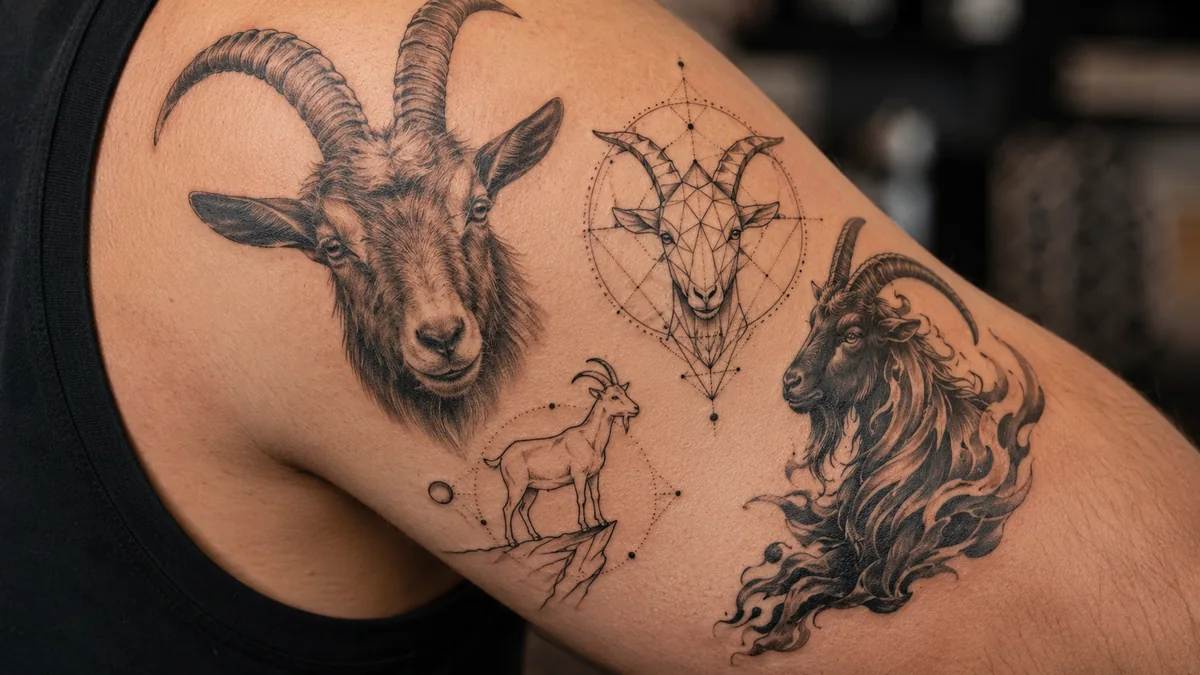
The goat translates across styles cleanly. A bold, neo-traditional goat head with exaggerated horns and rich color saturation looks strong on larger real estate like the thigh or upper arm. Fine line black and grey suits a minimalist goat silhouette or a detailed skull-faced goat, popular in darker, more occult-leaning aesthetic choices. Geometric and dotwork interpretations handle the angular bone structure of the goat face really well.
Realistic black and grey is another strong lane, especially for a mountain goat standing on a rocky outcrop, which reads beautifully as a large back or chest piece. Illustrative and watercolor styles exist too, but bold will hold better over time than a heavily washed-out watercolor treatment. If you’re going fine line, keep it simple so it stays crispy after healing rather than blurring into noise.
Color vs. Black and Grey

Black and grey is the dominant choice for goat tattoos, and it works for good reason. The goat’s natural coloring is neutral, and a black and grey piece lets the linework and shading carry the weight without distraction. Whip shading on the fur texture, especially on a realistic mountain goat, looks incredibly clean when healed properly.
Color opens up in the neo-traditional and illustrative directions. Deep greens for mountain backgrounds, saturated golds for a regal crowned goat, bold reds and blacks for a more intense occult-influenced design. Color saturation in a high-quality piece pops, but placement matters. Areas that see heavy sun exposure or friction will fade faster, so a saturated color goat on the outer forearm or hand needs touch-ups more often than one on the upper arm or back.
Placement, Pain, and Longevity
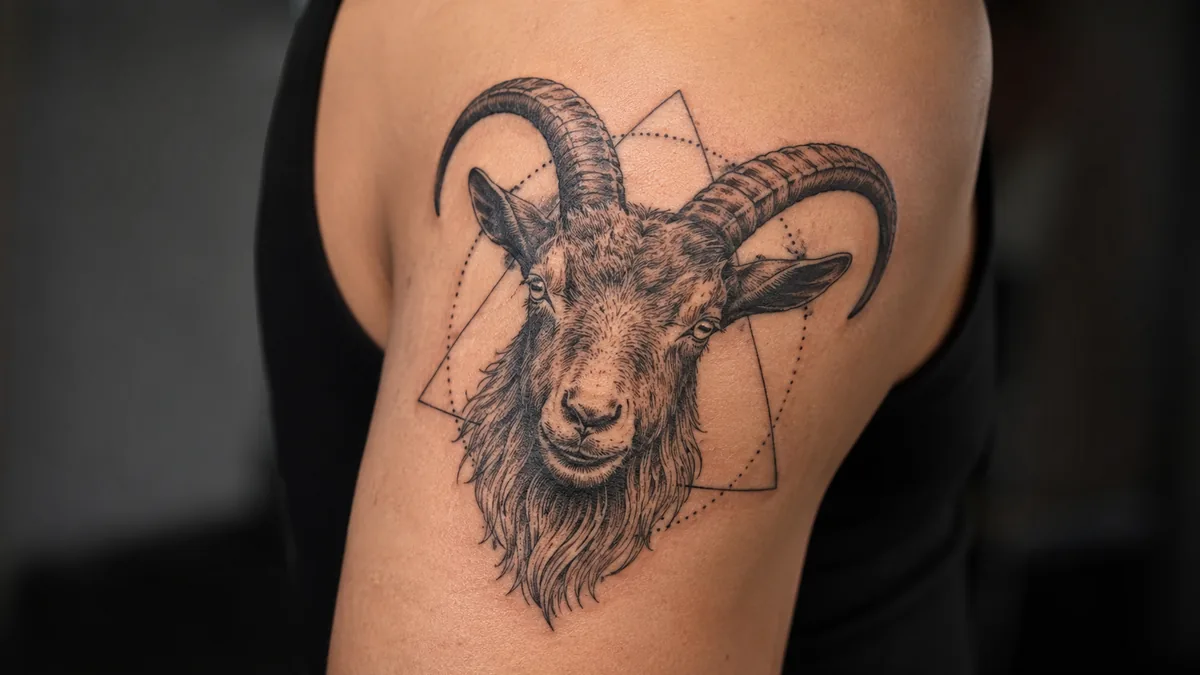
Upper arm, thigh, calf, and chest are the workhorses for goat tattoos. They offer enough real estate for detail, the skin is relatively stable over time, and pain levels are manageable for most people. A detailed goat head with horns needs room to breathe, so cramming one onto a wrist or behind the ear will cost you line clarity. A small, simple silhouette can go almost anywhere, but size it to the zone.
Spicy placements for a goat piece include the ribs, sternum, spine, and the ditch of the elbow. The neck and hands are high-wear zones that will require touch-ups to stay sharp. The outer forearm and shoulder are lower wear, heal nice, and stay readable for years. In general, simpler designs age better in tricky spots. A clean, bold goat with solid linework will still read from across the room in twenty years.
Who Gets Goat Tattoos and How to Make It Personal
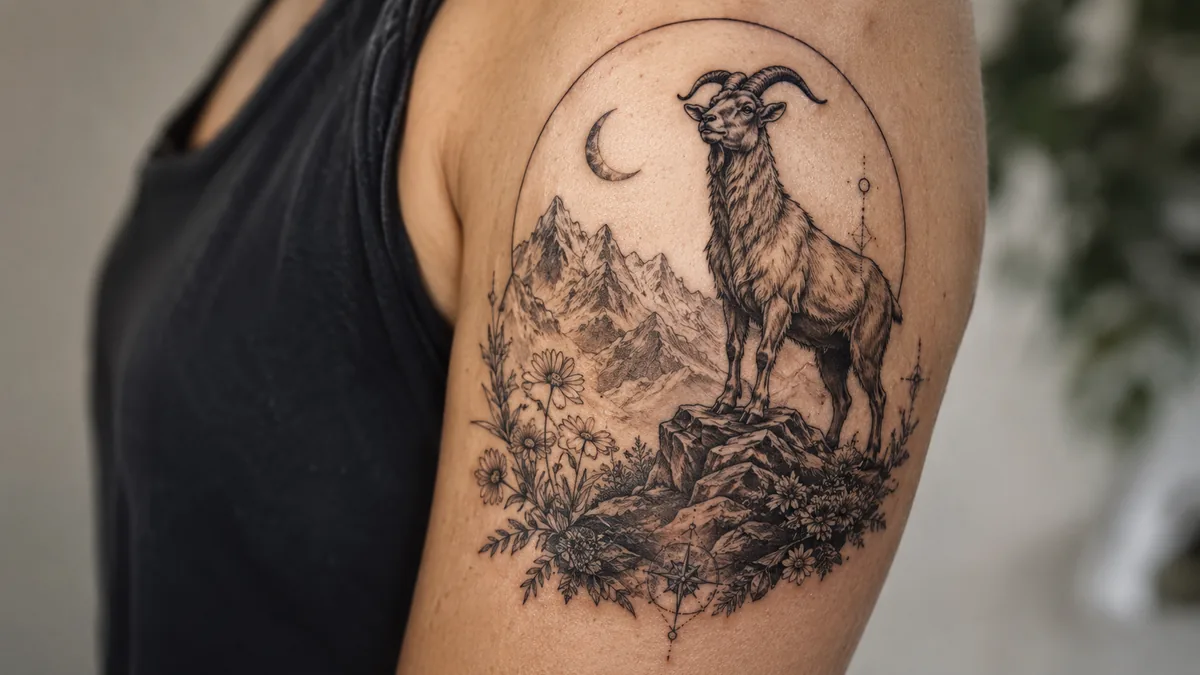
Athletes, Capricorns, and people who’ve climbed back from serious setbacks make up a big chunk of goat tattoo clients. It’s also popular with anyone drawn to its mythology, from Greek history buffs to people with ties to religious traditions that carry goat symbolism. It’s a piece that works across a wide range of ages and backgrounds without feeling niche or obscure.
To make it yours, anchor it to a specific moment or trait. Pair the goat with a mountain that means something to you, a date, a number, or imagery from your cultural background. A crowned goat with your team’s colors hits different than a generic design. Brief your artist honestly: tell them whether you want it to read athletic, spiritual, astrological, or personal. That conversation is what turns a good tattoo into the right tattoo.