Getting a tattoo license in Texas means going through the Department of State Health Services (DSHS), not a county clerk or private board. You need a specific license to tattoo, a separate one to pierce, and you must work out of a licensed facility. The process is straightforward but has strict steps you cannot skip, including bloodborne pathogen training, a hepatitis B vaccination or declination, and passing an inspection. Here’s exactly how it works and what trips people up.
Who Needs a License and What Kind
Texas draws a hard line between tattooing and body piercing. You cannot legally tattoo without an Individual Tattoo License issued by DSHS. Piercing requires its own separate license. Even if you hold a cosmetology license or an out-of-state tattoo credential, Texas does not reciprocate, you must apply through DSHS.
Apprentices fall into a gray zone that confuses many people. You can apprentice in a licensed shop, but you cannot tattoo paying clients until your individual license arrives. Some shops let apprentices practice on synthetic skin or fruit; others have strict in-house protocols. Either way, unlicensed tattooing on human skin is illegal and can shut a shop down.
Tattoo Studio License vs. Individual License
The shop itself needs a Tattoo Studio License, separate from your individual one. You cannot get your individual license without a licensed studio to affiliate with on your application. This creates a catch-22 for newcomers: you need a shop to get licensed, but shops hesitate to bring on unlicensed artists. Most solve this by apprenticing first, then having the shop sponsor their individual application.
- Individual Tattoo License: required for every artist
- Tattoo Studio License: required for the business location
- Both must be current; neither substitutes for the other
Training Requirements Before You Apply
DSHS requires completion of a bloodborne pathogen training course that meets OSHA standards. This is not a suggestion, it is mandatory documentation with your application. The course must cover exposure control, proper sterilization, waste disposal, and incident response. Many community colleges, online providers, and tattoo supply companies offer approved courses. Expect to pay $50, $150 and spend 4, 8 hours.
Hepatitis B vaccination or a signed declination form is also required. Texas does not force the vaccine, but you must document your choice. Most artists opt for the vaccine series; it is three shots over six months, so start early if you go this route.
First Aid and CPR: Recommended, Not Required
DSHS does not mandate first aid or CPR certification for tattoo licensing, but many reputable shops require it. Having both makes you more hireable and prepares you for the rare but real situations where a client faints, has a seizure, or experiences a severe allergic reaction during a session.
The Application Process Step by Step
Applications go through the DSHS Tattoo and Body Piercing Program. You can download forms from their website or request a packet by mail. The current individual license fee is $127 for a two-year term, though fees change, verify before submitting. Studio licenses run higher and require a separate application with floor plans and equipment lists.
Your application must include:
- Completed individual application form
- Copy of bloodborne pathogen training certificate
- Hepatitis B vaccination record or signed declination
- Photo ID (driver’s license, passport, or state ID)
- Passport-style photo
- Affiliation with a licensed studio (shop name and license number)
Processing typically takes 4, 6 weeks, though delays happen. You cannot tattoo until the physical license arrives. Some artists keep bartending or their previous job during this gap.
Common Application Mistakes
Incomplete hepatitis B documentation is the number one reason applications bounce back. Another frequent error: listing a shop that does not have a current studio license, or whose license is under renewal. Always verify the shop’s status before submitting. Photocopies of certificates often come out blurry; scan and print clearly.
Shop Inspections and What They Cover
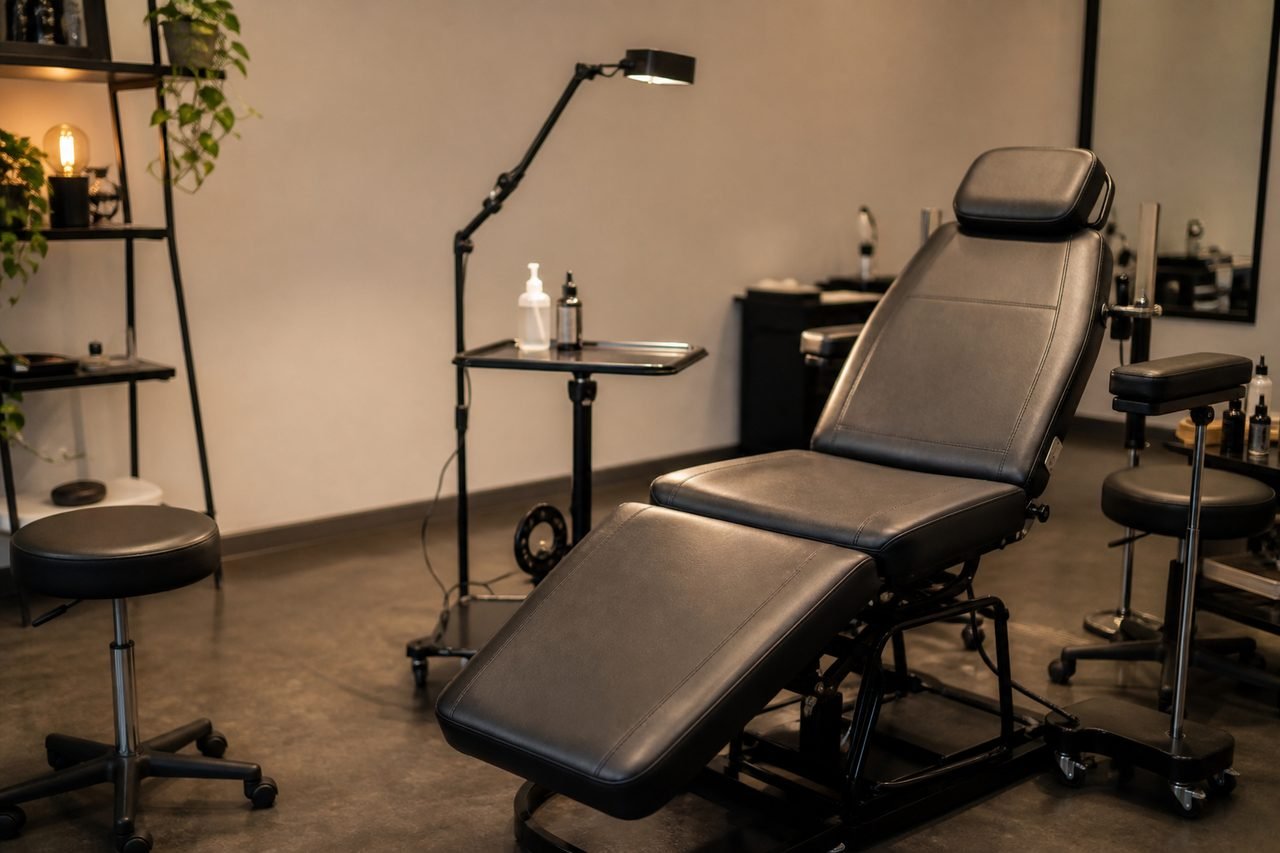
DSHS inspects tattoo studios at least annually, and your individual license ties you to that shop’s compliance. Inspectors check autoclave logs, spore test results, needle disposal contracts, workstation setup, and client consent records. Artists must maintain a clean, covered work surface; use single-use needles; and dispose of sharps in puncture-proof containers.
If a shop fails inspection, all artists working there feel the consequences. DSHS can suspend studio licenses, which automatically affects every affiliated individual license. This is why experienced artists vet shops carefully before affiliating.
Autoclave and Sterilization Specifics
Texas requires weekly biological indicator (spore) testing for autoclaves, with results logged and available for inspection. The autoclave itself must be medical-grade, not a pressure cooker or kitchen equipment. Many new artists learn sterilization protocol during apprenticeship, but the license holder bears legal responsibility for compliance.
Renewal, Transfers, and Moving Shops
Individual licenses expire two years from issuance and must be renewed before deadline. DSHS sends renewal notices, but missing them is on you. Late renewal incurs penalties and a lapse in legal tattooing ability.
Switching shops requires updating your affiliation with DSHS. The process is simpler than initial application but still requires paperwork. Some artists keep their old affiliation active until the new one processes to avoid gaps. Never tattoo at an unlicensed pop-up, convention booth, or private residence, Texas enforcement is active, and penalties include fines and criminal charges.
Apprenticeship: The Real Path In
Texas has no formal apprenticeship license, so the practical route is informal but universal. You find a licensed artist willing to train you, often unpaid for 6, 18 months. During this time you clean stations, set up needles, observe procedures, and gradually practice under supervision. The quality of your apprenticeship determines your skill level far more than any classroom course.
Good apprenticeships are competitive. Build a portfolio of drawings, show up consistently, and accept that scrubbing tubes is part of the process. No reputable artist hands you a machine on day one. The apprenticeship is where you learn skin tension, needle depth, how ink spreads differently on various body parts, and how to read how a tattoo will age, knowledge no license test covers.
Key Takeaways
- Texas tattoo licensing runs through DSHS, with no reciprocity for out-of-state licenses
- You need bloodborne pathogen training, hepatitis B documentation, and a licensed studio affiliation
- The individual license costs around $127 for two years; studio licenses are separate and more expensive
- Apprenticeship is the practical entry path, though unlicensed tattooing on clients is illegal
- Autoclave logs, spore tests, and sharps disposal are inspected and must be maintained
- Renew on time, update shop affiliations when you move, and never work unlicensed
Getting licensed in Texas is bureaucratic but not mysterious. The bigger challenge is finding a solid apprenticeship and developing the technical skill to back up your paperwork. Start the DSHS requirements early, especially the hepatitis B series, and treat the administrative side with the same seriousness you bring to needle hygiene.
Frequently Asked Questions
How long does it take to get a tattoo license in Texas after submitting the application?
DSHS typically processes individual tattoo license applications in 4 to 6 weeks. Delays happen if your documentation is incomplete, so double-check your hepatitis B records and bloodborne pathogen certificate before submitting.
Can I tattoo from home or at a convention with just an individual license?
No. Texas requires you to work from a licensed tattoo studio. Home tattooing and unlicensed convention booths are illegal and can result in fines or criminal charges against both you and the venue.
Do I need to renew my bloodborne pathogen training every time I renew my license?
DSHS requires current training, but the exact renewal frequency depends on your certificate’s expiration date. Most courses are valid for one year, so you may need to retake training before each two-year license renewal.
What happens if my shop fails a DSHS inspection while I’m working there?
A failed studio inspection can suspend the shop’s license, which affects all affiliated artists. You cannot legally tattoo until the studio resolves violations and DSHS reinstates the license. This is why many artists research a shop’s compliance history before affiliating.
Related Tattoo Guides
- How to Get Tattoo Ink Off Skin: A Complete Guide
- How to Lessen Tattoo Pain: A Practical Guide
- How to Heal a Tattoo Faster: Real Aftercare That Works
- Explore more