You can lighten a tattoo through professional laser removal, strategic cover-up preparation, or in some cases, careful fading over time, but there’s no magic cream or home remedy that’ll do the job safely. I’ve sat with clients for fifteen years watching their hope and their ink fade in equal measure, and the honest truth is: lightening a tattoo takes patience, money, and realistic expectations. This guide breaks down what actually works, what doesn’t, and how to think about the process from someone who’s watched hundreds of people walk this path.
Professional Laser Removal: The Real Deal
Laser tattoo removal is the only method that genuinely breaks down ink particles so your body can flush them out. I’ve sent dozens of clients to reputable laser clinics over the years, and I’ve watched sleeves become ghosts, then disappear entirely. It works, but it’s not fast and it’s not cheap.
How It Actually Works
The laser fires concentrated light pulses that shatter ink into smaller fragments. Your lymphatic system then scavenges those bits over weeks. Darker inks, black, dark blue, absorb the light best and fade fastest. Colors like yellow, green, and light blue fight back harder. I’ve seen a solid black tribal band need six sessions, while a watercolor piece with yellow and peach took twelve and still held a faint wash.
- Black and dark blue: Usually respond best, fewer sessions needed
- Red: Breaks down reasonably well with the right wavelength
- Green, yellow, turquoise: Stubborn, often need specialized lasers
- White ink: Turns gray or darkens first, unpredictable results
- Skin tone matters: Darker skin requires more conservative settings to avoid hypopigmentation
Pain, Healing, and What to Expect
I always tell clients: it hurts worse than getting the tattoo. Imagine hot grease snapping against skin, over and over, for minutes. Afterward, it blisters, scabs, itches like hell. The healing timeline runs two to four weeks between sessions, and you need six to twelve sessions spaced eight weeks apart minimum. A full sleeve removal? You’re looking at two years and thousands of dollars. I’ve had clients cry in my chair just talking about the cost, but I always say, if you’re committed, budget for it properly. Skipping sessions or going to cut-rate places burns skin and wastes money.
Lightening for Cover-Up Tattoos
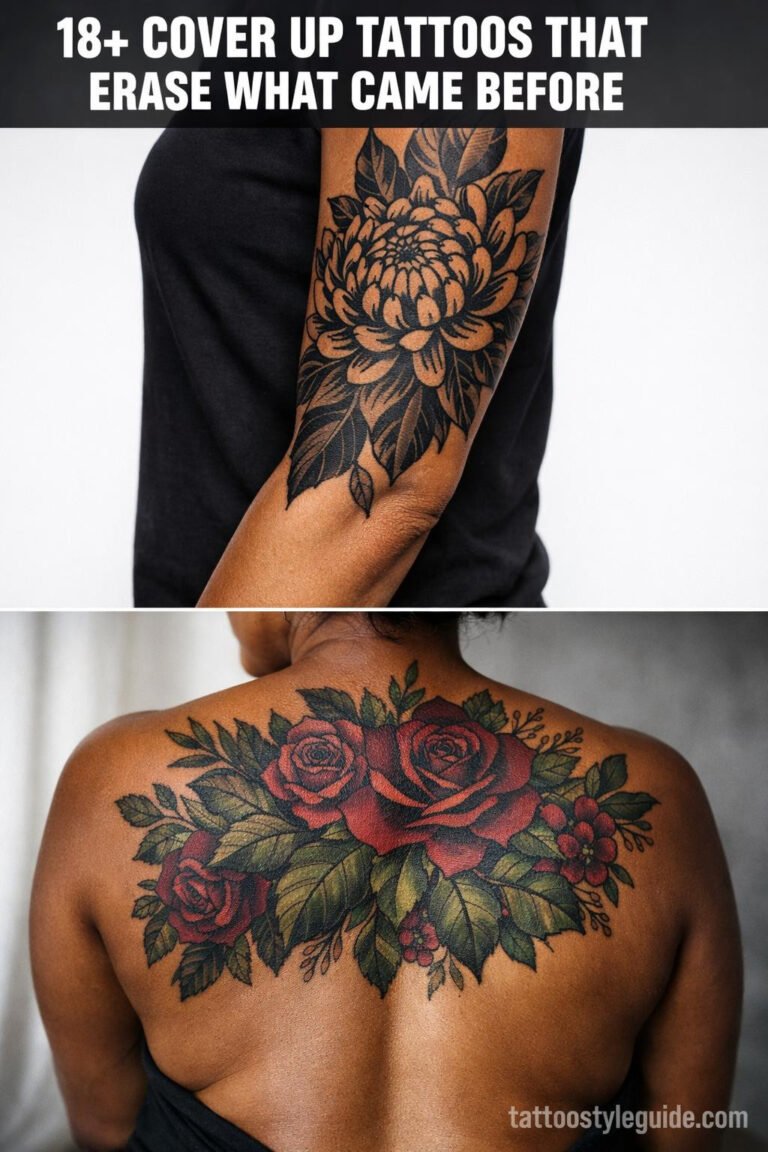
This is where I spend most of my time talking about lightening. Most people don’t want complete removal, they want enough fade so I can bury the old piece under something new. A cover-up needs the old tattoo significantly lighter, especially if it’s dense black or has hard lines that would show through anything new.
The Partial Fade Strategy
I typically ask clients to get two to four laser sessions specifically targeting the darkest areas. We’re not trying to erase everything, just knocking down the contrast so I can work. A blown-out tribal armband might need three sessions to become a workable gray wash background. A small black lettering piece might fade enough in one or two. I always examine the old tattoo under bright light, stretch the skin, and tell them honestly: “I can work with this now,” or “Two more sessions, then we’ll talk.”
Some artists do what’s called a “blast over”, tattooing directly over dark work with heavy black and saturated color. I avoid this when possible. The results often look muddy in five years, and I’ve had to fix too many of those. Lightening first gives us options. It lets me use color, negative space, detail. That’s the difference between a cover-up you tolerate and one you love.
What Doesn’t Work: The Myths I Hear in My Chair
Every month someone asks about salabrasion, lemon juice, salt scrubs, tattoo fading creams, or dermabrasion at home. I get it. People want control, they want cheap, they want privacy. But I’ve seen the aftermath, and it’s not pretty.
- Fading creams: No topical cream penetrates the dermis where ink lives. I’ve seen chemical burns, rashes, wasted hundreds of dollars. The FDA doesn’t approve any of them for tattoo removal.
- Lemon juice and salt: These exfoliate the epidermis at best. You might irritate skin, risk infection, and the tattoo stays exactly as dark. I had a client try this for six months on a wrist piece. She came in with raw, discolored skin and the tattoo unchanged.
- DIY dermabrasion/salabrasion: Sanding or salting skin down to bleeding layers risks scarring, infection, and permanent pigment changes. I’ve referred two people to dermatologists for keloid scarring from this.
- Tanning to “fade” ink: UV exposure actually breaks down ink slightly over decades, but it destroys skin elasticity and makes laser removal harder later. I see this on older tattoos, faded, blurry, on sun-damaged skin. Not a strategy.
The only exception: time itself. Tattoos do fade gradually. A piece on a sun-exposed forearm will look different at ten years than one on a covered thigh. But we’re talking subtle change, not lightening you can plan around.
Natural Fading and Lifestyle Factors
I mention this for completeness, not as a method. If you’re not ready for laser, understanding how tattoos age helps set expectations.
Placement matters enormously. Finger tattoos, tops of hands and feet, inner forearms, high friction, high sun, constant washing. I’ve watched finger pieces fade to illegibility in three years. A back piece under shirt fabric? Twenty years and still readable. Ink quality and artist technique matter too. Heavy-handed saturation lasts; light, sketchy work drifts faster. I’ve had clients come in thrilled their teenage stick-and-poke faded almost away, and others devastated that their expensive watercolor piece disappeared into a bruised-looking wash.
Weight fluctuation changes how tattoos sit. Skin stretches, compresses, the ink molecules spread. I’ve tattooed over stretch marks where old tattoos distorted. Not lightening exactly, but alteration that some people read as fading.
Pain, Cost, and Emotional Reality
I always bring this up because nobody talks honestly about the psychological weight. Tattoos carry memory, identity, sometimes trauma. Lightening or removing one is a process of letting go, and that hits harder than the laser.
Pain varies wildly by placement. Rib removal? I’ve had clients tap out. Ankle bone? Excruciating. Upper arm, outer thigh? More manageable. Most clinics use numbing cream or cooling devices, but it still hurts. Cost runs roughly $200-$500 per session for palm-sized pieces, more for larger work. Package deals help, but budget for more sessions than they estimate. I’ve never heard anyone say it took fewer than predicted.
The emotional arc I see: relief at starting, frustration at slow progress, impatience around session four, then either acceptance or renewed commitment. I keep in touch with clients through this, and I always say: photograph every session. The week-to-week change is invisible. Month to month, year to year, you’ll see it. Those photos keep people going.
Key Takeaways
Professional laser removal is the only reliable path to genuine lightening, whether you want full removal or prep for a cover-up. Expect multiple sessions, significant cost, and real pain. Partial lightening for cover-ups is often the smartest middle ground, give your artist workable canvas rather than demanding total erasure. Avoid every home remedy; I’ve seen the damage and the disappointment. Time and sun exposure create subtle fading but aren’t controllable strategies. Most importantly, find reputable providers, budget honestly, and be patient with your own skin and story. I’ve guided this process for years, and the clients who do best combine skepticism of quick fixes with genuine commitment to the long path.
Frequently Asked Questions
How many laser sessions does it usually take to lighten a tattoo enough for a cover-up?
Most cover-ups need two to four sessions to knock down dense black or heavy color enough for an artist to work effectively. I always examine the faded piece under bright light before starting, since every tattoo holds ink differently based on depth, color, and skin type.
Can I get a new tattoo immediately after laser lightening?
You need to wait six to eight weeks minimum after your last laser session before tattooing over that skin. The area needs to fully settle, any blistering or scabbing resolved, and the immune response calmed before I put new ink in.
Why did my white ink turn darker after laser treatment?
White ink often contains titanium dioxide that oxidizes under laser heat, turning gray or dark before it fades. This surprises people, and it’s one reason I warn clients that white and flesh-tone inks behave unpredictably during removal.
Is there any way to speed up fading between laser sessions?
Stay hydrated, exercise to support lymphatic flow, and protect the area from sun exposure. But honestly, your body clears ink at its own pace. I tell clients not to waste money on supplements or creams claiming to accelerate removal, they don’t change the biology.
Related Tattoo Guides
- How to Make a Fake Tattoo at Home: A Realistic Guide
- How to Remove Eyebrow Tattoo: A Complete Guide
- DIY Tattoo Removal: What Actually Works and What Doesn t
- Explore more