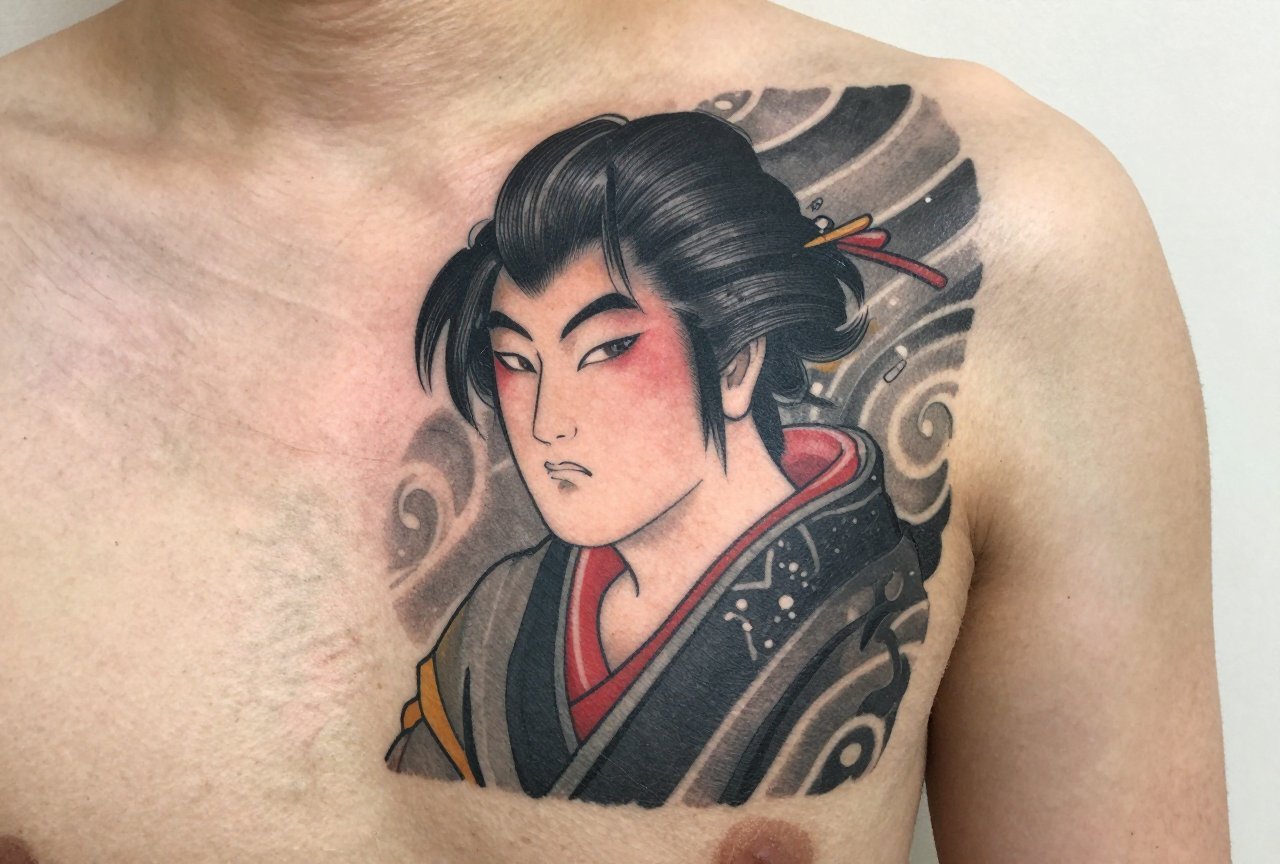
When someone sits in my chair and says “I want Japanese,” I always pause. That word covers a lot of ground. I’ve seen clients walk in with a blurry koi screenshot from Pinterest and others who’ve studied ukiyo-e prints for years. Japanese tattooing, irezumi, as it’s properly called, isn’t one look. It’s a massive tradition with rules, regional variations, and a working culture that’s totally different from American street shops. I’ve tattooed alongside Japanese-trained artists and I’ve watched American apprentices try to copy Horiyoshi III flash without understanding why the scales curve that way. This guide is what I tell those clients after they sit down and before I pick up a machine.
Origins & History
Irezumi goes back centuries. We’re talking Edo period, 1600s, when woodblock prints started influencing what people wore on their skin. Criminal branding existed too, those marks were punishment, not art. The tradition split. Decorative irezumi became associated with firemen, laborers, and eventually the yakuza. That criminal association got tattooing banned in Japan for decades. The irony? Some of the most refined tattooing on earth was driven underground.
The Tebori Legacy
Hand-poking with steel needles attached to bamboo handles. I’ve watched tebori done at conventions. The sound is softer than a machine, more of a wet, rhythmic push than a buzz. The saturation sits differently in skin. Machine work can mimic it, but there’s a depth to real tebori that photographs don’t capture. Most Japanese tattoo artists working outside Japan use machines now. A few, like Horitaka in California, still offer tebori for parts of large pieces. It costs more. It takes longer. Clients either care or they don’t.
From Underground to Global
By the 1990s, Japanese tattooers started traveling. Western artists started flying to Tokyo to apprentice. I know a guy who spent three years in Osaka learning to mix traditional pigments. He came back with different hands, literally, the muscle development from tebori changed his grip. Now “Japanese style” gets done in Berlin, São Paulo, everywhere. Quality varies wildly. The best artists understand the rules. The worst just copy images without knowing why a dragon has three claws versus five.
Key Characteristics & Motifs
Japanese tattooing has grammar. Backgrounds aren’t filler, they’re environment. Wind bars, waves, clouds, cherry blossoms: these frame the main subject and create movement. I’ve had clients ask me to skip the background to save money. I explain that without it, you’ve got a sticker, not a Japanese tattoo.
- Koi: Upstream swimming, often becoming dragons. Represents perseverance. The direction matters, downstream koi are dead or defeated.
- Dragons: Usually without wings in Japanese tradition. Claw count indicates rank. Three claws common, five imperial.
- Phoenix (Hō-ō): Fire, rebirth, often paired with paulownia flowers. I’ve done three full backs with this motif.
- Foo dogs (Komainu): Guardian pairs, almost always done together. One mouth open, one closed.
- Snakes and cherry blossoms: Transience, danger, beauty. The contrast is the point.
- Oni masks and samurai: Protection, warrior spirit. These read masculine but I’ve tattooed them on women who train MMA.
Water is almost always present. Not literal blue water, stylized waves with specific names. “Men’s waves” are bolder, crashing. “Women’s waves” softer, more flowing. These aren’t gender rules anymore, but the visual language persists.
Color vs Black and Grey
This is where I spend twenty minutes with clients sometimes. Traditional Japanese is bold color. Vermilion red, peony pink, cobalt blue, intense green. The pigments were originally mineral-based, cinnabar for red, which is toxic. Modern artists use safer equivalents. The saturation needs to be aggressive because Japanese tattoos are designed to read from distance. A back piece should pop across a room.
When Black and Grey Works
I’ve done full black and grey Japanese sleeves. They can be stunning. The shading becomes the color, temperature shifts from warm black to cool grey create depth. But you lose something. The red of a koi’s belly, the pink of a peony: those carry symbolic weight. Black and grey reads more somber, more yakuza-movie. Some clients want that. Others don’t realize what they’re giving up until it’s too late.
Healing differs too. Color saturation requires more passes. The skin gets angrier. I’ve seen color Japanese pieces peel for ten days straight. Black and grey settles faster, but the long-term contrast can fade to mud if the artist doesn’t understand value separation.
Best Placements
Japanese tattooing traditionally covers large areas. The body suit, full back, chest, arms, legs, is the ultimate expression. But most of my clients aren’t committing to that. Here’s how we break it down:
- Full back: The canvas. Dragons, phoenixes, scenes from mythology. Needs to flow with spine and shoulder blades. I’ve seen backs where the artist ignored the anatomy and the dragon looks broken when the person moves.
- Sleeves (arm): Most common request. Can be standalone or connect to chest/back. The wrist area needs careful design, too much detail and it blurs in five years.
- Leg sleeves: Rising popularity. Thighs hold color amazingly. Knees and shins hurt more, but the wrap-around effect is worth it.
- Chest panels: Often paired with back pieces. The sternum is brutal. Clients tap out. I tell them upfront.
- One-shot pieces: Single images, usually thigh or upper arm. Not traditional, but workable if the artist understands spacing.
Finger and neck tattoos in Japanese style? I try to talk people out of it. The scale is wrong. The motifs don’t fit. It’s like putting a semi truck engine in a motorcycle frame.
Who It Suits
Not everyone. I say this with love. Japanese tattoos demand commitment. The bold lines and saturated color don’t hide. They age well if done right, the thick outlines hold better than fine-line nonsense, but they don’t fade into subtlety.
Skin tone matters less than people think. I’ve tattooed Japanese style on dark skin. The colors shift, reds become deeper, greens more emerald, but they read. The key is the artist’s understanding of pigment behavior, not the style itself.
Body type matters more. Large, flowing pieces need space. A 5’2″ person can get a gorgeous sleeve. A full back dragon on someone with a short torso gets compressed and weird. I trace and resize. Sometimes I have to say no to a design and suggest alternatives.
Career considerations? Japanese tattoos are recognizable. They’re not easily explained as “just a small thing.” I’ve tattooed lawyers who keep them covered, chefs who show them proudly. You need to know your own life.
Modern Variations
The scene’s splitting. Purists stick to strict rules, specific background patterns, traditional color palettes, motifs from established mythology. The new wave, sometimes called “J-inspired” or neo-Japanese, bends things. I’ve seen geometric backgrounds replacing wind bars. I’ve tattooed koi with watercolor splashes behind them. Purists hate it. Clients love it.
Single-Needle and Fine Line Crossover
This is tricky. Traditional Japanese relies on bold lines, 7RL minimum, often 9RL or mag shaders. The single-needle trend (3RL, even 1RL) doesn’t hold up in large Japanese work. I’ve seen Instagram-famous pieces that looked crisp at six months and blurry at two years. If you want fine line, don’t ask for Japanese. Ask for something else.
Mixed Cultural Motifs
Clients ask for Japanese dragons with Mexican sugar skulls. Polynesian patterns with koi. I don’t do it. Other artists do. The conversation in shops is ongoing, whether this is evolution or dilution. My take: know the rules before you break them. Most mashups look like the artist knew neither tradition.
Choosing an Artist
This is everything. A mediocre artist with a Japanese machine can ruin your skin for life. Here’s what I tell people:
- Look at healed work, not fresh photos. Fresh Japanese tattoos always look incredible. The color sits on top of irritated skin. Healed pieces show whether the artist understands saturation and depth. Ask for photos from one year later.
- Check their background training. Did they apprentice under someone Japanese-trained? Have they traveled? I spent two weeks in Horiyoshi III’s studio just observing. It changed my water work permanently.
- Ask about their pigment choices. Traditional Japanese color demands specific brands. Cheap ink goes chalky. I’ve seen “Japanese style” pieces where the red turned orange in six months.
- Evaluate their drawing flow. Japanese tattooing is about movement. If their portfolio looks static, images that could be stickers, keep looking. The piece should wrap, breathe, follow your body.
- Budget realistically. Good Japanese work is slow. A full sleeve might be forty hours. At proper rates, that’s serious money. Payment plans exist. Cheap irezumi doesn’t.
Shop culture matters too. Japanese tattooing traditionally happens in private studios, not walk-in shops. The artist-client relationship is longer, more involved. Some American artists replicate this. Others work in street shops and do Japanese between infinity symbols. Both can produce good work, but the private studio model tends to attract more dedicated practitioners.
Final Thoughts
I’ve been tattooing fifteen years. Japanese work still intimidates me. That’s healthy. The tradition is deep enough that arrogance means you’re missing something. When a client comes in educated, knows why they want a koi, understands the commitment of a background, has realistic budget expectations, the process becomes something special. I’ve had clients cry when they see their healed back piece for the first time. Not from pain. From recognition. The image has become part of them.
Bad Japanese tattooing is everywhere now. The style’s popularity means every shop claims they do it. Look deeper. Ask questions. The right artist will welcome your scrutiny. The wrong one will rush you to deposit. Trust your gut, but verify with healed work and real training. Your skin deserves the respect this tradition demands.
Frequently Asked Questions
How long does a Japanese sleeve typically take to complete?
A full Japanese sleeve usually runs 25 to 40 hours depending on complexity, your pain tolerance, and how your skin takes color. I book them in four to six hour sessions spaced three weeks apart for healing. Rushing it damages the work.
Can I get a Japanese tattoo if I’m not Japanese?
This comes up constantly. Respectful appropriation versus appropriation. Most Japanese artists I’ve met are honored when foreigners study the tradition seriously. The problem is lazy copying without understanding. Learn the meanings. Find an artist who knows the culture. Don’t treat it like aesthetic tourism.
Why do Japanese tattoos cost so much more than other styles?
The scale, the saturation, and the time. A small American traditional piece might be two hours. A Japanese sleeve is twenty times that. Plus the drawing phase is extensive, custom backgrounds, multiple revisions. You’re paying for years of specialized training and forty-plus hours of needle time.
Will my Japanese tattoo look bad when I’m old?
Better than most styles, honestly. The bold lines and heavy saturation age well if the artist knew their craft. Fine details in fingers or throat will blur. But a properly done back piece or sleeve? I’ve seen thirty-year-old Japanese tattoos that still read clearly. The rules exist partly because they work long-term.
Related Style Guides
- Traditional Tattoos for Women: A Real Shop Guide
- Great Tattoo Ideas That Actually Work
- Abdominal Tattoo Ideas for Every Body
- Explore more