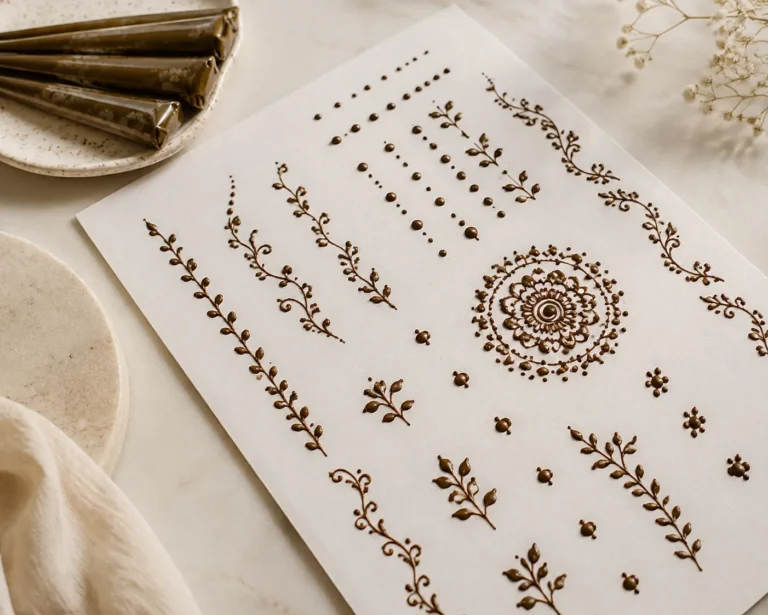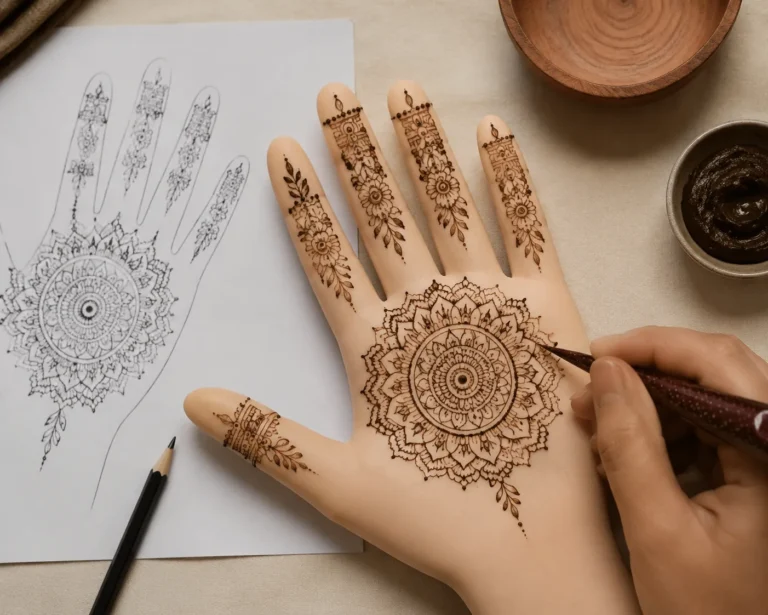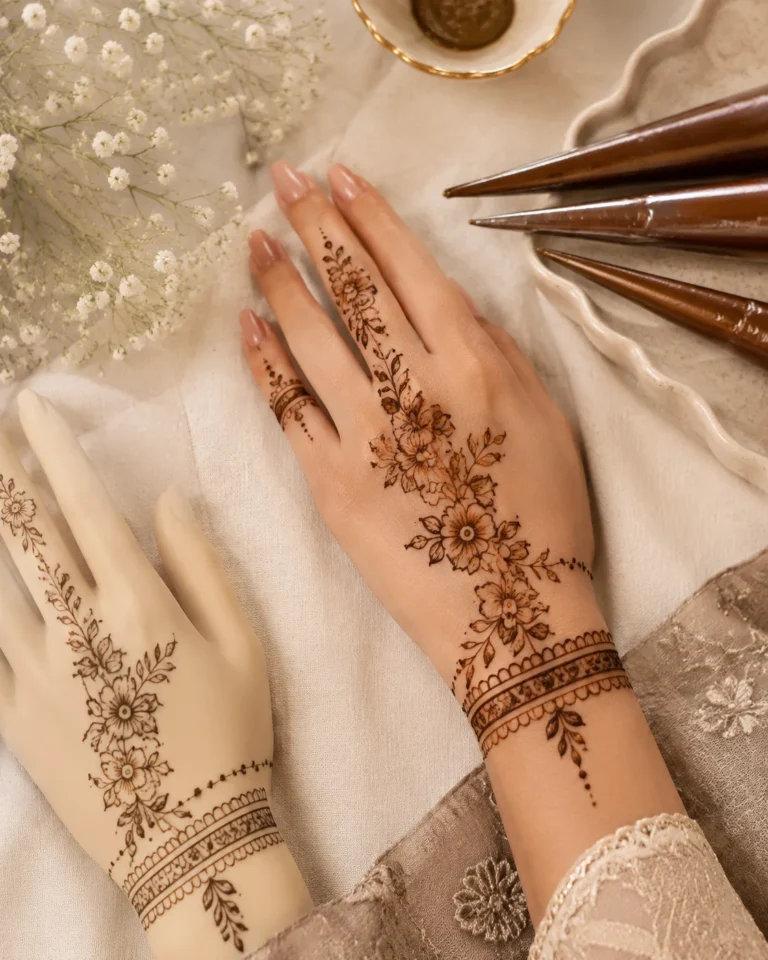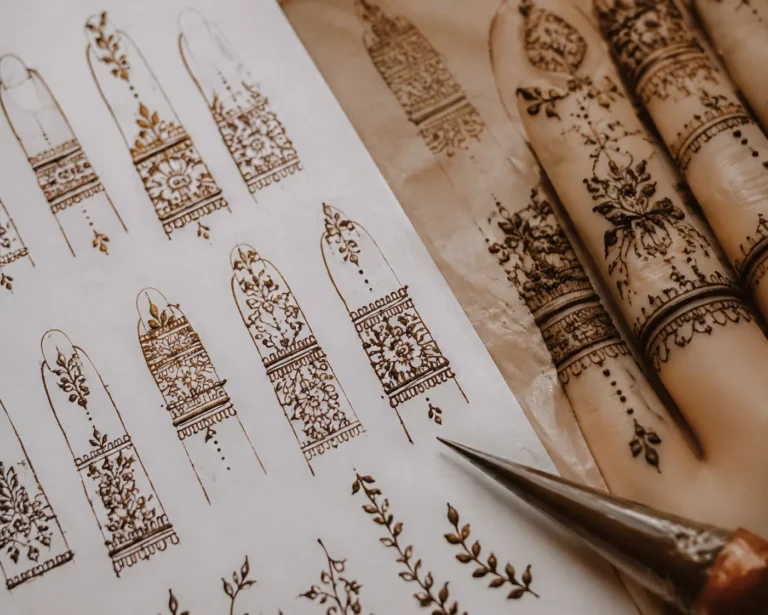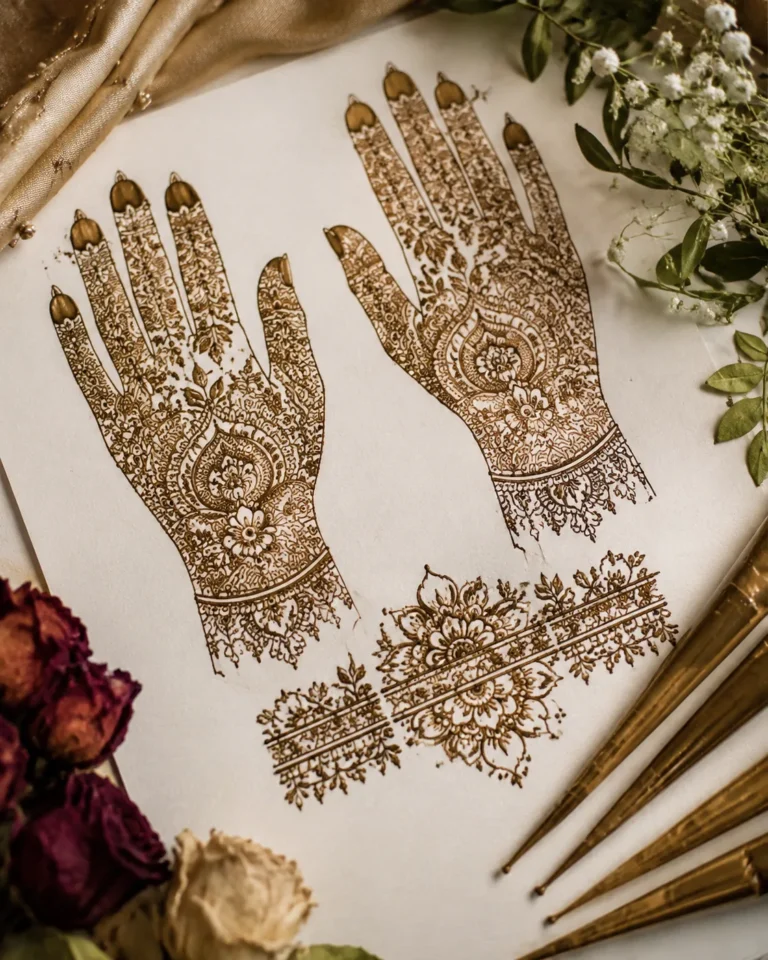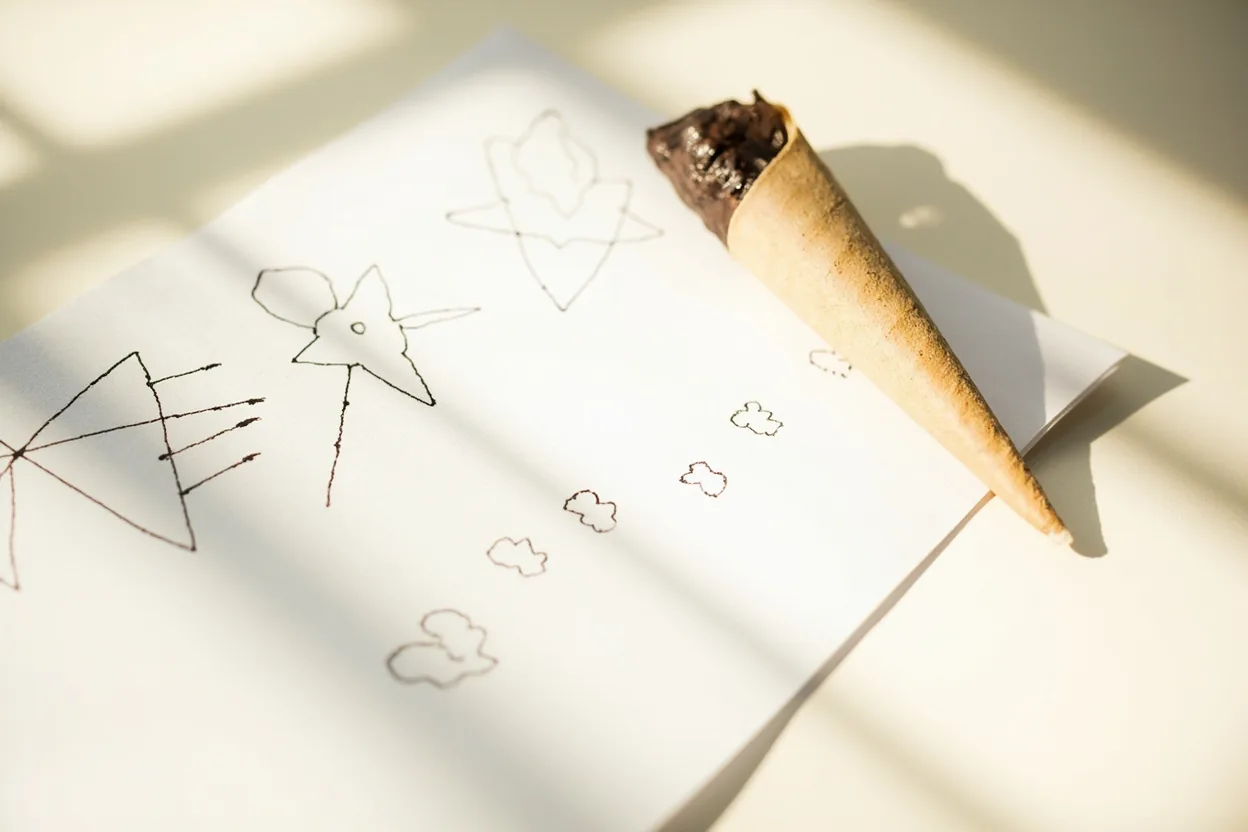
Kids henna designs should stay small, simple, and safety-first. A child does not need a dense bridal-style pattern to enjoy a temporary flower, star, moon, or tiny animal.
Quick answer: Good kids henna designs include small flowers, stars, moons, hearts, butterflies, simple animals, dots, wrist bands, and tiny back-hand motifs. Use safe natural henna, supervise the process, and avoid black henna products.
Simple Designs That Work for Kids
Keep the design quick so the child can sit still and let it dry.
| Option | Best use | Keep in mind |
|---|---|---|
| Tiny flower | Back of hand | Keep petals simple |
| Star or moon | Fast design | Let paste dry fully |
| Butterfly | Fun symbol | Avoid tiny wing detail |
| Wrist band | Bracelet effect | Do not make it too tight-looking |
| Small animal | Playful design | Use a simple silhouette |
Stick with bold, simple shapes for kids. Flowers with four or five petals, small stars, butterflies, and basic geometric outlines all read clean on small hands. Keep the design contained, maybe two inches across max. Tight fill-in areas or ultra-fine linework will look muddy on young skin, so open shapes with clear negative space are your best bet.
The back of the hand and the inner wrist are popular spots for a reason. They’re low-wear areas, meaning the henna stays saturated longer and doesn’t fade out in three days like it would on a palm. For really young kids, the forearm is even better. Flat surface, easy to hold still, and the design stays crispy for up to two weeks.
How Henna Actually Stains Skin
Henna bonds with the keratin in the outer layer of skin. That’s why the stain develops over the first 24 to 48 hours and why warmer areas of the body often pull a deeper orange-brown. On the palm, skin is thicker and more keratinized, so you get a darker result. On the back of the hand or forearm, expect a medium-brown tone that softens gradually.
Temperature and moisture matter more than most people realize. After application, the paste needs to dry completely, then stay on for at least four to six hours. Water is the enemy during that window. Wrapping the dried paste loosely in medical tape helps hold heat in and pushes the stain deeper. Skip that step and you’re leaving color on the table.
Kids are more likely to smudge paste, scratch, or get impatient. A small design is easier to manage and easier to live with if something goes wrong. I’ve watched children at community events rub their hands together after ten minutes, turning a neat star into a brown smear. A quick, contained shape minimizes that risk.
Safety: What Parents Need to Know
The Black Henna Problem
Parents should be especially careful with products marketed as black henna. The FDA has warned about adverse reactions linked to some temporary tattoo products. Real henna fades in weeks. A bad reaction from black henna can scar a child for life.
Choosing Safe Products
Read the ingredient list before anything touches skin. If you’re buying a kit, it should list henna powder, lemon juice or water, and maybe a small amount of essential oil like cajeput or lavender. If the list includes paraphenylenediamine, silver nitrate, or anything you can’t pronounce that isn’t a botanical, put it down. Certified natural paste from a reputable supplier runs around 10 to 20 dollars for a cone and is worth every cent.
Patch Testing and Supervision
Always do a patch test 24 hours ahead, especially with kids. Apply a pea-sized amount to the inner arm and check for redness, swelling, or itching. Natural henna, meaning 100% Lawsonia inermis with no added chemicals, is generally safe. Black henna is a different story entirely. It contains PPD, a chemical found in hair dye, and it can cause chemical burns and permanent scarring.
Use parental supervision, safe natural henna, and skip the design if the child has sensitive or irritated skin.
- Choose a quick design.
- Patch test when appropriate.
- Keep paste away from eyes and mouth.
- Avoid black henna completely.
Common Mistakes and How to Avoid Them
Do not chase a very dark stain on a child. The temporary fun is not worth unsafe products. Do not force a child to sit for a long, dense design if they are uncomfortable.
Don’t rush the removal. Parents will wipe the paste off early thinking the color’s done setting. It’s not. The longer the paste stays on dry skin, the deeper the stain develops. Peeling it off at two hours means a light, washed-out result that fades in four or five days. Let it sit the full four to eight hours, then scrape it off gently with a dull edge, no water.
Avoid lotion or sunscreen directly over the design right after application. Both break down the stain fast. If the kid is going swimming or playing outside in the sun, the design will fade significantly within a day or two no matter what, so plan timing accordingly. High-wear zones like palms and fingers lose color first. Lower-wear spots like the outer forearm hold the design noticeably longer.
What to Remember
Kids henna is about giving a child a small, beautiful mark that disappears on its own. The best designs take ten to fifteen minutes to apply, use safe natural paste, and sit on low-wear skin where the stain can develop fully. A simple flower on the back of a hand, a wrist band, a tiny star on the forearm: these are enough. The child gets the excitement of body art without the risks of permanent ink or unsafe chemicals.
Your job as a parent or artist is to keep the experience calm, quick, and clean. Check ingredients, watch for reactions, and let the paste do its work. The stain that develops over two days, the one the child shows off to friends, is the reward for that patience. Nothing about this needs to be elaborate. The best kids henna is the kind that looks good, feels safe, and fades away without a trace.
Safety source note: This guide keeps safety advice conservative and points readers to primary public-health or dermatology sources.
Frequently Asked Questions
How long should henna paste stay on a child’s skin?
Four to eight hours minimum. The longer the dried paste remains on the skin, the deeper the stain develops. Removing it after two hours produces a light, short-lived result.
What is black henna and why is it dangerous?
Black henna contains para-phenylenediamine (PPD), a chemical hair dye additive. It can cause severe blistering, chemical burns, and permanent scarring, especially on children’s sensitive skin.
Where is the best place to apply henna on a child?
The outer forearm, back of the hand, and inner wrist are ideal. These are low-wear, relatively flat areas where the stain develops well and lasts one to three weeks.
How much does a kids henna design typically cost?
At a festival booth or with a henna artist in the US, expect $10 to $40 depending on design complexity and location.
Can henna cause allergic reactions even if it’s natural?
Rarely, but possible. Some children react to essential oils (cajeput, lavender, tea tree) often added to paste. A patch test on the inner arm 24 hours before full application is recommended.