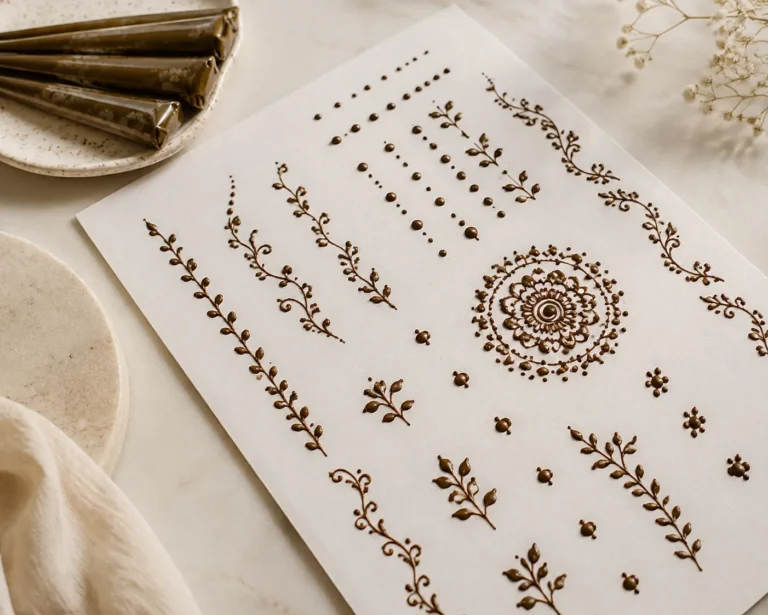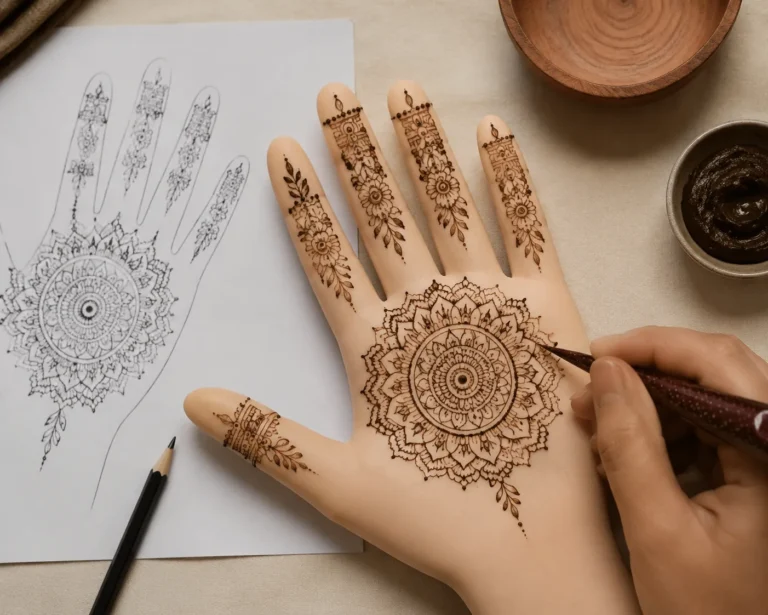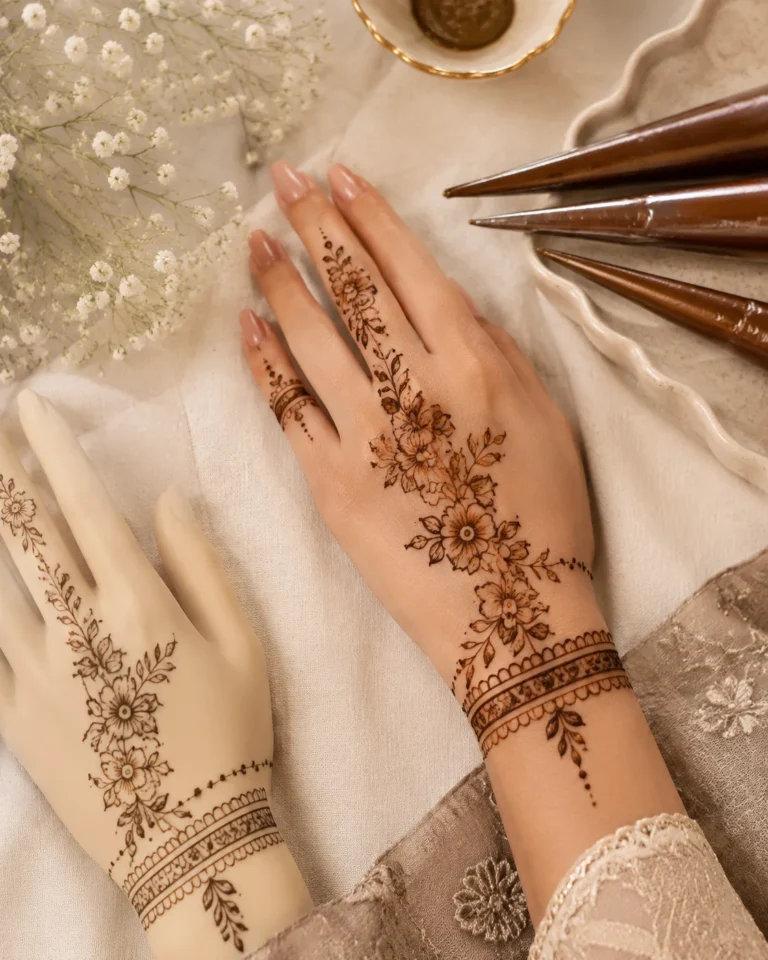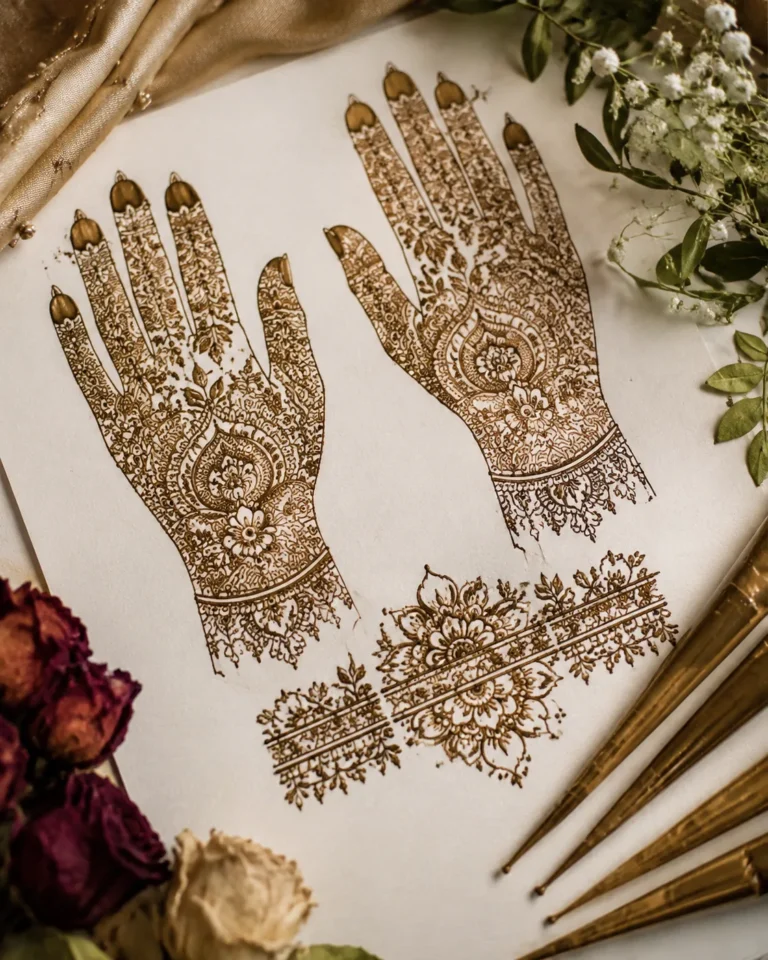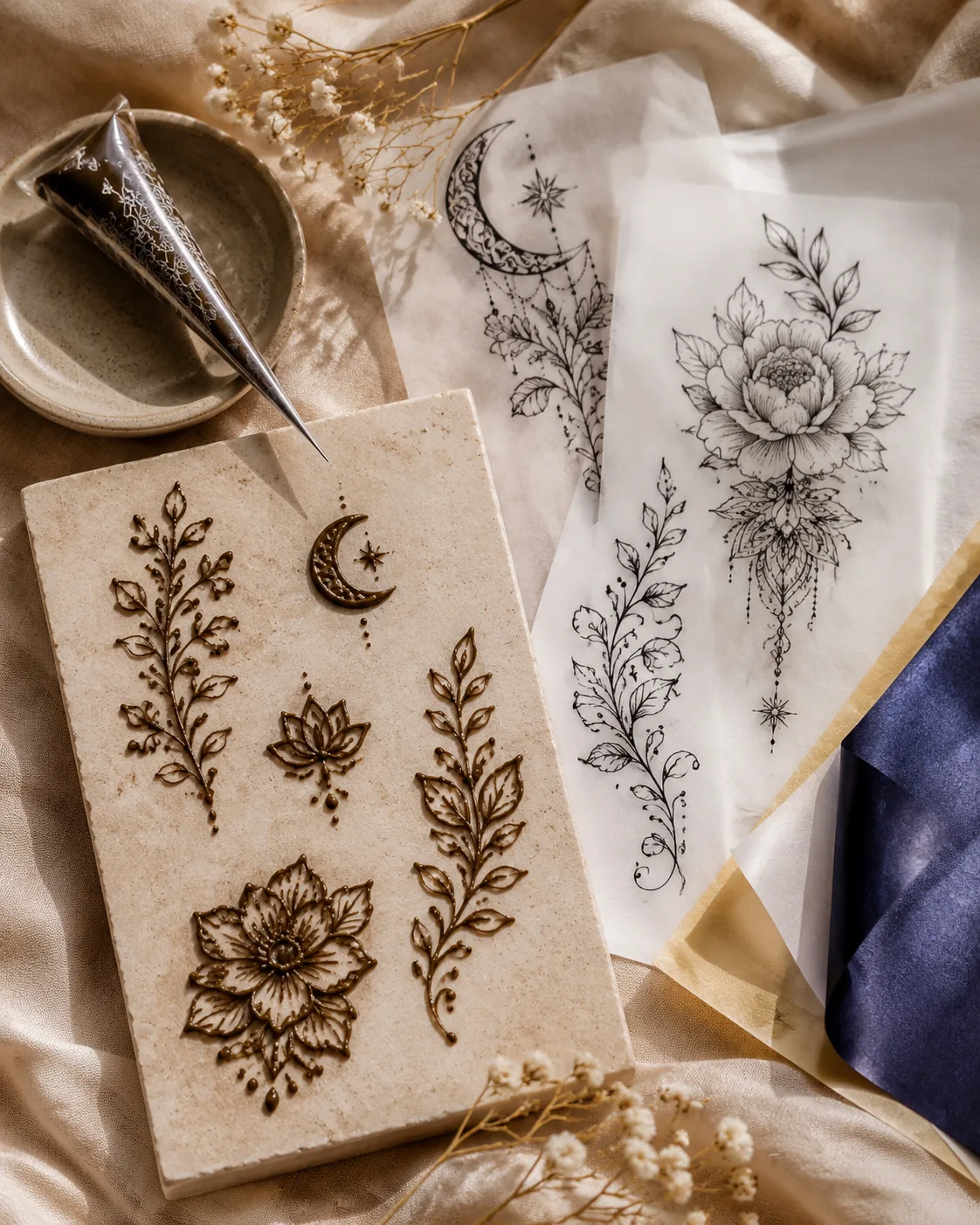
Easy henna tattoo ideas are useful when you are testing a tattoo placement, not when you are trying to copy permanent tattoo detail exactly.
Quick answer: Good henna tests before permanent ink include simple flowers, moons, stars, small animals, wrist bands, finger symbols, ankle marks, and placement mockups that help you judge visibility, scale, and comfort.
Henna ideas that help tattoo planning
Use henna to test where a tattoo lives on the body and how visible it feels.
| Option | Best use | Keep in mind |
|---|---|---|
| Wrist symbol | Visibility test | Permanent linework will differ |
| Ankle flower | Shoe and placement test | Henna stain is not tattoo aging |
| Finger mark | Commitment test | Permanent finger tattoos fade differently |
| Rib vine | Private placement test | Pain is not tested by henna |
| Behind-ear mark | Visibility with hair up | Tiny detail still risky |
Use henna to test placements you’re unsure about, especially wraps around the wrist, forearm, or upper arm where the design needs to flow with your muscle and bone. A henna piece gives you two to three weeks of wearing it daily, sleeping on it, and seeing it in different lighting. That’s real data no phone mockup can give you.
Pay attention to how the shape reads at arm’s length. If you can’t make it out from six feet away, a fine-line tattoo in the same spot is going to disappear on healed skin. Henna forces you to live with size, placement, and proportions before you commit to a needle.
What makes this work on real skin
Two weeks of henna can save you a lifetime of regret on the wrong placement.
Henna can show whether you like a placement for a few days. It cannot show tattoo pain, healed line spread, ink aging, or artist execution.
Still, a temporary mark can stop a bad permanent decision. If you hate seeing the design in daily life, do not book it yet.
Natural henna stains the top layers of skin, so it fades as those cells shed, usually over one to three weeks depending on the zone. High-wear spots like palms and fingers fade fastest. Low-wear zones like the upper arm or thigh hold the stain longer, which is exactly the pattern you’ll see with real ink aging over years.
The stain starts orange and oxidizes to a deep reddish brown within 24 to 48 hours. That final color is your truest read of how a black and grey or warm-toned tattoo will sit against your skin tone. Dry, well-moisturized skin takes henna more evenly, same as prepped skin holds tattoo ink more consistently.
Before you book or apply it
Use safe henna and keep expectations realistic. Henna is a placement rehearsal, not a permanent tattoo preview.
- Wear it through normal clothes and routines.
- Take photos from normal distance.
- Test visibility at work or school if relevant.
- Avoid black henna products.
Always do a patch test 24 hours before a full application, especially with pre-mixed cones from a market or online shop. Black henna is a red flag, full stop. It contains PPD, a chemical dye that causes chemical burns and can scar permanently. Real henna is brown, never jet black right out of the cone.
If you’re booking a tattoo within two weeks of a henna application, tell your artist. Active henna or residue on the skin can affect how the artist reads your undertone and can interfere with stencil adhesion. Let the henna fully fade first, or place the tattoo in a completely separate area.
Mistakes to avoid
Do not assume a detailed henna pattern can become a tiny permanent tattoo. Permanent ink needs different spacing.
Do not use henna to ignore artist advice about size or placement.
Safety source note: This guide keeps safety advice conservative and points readers to primary public-health or dermatology sources.
Don’t wash the paste off too early. Leave it on at least four to six hours, overnight if possible. Rushing it gives you a weak orange stain that tells you nothing about how a real tattoo will look. Keep it warm while it dries, cold skin slows the dye uptake significantly.
Stop soaking that area in water for the first 48 hours after removal. Pools, long showers, and dishwater all strip the stain before it fully oxidizes. Also skip heavy lotions or oils right after removal, they seal moisture in but block the oxidation process. Light, fragrance-free moisturizer once the stain is set is fine.