
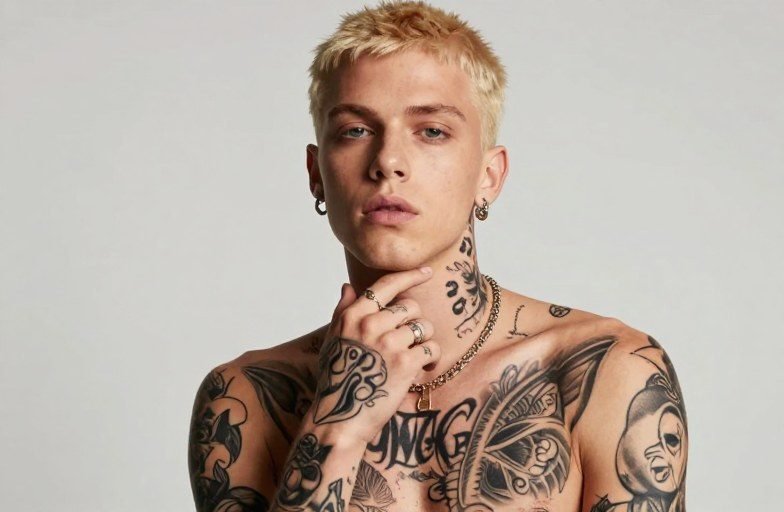
Machine Gun Kelly’s newest tattoo, a large black-out piece covering much of his upper body, signifies a dramatic personal and aesthetic reset. The work essentially erases previous ink while creating a new visual identity, representing rebirth through intentional destruction. For those considering similar powerful cover-up work, understanding the technical and symbolic weight matters enormously.
Symbolism & Core Meaning
Black-out tattoos carry inherent tension. They simultaneously conceal and declare, burying old imagery under dense pigment while establishing something uncompromising and new. MGK’s piece reads as deliberate self-reinvention, using the body as canvas to mark a chapter closed.
The Act of Erasure as Statement
Covering existing tattoos with solid black isn’t neutral. It demands acknowledging what came before while refusing to let it remain visible. The symbolism often resonates with people who’ve survived public or private upheaval and want the transformation etched physically. For MGK specifically, the timing aligned with shifts in his musical direction and public persona, making the body modification a parallel narrative to his creative evolution.
Visibility and Vulnerability
Choosing such extreme visibility, torso, arms, neck-adjacent areas, means the statement can’t be hidden. This differs from tattoos placed for personal reference only. The black-out becomes armor and exposure simultaneously, a contradiction that gives the piece its psychological weight.
Mythology & Folklore
While black-out tattooing itself is modern, the impulses behind it trace back through various traditions. Some trace it to practices of deliberate scarification and marking found across indigenous cultures, where body modification signaled status transition or spiritual protection. The concept of covering old markings with new ones appears in Japanese tattoo history, where elaborate irezumi sometimes incorporated or obscured earlier work.
Rebirth Narratives Across Cultures
The phoenix motif, destruction preceding renewal, surfaces repeatedly in mythology often linked to fire and ash. MGK’s approach substitutes ink for flame, but the structural narrative remains: something must end for something else to emerge. This isn’t to claim his tattoo references these traditions directly, but the symbolic architecture has deep roots.
Tabula Rasa Concepts
Philosophical traditions across multiple cultures have valued the “blank slate” as starting point for authentic existence. The black-out tattoo ironically inverts this, the slate isn’t blank but aggressively filled, suggesting that emptiness itself requires active construction rather than passive absence.
Color vs Black and Grey
MGK’s choice of pure black work versus color or black-and-grey shading carries specific technical and visual consequences. Solid black ages differently than washed grey tones; it tends to hold saturation longer but can blur at edges over decades. The contrast against skin creates graphic, almost print-like impact that color rarely achieves.
Technical Longevity Considerations
- Black pigment particles are largest and most stable, resisting breakdown better than most colorants
- Solid fields show less fading variation than shaded gradients, maintaining uniformity
- Touch-ups are difficult, adding lighter tones over healed black is nearly impossible without laser preparation
- Skin undertone affects perceived warmth or coolness of the black, something artists account for during application
Visual Weight and Context
Black-out pieces dominate whatever skin they occupy. Unlike color work that can blend with clothing or environment, pure black creates stark interruption. This suits MGK’s performance presence and fashion choices, where the tattoo functions as permanent accessory against varied backdrops. For everyday people, the same visual weight means committing to constant conversation and attention.
Design Tips & Pairings
Anyone inspired by MGK’s direction needs practical guidance beyond the aesthetic appeal. Black-out work requires specific technical expertise, not every artist handles large-scale saturation well.
Finding Qualified Artists
Look for portfolios showing healed black-out results, not just fresh photos. Fresh work looks uniformly dense; healed pieces reveal patchiness, scarring, or inconsistent saturation. Ask specifically about needle configurations, magnum groupings in varying sizes achieve smooth fields, and artists should explain their approach to preventing overwork.
Strategic Negative Space
Some black-out designs incorporate un-inked skin as deliberate pattern, geometric breaks, figurative silhouettes, or text emerging from darkness. MGK’s piece includes these elements, creating rhythm and reference points within the density. Planning negative space before any ink touches skin is essential; adding it after requires painful and expensive laser removal of surrounding areas.
Placement Realities
- Torso black-out tolerates stretching better than areas with frequent joint movement
- Hands and feet heal poorly for solid saturation due to skin turnover and friction
- Neck and face placement amplifies social consequences beyond personal symbolism
- Existing tattoos beneath black-out may ghost through over time, especially if they contained heavy color or scarring
Personal & Modern Meanings
Contemporary tattoo culture has embraced black-out work as legitimate genre rather than merely cover-up solution. The meaning expanded from practical concealment to intentional aesthetic choice. For MGK, this evolution mirrors broader trends where extreme body modification becomes normalized within certain subcultures.
Mental Health and Transformation Narratives
Many people pursuing black-out work cite psychological transitions, recovery, identity shifts, leaving harmful relationships. The physical intensity of the process itself matters: sessions running multiple hours, skin pushed to saturation limits, healing that demands patience. The discomfort becomes part of the meaning, not incidental to it.
Performance and Authenticity
Public figures face particular pressure around visible modifications. Every choice reads as statement, whether intended or not. MGK’s tattoo generates interpretation regardless of his private intentions, making the piece function as communication with audiences he may never meet. This layered meaning, personal plus projected, characterizes much celebrity tattoo discourse.
Who Chooses This Tattoo
The demographic for black-out work skews younger, heavily tattooed already, and often involved in creative or alternative communities. It’s rarely a first tattoo; the commitment level and existing coverage requirements filter for experienced collectors. Gender distribution appears relatively balanced, though placement preferences sometimes differ.
Practical Prerequisites
- Substantial existing tattoo coverage to justify or necessitate the approach
- Financial resources for extensive session work, black-out isn’t quick or cheap
- Pain tolerance for prolonged saturation work, which exceeds typical tattooing intensity
- Professional or social context that accommodates extreme visibility
Psychological Profile
People drawn to this style often value decisiveness over reversibility. They accept that laser removal of solid black is technically possible but practically limited, making the choice functionally permanent. This comfort with irreversibility suggests specific relationship to time and change, neither fearing future regret nor overvaluing present flexibility.
Key Takeaways
MGK’s black-out tattoo represents personal transformation made visible through extreme technical commitment. The meaning layers individual narrative onto broader cultural patterns of rebirth symbolism and body modification tradition. For observers considering similar work, the technical realities, artist selection, placement consequences, healing demands, and near-permanence, matter as much as the symbolic content. The tattoo succeeds as statement precisely because it refuses half-measures; the density, coverage, and visibility create impact that subtler work cannot replicate. Whether that impact serves your specific life circumstances requires honest assessment of your pain tolerance, professional constraints, and comfort with irreversible public declaration.
Frequently Asked Questions
How painful is a black-out tattoo compared to regular tattooing?
The saturation process requires repeated passes over the same area to achieve solid black, making it significantly more intense than standard line work or shading. Most people find torso work manageable but exhausting, while areas over bone or thin skin become genuinely difficult.
Can you tattoo color over a black-out piece later?
Adding color over healed black is essentially impossible without laser lightening first. The pigment blocks underlying layers completely. Any future modifications require working within the black framework or removing sections.
How long does large-scale black-out work take to complete?
Full torso coverage typically requires 40-80 hours across multiple sessions, depending on size, existing work beneath, and individual skin response. Healing breaks between sessions are mandatory and extend the timeline significantly.
Does black-out tattooing cause more scarring than other styles?
When performed correctly by experienced artists, scarring should be minimal. However, the heavy saturation does stress skin more than delicate work, and overwork by inexperienced artists can leave raised or textured areas permanently.
Related Tattoo Meanings
- Vida Loca Tattoo Meaning: Loyalty, Loss, and Street Culture
- Michael Fanone Tattoo Meaning: DC Officer s Ink Explained
- Mina Kimes Tattoo Meaning: Symbolism Behind the Design
- Explore more









