Realistic tattoos aim to reproduce photographs, objects, or living subjects with photographic accuracy on skin. Unlike illustrative or traditional styles that simplify forms into bold lines and flat color, realism relies on smooth gradients, microscopic detail, and the absence of hard outlines. The goal is deception: making ink look like flesh, fabric, stone, or light itself. This demands technical mastery from the artist and realistic expectations from the collector about what skin can actually hold.
Modern Variations
Black and Grey Realism
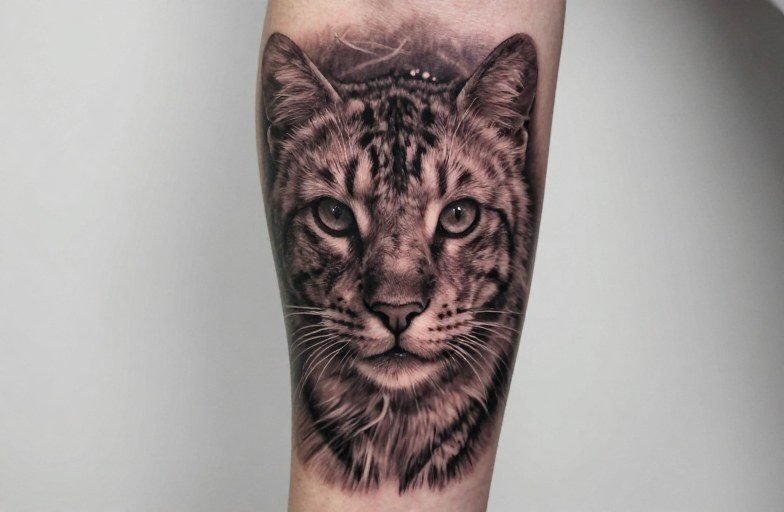
Black and grey realism dominates the field, using diluted black ink to create full tonal ranges from deep shadow to bright highlight. Artists build form through whip shading, smooth gradation, and negative space rather than color. This approach excels at portraiture, religious imagery, and dark, moody compositions. The limited palette forces attention to structure and light source. Skin undertones warm the grey naturally, so skilled artists account for this shift during application.
Color Realism
Color realism attempts the same photographic accuracy but introduces full spectrum hues. Flower petals, animal fur, and human eyes benefit enormously from this approach. The technique requires understanding color theory deeply, how adjacent pigments interact, how yellows fade faster than blues, how warm tones need different saturation levels than cool ones. Color realism typically needs more frequent touch-ups than black and grey because pigments break down at different rates and lighter colors disappear into skin tone within a few years.
Hyperrealism and 3D Effects
Some artists push beyond standard realism into hyperrealism, adding trompe l’oeil effects like torn skin revealing machinery beneath, or objects that appear to sit on top of the body rather than within it. These demand extraordinary technical precision and usually work best at larger scales where detail isn’t compressed. The 3D effect relies heavily on correct placement relative to body movement, what looks convincing on a flat bicep may distort strangely across a flexing shoulder.
Who It Suits
Realistic tattoos attract collectors who want specific imagery reproduced faithfully, deceased loved ones, pets, cultural icons, or moments frozen photographically. The style suits people comfortable with longer sessions and higher costs, since quality realism cannot be rushed. It also demands commitment to aftercare; blurred realism from sun damage or poor healing looks worse than faded traditional work because the illusion depends on precision.
However, this style frustrates those wanting symbolic abstraction or stylistic flexibility. A realistic portrait of your dog will always be that dog. It won’t reinterpret well into other styles later. Collectors who frequently regret decisions or crave variety might find realism too permanent in its specificity. The style also challenges those with darker skin tones, since achieving light values requires working against natural pigmentation, possible with skilled artists, but more technically demanding and sometimes less durable.
How It Ages
The Spread Problem
All tattoos blur slightly as ink particles migrate through skin layers, but realism suffers disproportionately. Fine lines that define eyelashes, individual hair strands, or texture in fabric will soften first. What reads as photographic detail at one year may become muddy suggestion at ten. Artists compensate by building slightly heavier than the final image needs, anticipating this spread. Even so, high-detail areas like nostrils in portraits or stamens in flowers often need reinforcement within five to seven years.
Contrast Preservation
Realism’s longevity depends on maintaining tonal range. Black and grey pieces hold better because the contrast between dark and light remains visible even as edges blur. Color realism faces particular challenges: white ink yellows or disappears entirely, light pinks and peaches become indistinguishable from skin tone, and blues sometimes shift toward green as yellow components fade faster. Strategic use of darker surrounding values helps preserve the illusion of brightness even as actual light pigments degrade.
- High-detail areas (eyes, jewelry, small text) blur fastest
- Smooth gradient backgrounds age more gracefully than textured surfaces
- Areas with frequent sun exposure degrade noticeably within 3-5 years
- Touch-ups every 5-10 years maintain the photographic effect
Key Characteristics & Motifs
Technical Execution
Realism avoids bold outlines entirely, using instead “soft edges” created through gradual tonal transitions. Needle grouping matters enormously, single needles or tight threes for hair and pore detail, magnum shaders for smooth skin tones and backgrounds. The best work shows no visible needle pattern; strokes disappear into seamless surface. Artists often work from reference photographs projected or printed beside the skin, sometimes using stencils only for basic placement and freehanding the actual rendering.
Common Subject Matter
Portraiture remains the most requested realistic subject, requiring anatomical knowledge and the ability to capture likeness beyond mere copying. Animals, particularly eyes and fur textures, test an artist’s patience and needle control. Floral realism allows dramatic color work with natural subjects. Religious and cultural icons, praying hands, virgin Marys, deities, translate through realism with gravitas that stylized versions cannot match. Objects with reflective surfaces (watches, jewelry, glass) demonstrate technical bravado through accurate highlight placement.
Best Placements
Flat, Stable Surfaces
Realism rewards flat planes where skin stretches minimally and viewing angle stays consistent. The outer upper arm, outer thigh, and calf sides offer excellent stability. These areas allow the artist to work without contending against complex curvature that distorts facial proportions or makes straight objects appear bent. The back, particularly shoulder blade to shoulder blade, accommodates large compositions with minimal movement distortion.
Challenging Areas to Avoid
Hands, feet, and joints destroy realism quickly. Constant movement accelerates ink migration, and these areas heal poorly due to use and friction. The ribcage and stomach stretch and compress dramatically with breathing and weight fluctuation, making precise realism temporary at best. Neck and face placement risks rapid sun damage and social consequences that disproportionately affect such a specific, recognizable style.
- Upper arm (outer): ideal for portraits and medium compositions
- Thigh (outer or front): excellent for large, detailed work
- Calf: stable, tolerable for long sessions, good visibility
- Back: accommodates the largest realistic pieces
- Chest: workable for centered compositions, avoid near armpits
Choosing the Right Artist
Portfolio examination for realism requires looking past initial impact. Check how work appears at multiple healing stages, not just fresh photographs. Ask to see pieces one year or older. Look specifically at edges, do they hold, or blur into surrounding skin? Examine whether the artist can handle different textures: skin, fabric, metal, organic matter. Many specialize in one and struggle with others.
Consultation matters enormously. A strong realistic artist will discuss reference quality openly, blurry source photos yield blurry tattoos. They’ll explain where detail must be simplified for longevity, rather than promising impossible precision. Pricing reflects the time investment; realistic work typically costs 1.5-3x comparable sized traditional pieces because sessions run longer and require more concentration. Artists charging standard rates for photorealism are usually cutting corners you cannot see until healing completes.
Geographic concentration exists for this specialty. Major metropolitan areas and specific tattoo tourism destinations host the deepest talent pools, though excellent artists work regionally too. Travel for the right practitioner is common and worthwhile for significant pieces.
Before You Decide
Realism commits you to maintenance. Budget for touch-ups. Protect work from sun diligently, UV exposure degrades the subtle gradients that make realism convincing faster than it destroys bold traditional pieces. Accept that your tattoo will look best in its first three years and will soften continuously after. This isn’t failure; it’s physics.
Consider also whether you want this specific image forever, or whether a more stylized interpretation might serve you longer. Realism’s power is its immediacy and recognition. Its limitation is the same. The style offers no abstraction to hide behind, no symbolic distance. What you see is exactly what was intended, which means any disappointment lands with full force.
If you proceed, invest in reference material, invest in artist selection, and invest in aftercare. Realism is unforgiving of shortcuts at every stage. The reward, when executed well, is a tattoo that genuinely stops conversation, people reaching to touch what isn’t there, forgetting for a moment that ink and skin are different substances at all.
Frequently Asked Questions
How long does a realistic tattoo session typically take?
Small realistic pieces need 3-4 hours, while portraits or large compositions often require multiple full-day sessions spanning weeks or months. Rushing realism guarantees poor results.
Can realistic tattoos be covered up if I change my mind?
Covering realism is extremely difficult because it lacks bold outlines and uses dense, varied shading. Laser removal first, or finding an artist specializing in large cover-up work, are usually necessary.
Why do some realistic tattoos look shiny or waxy when fresh?
Fresh realism often appears slightly glossy from plasma and healing fluid trapped in the skin’s upper layers. This subsides within 2-3 weeks, revealing true matte tones.
Is black and grey realism cheaper than color realism?
Pricing depends on artist rates and time, not palette. Some color pieces actually finish faster than equivalent black and grey work because certain effects are achieved more directly with pigment.
Related Style Guides
- Realistic Clock Tattoos: Style Guide
- Realistic Eyeball Tattoos: Complete Style Guide
- Realistic Fire Tattoos: A Complete Style Guide
- Explore more