
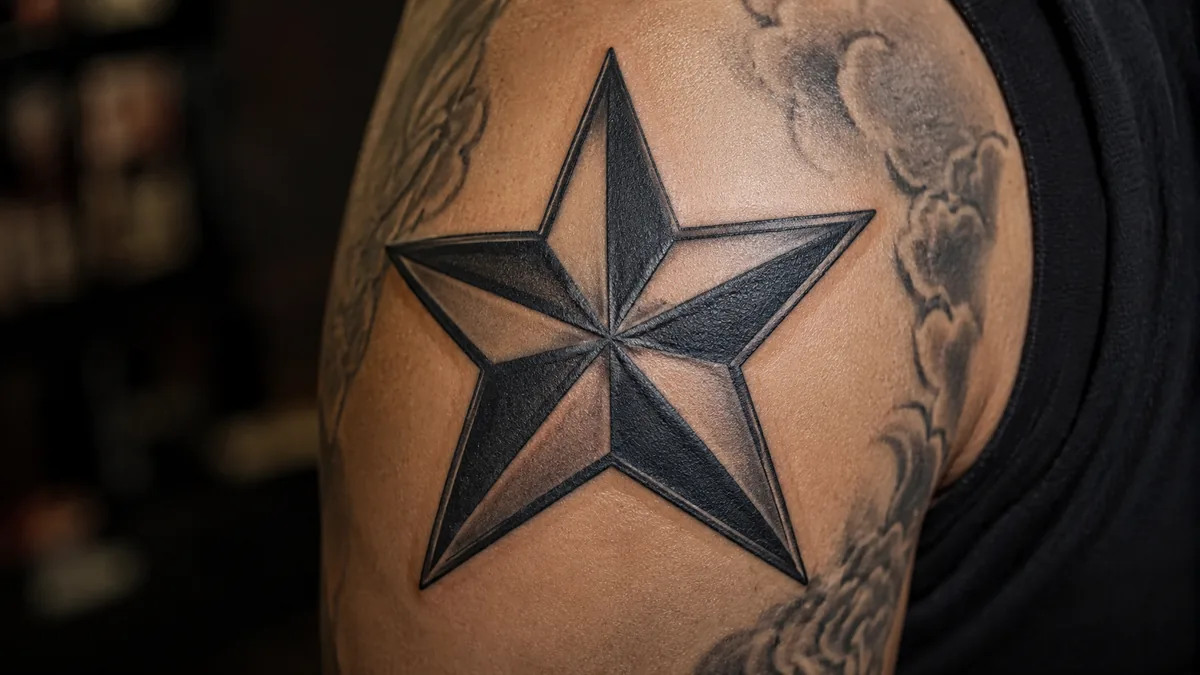
The norcal star tattoo is a nautical-style five-pointed star worn as a badge of Northern California identity. It layers two things at once: the centuries-old symbolism of the north star as a guide, and straight-up NorCal regional pride. Pretty simple on the surface, but there’s some context worth knowing before you commit to it on skin.
The design gets popular across the whole Bay Area, Sacramento, Fresno, Redding, anywhere north of the Grapevine. Some people add personal elements, some keep it clean and minimal. Either way, the base meaning is the same: this is where I’m from, this is my direction.
The Core Symbolism Behind the Norcal Star
The nautical star has been tattooed on sailors since at least the early twentieth century. The concept is straightforward. Sailors used the North Star, Polaris, as a fixed navigational point in the sky. Getting it tattooed meant you always had your guide with you, that you’d find your way home. Those meanings transferred straight into civilian tattoo culture: guidance, direction, a personal true north.
When Californians started branding the design as a NorCal star, they kept all that baggage and added a layer of regional identity on top. So the full read of a norcal star today is usually something like: I’m from Northern California, I know where I came from, and I know which direction I’m heading. That’s a solid three-for-one for a clean star design.
Cultural Background and the Nautical Star Legacy
It's not just a star. It's a zip code tattooed on your skin.
The nautical star, with its alternating shaded and light points, comes from compass rose imagery on old maritime charts. Sailors tattooed it hoping for safe passage and a safe return. The design was also adopted heavily by the military, especially Navy and Marine culture in the twentieth century. By the mid-century, it showed up in punk and rock circles as a symbol of personal navigation and counterculture identity.
The NorCal branding of the star follows the same pattern as regional pride tattoos across the US. Think Texas star, or Pacific Northwest iconography. The symbol gets localized, the meanings stick but the geographic attachment gets personal. In Northern California specifically, the symbol got absorbed into streetwear branding first, then moved onto skin. That’s a normal pipeline for regional tattoo motifs.
The Norteno Connection: What You Need to Know
This is the part most people skip and probably shouldn’t. In Northern California, a Northern Star combined with red ink, the number 14 or XIV, and words like Norte or Norteno is documented gang symbolism tied to Norteno crews and Nuestra Familia. Those are explicit identifiers, not just aesthetic choices. Law enforcement and gang researchers treat that specific combination as a clear signal.
A plain nautical star with zero of those elements reads completely differently. The problem is placement and company. A bold red star with 14 on a visible spot like the neck or hands in the wrong context gets read fast. If you want to wear a norcal star as pure regional pride, keep it clean: no red accent on the star points, no 14, no Norte text. Add Bay Area skyline, redwoods, the Golden Gate, or a personal element and the read shifts completely to civilian pride.
Design Variations and Popular Styles
The most recognizable version is the classic alternating-shade nautical star, each point split down the middle, half black and half grey or white. That’s what most people picture when they hear norcal star. It’s bold, it reads from across the room, and the high contrast makes it age well. You’ll also see it done as a pure geometric outline, especially in fine line work, or as a solid black star with crisp points.
Some clients go bigger and build a composition around it: the star as the anchor piece with a California outline, a bear, or some Sierras landscape behind it. Others keep it solo and small. Chicano-influenced lettering around the star, like a banner reading ‘NorCal’ or a city name, is common in certain regions. Dotwork fills inside the points are popular in the fine line world. Blackwork with heavy solid fills is another solid direction if you want something that really holds over the years.
Color Versus Black and Grey
Black and grey is the dominant choice for this design and it makes sense historically. Nautical stars were traditionally tattooed in black with grey shading, partly because that’s all that was available and partly because the contrast reads clean and timeless. In B&G, the alternating light and dark points on a nautical star give you natural contrast without any color needed. The design is built for black and grey.
Color versions show up, mostly blue for a Pacific or nautical vibe, or green for NorCal outdoors energy. Red you already know to avoid for context reasons. Yellow or gold can look sharp on a six-pointed or geometric version. If you go color, make sure your artist saturates it fully so it doesn’t fade to a muddy mess in two years. Pastels on a bold geometric star almost never hold. Bold will hold. Whip shade or tight B&G is the safer long-term play.
Best Placements and How It Ages
The outer upper arm is the safest bet for longevity. Stable skin, moderate UV exposure, not too much flex and friction. The shoulder cap works great for a medium-to-large version. Chest and upper back are excellent if you’re going bigger or building it into a larger piece. Forearm is popular for visibility and heals nice on most people, just keep it away from the wrist crease where skin moves a lot.
Hands, fingers, inner wrist, and feet are high-wear zones. Fine line details on fingers will blur in months, not years. If you insist on a hand or finger placement, go solid black and accept that touch-ups are part of the commitment. The norcal star as a standalone tight design, done with slightly thicker outer lines than you think you need, will stay crispy much longer than a hairline fine line version. Size up a little. Smaller than two centimeters on a fine line star means you’re scheduling a touch-up sooner than you want.
Who Gets the Norcal Star and How to Make It Yours
Pretty wide demographic gets this one. People born in the Bay, Sac, the Central Valley, Humboldt, Tahoe, anywhere north. Military veterans from NorCal who want to mark where they’re from. People who left the state and want to carry it with them. A lot of first tattoos in NorCal circles are some version of this star because the meaning is personal and the design is versatile, not overly complex.
To make it yours, think about what the guidance angle means in your actual life. Did you navigate out of a rough period, move somewhere new, lose and find your direction? Adding a date, coordinates, or a tiny constellation behind it pins a specific story to the symbol. Keep the linework clean and the contrast strong. A solid, well-executed nautical star, placed right and sized correctly, is one of those tattoos that looks just as good in twenty years as it does walking out of the shop.









