
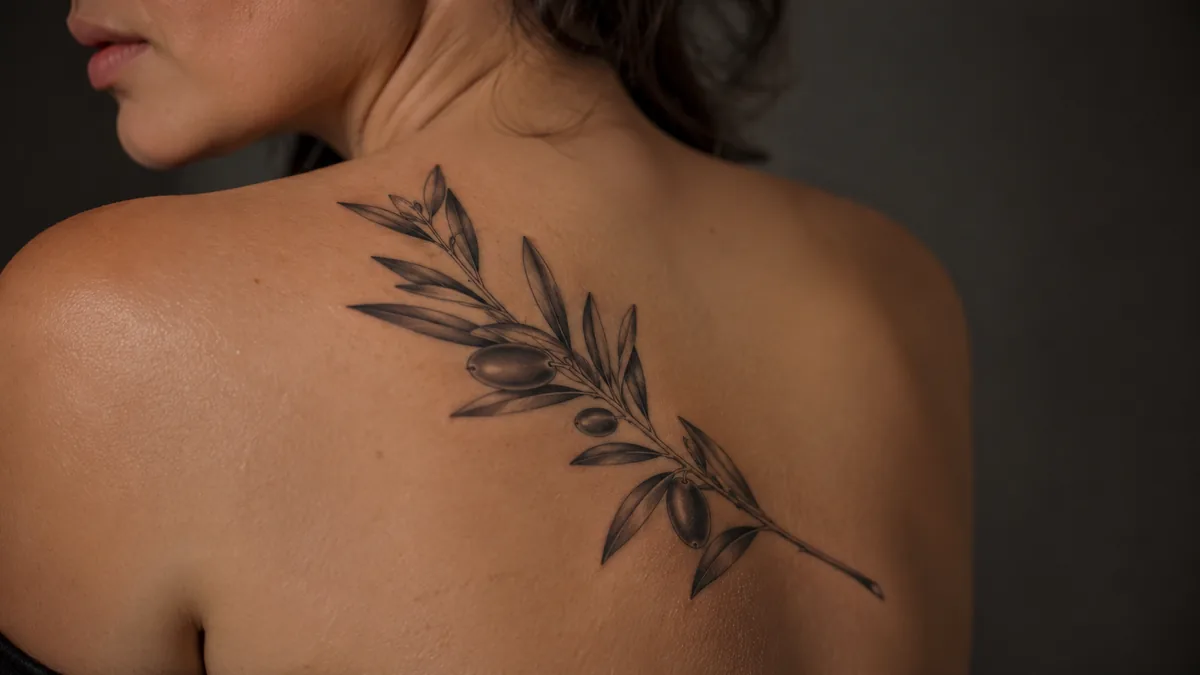
The olive branch is one of the oldest symbols humans ever put on their bodies, walls, and flags. It means peace. That’s the short answer. But depending on how you design it and what you pair it with, it can carry a whole lot more, including victory, wisdom, fertility, renewal, and the idea of extending a hand after conflict.
People get olive branch tattoos because the image does real work. It’s not decorative fluff. It’s a statement that reads quietly but lands hard, and the botanical shape gives artists something genuinely beautiful to work with. Here’s everything you need to know before you book the appointment.
The Core Meaning: Peace and More
The olive branch is synonymous with peace, full stop. That’s the meaning most people are reaching for when they sit in the chair. But the symbol also carries victory, goodwill, and the act of reconciliation, as in the phrase ‘extending an olive branch.’ It signals a willingness to end conflict, forgive, or move forward after something heavy.
Many clients get this tattoo after a significant turning point. A war with themselves, sobriety, a bad relationship, a loss. It marks the moment they chose peace over the fight. That’s not a shallow meaning. That’s the kind of symbolism that earns permanent real estate on your skin.
Where the Symbol Comes From
Peace is not passive, and neither is the branch that has symbolized it for three thousand years.
The olive branch has roots across multiple ancient cultures. In ancient Greece, olive branches were awarded to Olympic winners and were sacred to Athena, goddess of wisdom and war strategy. Olive trees were considered gifts from the gods, associated with prosperity and civilization. In ancient Rome, olive branches symbolized peace and were carried by ambassadors seeking to end conflicts.
In the Hebrew Bible and Christian tradition, a dove carrying an olive branch back to Noah’s ark became one of the most enduring images of hope and divine peace after destruction. The United Nations seal includes an olive branch wreath. The U.S. presidential seal puts one in the eagle’s right talon. The symbol is genuinely universal and ancient, not something invented by a design trend.
Common Design Variations
The classic design is a single arcing sprig with leaves and small round olives or buds. Clean, simple, reads immediately. A lot of people stop right there and that’s a solid call. Others wrap the branch into a wreath or circle for a more structured, symmetrical look that suits certain placements like the upper back or chest.
Popular pairings include a dove carrying the branch, which doubles down on the peace narrative. A olive branch with a sword or arrow introduces tension between peace and strength. Combining it with words, a date, or a name makes the personal connection explicit. Some clients go botanical and hyper-detailed with every vein in the leaf rendered out. Others keep it minimal with a few gestural lines.
Fine Line vs. Bold Traditional
Fine line is the dominant style for olive branches right now. The botanical shape lends itself to delicate linework, and a skilled artist can make the leaves look almost pressed and dried on your skin. It photographs beautifully. The honest catch is that fine line in high-wear zones like the wrist, hand, or inner arm can fade and blur over the years. If you want it to hold, placement matters as much as style.
Bold traditional or neo-traditional takes the same imagery and locks it in with solid outlines and saturated fills. Less trendy at the moment but it’ll still read clean in 20 years. Black and grey botanical falls in the middle, giving you realism and detail that holds better than ultra-fine work. Talk to your artist about what heals best on your specific skin tone and texture before committing to a technique.
Color or Black and Grey
Color olive branches can be stunning. The grey-green of real olive leaves is muted and sophisticated, pairing well with small pops of deep purple or black for the olives themselves. A full-color botanical piece with realistic leaf tones reads as an art piece and holds up well in low-friction zones. Bold greens are also common for a fresher, more graphic look.
Black and grey is the go-to for most fine line botanical work and for good reason. It’s versatile, ages more predictably, and suits almost every skin tone. A skilled artist doing black and grey can still capture the texture of the leaves and the weight of the fruit through shading alone. If you’re torn, ask your artist to draw both up and look at them on paper before you decide.
Best Placements and How It Ages
The olive branch shape is naturally elongated and flowing, which makes it ideal for areas that match that silhouette. Forearms, ribs, sternum, spine, upper arm, and collarbone are all strong choices. The shape follows the body’s lines naturally and stays legible as it settles. Ankle and inner wrist placements are popular but expect more touch-up work over time given the friction and sun exposure.
High-wear zones like fingers, hands, and feet are spicy to sit through and brutal on fine detail long-term. Blowout risk is real on thin skin. The inner arm and ribs hold fine line better than you’d think if the artist works at the right depth. Wherever you put it, keep it out of the sun during healing and use SPF after it’s fully healed. That’s what keeps it crispy long-term.
Who Gets This Tattoo and How to Make It Yours
Olive branch tattoos are genuinely for everyone. They cross gender lines, age groups, and style preferences more than most symbols. Veterans getting it after service, people marking the end of a hard chapter, couples getting matching pieces, or someone who just loves clean botanical ink with real weight behind it. The symbolism is strong enough that it doesn’t need explanation but personal enough to carry your own story.
To make it yours, think about what specific angle of the meaning you’re claiming. Peace after a specific conflict. Victory. Wisdom. A tribute to Greek or Mediterranean heritage. Then let that inform the design choices, the pairing elements, the placement. A tattoo that’s visually beautiful and personally meaningful is always going to hit harder than something chosen off a flash sheet. Know your why and build the design around it.









