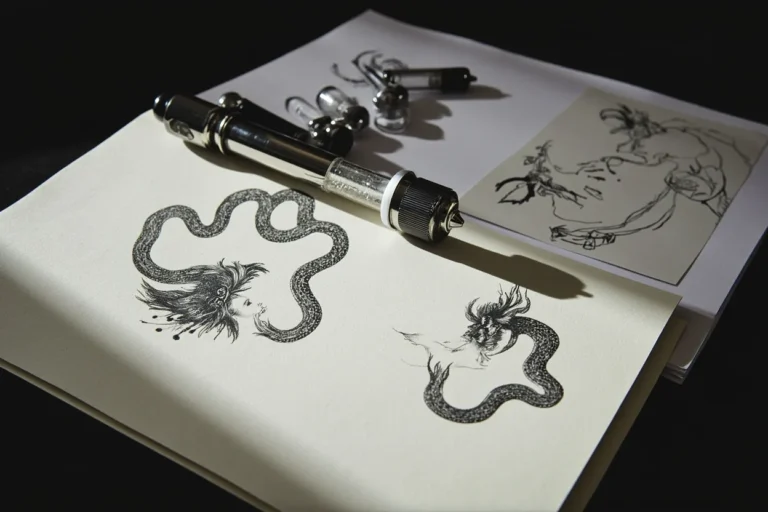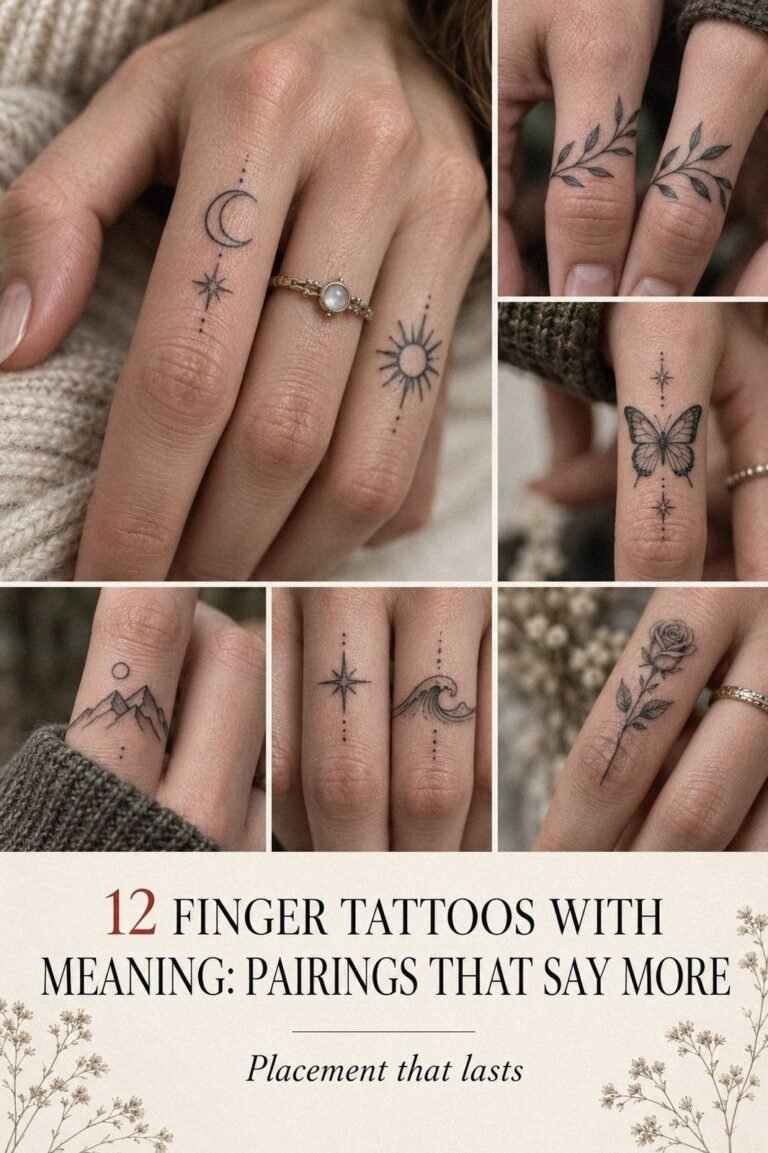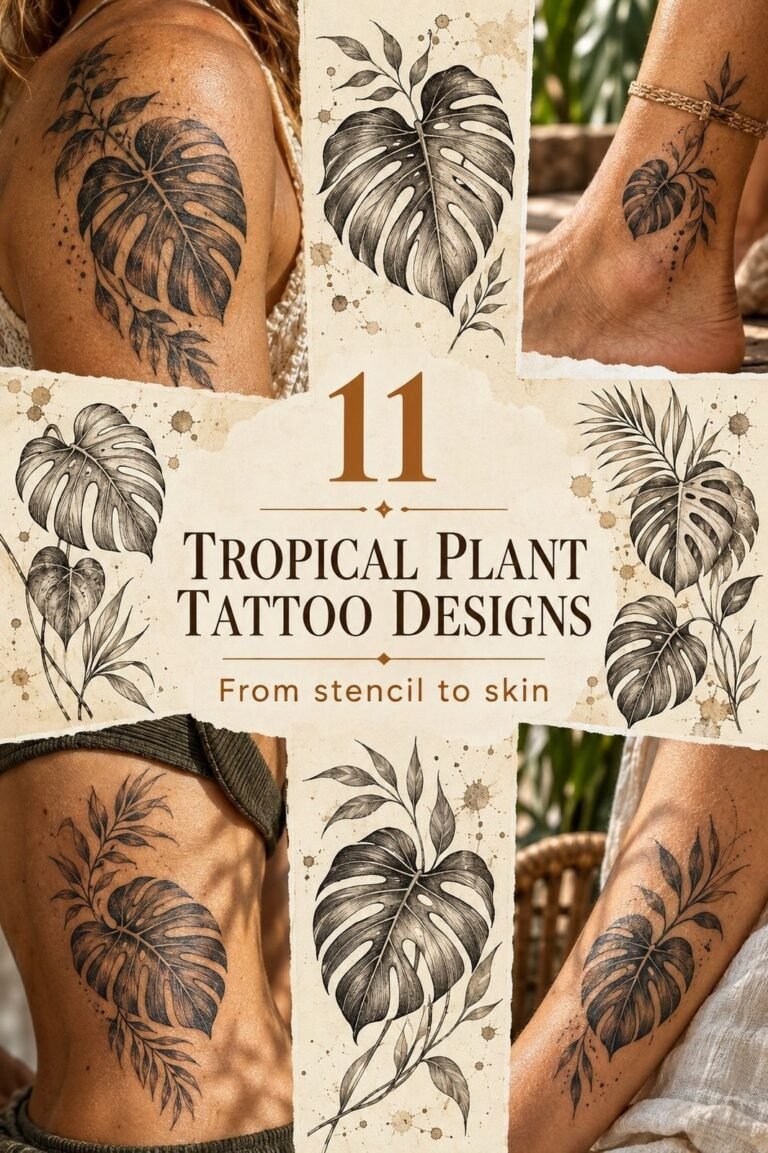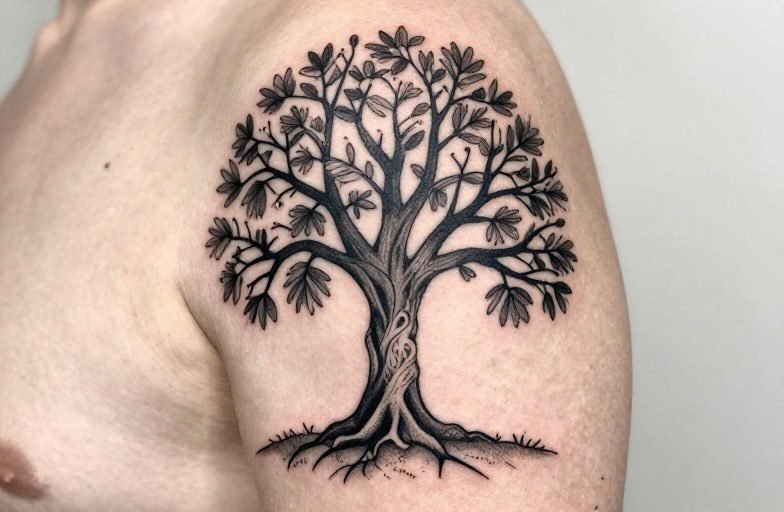
A poisonous tree tattoo typically symbolizes the duality of beauty and danger, the protective power of boundaries, and personal transformation through adversity. Rather than representing pure harm, these designs often speak to survival mechanisms, how what makes something toxic to others can be what keeps it alive.
Symbolism & History
The poisonous tree carries weight across cultures, though specific meanings shift with context. Understanding these layers helps explain why someone might choose something outwardly menacing for permanent skin art.
Cultural and Mythological Roots
The manchineel tree, native to Caribbean coasts, holds particular infamy. Spanish conquistadors documented its caustic sap, and indigenous peoples often used the tree’s wood for furniture while carefully neutralizing the toxins through fire. This practical relationship with danger, rather than simple avoidance, mirrors how many people relate to their own difficult traits or histories.
Yggdrasil, the Norse world tree, connects to poisonous imagery through its serpent Nidhogg gnawing at the roots. Some trace the poisonous tree motif to medieval bestiaries where certain trees were believed to kill anything sleeping beneath them. The Upas tree of Java entered European imagination through exaggerated travel accounts, becoming a symbol of lethal isolation.
More recently, the poison apple tree from Disney’s Snow White and the Whomping Willow from Harry Potter cemented the image of beautiful, deadly flora in popular consciousness.
Core Symbolic Meanings
- Protected vulnerability: The toxin defends something worth preserving, fruit, shade, the tree’s own life
- Survivor’s edge: What harmed you becomes what hardens you
- Warning as honesty: No pretense of safety; what you see is what you get
- Forbidden knowledge: The fruit you weren’t meant to take, the boundary you crossed anyway
- Natural consequence: Actions have reactions; respect the ecosystem
Common Variations & Styles
The specific tree species and artistic approach dramatically shift how the tattoo reads on skin. Line work versus heavy shading, color versus black and grey, realistic versus stylized, each choice carries meaning.
Species-Specific Designs
Manchineel: Often shown with warning signs, beach settings, or human figures recoiling. The small green apple-like fruit becomes a focal point. These tend toward realism or neo-traditional with bright, almost tempting coloration.
Yew trees: Deep red arils (the fleshy cups around seeds) against dark needles. Yew carries additional funeral associations, European churchyards planted them for centuries, and every part except the aril itself contains taxine alkaloids. Gothic and blackwork styles dominate here.
Oleander: Pink or white blossoms with slender leaves. The visual softness creates deliberate tension with the toxicity. Watercolor and fine-line approaches work well for capturing the flower’s deceptive delicacy.
Whomping Willow / Fantasy variants: Anthropomorphized, aggressive forms, often with faces or reaching branches. These lean illustrative or new school, with exaggerated movement and sometimes comic energy.
Stylistic Approaches
Blackwork and woodcut styles emphasize the folk-tale danger, the Brothers Grimm quality. Single-needle fine line can create a specimen-drawing feel, scientific, detached, almost beautiful in its documentation of harm. Heavy black and grey realism goes visceral: you can almost feel the sap.
Color choices matter. Green dominates for obvious associations, but deep purples (oleander, nightshade) and sickly yellow-greens create different emotional temperatures. Some artists use only black with a single spot of warning red, the fruit, the drop of sap, the cut that proves the danger.
Best Placements
Where this tattoo sits on the body changes its social function. A poisonous tree visible on the forearm or hand functions as a warning to others; hidden on ribs or thigh becomes private symbolism, a note to self.
Vertical compositions, tall trunks with spreading canopies, fit naturally on the side of the torso, the outer thigh, or running up the calf. Horizontal spreads work across shoulders, upper back, or wrapping the forearm. Root systems extending downward suit the lower leg or side of the foot, though foot tattoos age poorly and hurt significantly.
Smaller designs concentrating on a single branch with fruit or leaf cluster work as hand-sized pieces: upper arm, shoulder cap, behind the ear. The ear placement specifically carries “poison in the ear” Shakespearean resonance for some.
Consider how the tattoo ages. Fine lines in leaves and fruit tend to blur over 5-10 years. Bold trunk lines hold; delicate veining on leaves may need future touchup. Discuss this explicitly with your artist, some will design with aging in mind, building in slightly heavier line weights that read as detail now but survive as structure later.
Who Chooses This Tattoo / Personal Meanings
People drawn to poisonous tree imagery often share certain experiences or temperaments, though no universal profile exists. The tattoo functions differently depending on where someone sits in their own narrative.
For those who’ve been harmed and adapted, the tree represents a hard-won boundary. The poison developed after the injury. It’s not inherent malice; it’s learned protection. This interpretation resonates with trauma survivors, people who’ve left destructive relationships, or anyone who had to become “harder” than they started.
Others connect to the forbidden knowledge angle, the fruit that teaches, the cost of curiosity. Scientists, researchers, people who’ve paid prices for pursuing truth they were discouraged from finding. The tree doesn’t punish curiosity; it simply makes the price explicit.
Some choose it for darker humor or subversion. A beautiful, even feminine image that carries literal lethality. The contrast itself is the point. This often overlaps with gothic aesthetics, witchcraft-adjacent symbolism, or simply an appreciation for nature’s less celebrated mechanisms.
There’s also the ecological perspective: the tree isn’t evil, isn’t even aggressive. It simply exists, with defenses that happen to be dangerous to humans who ignore its nature. This appeals to people who feel misread themselves, who want their boundaries respected without being framed as hostile.
Similar Symbols
Clients considering poisonous trees often explore related imagery. Understanding the distinctions helps clarify what specifically draws you to this motif.
Skull and crossbones / general poison symbols: More direct, less layered. The tree adds the element of growth, time, natural process. Pure poison symbols read as threat; the tree reads as defended life.
Venus flytrap and carnivorous plants: Active predation versus passive defense. The tree harms those who touch it; the flytrap lures and traps. Different relationship to agency.
Snakes (especially tree-dwelling species): Close cousin symbolically. The Garden of Eden pairing isn’t accidental. Snake and tree together can become too on-the-nose; many prefer one or the other for subtlety.
Barbed wire, thorns, spines: Mechanical defense versus organic. Thorns share the botanical family but lack the invisible danger, poison works without visible warning, which matters symbolically.
Dead trees, withered forms: The opposite arc. Poisonous trees are alive and dangerous; dead trees are spent, finished. Don’t confuse the two unless the specific meaning is decline after having been potent.
Final Thoughts
A poisonous tree tattoo commits to complexity. It refuses to be purely beautiful or purely threatening, and that tension is exactly what makes it durable as personal symbolism. The image works because nature actually built this paradox: things that nourish ecosystems can kill individual creatures that approach them wrong.
If you’re considering this design, the most important question isn’t which species or style. It’s whether you want the tattoo to face outward, warning, boundary, honest advertisement, or inward, a private recognition of what you’ve survived and what you’ve become. Most successful pieces do both, visible enough to be seen but specific enough that the full meaning requires explanation. That necessary conversation becomes part of the tattoo’s function.
Work with an artist who understands botanical structure enough to make the tree identifiable, and who can render the specific visual tension you’re after: the inviting shape, the dangerous detail. The best poisonous tree tattoos don’t scream threat. They invite closer look, then reward it with unease.
Frequently Asked Questions
Does a poisonous tree tattoo have negative connotations?
Not inherently. Most people wear it as a symbol of healthy boundaries or survival, not as a sign of wanting to harm others. The meaning depends heavily on the specific species chosen and the wearer’s personal intent.
Which poisonous tree species works best for small tattoos?
Oleander or yew branches with berries translate well to smaller scales. The recognizable flowers or red arils provide visual interest without requiring a full trunk and canopy. Avoid manchineel for small pieces, the fruit alone looks too generic without context.
How well do fine-line poisonous tree tattoos age?
Leaf detail and thin branch work tend to soften within 5-8 years. For longevity, prioritize bold trunk lines and use negative space or heavier shading rather than intricate linework for foliage. Ask your artist to design with a 10-year view.
Can a poisonous tree tattoo incorporate other elements like animals or text?
Yes, but carefully. A snake coiled in branches becomes very Eden-specific. A skull at the roots shifts toward memento mori. Text can work if integrated organically, carved into bark, formed by roots, rather than floating nearby. Discuss integration thoroughly with your artist before committing.
Related Tattoo Meanings
- Post Malone Face Tattoo Meaning: Broken Sword Barbed Wire
- Question Mark Tattoo Meaning: Mystery, Doubt Curiosity
- Ram Head Tattoo Meaning: Power, Stubbornness Astrology
- Explore more