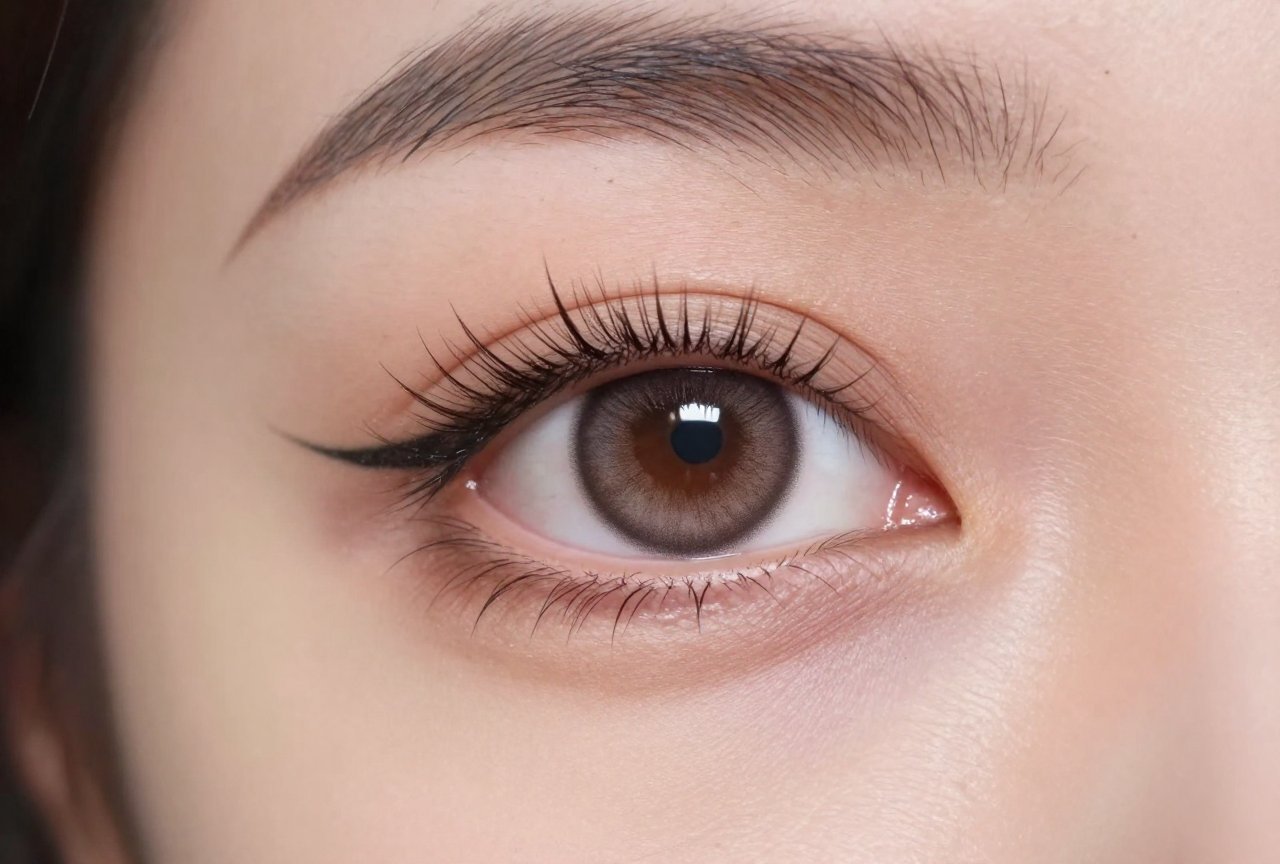
A realistic eye tattoo is exactly what it sounds like, a human eye rendered with photographic precision on skin. But pulling it off is anything but simple. I’ve tattooed dozens of these over the years, and I can tell you: the eye is unforgiving. Every client who sits down for one wants that glassy catchlight, the subtle vein mapping in the sclera, the iris fibers that catch the light differently depending on angle. It’s portrait work condensed into a tiny, curved surface. Get the white of the eye wrong and it looks like a boiled egg. Get the pupil placement off by a millimeter and the whole thing feels haunted in a bad way. This guide breaks down what actually matters if you’re considering one.
Origins & History
From Sailor Superstition to Fine Art
Eye imagery in tattooing goes way back. Traditional sailors wore simple eye designs, often just a crude outline, as protective talismans. The classic “third eye” on the back of the hand, the crying eye on the forearm. These were symbolic, not realistic. The shift toward photorealistic eye tattoos really took off in the late 1990s and early 2000s when artists started pushing black and grey realism beyond Chicano lettering and religious imagery. I remember first seeing Nikko Hurtado’s color eye portraits around 2005 and thinking, that’s a different game entirely. Suddenly people wanted their mother’s eye, their child’s eye, a lover’s eye rendered like a photograph.
What Changed Technically
Better machines, better needles, better pigments. Cartridge systems let us switch between liner and shader mid-piece without breaking flow. Greywash inks eliminated the old guesswork of hand-mixing black dilutions. But the biggest shift was cultural: clients started bringing in high-resolution photos from smartphones, expecting that level of detail. The bar got raised, and artists had to meet it.
Key Characteristics & Motifs
What separates a realistic eye from a stylized or traditional one? Specificity. Here’s what we’re actually rendering:
- Iris detail: Real irises aren’t flat color. They have crypts, furrows, a collarette boundary. I build these with concentric stippling and fine line work, sometimes 3RL, sometimes single needle for the really tight stuff.
- Sclera values: The white of the eye is never white. It’s blue-grey near the limbus, pink toward the corners, threaded with fine vessels. I tell clients: if your artist tattoos it pure white, they don’t understand the subject.
- Corneal reflection: That catchlight is what sells the wetness. Usually left as skin tone or very light grey, sometimes with a subtle blue shift. Placement matters, top-left catchlight reads as natural window light to most viewers.
- Depth cues: The eye sits in an orbit. Lid creases, tear ducts, subtle shadow beneath the brow. Without these, you have a floating eyeball. Creepy, but not realistic.
- Emotional content: A realistic eye carries expression. Squint lines, moisture at the rim, the slight asymmetry of a genuine human feature.
Common motifs include single eyes (often with symbolic elements like clocks, roses, or geometric frames), paired eyes in mirror arrangement, and eyes integrated into larger compositions, sleeves, back pieces, chest panels. I’ve done eyes within the negative space of a skull, eyes looking through keyholes, eyes that are technically part of a religious scene but function as the emotional center.
Color vs Black and Grey
When Color Works
Color eye tattoos are stunning when done well. Hazel tones, amber flecks, the ring of darker pigment around the iris edge, these subtleties reward color work. But color realism demands more sessions, more money, more aftercare discipline. The reds in scleral vessels can blow out or heal pinker than intended. Blues and greens in irises sometimes shift toward grey as they settle. I always warn clients: that bold turquoise you love at week three will likely mute by month six. Still worth it for many, but know what you’re signing up for.
Why Black and Grey Dominates
In my chair, maybe seven out of ten eye tattoos go black and grey. It’s not just about cost. Greywash ages more gracefully on most skin tones. The contrast between deep blacks in the pupil and soft tones in the iris creates that photographic pop without relying on color saturation. And black and grey heals more predictably, less variation between fresh and settled. For clients with darker skin tones, black and grey often reads more true to the reference, whereas color can get muddy or require heavier saturation that risks scarring.
Best Placements
Not every spot works for an eye tattoo. The detail is too fine, the curvature too specific.
- Forearm: Flat, visible, good size for a single eye. We see this a lot. The inner forearm especially, enough real estate for surrounding detail, not too much movement to distort the image.
- Upper arm/shoulder: Classic for larger compositions. The deltoid curve can actually complement the eye’s spherical form if the artist accounts for it.
- Hand: I try to talk people out of this. The skin is different, thicker, more variable, prone to blowout. Plus hands take abuse. That fine iris detail? Gone in a few years. If someone insists, I go bolder, more illustrative, less photorealistic.
- Thigh: Underrated. Large, relatively flat, easy to heal. Good for paired eyes or eyes with extensive surrounding elements.
- Ribcage: Painful, tricky to stretch consistently, but the vertical format suits a single eye with tear trails or dripping composition. I’ve done beautiful work here, but I don’t suggest it for first-timers.
- Chest: Sternum placement can work for centered compositions, but the pectoral movement means the eye lives on a shifting surface. Design accordingly.
Size matters. Below about three inches in diameter, the detail becomes nearly impossible. At two inches, you’re losing individual iris fibers. At four-plus, you can really breathe. I generally won’t do a realistic eye smaller than three inches unless the client accepts significant stylization.
Who It Suits
Realistic eye tattoos aren’t for everyone, and that’s fine. They work best for clients who:
- Have a specific personal connection, memorial, tribute, spiritual significance
- Understand that photorealism requires maintenance; touch-ups are likely
- Can commit to proper aftercare; eyes show poorly if they heal rough
- Have skin that holds fine detail (some people just don’t; genetics, age, sun damage)
- Are comfortable with the uncanny effect; some people find realistic eyes unsettling in person
I’ve had clients who wanted an eye for years, finally get one, and realize they don’t like being looked at by their own tattoo. Others find it grounding, protective, a way to carry someone’s gaze. There’s no wrong reason, but know your own psychology.
Modern Variations
Technical Mashups
Contemporary artists are mixing realistic eyes with other languages. I’ve seen eyes rendered in negative space within geometric patterns, eyes with the iris replaced by galactic imagery (technically still realistic in execution, surreal in concept), eyes split down the middle with one half photorealistic and half graphic. These work when the artist commands both vocabularies. They fail when one side is clearly stronger.
Biomechanical and Horror Integration
Eye tattoos slot naturally into biomechanical work, organic machinery, H.R. Giger descendants. The eye becomes a lens, a camera aperture, something surveillance-themed. Horror realism uses the same technical approach but pushes toward discomfort: bloodshot sclera, damaged iris, something wrong that the viewer can’t immediately name. I’ve done eyes with the pupil dilated to near-black, the surrounding iris barely visible, and the effect is genuinely disturbing. Intentionally so.
Choosing an Artist
This is where too many people go wrong. Not every realism artist does eyes well. Not every portrait artist wants to. Here’s what I tell friends:
- Look at healed photos, not just fresh: Any tattoo looks sharp at day three. Ask to see work at six months, a year. The iris detail should still read, the sclera should have maintained its values.
- Check their eye-specific portfolio: General portrait skill doesn’t guarantee eye expertise. The curvature, the wetness effects, the vessel work, these are specialized.
- Ask about their reference process: Do they work from photos you provide? Do they composite multiple references? Do they understand how to correct for skin tone versus the reference subject’s tone?
- Discuss their greywash or color approach: Single pass? Multiple passes? How do they handle the white highlights? Their answers should be specific, not vague assurances.
- Budget realistically: A good realistic eye takes four to eight hours depending on size and complexity. At professional rates, that’s not cheap. Anyone offering a detailed eye for $200 is cutting corners you can’t afford on something this visible.
Shop culture matters too. Does the artist seem rushed? Distracted? Annoyed by questions? I’ve watched colleagues blow through eye tattoos like they’re filling a quota. You want someone who slows down for the catchlight, who checks their reference every few minutes, who treats the piece like it matters. Because it does, to you, and to how their portfolio reads.
Final Thoughts
Realistic eye tattoos occupy this strange space between technical challenge and emotional weight. They’re hard to do well, harder to do originally, and they carry meaning that runs deeper than most imagery. I’ve watched clients cry in my chair when they see their child’s eye rendered on their skin. I’ve also seen people disappointed because they expected photograph perfection on a surface that moves, ages, and lives in light differently than paper. The best eye tattoos acknowledge these limitations and work with them. They don’t fight the medium; they use what skin does well, softness, depth, the way pigment settles into living tissue, and build something that feels true rather than merely accurate. If you’re considering one, take your time finding the right artist, the right reference, the right placement. The eye you’re tattooing deserves that care. So does the one you’re looking out of.
Frequently Asked Questions
How long does a realistic eye tattoo take to heal?
Most of the surface healing happens in two to three weeks, but the deeper settling continues for two to three months. During that first month, you’ll see some flaking and the colors will look dull, that’s normal. The final vibrancy and detail sharpness won’t be apparent until around the six-week mark.
Will a realistic eye tattoo look blurry as I get older?
All tattoos soften with age, but eyes are particularly vulnerable because of their fine detail. The pupil edge and iris fibers are the first to blur. Proper sun protection helps dramatically, and most clients plan a touch-up every five to eight years to keep the crispness intact.
Can I use a photo of my own eye for the tattoo?
You can, but it’s tricky to photograph your own eye well, lighting, angle, and focus all matter. Most artists prefer a professional reference or will shoot their own reference during a consultation. If you bring a phone photo, expect the artist to adjust it for tattoo readability.
Why do some realistic eye tattoos look creepy instead of beautiful?
Usually it’s a proportion issue, pupil too large or misplaced, iris flattening, or sclera too pure white. The uncanny valley effect is real with eyes. Small technical errors read as emotionally wrong to viewers. This is why artist selection matters so much for this specific subject.
Related Style Guides
- Realistic Fox Tattoos: A Working Artist s Guide
- Realistic Moon Tattoos: Complete Style Guide
- Realistic Skull Tattoos: A Working Artist s Guide
- Explore more