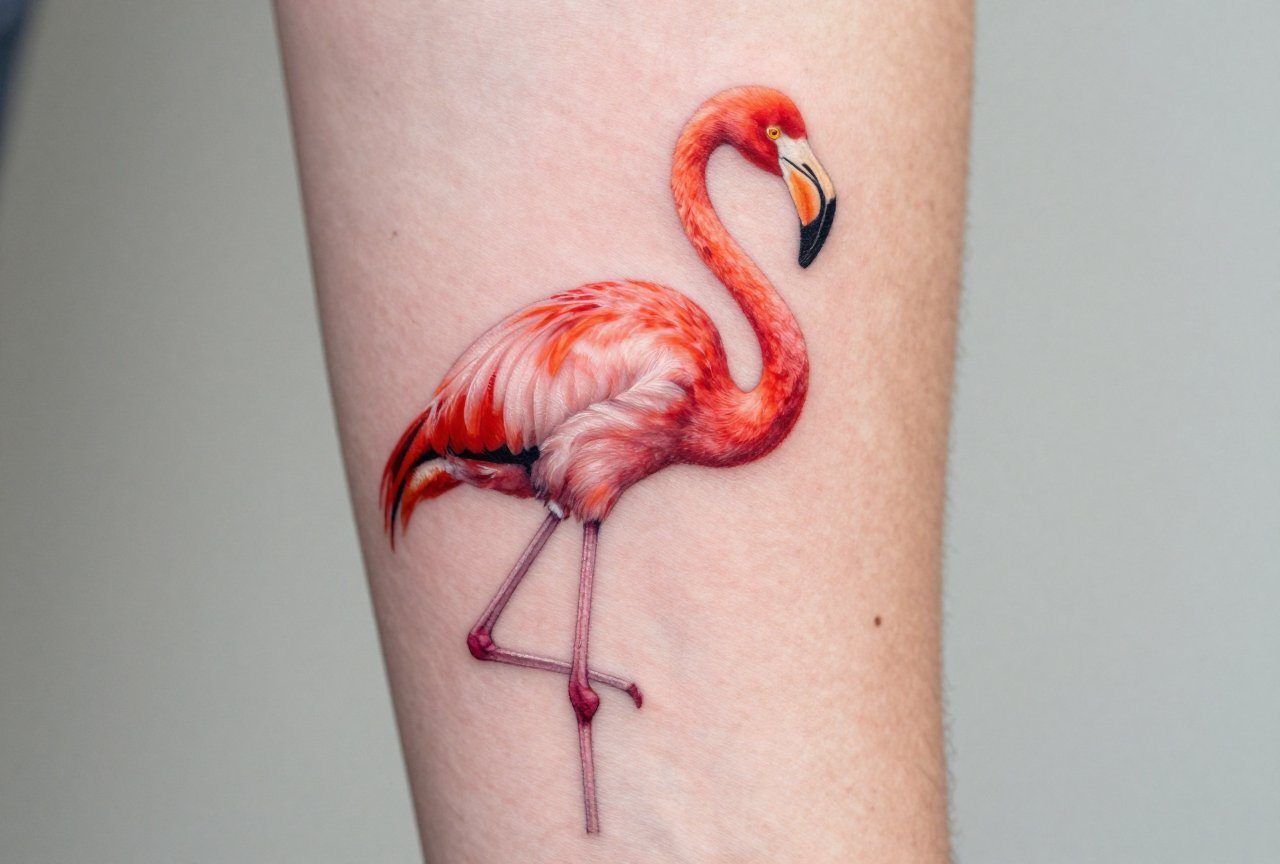
A realistic flamingo tattoo is exactly what it sounds like, an attempt to render this gangly, pink, improbable bird as it actually appears in nature, not the cartoon version from your childhood lawn ornaments. I’ve tattooed maybe a dozen over the years, and they always draw a crowd in the shop. There’s something about taking an animal most people associate with plastic yard decor and making it look alive on skin that hits different. The long legs, that crooked bill, the way the feathers shift from hot coral to near-white at the wing edges, it’s a technical challenge that separates good artists from great ones.
Origins & History
Flamingos as tattoo subjects didn’t really take off until the 2010s, when photorealism in tattooing hit its stride and clients started bringing in reference photos from their own travels rather than flash off the wall. Before that, you saw them in old-school Americana, bold outlines, limited color, more symbol than bird. The realistic approach owes everything to the evolution of color packing and the availability of better pigments that actually hold their pink tones.
From kitsch to fine art
I remember the first realistic flamingo I did, back around 2014. A client had spent six months in the Galápagos and came back with thousands of photos. She didn’t want “a flamingo tattoo.” She wanted that specific bird, the one with the crooked knee and the algae stain on its chest. That’s the shift, tattooing moved from generic symbols to specific memories, and flamingos benefited because they’re so visually striking. Their anatomy is weird enough to be interesting, familiar enough to read instantly.
Tropical tattoo tradition
Realistic tropical birds have deeper roots in Polynesian and Japanese tattooing, though those traditions stylized rather than rendered photographically. The modern realistic flamingo sits at a crossroads: Western photorealism techniques applied to a subject that carries decades of camp and kitsch baggage. Part of the artist’s job is honoring the bird without tipping into irony.
Key Characteristics & Motifs
What makes a flamingo tattoo “realistic” versus stylized? It’s the details that working artists obsess over.
- Feather texture: Real flamingo plumage isn’t smooth. It’s layered, slightly shaggy, with distinct barbs that catch light differently. I build this with whip-shading and single-needle texture work, never solid fills.
- Leg structure: That backward-bending knee is actually an ankle. The real knee sits up under the feathers. Getting the anatomy right matters, I’ve seen too many pieces where the joint bends the wrong direction and it ruins the whole illusion.
- Bill curvature: The distinctive downward curve filters food from water. In realism, you need to show the black tip fading to pink, the slight hook at the end, the way light passes through the thinner areas near the face.
- Color gradation: No flamingo is one shade of pink. They’re coral, salmon, almost white where the wings fold, sometimes orange where diet has been heavy in carotenoids.
- Background context: Most realistic pieces include some environmental storytelling, shallow water reflections, mangrove roots, that particular milky tropical sky.
Color vs Black and Grey
This is the question I get before the needle even touches skin. And my answer’s changed over the years.
Color: the obvious choice, with catches
Color is what people picture. That hot pink is the whole point, right? But here’s the reality from my chair: pink is a bastard color. It fades fast, it blurs, and cheap pigments go muddy or orange. I use specific brands, Eternal’s Lining Pink, Fusion’s Coral, sometimes custom mixes with a touch of white, to get longevity. A good color realistic flamingo needs touch-ups. I tell clients that straight. Expect it. Plan for it. The piece will look incredible for five years, then need refreshing. That’s not failure; it’s maintenance.
Black and grey: surprisingly powerful
I did a black and grey flamingo last year on a forearm, and it stopped people in the shop. Without color, you focus on structure, the negative space of the feathers, the weight of the body, the absurd elegance of those legs. Greywash lets you render the subtle shifts in plumage that color sometimes obscures. For clients who want the bird but work in conservative environments, or who just prefer the aesthetic, black and grey is underrated. It ages better, too. No pink turning peach turning vaguely flesh-toned.
Best Placements
Flamingos have that vertical stretch, long neck, long legs, which dictates placement more than most subjects.
- Outer forearm: The classic. The vertical flow matches the arm’s length. I’ve done this placement most often. The bird stands, one leg tucked, and the composition feels natural. Visibility is high, which clients love or hate depending on their life.
- Ribcage/side: Gives you room for the full body plus environment. Painful. Worth it for the canvas size. The stretch of the torso lets you play with the bird’s posture, feeding, preening, in flight with legs trailing behind.
- Thigh: Underrated for vertical subjects. The muscle curve can echo the bird’s body. I’ve placed them facing inward, so the head tucks toward the hip, creating intimacy rather than display.
- Calf: Similar to forearm but with more width for wing spread. The back of the calf handles detail well; the skin’s relatively stable.
- Shoulder to chest: For the ambitious. The neck curves up toward the collarbone, the body settles on the chest. Dramatic, large, not for first-timers.
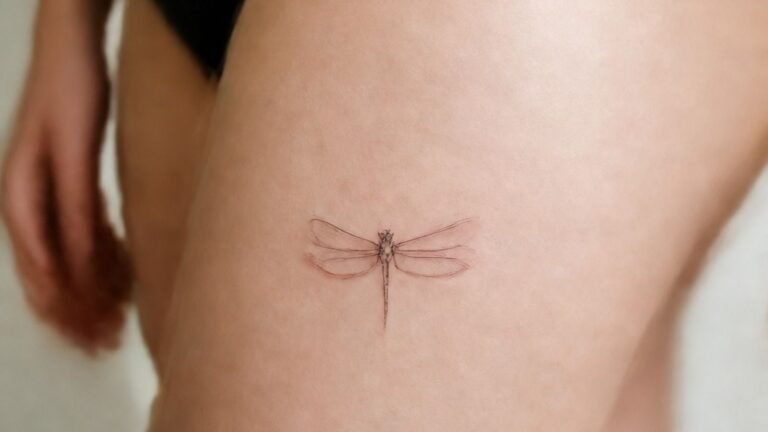
Small realistic flamingos, wrist, ankle, behind-ear, are technically possible. I discourage them. The detail that makes realism work needs space. Compress it too much and you get pink mush in three years.
Who It Suits
Not a personality quiz. More practical: who heals well, who commits to aftercare, whose lifestyle fits the visibility.
The color clients need to understand sun protection. I say this every consultation: that pink will vanish under UV. If you’re a beach person, a gardener, someone who won’t wear sunscreen, talk to me about black and grey or placement under clothing. The realistic style also demands patience in the chair. These aren’t three-hour walk-ins. A full color piece with background is eight to twelve hours, sometimes split across sessions. Your pain tolerance matters. Your ability to sit still matters. I’ve had clients tap out during the feather detail phase and come back months later, which is fine, but it breaks my rhythm.
Who shouldn’t get one? Anyone wanting “something small and cute.” Realism isn’t cute. It’s committed. It’s a statement about paying attention to the natural world.
Modern Variations
The style’s evolved even in my relatively short career.
Double exposure and composite pieces
I’m seeing more flamingos with landscape worked into their bodies, sunset gradients in the feathers, mangrove silhouettes in the neck curve. Technically difficult, requires planning the negative space from the stencil stage. When it works, it’s stunning. When it doesn’t, it’s a muddy bird with inexplicable dark patches.
Neo-traditional hybrids
Some artists are merging realistic rendering with bold neo-traditional composition. The bird’s face and body are photoreal, but the background uses decorative patterns, limited palettes, graphic elements. It’s a compromise for clients who want realism’s impact without its softness.
Scientific illustration style
My personal favorite direction. Think Audubon plates: precise, labeled, slightly formal. The bird in profile, maybe with Latin name incorporated. Appeals to the biology-minded, the birders, the ones who know there are six species and care which one they’re getting.
Choosing an Artist
This matters more for realistic flamingos than almost any style I can name. Here’s what I tell people who ask me for referrals.
- Look at their animals, not their portraits. Portrait realism and animal realism are different muscles. Fur and feather texture, the way light hits curved surfaces versus flat planes. An artist crushing human faces might struggle with the specific challenges of bird anatomy.
- Ask about their pink protocol. If they can’t name specific pigments, mixing ratios, how they handle fading, keep looking. This is basic technical knowledge for color realism.
- Check healed work, not just fresh. Everyone’s portfolio looks good at week one. Ask for photos at six months, a year. The best artists keep these records. I photograph my clients at healing milestones specifically for this.
- Consultation quality: Do they ask about your reference? Your actual experience with flamingos? The placement’s movement with your body? Or do they just book you and stencil from a Google image? The conversation tells you everything.
Price correlates with skill here, but not perfectly. I’ve seen mediocre artists charge premium rates because they have Instagram clout. I’ve seen incredible technicians undercharge because they’re bad at self-promotion. The consultation is your filter. Trust it.
Final Thoughts
A realistic flamingo tattoo is a strange, specific choice that says something about the wearer. Maybe it’s travel, maybe it’s an inside joke reclaimed, maybe it’s genuine ornithological enthusiasm. Whatever the motivation, the execution demands respect for the bird’s actual form and the medium’s limitations. I’ve watched this style mature from novelty to legitimate technical showcase. The best pieces I’ve done, the ones I’m still proud of years later, balance the absurdity, the pink, the lawn-ornament associations, with genuine craft. The bird stands on your skin, one leg raised, and for a moment it looks like it might step into real water. That’s the goal. Everything else is just pigment.
Frequently Asked Questions
How long does a realistic flamingo tattoo take to complete?
Most full-color realistic flamingos run 8-12 hours, often split across two or three sessions. Size, background detail, and your pain tolerance all factor in. I never rush these, the feather work alone can eat three hours.
Will the pink color fade completely over time?
Pink fades faster than black, but it doesn’t disappear. What happens is it shifts warmer, sometimes toward peach or salmon. Proper sun protection, quality pigments, and occasional touch-ups keep it bold. I schedule refresh sessions with my color clients every few years.
Can you make a realistic flamingo look good on dark skin?
Absolutely, but the approach changes. I lean heavier on contrast and structure, sometimes using more coral and orange tones rather than soft pastels. The realism comes from form and shadow, not just pink saturation. A consultation with skin tone in mind is essential.
What’s the most common mistake people make with this tattoo?
Going too small. Clients want delicate, but realism needs room to breathe. I’ve seen beautiful designs destroyed by compression, details blur together, the leg becomes a stick, the pink muddies. Trust your artist on minimum sizing.
Related Style Guides
- Realistic Hammerhead Shark Tattoos: Complete Guide
- Realistic Hourglass Tattoos: Complete Style Guide
- Realistic Lighthouse Tattoos: A Working Artist s Guide
- Explore more