The sakura tree tattoo is one of the most loaded symbols you can put on your skin. It looks delicate, sure, but the meaning behind it hits hard. Cherry blossoms live for about two weeks before they fall. That’s the whole point.
People get this tattoo for a reason. It’s about life being short, beauty being fleeting, and making peace with that instead of fighting it. That theme resonates across cultures, across ages, across every kind of person who walks into a shop. Here’s what it actually means and what to know before you commit.
The Core Meaning: Beauty That Doesn’t Last
The central meaning of the sakura tree tattoo is impermanence. Cherry blossoms bloom hard and fast, then drop. In Japanese philosophy, that cycle is called mono no aware, which translates roughly to the bittersweet awareness that nothing lasts. It’s not a sad concept. It’s an honest one. The tattoo is a reminder to be present, to appreciate what you have while you have it, because everything passes.
Most people who get this piece aren’t being dramatic. They’re marking something real: a loss, a survival, a transition, a rebirth. The sakura tree says life is fragile and worth it anyway. That’s a message that holds up on skin for decades, no matter how the context of your life shifts.
Japanese Cultural and Historical Background
A sakura tree in ink is a reminder that everything beautiful is already leaving.
In Japan, cherry blossoms, called sakura, have been culturally significant for over a thousand years. Hanami, the tradition of gathering under blooming sakura trees to eat, drink, and reflect, dates back to at least the 8th century. The blossoms appear in classical Japanese poetry, paintings, and textiles. They symbolize renewal and the arrival of spring, but always with that underlying note of transience.
During the feudal era, samurai associated the falling blossom with a warrior’s death: brief, beautiful, without regret. This reading gave sakura a connection to courage and living fully. That layer still carries weight in tattoo culture today, especially in traditional Japanese tattooing, known as irezumi, where sakura appears alongside koi, dragons, and tigers as part of large-scale full-body compositions.
Western and Personal Interpretations
Outside Japan, the sakura tree tattoo has taken on a broader, more personal meaning for a lot of people. Many get it as a memorial piece, honoring someone who died too young or too suddenly. The falling petals read as life leaving gracefully. Others use it to mark a chapter they’ve closed, a version of themselves they’ve let go. New city, end of a relationship, getting sober, coming out, surviving illness. The symbolism fits all of it.
Some people simply connect with the visual. They see a cherry blossom tree and feel something. That’s a legitimate reason to get a tattoo. Not every piece needs a dissertation. But knowing the depth behind sakura means you’re choosing something with centuries of real weight, not just a pretty design that trends on Pinterest and fades out culturally in two years.
Design Variations: From Realistic to Traditional
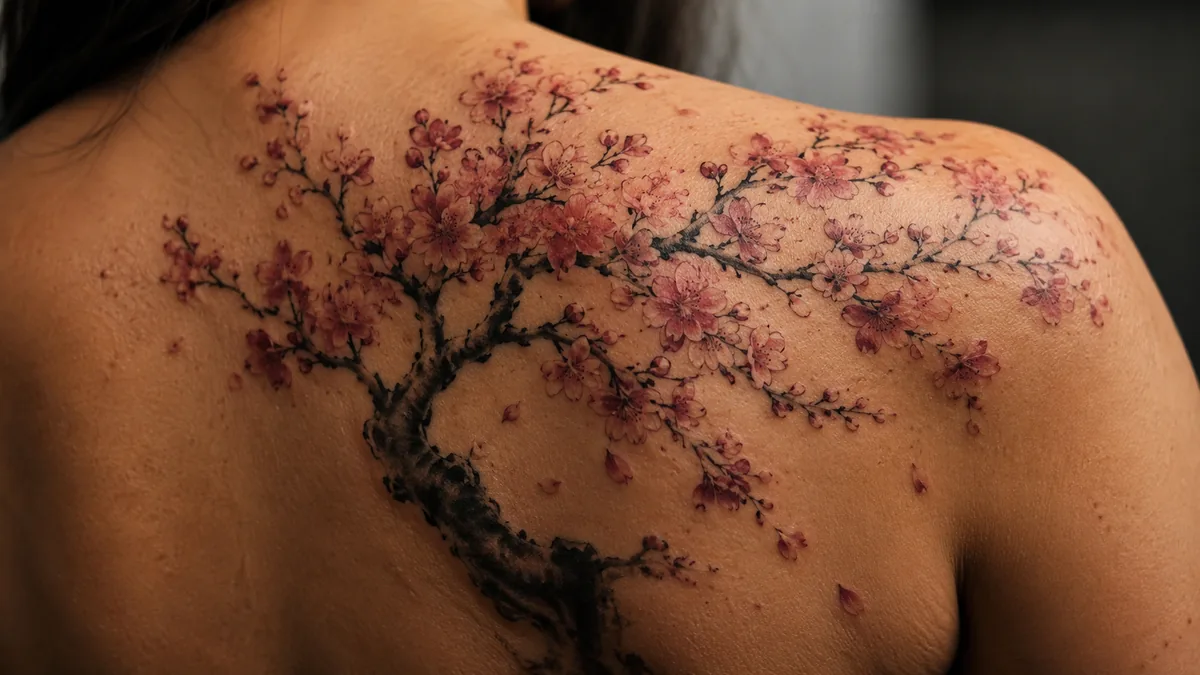
There’s a lot of room in how you render a sakura tree. Full tree compositions, trunk twisting upward with branches spreading wide and petals scattering, work great on the back, thigh, or ribcage where you have canvas to let it breathe. Smaller branch sprigs with a cluster of blossoms are cleaner for forearms, upper arms, and collarbones. Single blossoms work as minimalist accents or filler in a sleeve.
Style matters. Traditional Japanese (irezumi-influenced) sakura uses bold black outlines, flat color, and graphic petal shapes. It reads from across the room and ages well. Neo-traditional adds more dimension and saturated color. Fine line and watercolor styles look stunning fresh but require more care as they age since thin lines can blur and watercolor washes can fade without solid anchors. Know what you’re signing up for.
Color vs. Black and Grey
Color sakura tattoos, especially the classic pink and white blossoms, are a strong choice if done right. A good artist can layer soft pinks, warm whites, and deep magentas to create blossoms that look lit from inside. Saturated color holds better on lighter skin tones. On deeper skin tones, high-contrast placement matters more, leaning into white highlights and darker outlines to keep the design readable as it settles.
Black and grey sakura is equally valid and arguably more versatile. Whip-shaded petals with crispy linework give the design a timeless quality. It works in a Japanese-influenced sleeve or as a standalone piece. Black and grey also tends to heal more consistently across skin types and ages with more predictability than color. If you’re worried about long-term results, black and grey is the lower-maintenance path without sacrificing impact.
Placement and How It Ages on Skin
The back is the prime real estate for a full sakura tree. You’ve got the vertical space for the trunk and horizontal room for branches to spread. It’s also a low-wear area with minimal friction from clothing, so color stays saturated longer and fine details hold. Thighs and ribs are strong seconds for larger compositions. For the ribcage, know it’s a spicy spot to sit through, and the skin there moves a lot, which can affect long-term crispness.
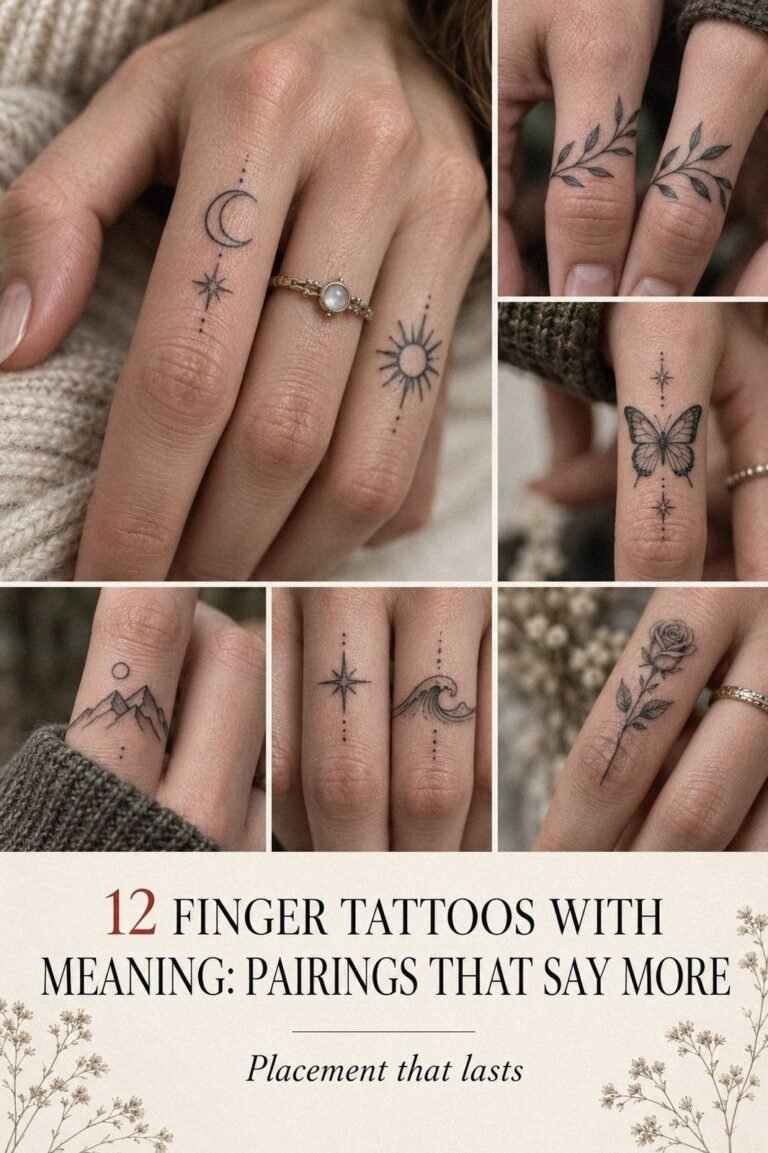
High-wear zones like hands, feet, and inner wrists will fade faster and may need touch-ups. Forearms and upper arms are solid middle ground, good visibility, reasonable aging, easy to show or cover. Avoid placing ultra-fine line sakura in spots that see a lot of sun and friction without a solid plan for touch-up. Bold will hold. Thin decorative lines in high-wear spots will ghost over time. Build accordingly.
Who Gets This Tattoo and How to Make It Yours
Sakura tree tattoos cross every demographic. Men, women, nonbinary folks, 20-year-olds and 60-year-olds. Military veterans who connect with the samurai-era meaning. People coming out of grief. People celebrating a new phase of life. Travelers who fell in love with Japan. Artists drawn purely to the form. The symbol is broad enough to hold all of it without feeling diluted.
To make it personal, think about what you’re anchoring it to. Add a specific detail that means something to you: a date worked into the roots in Roman numerals, a bird species native to your hometown perched in the branches, a color that connects to a person or memory. Work with an artist who does this style well, not just anyone who’ll take your money. Look at healed photos of their work, not just fresh shots. A sakura tree done right is one of the most quietly powerful tattoos you can carry.