
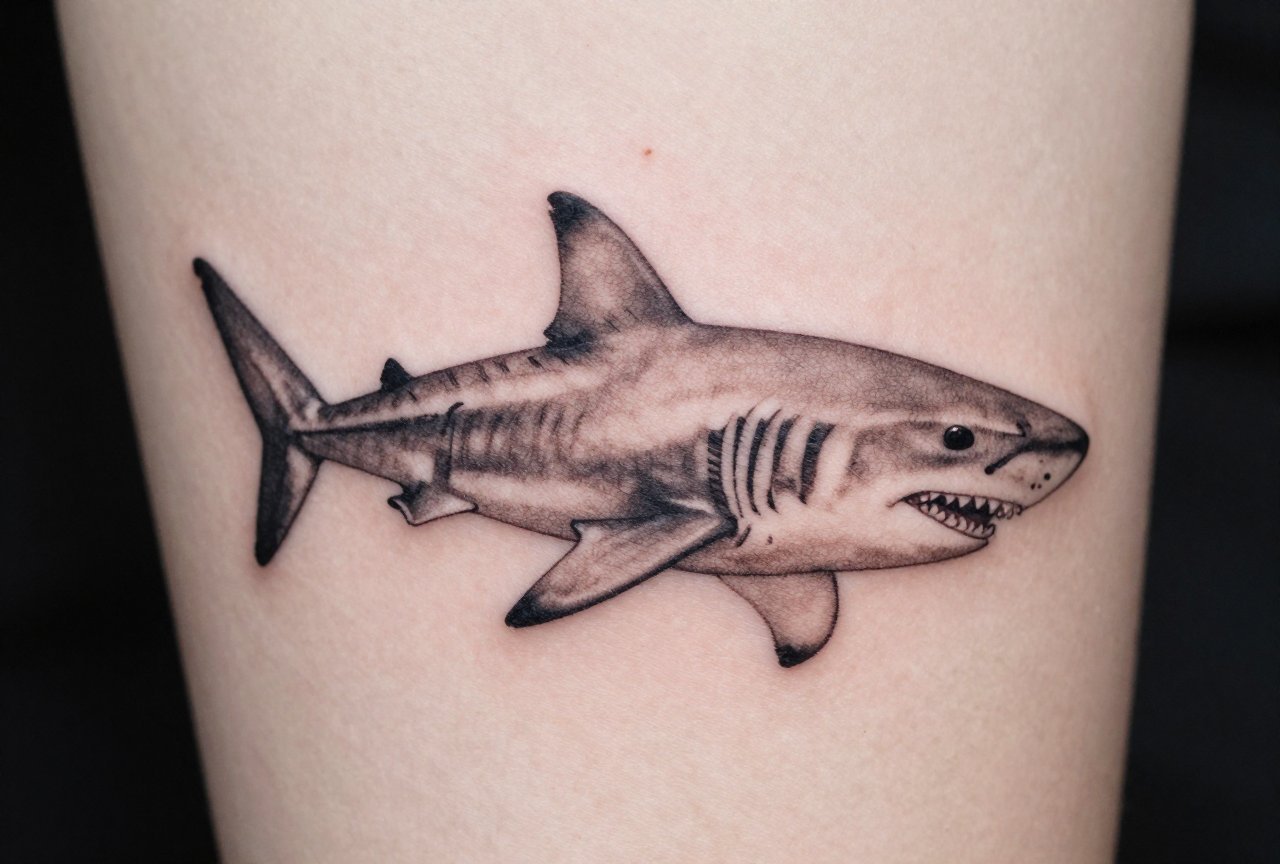
A shark tattoo paired with alexithymia represents the tension between appearing calm, even predatory or cold, while actually experiencing emotions that feel inaccessible or impossible to name. It’s about surviving when your own feelings stay hidden beneath the surface, even from yourself. The shark becomes a mascot for that disconnect, powerful, misunderstood, and moving through depths others don’t see.
Symbolism & History
The Shark as Emotional Armor
Sharks have carried weight in tattoo culture for decades. Sailors got them for protection and survival. Later, shark imagery shifted into surf culture, then into street and fine-art tattooing. But the alexithymia connection is newer, and it hits different.
Alexithymia isn’t a diagnosis most people throw around at parties. It’s the difficulty identifying and describing emotions, sometimes linked to trauma, sometimes present from childhood, sometimes appearing after brain injury. People who live with it often describe feeling like they’re watching life through glass. The shark fits because sharks don’t look like they’re feeling much either. They’re all business, all forward motion.
I’ve tattooed this motif on people who explain it quietly, sometimes with relief that there’s a word for their experience. They don’t want a brain diagram or a ribbon. They want an animal that matches how they move through the world, functional, effective, but not obviously emotional.
Where the Symbolism Comes From
- Sharks breathe without stopping; people with alexithymia often function without emotional processing
- The cold eye reads as detached, which mirrors how alexithymia gets misread as indifference
- Water as emotional depth that the shark navigates without surfacing
- Historical tattoo meaning of survival and protection gets repurposed for psychological survival
Common Variations & Styles
What Actually Gets Inked
In my chair, I’ve seen a few approaches that work better than others. The shark can be aggressive or passive, whole or partial, realistic or stylized. Each choice changes the meaning slightly.
Realistic great whites in black and grey dominate. The detail of the eye matters enormously, some clients want that dead, flat stare emphasized. Others want the shark in motion, mid-hunt, which shifts the meaning toward action despite internal stillness. I’ve done one where the shark was swimming downward, away from the viewer, which the client said was about disappearing into their own depths.
Line work and single-needle styles are growing for this. They feel more clinical, more diagrammatic, which suits the alexithymia theme. Heavy traditional bold lines can work but risk making the shark look too aggressive, too cartoon-mean. The emotional register is different.
Adding Elements
- Water lines or negative space waves around the shark to emphasize isolation
- Text fragments, sometimes just a word like “numb” or “below”, integrated into the design
- Split compositions: shark above water, something else below, or vice versa
- Geometric framing that suggests measurement, control, or clinical distance
Color is rare for this specific meaning. When it appears, it’s usually muted, blue-grey, washed-out teal, the color of deep water where light doesn’t reach. Bright traditional shark colors read as celebration, and that’s not the tone here.
Best Placements
Where this goes on the body matters for how the meaning lands. I’ve seen strong results in a few spots.
The forearm works when someone wants it visible, when the tattoo is partly about explaining themselves to others, or at least making the invisible visible. The ribs or side torso are more private, which fits when the alexithymia experience is held close, not shared casually. The upper back, between shoulder blades, gives the shark space to stretch and suggests something carried.
Thigh pieces happen too, especially for larger compositions with water and geometric elements. The calf can work but the cylindrical shape fights the shark’s horizontal movement. We see this a lot with animal designs, flow matters.
One placement I remember: a woman got a small shark behind her ear, just the head and gills, done in fine single-needle grey. She said it was where she felt her emotions get stuck before she could access them. That specificity is what makes these tattoos matter.
Who Chooses This Tattoo / Personal Meanings
What Clients Actually Say
People who request this aren’t typically walking in with the word “alexithymia” on their tongue. More often they describe a feeling: “I don’t know what I’m feeling until days later.” “People think I’m cold.” “I had to learn emotions like a second language.” Then they saw a shark image and something clicked.
I’ve tattooed this on a paramedic who said emergency work had flattened his emotional range until he couldn’t tell his wife he loved her without it feeling like reciting lines. On a software engineer who described her twenties as “operating in grayscale.” On a parent recognizing the same pattern in themselves that they’d initially pathologized in their child.
The Conversation in the Shop
What artists actually say about this varies. Some will push for clarity: “Do you want this to read as sad, or strong, or both?” Because the shark can go either way. The wrong design choices make it look like a sports team logo or a fear-of-sharks piece, which is the opposite of the intended meaning.
Good artists ask about the eye, the direction of movement, whether the mouth is open. These details carry emotional weight. An open mouth with visible teeth suggests the alexithymia is a defense, something active. A closed mouth, swimming shark reads more as description, less as narrative.
Similar Symbols
People considering shark alexithymia tattoos often look at alternatives first. Understanding the overlap helps clarify why the shark wins for some and loses for others.
- Iceberg tattoos: The classic “tip of the iceberg” visual maps neatly onto hidden emotional depth. Less animal, more diagram. Some find it too clinical or overused.
- Mask imagery: Comedy/tragedy masks or Noh mask references speak to hiding true feelings. Stronger for social anxiety or depression than for alexithymia specifically, which isn’t about hiding but about not knowing.
- Deep sea creatures: Anglerfish, giant squid, animals from actual depths. These emphasize alienation more than functional survival. The shark moves; the anglerfish waits.
- Robot or android motifs: Direct but risks feeling juvenile or ironic in a way that undercuts real experience.
- Empty speech bubble: Too literal for most, though I’ve seen it work in very minimal, text-based designs.
The shark’s advantage is its existing cultural weight combined with ambiguity. It doesn’t explain itself. That not-explaining is the point.
Final Thoughts
This tattoo works when it’s specific to a person’s experience rather than borrowed from a trend. The best shark alexithymia pieces I’ve done came from clients who could point to a moment, their own behavior they finally understood, a relationship that suffered, a relief at naming something that had been shapeless.
How it ages matters too. Fine line work around the eyes can blur. Heavy black in the body holds. I tell clients to plan for ten years out, not just the fresh photo. The meaning should last longer than the Instagram post.
If you’re considering this, bring reference but also bring language. The words you use to describe why you want it will shape what gets drawn. The artists who do this well aren’t just technically skilled; they’re listening for the emotional architecture underneath the request. That’s where the real design happens.
Frequently Asked Questions
Do I need to tell my tattoo artist I have alexithymia?
You don’t need to disclose a diagnosis, but sharing what the shark represents to you helps the artist design something authentic. The more specific you are about the feeling, survival, invisibility, emotional distance, the better the tattoo will match your experience.
Will people ask what my shark tattoo means?
Probably, especially if it’s visible. Shark tattoos are common enough that strangers might assume it’s about strength or surfing. Whether you explain the alexithymia connection is entirely your choice; many people with this tattoo keep the meaning private.
Can this tattoo look too aggressive or scary?
It depends on design choices. Open mouths, sharp teeth, and heavy black shading read as threatening. If you want the alexithymia meaning to come through, consider a swimming shark with a closed mouth, softer grey tones, or geometric elements that suggest interiority rather than attack.
Is this tattoo only for people diagnosed with alexithymia?
Not at all. Many people relate to the experience without a formal diagnosis, emotional numbness, difficulty naming feelings, or feeling misunderstood as cold. The tattoo belongs to anyone who connects with the symbol, though being thoughtful about why helps avoid generic ink.
Related Tattoo Meanings
- Hawaiian Tribal Tattoo Meaning: Heritage Personal Power
- Hawaiian Tattoo Meaning: Heritage, Spirituality Island Identity
- Maori Face Tattoo Meaning
- Explore more









