Let’s get one thing straight before we go any further: a traditional head tattoo is not a whim. I’ve had grown men sit in my chair, knuckles white on the armrest, asking if we can “just do a little one behind the ear to test it out.” There is no testing a head tattoo. The skin is different, tighter, oilier, sitting right on bone. The pain is real. The commitment is absolute. And the look? When done right, nothing else in tattooing carries that same weight. Old school imagery, bold eagles, daggers, roses, clipper ships, panthers, was built for visibility. It was meant to be read from across a bar, across a street. On the head, that readability becomes part of your silhouette. People see it before they see you.
Origins & History
Sailor Jerry and the Original Bold
Norman Collins, Sailor Jerry to everyone who matters, didn’t invent traditional tattooing, but he codified the language we still speak. In his Honolulu shop, the head was reserved for the truly committed. Not every sailor wanted their scalp worked; the sun beat down mercilessly, and fresh ink on a bald head blistered something fierce. But the ones who did? They got the same bold outlines, the same limited palette, the same graphic punch that made traditional style travel. I’ve flipped through Jerry’s flash sheets until my fingers went black with ink residue. The head pieces were always the most stripped-down. No fine detail that wouldn’t hold. No subtle shading that would blur into mud.
From Counterculture to Mainstream
By the 1970s and 80s, head tattoos were punk rock territory. I apprenticed under a guy who’d done his first scalp piece in 1984 on a kid with a mohawk, skinhead culture meeting biker culture meeting whatever rebellion was handy. The imagery stayed traditional because traditional works. Bold lines. Solid color. Black that stays black. What changed was who got them and how visible they became. Where sailors hid under hats, these kids wanted the world to see. That shift matters for anyone considering one today. The social cost has dropped, but the permanence hasn’t budged.
Key Characteristics & Motifs
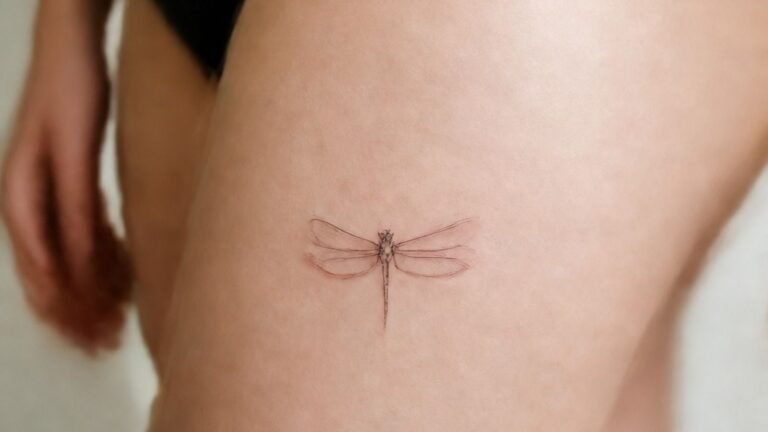
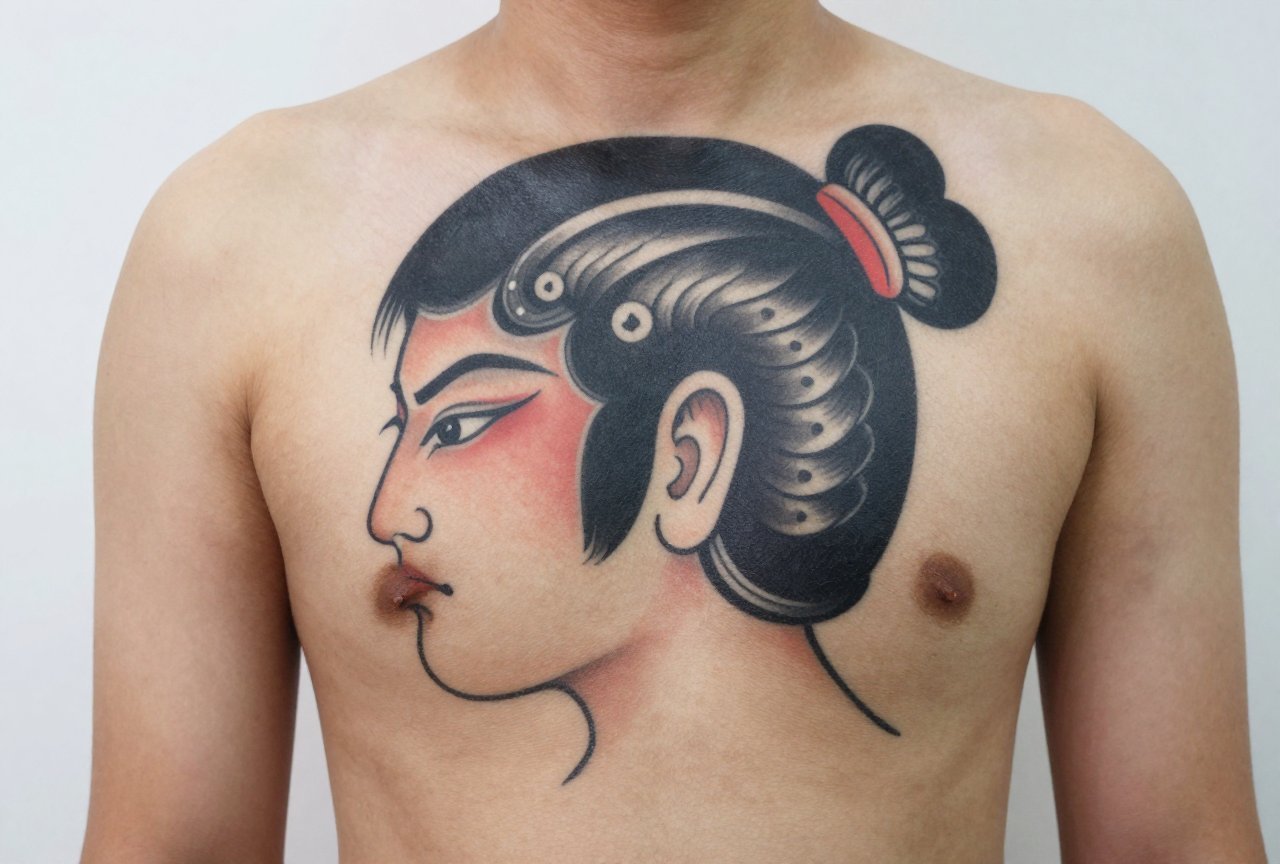
Traditional head tattoos follow rules that exist for reasons. I’ve seen too many clients bring reference from Instagram where some artist crammed photorealistic portraits onto a temple. Three years later, it’s all grey mush. Here’s what actually works on the scalp:
- Bold black outlines: The head moves constantly, jaw clenching, brow raising, the skin sliding over the skull. Fine lines blow out. Thick, confident outlines stay readable.
- Limited color palette: Red, yellow, green, blue, black. That’s the vocabulary. On the head, where sun exposure is constant, these saturated colors fight fading better than soft pastels ever could.
- Iconic imagery: Eagles, swallows, anchors, roses, skulls, snakes, daggers, pin-up girls, clipper ships. These motifs are legible at distance, readable at small sizes, and they carry cultural weight.
- Graphic simplicity: Negative space is your friend. The scalp isn’t a back piece. You don’t have room for narrative complexity. One strong image, cleanly rendered.
I did a spider web on a guy’s elbow years ago, classic traditional filler. He came back wanting the same web on his temple. I had to talk him down. The temple skin is thin, vascular, prone to blowout. We went with a bold black rose instead, heavy outline, limited shading. Five years later, it still looks like a rose. The web would have been a grey smudge.
Color vs Black and Grey
When Color Works
Color on the head is a statement. I’ve watched clients wince through four-hour sessions of solid red and yellow, the scalp bleeding more than most placements, the sting sharper because there’s no fat cushion. But the payoff? A traditional eagle with a red heart, yellow beak, green banner reading “MOM”, that’s the real thing. Color ages differently on the head, though. The sun hits it daily unless you’re religious about hats and SPF. I tell clients: that bright red will settle to a weathered brick. Plan for it. Want it to stay fiery? You’ll be buying sunscreen for life.
The Case for Black and Grey
Black and grey traditional on the head is underrated. The contrast against skin tone, the graphic weight of pure black ink, it photographs beautifully and ages with dignity. I did a black ship on a bald client’s entire crown five years ago. The sails were skin-tone negative space, the hull solid black, the waves bold lines. It healed rough, as head pieces do. The first pass always looks angry, swollen, the lines seeming too thick. But settled in? It’s become his signature. He says strangers ask about it constantly. The black stayed true, the grey softened to a weathered silver that suits the nautical theme.
Best Placements
Not all head real estate is equal. I’ve tattooed scalps, temples, behind ears, across foreheads. Each has its own personality, its own problems.
- The crown: Maximum visibility, maximum commitment. Best for symmetrical designs, spider webs, mandalas, religious imagery. The pain is intense; the skin is thin and the bone is right there. Healing means sleeping raised, dealing with plasma crust, not touching the scabs for weeks.
- Temples: Popular, tricky. The skin stretches differently here, and blowouts happen easier than you’d think. I keep designs simpler on temples: small roses, single daggers, minimal lettering. The client who wants a full temple-to-cheep piece? We plan it as a continuation, not an isolated image.
- Behind the ear: The “starter” head tattoo, though I hate that term. It’s hidden when needed, visible when the hair is up or the head is shaved. Pain is sharp but brief. Traditional swallows live here beautifully. The healing is annoying, sleeping on it hurts, headphones become impossible for two weeks.
- Forehead: I won’t do it unless I believe in the design and the client. Forehead tattoos are the most judged, the hardest to cover, the most likely to affect employment. Traditional imagery can soften the impact, a small anchor, a delicate rose above the brow. But I have turned people away. Some requests are about crisis, not art.
Who It Suits
I’ll be direct: head tattoos suit people who don’t need my permission. I’ve tattooed CEOs of tech companies with shaved heads and full traditional coverage. I’ve tattooed mechanics, musicians, teachers. The common thread isn’t profession or aesthetic. It’s certainty. The head is not a place for your first tattoo. I tell clients: get your arms done. Get your chest. Learn how your skin heals, how you sit with pain, how you feel about permanence. Then we’ll talk scalp.
Hair matters. If you’re balding, a head tattoo becomes a choice about embracing what’s happening. I’ve had clients shave everything for a clean canvas, then watch their hairline retreat further, changing the composition. Plan for the long hair you might lose. A good design works with a shaved head or a full buzz, not against them.
Modern Variations
Neo-Traditional on the Scalp
Neo-traditional keeps the bold outlines but adds dimension, more color, more illustrative detail. On the head, this walks a fine line. I’ve done neo-traditional panthers with softer grey shading, more anatomical accuracy, jewel tones in the eyes. They look stunning fresh. The question is always: how will this read in ten years? I tend to pull clients back toward simpler color blocks, heavier blacks. The neo-traditional influence is in the composition and flow, not the technical complexity.
Mixed Styles
Some of my favorite head pieces blend traditional with Japanese influences, bold outlines meeting wave backgrounds, a traditional eagle with wind bars. These require artists comfortable in multiple languages. The head doesn’t forgive hesitation. Every line is committed. I’ve watched apprentices struggle with scalp skin, the needle bouncing, the stretch wrong. You want someone who’s done this dozens of times, who knows when to push harder and when to let the skin rest.
Choosing an Artist
This is where I get passionate. Not every traditional tattooer does heads. Not every head tattooer does traditional. You need both. When someone asks me for a referral, I look for:
- Healed photos: Anyone can make a fresh tattoo look good. Ask to see one-year-healed head work. The lines should still be lines. The black should still be black. If they only show fresh work, that’s a red flag.
- Specific experience: “I’ve done a few” is not enough. I want to hear “I did three scalps last month.” The stretch technique for head skin is different. The aftercare knowledge is different. The pain management is different.
- Portfolio cohesion: If their traditional work is solid but their head pieces look tentative, keep looking. The confidence shows in the line quality. Hesitant lines on the head become permanent hesitation.
- Consultation quality: Do they talk you through placement options? Do they discuss how your hair grows, how baldness might progress, how the design flows with your skull shape? Or do they just stencil and go? The good ones plan.
I turned down a head tattoo last month. The client wanted a traditional eagle, full color, covering a birthmark on his crown. The birthmark was raised, vascular, risky. I sent him to a dermatologist first, then to a specialist who works with compromised skin. That’s part of the job too. Knowing when not to.
Final Thoughts
A traditional head tattoo is not decoration. It’s architecture. It builds your visible self in ways that can’t be undone casually. I’ve watched clients cry in my chair, not from pain, though there’s plenty, but from the mirror moment after, seeing themselves changed permanently. The good tears and the complicated tears look the same.
The style endures because it works. Bold lines. Limited palette. Iconic imagery. On the head, these principles matter more, not less. The sun hits harder. The skin heals differently. The world sees it first. Choose your artist carefully. Choose your imagery thoughtfully. And understand that “traditional” doesn’t mean safe, it means tested. Generations of tattooed people have proven what holds. Trust that lineage. Add to it honestly. Then wear it like the statement it is.
Frequently Asked Questions
How long does a traditional head tattoo take to heal?
Scalp tattoos typically need two to three weeks for surface healing, but the full settling process takes closer to two months. You’ll deal with heavy scabbing, sleeping discomfort, and strict sun avoidance. I tell clients to plan time off work if possible, and absolutely no hats or helmets until the peeling phase passes.
Will a head tattoo affect my hair growth?
Tattooing doesn’t kill hair follicles if done properly, but it can shock them temporarily. I’ve seen patchy regrowth for a few months post-tattoo, usually filling back in. If you’re already balding, the tattoo becomes more visible as hair thins, something to design around from the start.
How much does a traditional head tattoo hurt compared to other placements?
The head is among the most painful spots. There’s no muscle or fat padding, just skin on bone, and the vibration from the machine resonates through your skull. Clients describe it as sharp, burning, and relentless. Most need breaks every hour. I always schedule head pieces with extra time built in.
Can I shave my head after getting a scalp tattoo?
Wait at least four weeks before shaving over a fresh scalp tattoo, and even then, use extreme care. Freshly healed skin is sensitive, and nicks can introduce infection or damage the ink. Once fully settled, most clients shave regularly without issue, the tattoo actually looks sharper with a consistent buzz.
Related Style Guides
- Traditional Japanese Tattoo Artists: A Real Shop Guide
- Traditional Marine Tattoos: A Working Artist s Guide
- Traditional Portrait Tattoos: A Working Artist s Guide
- Explore more