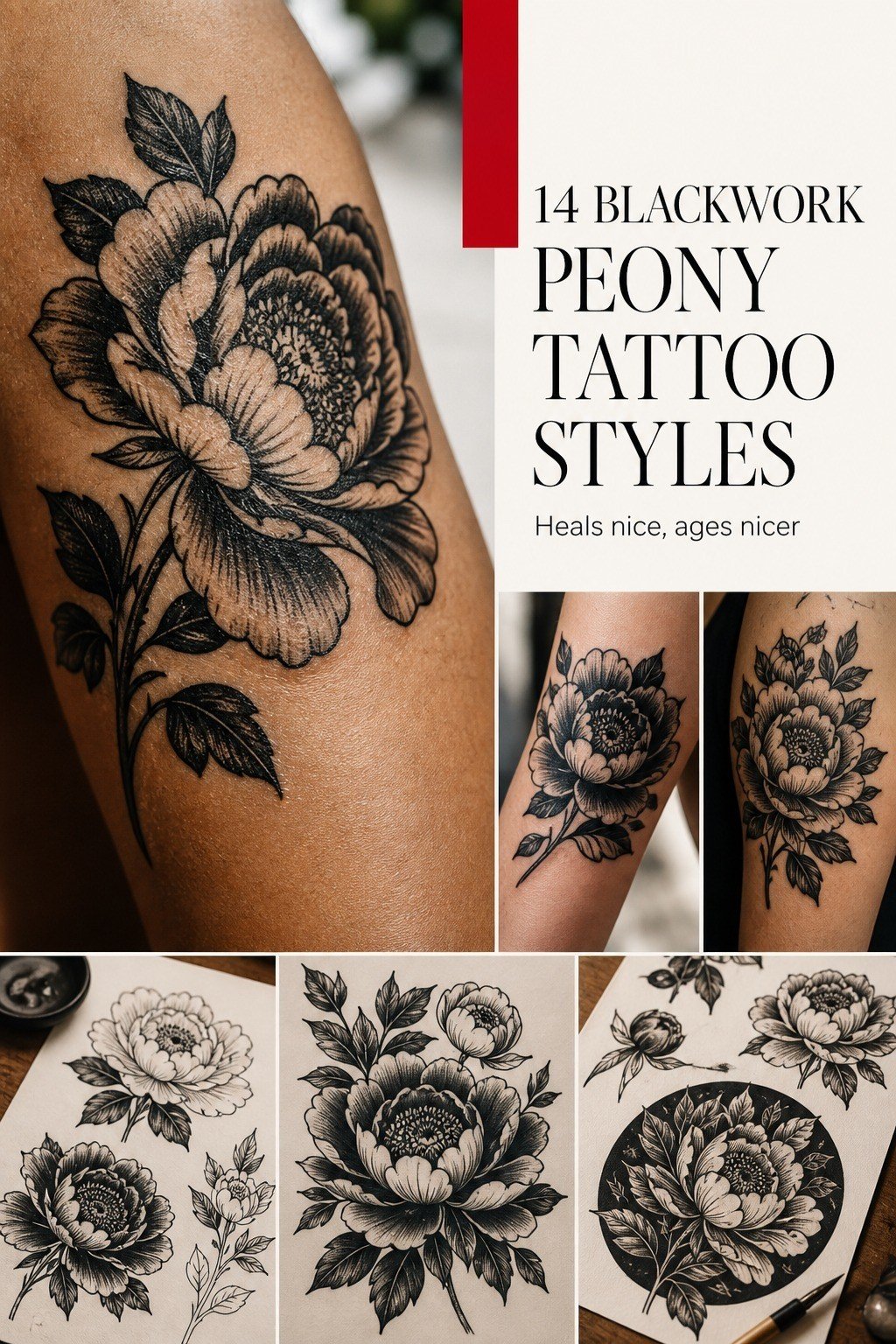
A blackwork peony tattoo ages well when you give the petals enough room, build real contrast, and put it where your skin won’t chew it up. I’ve seen gorgeous reference photos turn into a dark blur because someone chased tiny detail over clear design. Start cleaner. Your future tattoo will thank you.
- Start With a Bold Blackwork Peony Sketch
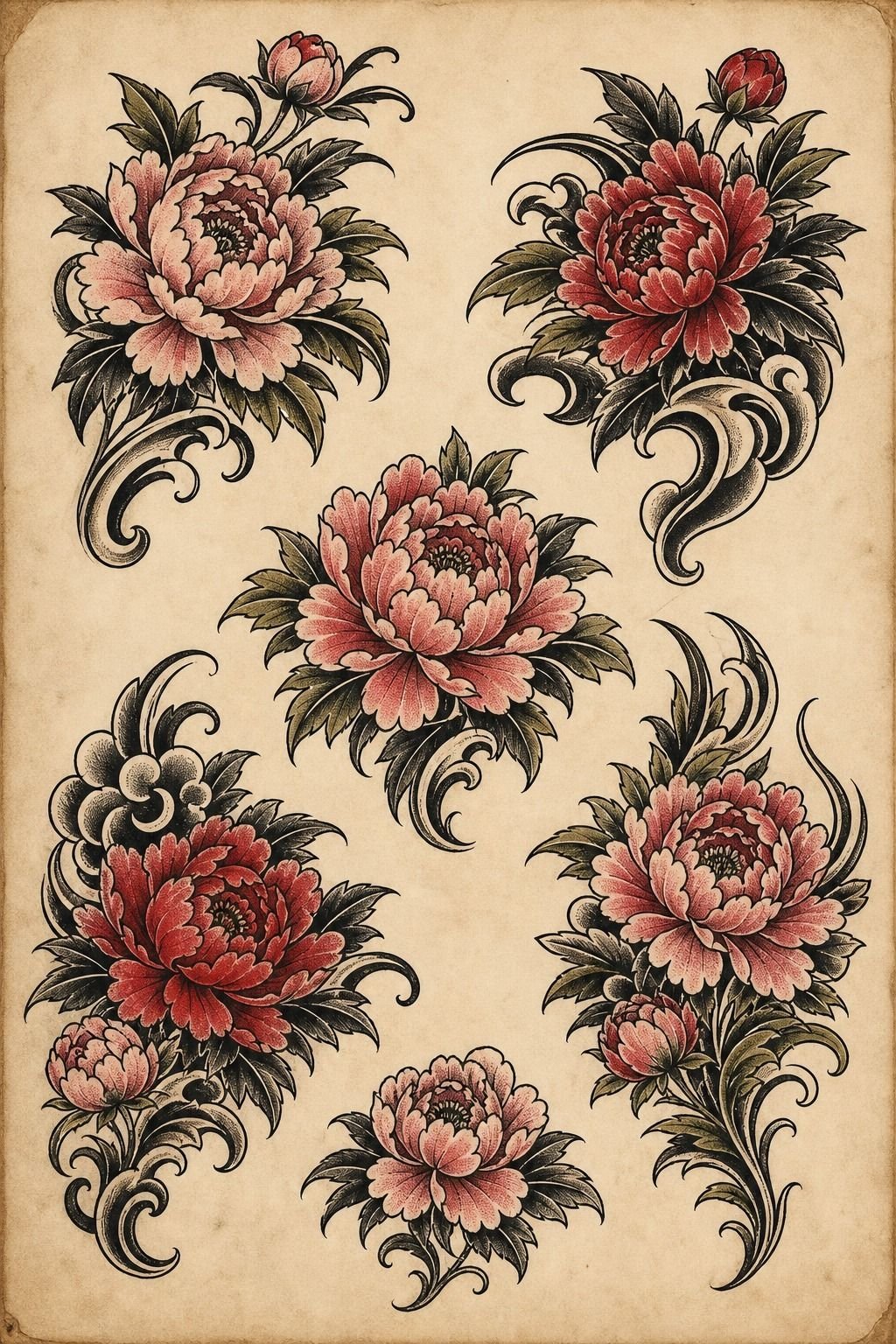
- Pick Petal Shapes That Hold Solid Ink
- Plan Negative Space Between Dense Petals
- Choose Stem Details For Lasting Clarity
- Place Your Peony Across The Shoulder
- Frame A Peony Along Your Forearm
- Scale The Bloom For Your Ribcage
- Match Blackwork Weight To Your Placement
- Add Leaves Without Losing Peony Focus
- Use Dotwork To Soften Heavy Blackwork
- Compare Blackwork Floral Tattoo References Carefully
- Check Healing Needs Before Booking
- Choose An Artist With Floral Blackwork
- Protect Your Peony Tattoo During Healing
1Start With a Bold Blackwork Peony Sketch
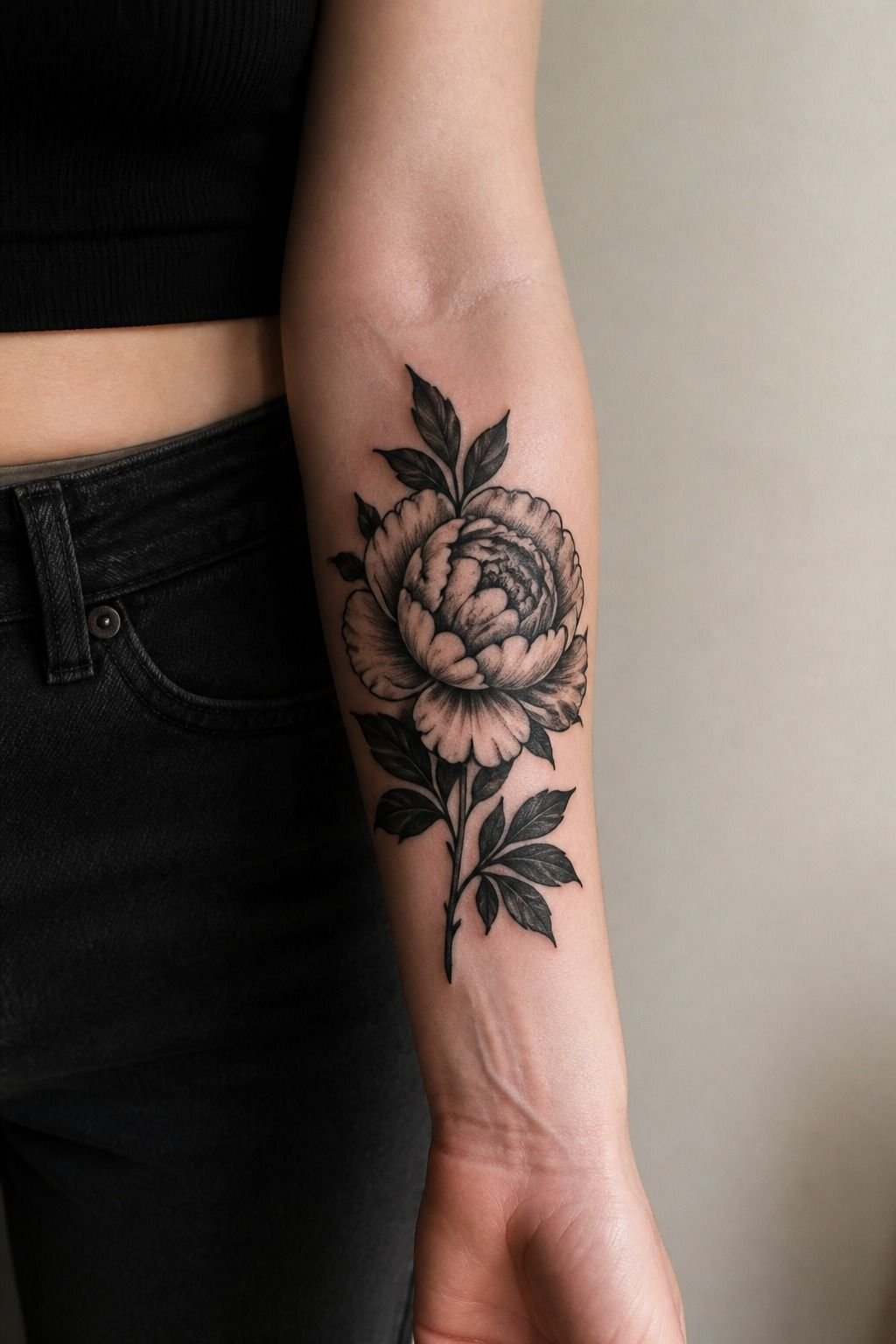
Start with a peony tattoo sketch that reads from a few feet away, not just while it’s zoomed in on your phone. You want one main bloom, a clear center, and outer petals that make a strong silhouette. If you can’t tell it’s a peony when you squint, your artist needs to simplify it.
Ask for black masses placed under the petal folds, not random black blobs. I usually want the darkest areas near the flower’s core and tucked behind a few larger petals.
That gives your eye somewhere to land. It also keeps the design bold without making your whole forearm look like one black patch.
Bring references for mood, not a Pinterest-exact copy. A solid artist can pull the velvety, dramatic shape you like while drawing a piece that fits your body.
For symbolism before you commit, read our peony tattoo meaning guide. Your tattoo should be yours.
2Pick Petal Shapes That Hold Solid Ink
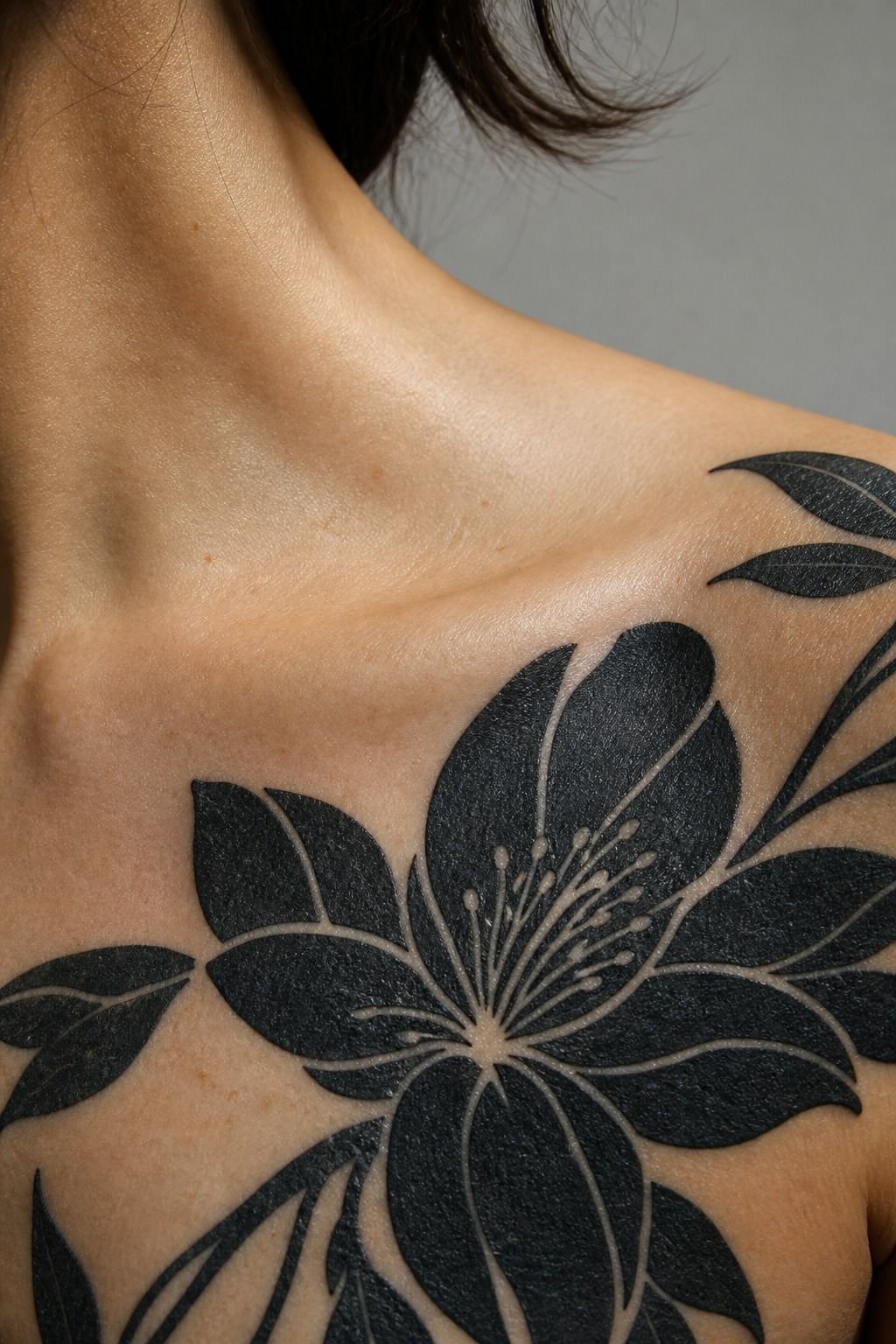
Choose petal shapes with thick outer edges and roomy inner curves. Those big, organic folds hold carbon black ink far better than a dozen skinny ruffles. Tiny scallops may look charming in a fresh stencil, but they’re the first part to soften together after years of skin movement.
I’d skip petals that overlap like stacked lace. They’re pretty in a digital drawing, sure, but they can heal into soup when every gap is less than a few millimeters. Your artist should use crispy and confident lines, then let a few petals go fully black for depth.
On a collarbone, the flower needs a little more breathing room because the skin shifts every time you move your shoulder. Keep the edges soft, but keep the structure bold. That contrast is what makes a blackwork-floral-tattoo feel refined instead of heavy.
3Plan Negative Space Between Dense Petals
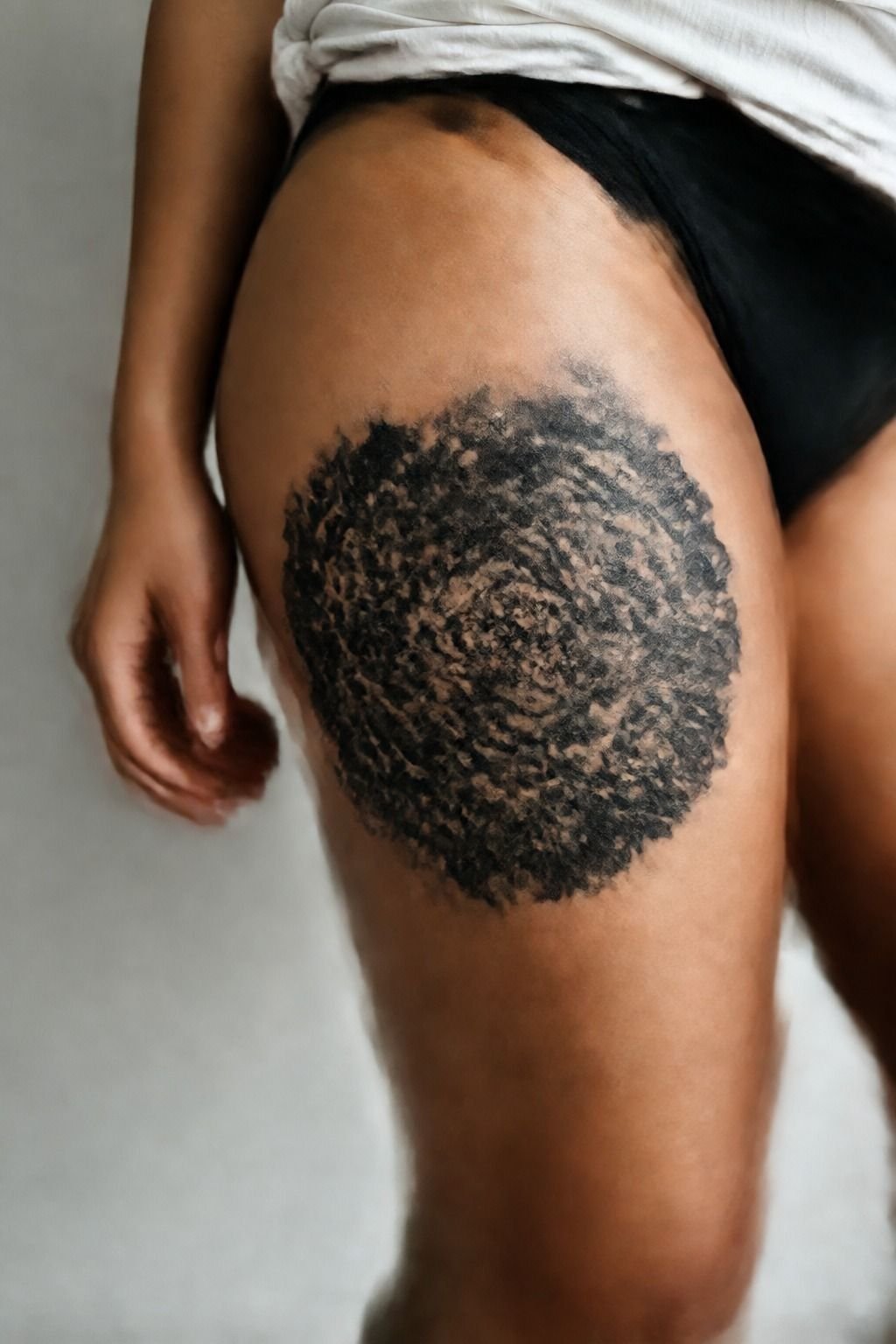
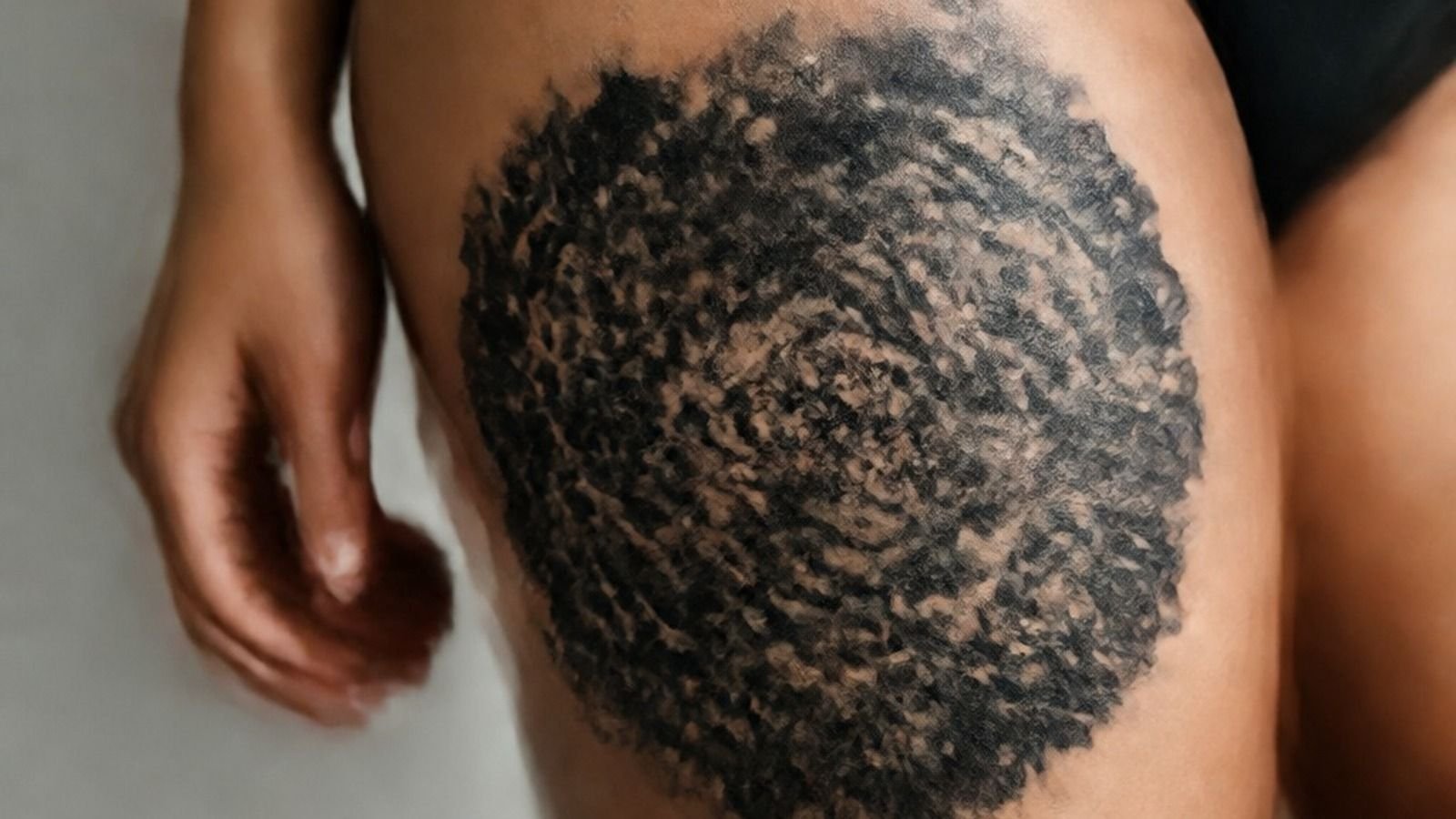
Negative space is the part that makes dense blackwork survive. Leave open skin between the dark petals, around the center, and at the flower’s outer edge.
You’re not wasting space. You’re giving the black somewhere to stop.
For a thigh piece, I’d map the bloom at roughly 4 to 6 inches wide if you want layered petals and heavy fill. A smaller flower can work, but it needs fewer folds. Your artist can show you the stencil at full size, then step back with you before anything touches skin.
But don’t ask them to fill every empty gap because it feels unfinished. A healed tattoo needs those pale channels so it stays airy and readable.
Look through blackwork tattoo ideas and notice how the strongest pieces use open skin like part of the drawing. That’s the whole move.
4Choose Stem Details For Lasting Clarity
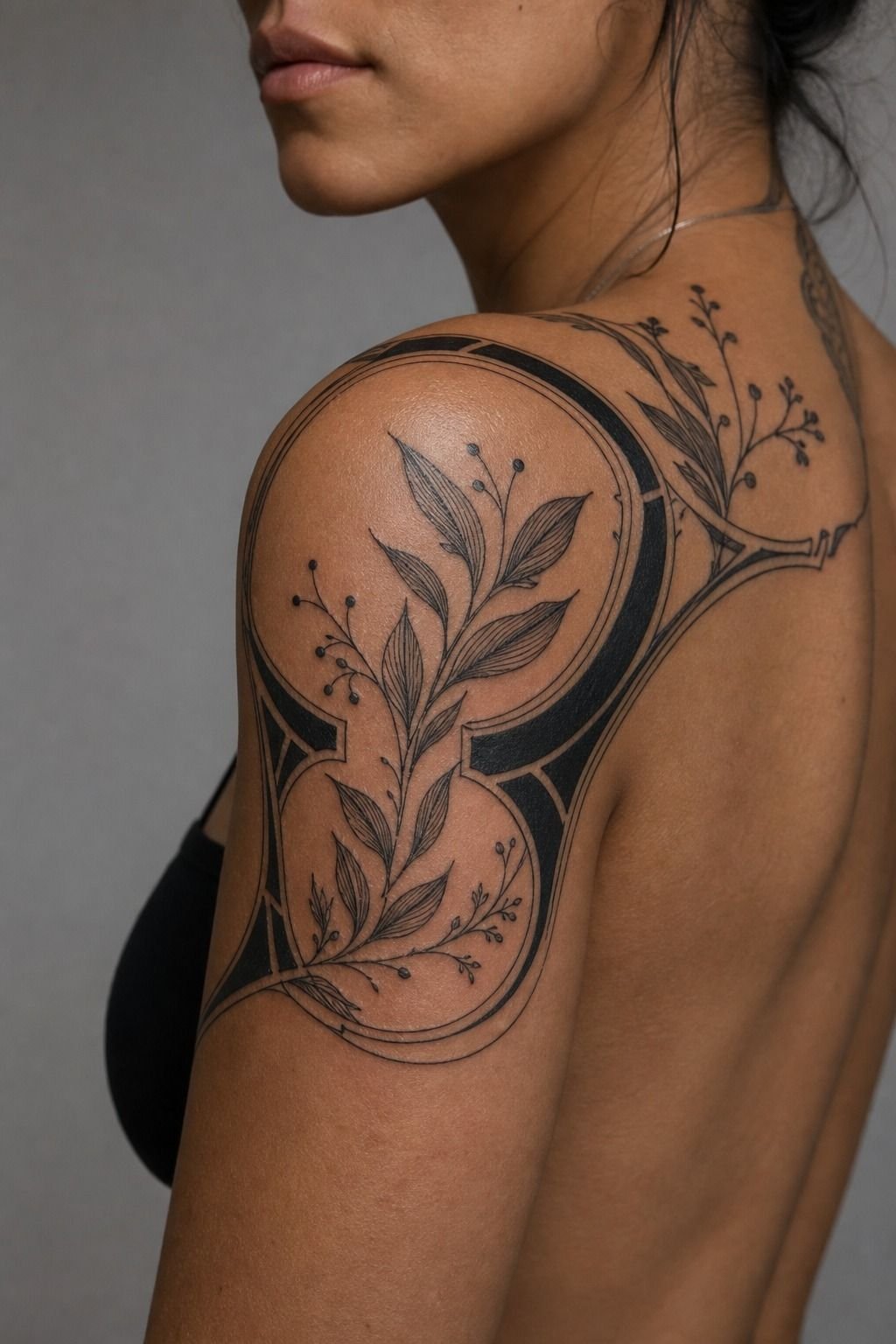
Build the stem after the bloom, not before. A peony has enough personality in its flower head, so your stem should guide the placement instead of competing with it. One curved stem, two or three leaves, and a few confident veins usually do more than a botanical tangle.
For a shoulder wrap, I like a stem that follows the top of the deltoid and lets the bloom sit slightly forward. Your body already has flow. Use it.
A straight vertical stem on that rounded area can look pasted on once you relax your arm.
Choose single-needle linework only for larger veins or light accents, then anchor it with a thicker blackwork outline. That mix feels soft but still holds.
And don’t let an artist scratch at the skin fifty times for a faint line. One clean pull is better.
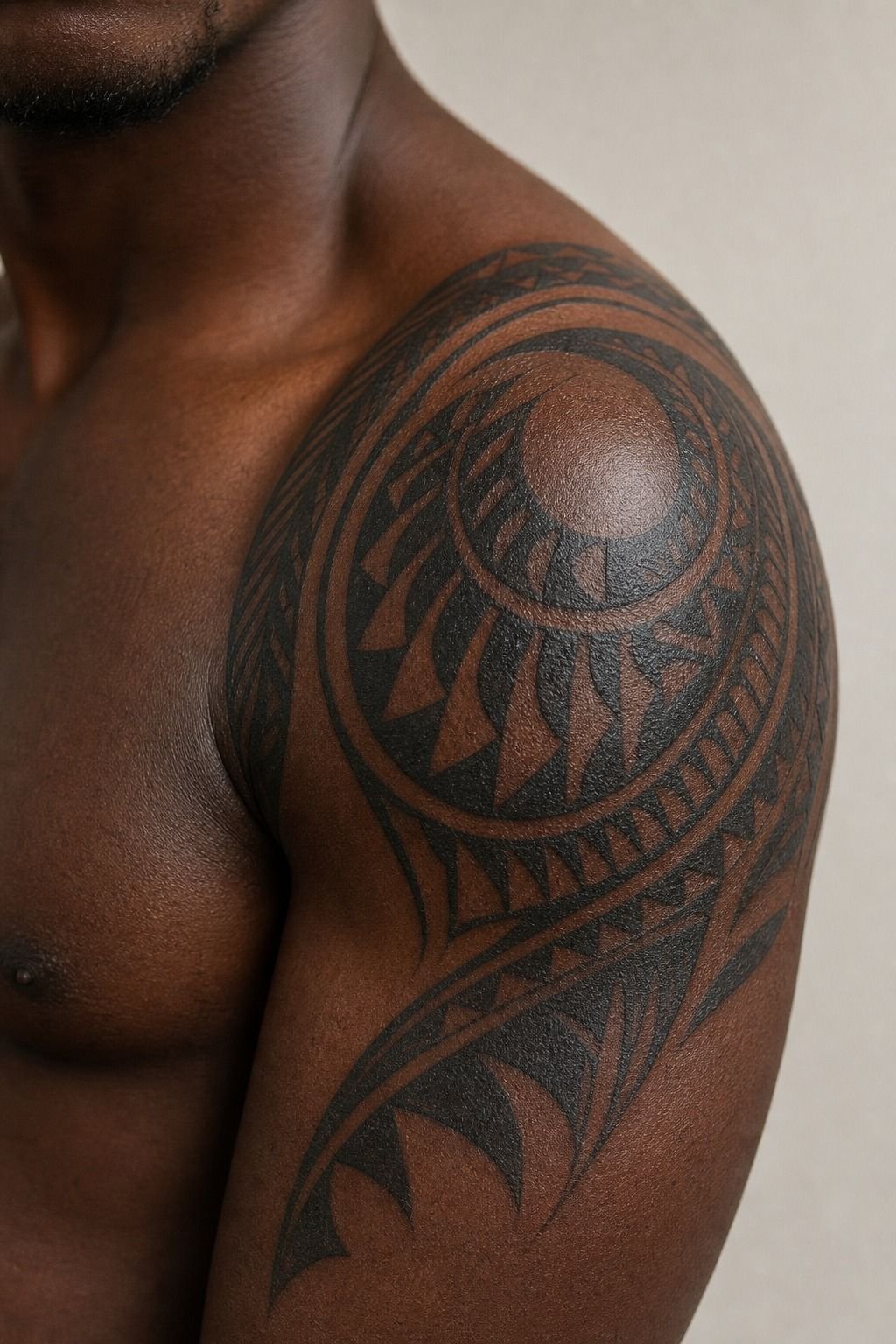
5Place Your Peony Across The Shoulder
A shoulder peony works because you get a broad, low-wear patch of skin and a natural curve for the petals.
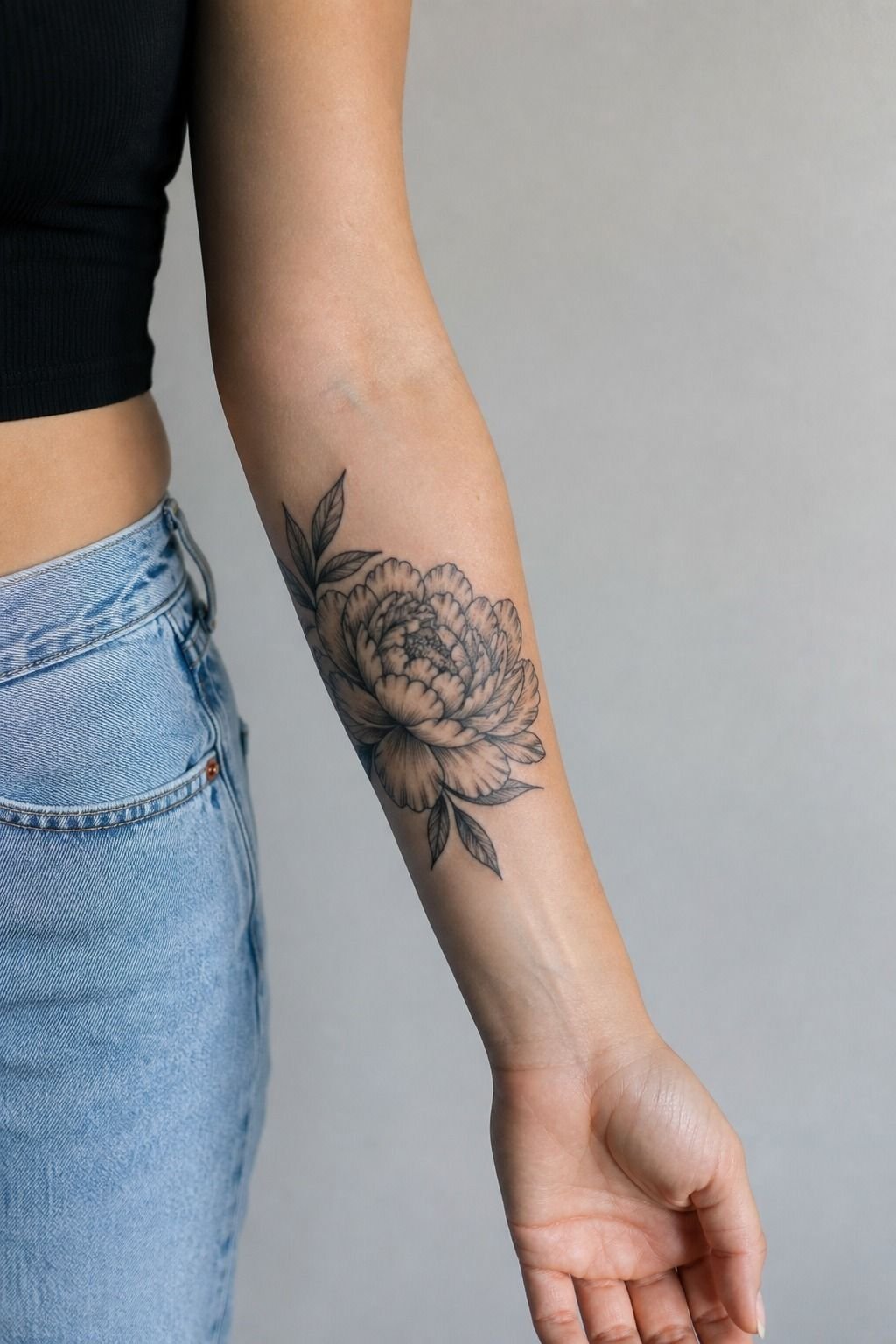
6Frame A Peony Along Your Forearm
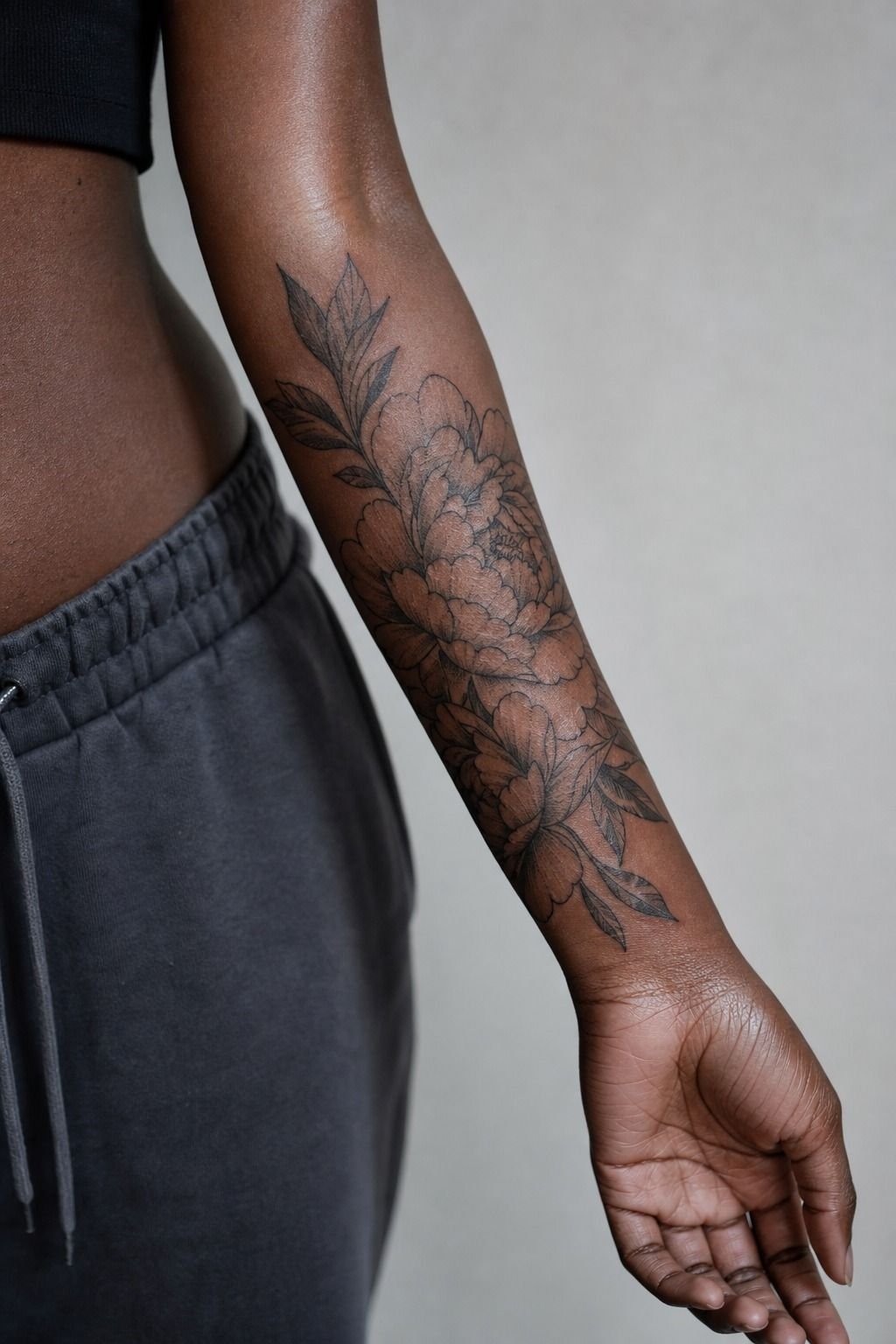
Use the forearm if you want to see the tattoo often and want your artist to have a clean canvas. An inner forearm peony can run from about 5 to 8 inches, with the bloom near the elbow crease and the stem tapering toward the wrist. That scale gives the petals room to breathe.
On deeper skin tones, a healed blackwork piece still reads beautifully when the artist pushes contrast and avoids timid grey wash. Black is your best friend for longevity. Your artist should photograph healed work on different skin tones, not only fresh tattoos under ring lights.
I’d keep the design off the wrist crease if it’s packed with fine details. That size on a wrist is gonna mush out, so bump it up the forearm where it can age nicer. For more layout options, save these blackwork tattoo design ideas.
You’ll see why long placements win.
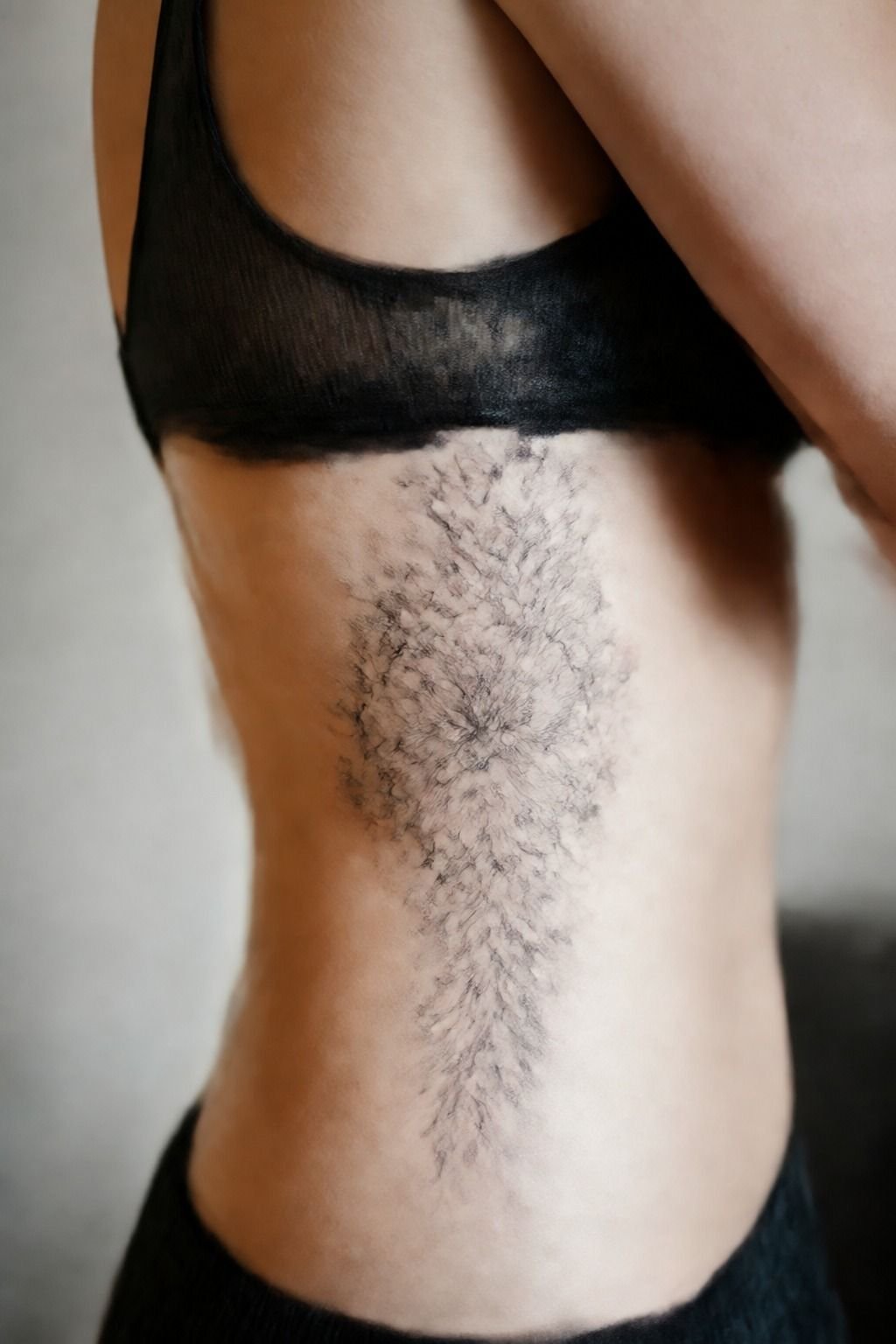
7Scale The Bloom For Your Ribcage
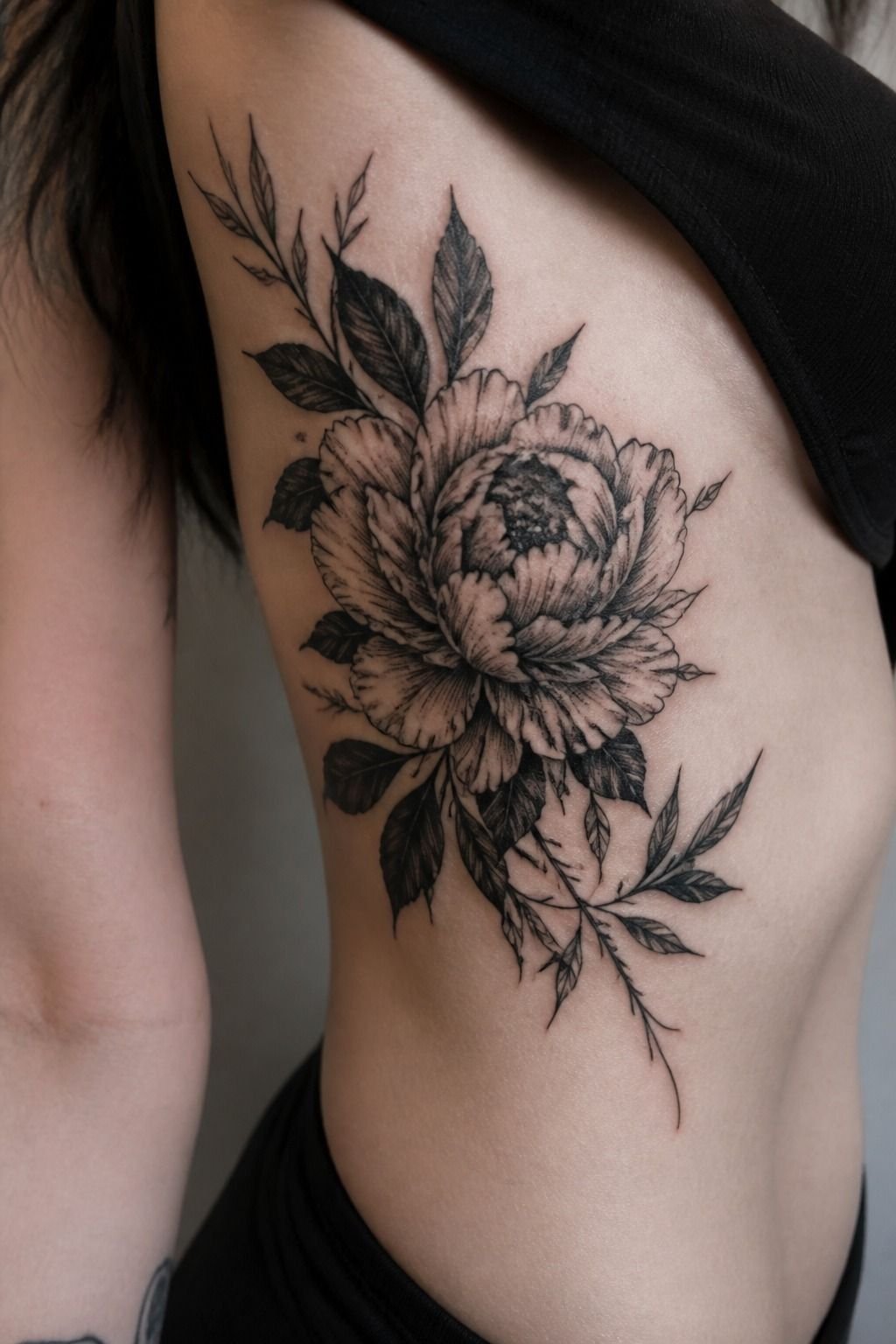
Scale a ribcage peony larger than you think you need.
8Match Blackwork Weight To Your Placement
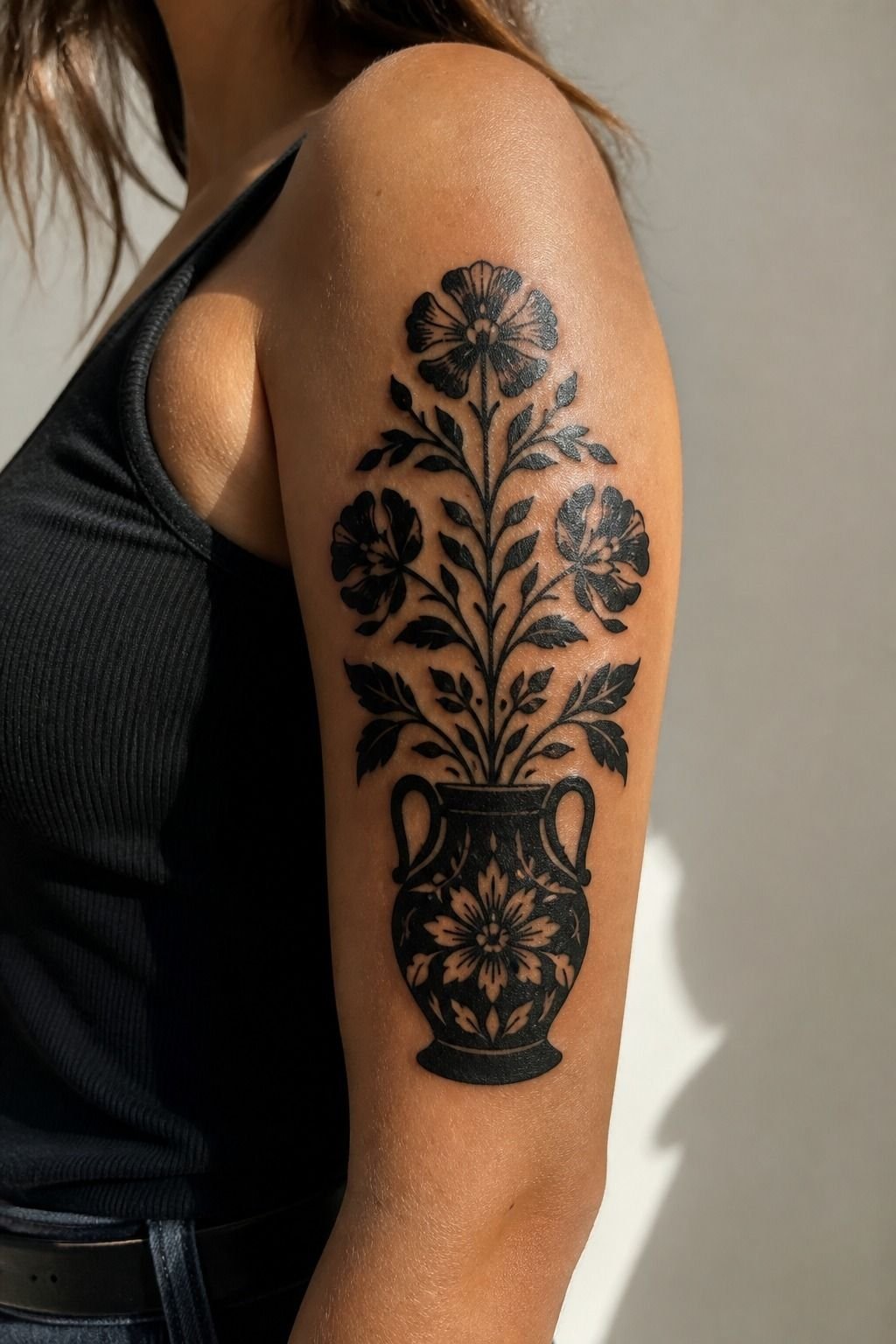
Match line weight to the body part before you lock in details. Forearms, thighs, calves, and upper arms can carry a mix of 3RL, 5RL, and heavier outlines because they’re lower-wear areas. Fingers, feet, elbows, and knees need simpler shapes because friction and movement will ask for maintenance.
Your artist may use a 9RL needle grouping for the outside contour, then a larger magnum for solid petals. That isn’t about making it aggressive. It’s about giving the tattoo enough backbone to heal clear and stay clear.
But don’t confuse bold with filling every inch black. A good blackwork flower tattoo has a calm rhythm: heavy petals, open skin, then a line-led petal to reset the eye. If it reads from across the room, you’re on the right track.
That’s what will hold.
9Add Leaves Without Losing Peony Focus
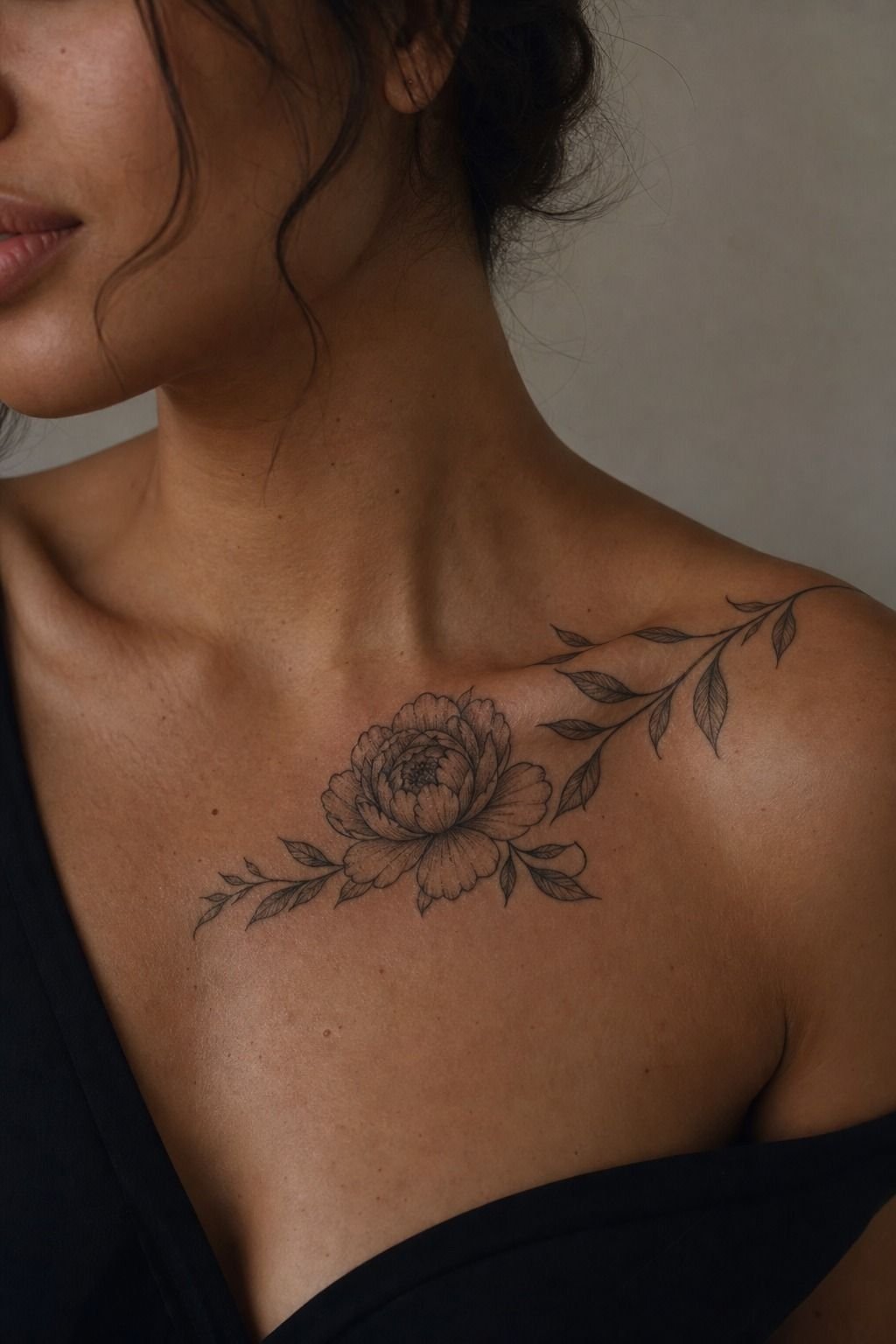
Add leaves only after the flower is working by itself. Your peony is the lead, so the leaves should frame it, point toward it, or help the placement travel. Three large leaves usually beat nine tiny ones.
Tiny detail gets chewed up fast on a collarbone.
I like broad, serrated peony leaves with one black side and one open side. They echo the bloom without making your tattoo look like a generic garden illustration. Use dynamic black packing along the leaf bases, then pull dotwork or grey wash outward if you want a softer fade.
A collarbone piece should keep its darkest leaf mass away from the center of the chest unless you want that visual weight. You want your eye to move along the bone, then back to the flower. And if you’re mixing symbols, our yin yang tattoo meaning guide can help you avoid a crowded story.
10Use Dotwork To Soften Heavy Blackwork
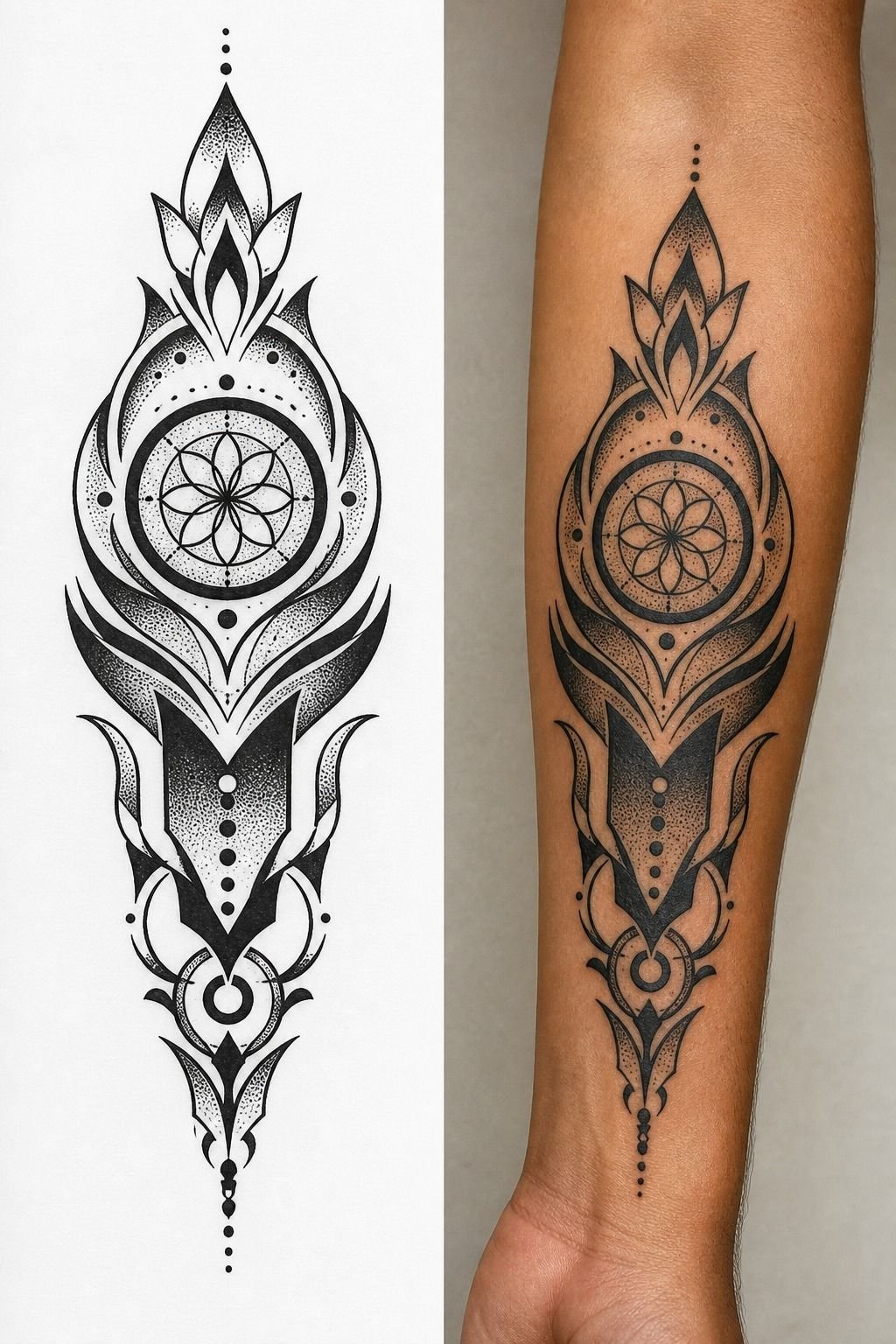
Use dotwork as a transition, not as filler.
11Compare Blackwork Floral Tattoo References Carefully
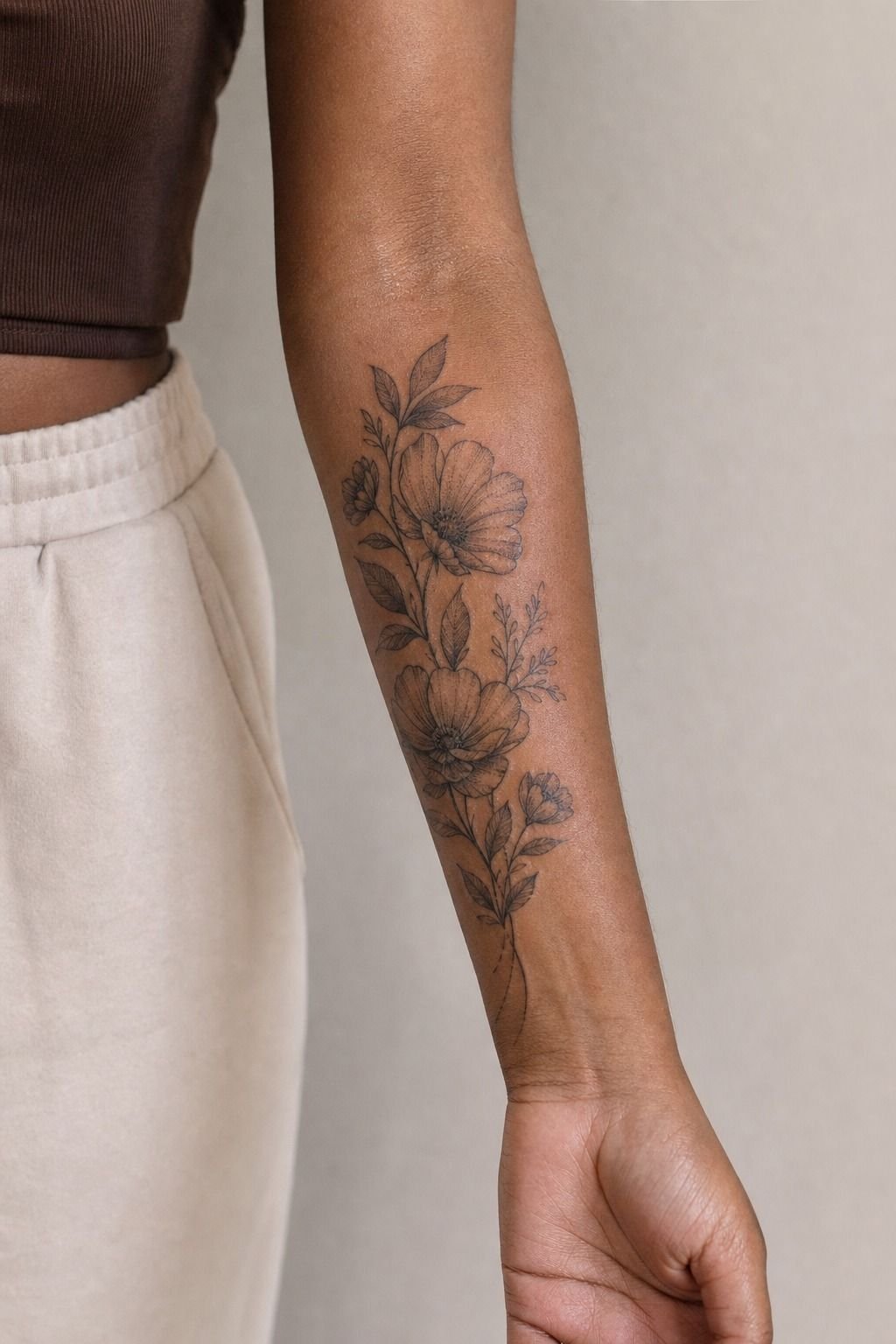
Compare references by the healed linework, not by the pose, filter, or perfect fresh shine. You’re looking for clear edges, consistent black saturation, and petals that still separate after healing. A fresh tattoo can look crisp even when the underlying design is too tight.
Save three kinds of images for your consultation:
– Healed forearm pieces with visible solid black petals – Floral tattoos on skin tones close to yours – A few shape references, not twenty duplicate screenshots
I’m blunt about this: if you want someone else’s tattoo copied line for line, I’m not your artist. References are for vibe and structure. A custom blackwork-flower-tattoo should fit your anatomy and your skin, not the algorithm.
And if abstract floral work is closer to your taste, browse the abstract blackwork tattoo guide.
12Check Healing Needs Before Booking
Check your schedule before booking, especially if your peony will sit where clothes rub. The first few days it’s an open wound, so treat it like that. You need clean sheets, loose clothing, gentle unscented soap, and enough downtime to avoid pool water, sun, and gym friction.
Here are typical U.S. planning numbers for a blackwork peony. Your artist, region, and design will change the final quote, but these ranges keep your expectations grounded.
Wash with unscented liquid soap, pat dry with a clean paper towel, then use a thin layer of approved ointment. Don’t suffocate it.
It’ll peel like a sunburn, and you don’t pick the flakes unless you enjoy pulling pigment out. Your tattoo can heal nice, but you’ve got to leave it alone.
13Choose An Artist With Floral Blackwork
Choose an artist whose healed portfolio proves they can draw flowers and pack black cleanly. You need both. A strong blackwork specialist may have flawless saturation but stiff petals, while a fine-line floral artist may draw lovely blooms that don’t have enough contrast for the design you want.
Ask to see healed examples at least several months old. Look for clean outlines, smooth solid fill, and spacing that hasn’t closed up.
Check their studio hygiene too: single-use needles, barrier protection, clean setup, and straight answers about aftercare. If they get defensive about those basics, leave.
A good consultation should include placement, scale, your skin, and the kind of black you want. Dynamic Black and other professional tattoo pigments can heal rich when applied well, but brand names don’t rescue weak design. I’d take a clear, simpler peony from a solid artist over a fussy flower from a scratcher every time.
14Protect Your Peony Tattoo During Healing
Protect your new peony from the boring stuff that ruins good work: sun, friction, soaking, and picking. On an inner forearm, sleeves and desk edges can rub it all day, so wear loose cotton and keep it clean. On a shoulder, watch backpack straps.
Little things matter.
Use broad-spectrum SPF only after the tattoo has fully closed and finished peeling. Before that, shade is better than product. Once it’s healed, sunscreen is the easiest way to keep black petals from going dull and grey.
But don’t over-moisturize because you’re worried it looks dry. A thin layer is enough. Your skin should feel comfortable, not slick.
If you see spreading redness, heat, worsening pain, or drainage, contact a medical professional instead of asking strangers in a comment section. Your artist can guide normal healing, but they aren’t your doctor.
Why I Push Back on Tiny Floral Blackwork
I love a delicate peony. I just don’t love lying to you about what “delicate” means once ink and skin have had years together. People come into the studio with a tiny black flower saved from Pinterest, usually packed with thirty petals, seven leaf veins, a few dots, maybe a little script underneath.
It looks gentle on a bright screen. On skin, especially in a high-wear placement, it has almost no room to stay itself.
I’ve had the awkward version of this conversation more times than I can count. A client wants the bloom smaller because they’re nervous, which I get.
First tattoos are emotional. But shrinking a design doesn’t make it safer if the detail stays the same.
It makes the problem smaller and tighter. That’s when fine gaps close, black sections join up, and the whole thing becomes visual soup.
My rule is simple: if you want the peony to look soft, make the shapes soft. Don’t make them microscopic.
A bigger petal with a clean curve can feel more gentle than a tiny petal squeezed between three outlines. You can still have movement, romance, and that moody floral look.
You just need a design that has enough air.
And yes, I’d rather redraw a reference than tattoo something I know won’t age cute on you. That can feel like a buzzkill in the moment.
Six years later, it’s usually the reason you still love it. Your skin isn’t paper. Work with it.
A Few Things Worth Answering
How much does a Blackwork Peony Tattoo usually cost?
A blackwork peony usually costs about $100 to $300 or more, depending on size, placement, artist, and region. A clear estimate comes after your artist sees the design.
– Shop minimums, about $50 to $100 – Hourly work, about $100 to $250 – Medium forearm pieces, often 2 to 4 hours
Are Blackwork Peony Tattoo a good idea for a first tattoo?
Yes, especially on your forearm, thigh, or outer shoulder. Bold black structure is easier to read over time than tiny packed detail, and a peony gives you meaning without needing extra symbols. Keep your first one roomy and let it breathe.
How do I choose a tattoo artist for Blackwork Peony Tattoo?
Choose someone with healed floral blackwork in their portfolio, not only fresh photos. Healed proof tells you whether their lines stay clean and their blacks stay solid.
– Crisp linework – Healed photos – Clean studio setup – Clear consultation answers
How much do Blackwork Peony Tattoo hurt?
They can hurt, but placement changes everything. Forearm, thigh, and shoulder placements are usually more tolerable, while ribs, feet, hands, and sternum are spicier.
Lines feel sharp; black packing feels like a dull burn. You’ll get through it.
How long does a Blackwork Peony Tattoo take to heal?
Surface healing usually takes 2 to 3 weeks, while full settling can take 2 to 3 months. Gentle aftercare protects the work while your skin rebuilds. Wash, use a thin moisturizer layer, and skip pools and direct sun.
What’s the best placement for Blackwork Peony Tattoo?
The forearm and shoulder are my top picks for most people. Low-wear skin helps bold petals stay clear, and both placements give you enough area for a flower with real contrast. For inspiration, compare these Japanese peony tattoo designs before choosing your final flow.
Where I’d Start First
If I had to pick one step, I’d start with negative space between dense petals. You can’t rescue a flower once every gap heals shut. Give the black room now, and your peony will still read clean years from now.