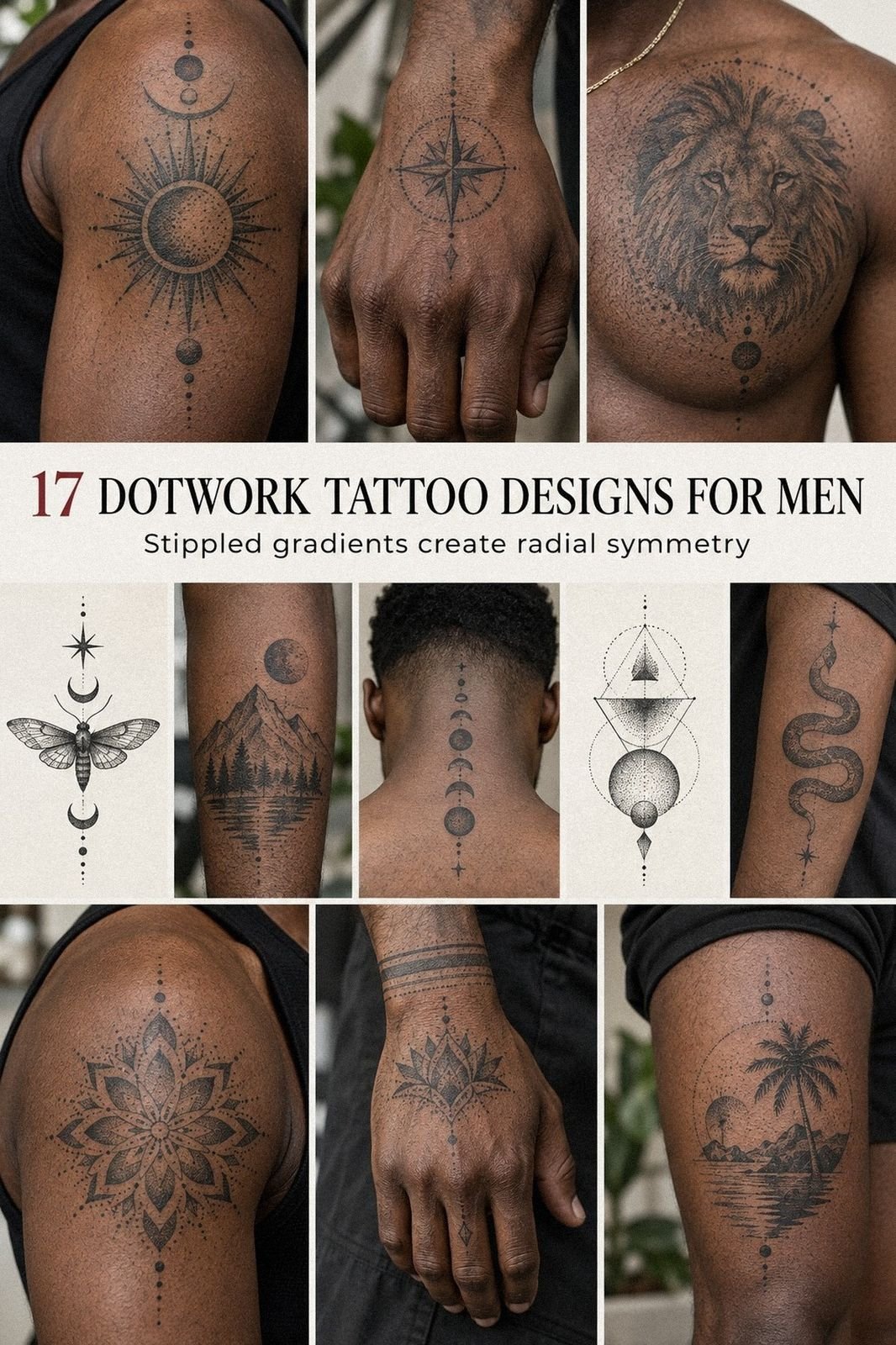
Dotwork tattoo men designs work best when the dots carry a clear idea, not just texture. I once chose a piece that looked crisp in the stencil and muddy after healing because I ignored scale. Don’t make that mistake. These designs show how placement, contrast, spacing, and meaning can work together for personal ink.
Editor’s note: Start with meaning, then test the actual tattoo size you’ll wear. A meaningful tattoo doesn’t need to explain itself to everyone else. It needs to feel right when you see it years from now!
Mandala Dotwork Chest Tattoo for Men
A chest mandala gives you room for a sacred mandala center with stippled shading radiating toward the sternum and pectoral lines. The circular structure can feel balanced rather than busy, especially when the spacing remains open. You’ll want the center aligned carefully, because even a small shift can make the whole design feel tilted.
The black dotwork shading should grow denser near the center and open toward the edges. That change gives the piece a flowing rhythm instead of one flat block of black.
I’d skip filling every gap. Negative space is what keeps an ornate mandala from becoming visually heavy across your chest.
This is where the Mandala Dotwork Tattoo Design can become meaningful. You might use repeating petals for family, directional points for faith, or a central compass shape for a personal turning point. Your artist can help you simplify the symbolism so the design still feels elegant from a few feet away.
Think about scale before you book. A chest design that’s too small won’t give the fine stippling enough room to breathe, while an oversized piece can crowd the collarbone and shoulder. If you’re comparing placements, this dotwork tattoo guide can help you weigh visibility, healing, and long-term readability.
A clean reference sheet matters. Show your artist the exact density you like, then ask how the dots will age on your skin.
You’re not choosing a sticker. You’re choosing a personal tattoo structure that should still look expressive when the newest ink has settled.
Geometric Dotwork Sleeve with Sharp Linework
A geometric sleeve works when the angles have a clear path down the arm. The design should follow the forearm’s movement instead of looking like several unrelated panels placed together. You’ll notice that the pattern doesn’t need to cover every inch to feel bold.
The geometric dotwork framework gives your artist a map for spacing. Triangles, arcs, and narrow bands can follow the forearm without fighting its movement.
I’d avoid copying three unrelated patterns into one sleeve. That approach sounds daring, but it usually makes your arm look assembled instead of intentional.
The best version uses linework contrast beside delicate dot fields. That contrast makes the design feel crisp and polished, while the small dots prevent the geometry from looking sterile. If you like a more edgy result, ask for sharper corners near the elbow and calmer spacing toward the wrist.
Your artist may recommend building the sleeve over more than one appointment, especially if the design includes dense black areas. You’ll have a better chance of keeping the linework clean if your skin isn’t pushed through an exhausting session. For more placement ideas, browse these blackwork geometric tattoo and dotwork mandala references.
A sleeve also changes as your arm bends. Ask to see the stencil standing, flexed, and relaxed.
That simple check can catch a crooked visual break before the needle starts. If you’re drawn to this style, your result should feel powerful in motion, not only impressive while your arm is still.
Dotwork Drawing of a Fierce Wolf
A wolf profile on the wrist can use directional fur strokes to shape the head without needing a huge scale. The pointed ear and focused eye make the design feel fierce, while the stippling adds texture without overwhelming the silhouette. You’ll want the profile facing toward the hand or toward the body for a reason.
A profile wolf portrait needs clear facial hierarchy. The eye, muzzle, and ear should read first; the fur texture comes second.
I’d skip overly tiny fur marks around the jaw. They may look intricate at stencil size, but they can blur together as the skin settles.
The fur direction can use curved rows of dots to suggest movement. That gives your wolf a gritty, expressive quality instead of making it look like a shaded sticker. A small crescent of untouched skin around the snout can make the silhouette sharper and more meaningful.
Wrist tattoos are visible, so your design should match how often you want to explain it. Maybe the wolf represents independence, loyalty, or survival.
Your meaning doesn’t need to be obvious to strangers, but you should know why the image belongs on your skin. A dotwork drawing collection can help you compare compact compositions.
The wrist also gets friction and sun, so aftercare routine matters. You’ll need gentle washing, light hydration, and patience while the surface heals for roughly 2 to 3 weeks.
If you’re outside often, protect the healed piece from ultraviolet exposure. That keeps the crisp, symbolic expression from fading faster than it should.
Dotwork Pattern Forearm Band for Men
A forearm band is one of the clearest ways to wear a dotwork pattern without committing to a full sleeve. Repeated marks can wrap around the arm with a steady, graphic pulse. You’ll want the band level when your arm hangs naturally.
The forearm pattern band should have one dominant rhythm. That might be nested triangles, linked circles, or repeating diamond shapes. I’d avoid mixing too many symbols in a narrow strip.
Your eye needs a pause, and the skin between dot clusters supplies that pause.
This style looks especially crisp when the outer border stays controlled and the inner shading varies. A delicate edge beside a bold central line can make the band feel intricate without looking crowded. If your taste runs minimal, ask for fewer dots and more open skin rather than shrinking every detail.
The design can carry personal meaning through repetition. You might choose four directional points for family members or a circular sequence for a cycle you’ve completed. For another reference point, compare this with a dotwork pattern tattoo before you settle on your final shape.
Placement affects how visible the piece feels at work, during exercise, and in daily life. You’ll also want to discuss how the band crosses the inner forearm, where movement and friction can make stenciling more demanding.
I’d choose a clean, understated pattern over a noisy one here. It’ll look more polished six months from now.
Sacred Mandala Dotwork Back Piece
A back-piece composition gives you space for a large center, repeated borders, and deliberate empty areas. The composition can feel ornate and sacred without becoming a solid block of marks. You’ll want to treat any reference sheet as a starting point, not a finished stencil.
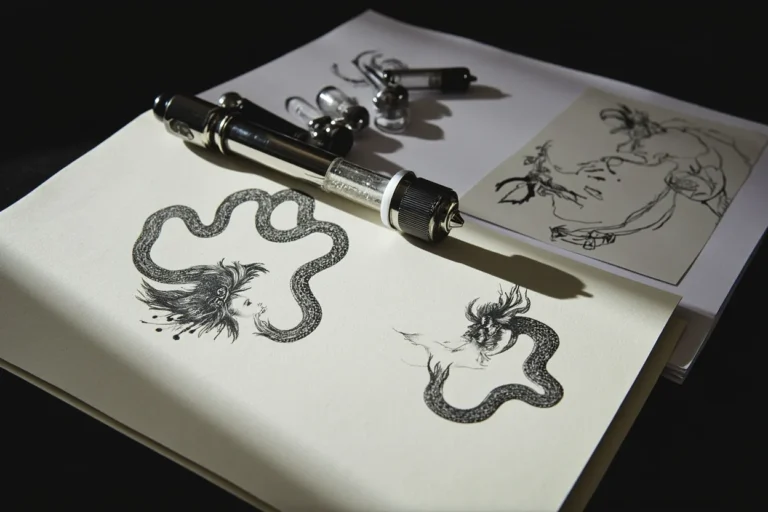
A flash-sheet mandala study lets you compare structure quickly. Look for the version with the clearest center and the strongest outer silhouette. I’d skip a design that looks impressive only because it’s full of tiny marks.
Those marks need a readable hierarchy.
Hand-drawn references can create a vintage, personal mood, but your tattoo can still become crisp and modern. Ask your artist which details should remain delicate and which should become solid black. That choice keeps an ethereal idea from turning muddy during healing.
Your back gives you space for a powerful, meaningful composition, though you’ll see it less often than a wrist or forearm piece. That can be a benefit if you want something personal rather than constantly visible. Browse tattoo ideas for men for ways to connect the mandala with animals, dates, or spiritual symbols.
You’ll need patience with back-piece healing because the area can rub against clothing. Keep the piece clean, avoid swimming while the surface is healing, and follow your artist’s instructions rather than improvising. If you choose this direction, the final design should feel timeless enough to reward the larger commitment.
Minimal Dotwork Compass on the Wrist
A minimal wrist compass uses a simple shape with stippled shading. Its value comes from restraint.
The points stay readable, the center remains open, and the dots create a subtle gradient rather than a solid patch. You’ll want your artist to show healed work on similar skin tones before you commit.
A minimal compass design needs strong line weight. If every mark is too delicate, the directions can lose their authority as the tattoo ages.
I’d choose fewer points with cleaner spacing over a crowded compass rose. The result will feel sleek, crisp, and easier to read.
Your compass can stand for direction, return, travel, or a decision you made without outside approval. That meaning doesn’t need an elaborate banner. A small star, initial, or coordinate-inspired mark can make it more personal without breaking the minimal structure.
The wrist is a practical placement for a small dotwork tattoo, but it’s also exposed to sunlight and frequent movement. Look at these small dotwork tattoo references to compare scale and edge spacing. You’ll see why tiny details need enough room to survive.
I’d avoid placing the smallest possible version directly over a crease. Your artist can shift it slightly toward the flatter wrist area, where the lines may stay more stable and the design will sit more naturally. That small decision can make the piece feel refined instead of merely dainty.
Bold Dotwork Lion Across the Shoulder
A shoulder lion tattoo can use layered mane strokes and dense dotwork to shape the cheeks. Strong black values create a striking contrast, especially when the head is centered over the shoulder’s natural curve. You’ll want the placement to let the mane expand rather than feel squeezed.
A forward-facing lion portrait needs a calm, symmetrical expression. I’d skip exaggerated snarling unless that emotion means something specific to you. A steady gaze often feels more powerful, personal, and timeless than a forced display of aggression.
The mane shading should use directional strokes, not one uniform halo. Dense dots under the cheekbones can create depth, while wider gaps near the outer mane keep the image breathable. Your artist may also leave a thin edge of untouched skin around the silhouette so the face stays crisp.
A lion can represent courage, family, leadership, or endurance. If you’re drawn to a bold symbol, write down the meaning before your appointment. Then compare it with circle tattoo design for men references if you want a stronger geometric frame around the portrait.
Shoulder placement is generally more tolerable than ribs, feet, hands, or sternum, though everyone responds differently. You’ll still need to consider clothing friction while the piece heals.
I’d let the lion’s expression do the work. More black isn’t always more powerful!
Intricate Dotwork Snake Wrapped Around the Arm
A forearm serpent can coil around the arm as a slim snake with fine scale lines. The winding body creates movement around the arm, while open spacing keeps the silhouette readable. You’ll want the head positioned where it remains clear when your wrist turns.
A coiled serpent composition depends on controlled overlap. The body should pass behind and in front of itself in a way that feels believable, not tangled.
I’d avoid squeezing too many scales into a narrow section. The snake needs a clear silhouette before you notice the texture.
The serpent head can make the piece feel edgy, sacred, or quietly dangerous. A closed mouth gives you a more understated symbol, while a visible tongue adds a daring edge. Your artist can use dot density under the belly to suggest form and leave the upper scales more open.
Snakes can represent renewal, protection, knowledge, or transformation without needing decorative extras. If you want the pattern to feel more graphic, compare it with this dotwork pattern tattoo guide. You’ll find useful ideas for repeating marks and intentional gaps.
Forearm movement is part of the appeal, but it can distort a straight reference image. Ask your artist to show the stencil while your arm is relaxed and rotated. That check helps you keep the serpent flowing instead of letting the body break awkwardly at the elbow.
Symbolic Dotwork Mountain Tattoo on the Calf
A mountain outline can use a simple range with a thin horizontal element beneath it. The range should angle with the calf rather than sit like a flat rectangle, so the design follows your leg naturally.
A mountain horizon composition works best when the outline stays clean. The dots can suggest distant peaks, gravel, or atmosphere, but they shouldn’t compete with the main silhouette.
I’d skip adding a forest, moon, compass, and quote all at once. One strong symbol usually says more.
The mountain can stand for endurance, travel, home, or a difficult climb you’ve finished. Your meaning might be private, and that’s fine. A single line beneath the peaks can become a personal boundary, horizon, or reminder without making the tattoo feel overexplained.
Calf placement gives you a larger, relatively even surface than the wrist. Compare it with this tattoo ideas for men collection if you’re deciding between a landscape and a more abstract symbol. You’ll notice how different proportions change the emotional weight.
The design should still read from a few feet away. Ask for a size that gives the peaks enough breathing room, especially if the artist uses stippled shading.
You’re choosing a symbolic tattoo, not a tiny illustration contest. Clear, expressive lines will serve you better than excessive detail.
Ornate Dotwork Skull with Geometric Details
A skull composition can combine a readable face with ornate geometric details. The design should remain recognizable before the eye sockets, crown, and jaw details take over.
A stencil-to-healed comparison should guide your expectations. Fresh black ink can look darker and sharper than the healed result, so ask to see your artist’s healed portfolio. I’d skip any artist who shows only brand-new work when you’re planning fine dot shading.
The geometric details can frame the eye sockets, crown, or jaw without covering every surface. Your artist may use solid black in the deepest areas and lighter stippling around them. That contrast makes the skull feel gritty and expressive instead of flat.
A skull can mean mortality, resilience, memory, rebellion, or a refusal to waste time. You don’t need to make it cheerful or frightening. The strongest version is often the one that matches your own reason for choosing it.
For related structure, explore this blackwork geometric tattoo and dotwork mandala guide.
Healing time takes patience. The surface may look settled after roughly 2 to 3 weeks, but complete healing can take about 2 to 3 months. You’ll want to avoid picking, prolonged sun exposure, and swimming during the early stage, even if the stencil looked flawless.
Delicate Dotwork Rose on the Hand
A profile rose can use layered petals and fine dotwork on the hand. The design feels delicate and romantic because it uses one flower rather than a crowded bouquet. You’ll want the rose angled so its profile follows the hand instead of fighting the knuckles.
A single-profile rose needs a clear outer contour. The petals can be intricate, but their overlaps should remain easy to read. I’d avoid shrinking the flower until every petal becomes a thin line.
A slightly larger rose will usually feel more expressive and polished.
The petal shading can follow the inner curl of each petal while leaving the outer edges open. That creates a graceful transition and protects the design from becoming a dark patch. Your artist should discuss how the details may settle on hand skin, which experiences frequent washing, friction, and sunlight.
Hand tattoos are visible and can be more demanding than forearm or shoulder placements. If you want a similar idea with less exposure, compare small dotwork tattoo options before booking. You might decide that the wrist gives you the same personal feeling with a little more flexibility.
The rose can represent love, grief, growth, or someone you carry with you. Keep the meaning personal rather than adding text just to fill space. You’ll get a more timeless result when the flower has room to breathe and the linework stays intentional.
Map the Meaning Before You Commit
Start with the feeling, not the symbol. Ask yourself whether you want the tattoo to represent protection, grief, direction, family, faith, independence, or transformation. A striking design with no personal anchor may lose its impact once the novelty fades.
Write one sentence about the tattoo meaning. Then remove anything that doesn’t support that sentence. This gives your artist a cleaner brief and improves the value of the consultation.
A meaningful piece can stay understated. You don’t need a quote, date, animal, landscape, and geometric border in the same design. One clear idea often feels more personal than five symbols competing for attention.
If your meaning changes later, that’s normal. The tattoo can still mark who you were when you chose it. I’d rather see a simple, honest symbol than an impressive composition that doesn’t belong to you.
Dotwork or Solid Blackwork: Which Holds Up Better?
Dotwork creates gradients through spacing, while solid blackwork relies on filled shapes and stronger blocks of contrast. Neither style is automatically better. The right choice depends on your skin, placement, scale, and preferred visual weight.
A dotwork-to-blackwork balance can give you both softness and structure. Solid accents protect the main silhouette, while open stippling keeps the interior from becoming too heavy. This approach can be worth it when you want detail without losing readability.
Dotwork may be the better value for a delicate, symbolic design, but it still demands careful sizing. Extremely small dots packed into a tiny area can soften together. Blackwork may cost less time in some cases, though a large filled area can require multiple appointments.
Ask to see healed examples in the style you’re considering. Fresh work can look perfect on day one, but healed structure tells you more about long-term quality. That evidence is worth more than a dramatic first-day result!
What Should You Ask at the Consultation?
Bring your reference designs, placement ideas, and a clear explanation of what you want the tattoo to express. You don’t need to arrive with every line solved. Your artist should help turn the concept into a composition that fits your body.
Ask how the design will be sized, how the dots will be spaced, and which details may need simplifying. You’ll also want to discuss healing expectations, sun protection, touch-ups, and how the piece may change over time.
Confirm the quote before booking. Ask whether the price is hourly, flat-rate, or based on the final size. A transparent cost estimate helps you compare artists without choosing based only on the lowest number.
Pay attention to how the artist responds. If they dismiss your questions or promise that every tiny detail will remain unchanged forever, I’d keep looking. A polished portfolio matters, but clear communication matters too.
Calculate the Cost Before You Book
The final cost depends on the artist’s experience, location, session length, placement, size, and detail density. A small wrist compass may fit a shop minimum, while a chest mandala or sleeve can become a larger investment.
Typical US planning references include:
Set a realistic tattoo budget before you schedule. If the quote is higher than expected, reduce complexity or increase the time between appointments rather than rushing toward a cheaper option. The cheapest tattoo rarely offers the best value.
A specialist may charge more, but consistent healed work can make that cost worth it. You’re paying for judgment, placement, hygiene, technique, and the ability to preserve the design’s structure. That’s a better comparison than price alone.
Why Dotwork Ages Differently Than Solid Blackwork
Dotwork can look crisp, delicate, and intricate when it’s planned with enough space. It doesn’t age by magic, though. Very fine lines may widen over time, ultraviolet exposure can fade black, and dense areas can soften as your skin changes.
The healed-contrast rule is simple: strong silhouettes and controlled black values tend to remain readable better than a field of microscopic marks. I’d choose bold black accents around a delicate pattern rather than making every detail equally fine.
Placement matters as much as style. Ribs, feet, hands, and sternum can be more painful, while the forearm, thigh, and shoulder are often more tolerable. Your experience can differ, so use these as planning references rather than promises.
Your artist’s portfolio should include healed tattoo work, not only fresh tattoos. Ask how they protect negative space, how they size fine details, and what aftercare they recommend. You’ll make a sharper decision when you’re comparing evidence instead of chasing the darkest possible first-day result.
The Decision I’d Make Before Booking
I’ve learned that the most meaningful tattoo usually isn’t the most complicated one. I once focused so hard on adding symbols that I nearly lost the central tattoo image. The better choice was the one with a clear silhouette, a placement that suited my routine, and enough open skin for the design to breathe.
Your first decision should be scale. A small compass, rose, or mountain can feel personal, but it needs enough room for line spacing.
A larger lion, mandala, or skull can carry more shading, though the time and cost will rise with complexity. If you’re unsure, compare dotwork tattoo men ideas and mark which designs still read clearly when viewed small.
Next, decide whether visibility matters to you. A hand or wrist piece stays in your daily field of vision, while a back or calf design can remain more private.
Neither choice is more meaningful. You’re choosing how often the symbol enters your life, and that deserves an honest answer.
Then consider the artist’s specialty. Look for clean dot placement, controlled geometric lines, and healed photographs. A famous artist who mostly creates colorful traditional work may not be the right match for a delicate dotwork piece.
I’d choose the specialist with consistent healed results over the flashiest social feed.
Finally, bring references but leave room for professional judgment. Your artist can adjust the design for your skin, muscle movement, and chosen placement.
Ask for a stencil review, discuss aftercare, and confirm the quote before the appointment. That preparation won’t remove every uncertainty, but it’ll give your tattoo a stronger beginning.
The Questions I Get Asked Most
How much does a Dotwork Tattoo Men usually cost?
A typical US tattoo shop minimum is about $50 to $100, while hourly rates often sit around $100 to $250. Your final cost depends on the artist, region, placement, scale, and detail density. Bring references, but ask for a quote after the artist reviews the design.
Are Dotwork Tattoo Men a good idea for a first tattoo?
Yes, dotwork can be a meaningful first tattoo when you choose a manageable placement and a readable design. An outer forearm, shoulder, or calf is often more tolerable than ribs, feet, hands, or sternum. You’ll also want a design that reflects your story rather than a passing trend.
How do I choose a tattoo artist for Dotwork Tattoo Men?
Choose an artist with clean healed linework, consistent dot spacing, and a portfolio that shows this style repeatedly. Ask about hygiene, stencil placement, and how they size fine details. You can also review the dotwork tattoo guide before your consultation.
How much do Dotwork Tattoo Men hurt?
Pain varies by person and placement. Ribs, feet, hands, and sternum are often more sensitive, while the forearm, thigh, and shoulder may feel more tolerable. Your session length, rest, hydration, and personal sensitivity all matter, so don’t treat any pain chart as a guarantee.
How long does a Dotwork Tattoo Men take to heal?
The surface commonly heals in 2 to 3 weeks, while complete healing can take about 2 to 3 months. Wash gently, moisturize as directed, avoid swimming during early healing, and protect the healed tattoo from strong sun. You shouldn’t pick flakes or force the skin to settle faster.
What’s the best placement for Dotwork Tattoo Men?
The best placement depends on visibility, pain tolerance, and design scale. The forearm and shoulder suit bold, readable pieces, while the calf gives a mountain or geometric design more room. Hands and wrists are expressive but receive more friction and sun, so your artist should plan accordingly.
Where can I buy Dotwork Tattoo Men designs?
You’re not buying a finished product. You’re choosing a reference and commissioning a licensed artist to create a design for your body. Use tattoo ideas for men for inspiration, then ask your chosen artist for an original composition rather than copying another person’s tattoo.
Where I’d Start First
If I had to pick one, I’d start with the minimal dotwork compass on the wrist. It has enough open space to stay crisp, carries meaning without explanation, and won’t require a huge commitment. Pin the compass idea for later and compare it with this small dotwork tattoo guide before booking.
If your personality feels more expressive, the wolf, lion, snake, or skull may offer stronger visual energy. If you prefer a quieter mark, the mountain, rose, or geometric band can hold just as much meaning. The best choice is the one you’ll still recognize as yours after the excitement settles.