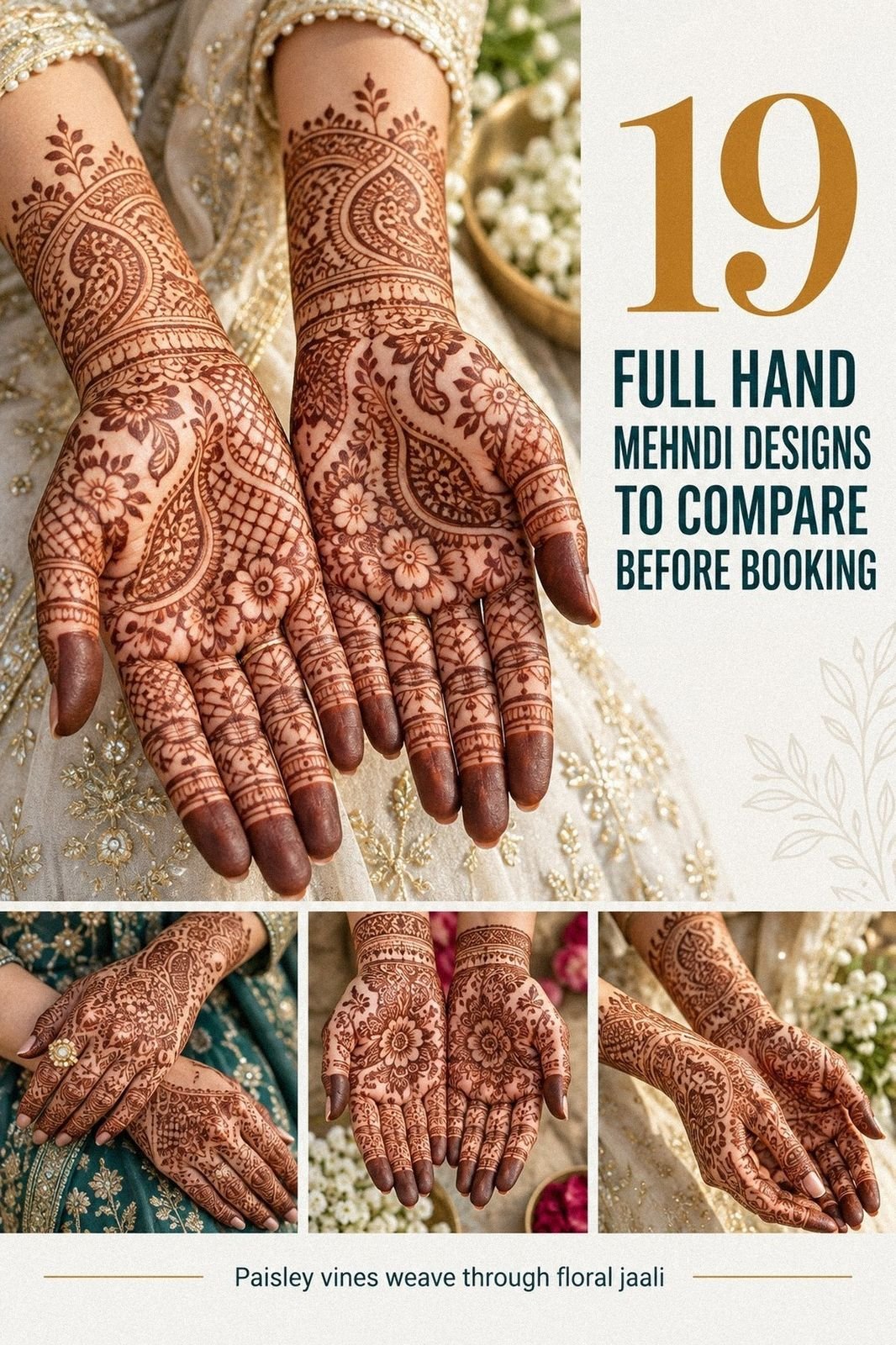
Full hand mehndi designs can age clean on skin if you build them like tattoos, not like temporary festival filler. I almost overpacked my first hand reference and would have turned the whole thing to soup. Once I started thinking about gap, flow, and how skin heals, the design got way stronger.
- Full Palm Bridal Mehndi Coverage
- Rajasthani Full Hand Peacock Pattern
- Let Arabic Vine Flow Across the Hand
- Stylish Front Hand Mandala Design
- Dense Finger To Wrist Henna
- Use Negative Space for Expensive-Looking Contrast
- Floral Bracelet Full Hand Design
- Paisley Packed Bridal Mehndi Hands
- Fine Line Full Hand Mehndi
- Lotus Centered Palm Henna Design
- Jewelry Style Full Hand Mehndi
- Traditional Grid Full Hand Mehndi
- Cap the Fingertips, Keep the Palm Breathing
- Modern Back Hand Mehndi Flow
- Is Bridal Portrait Detail Worth It?
- Dotwork Full Hand Henna Pattern
- Minimal Gaps Full Hand Mehndi
- Should You Mirror Both Halves?
- Ornamental Wrist To Fingertip Mehndi
1Full Palm Bridal Mehndi Coverage
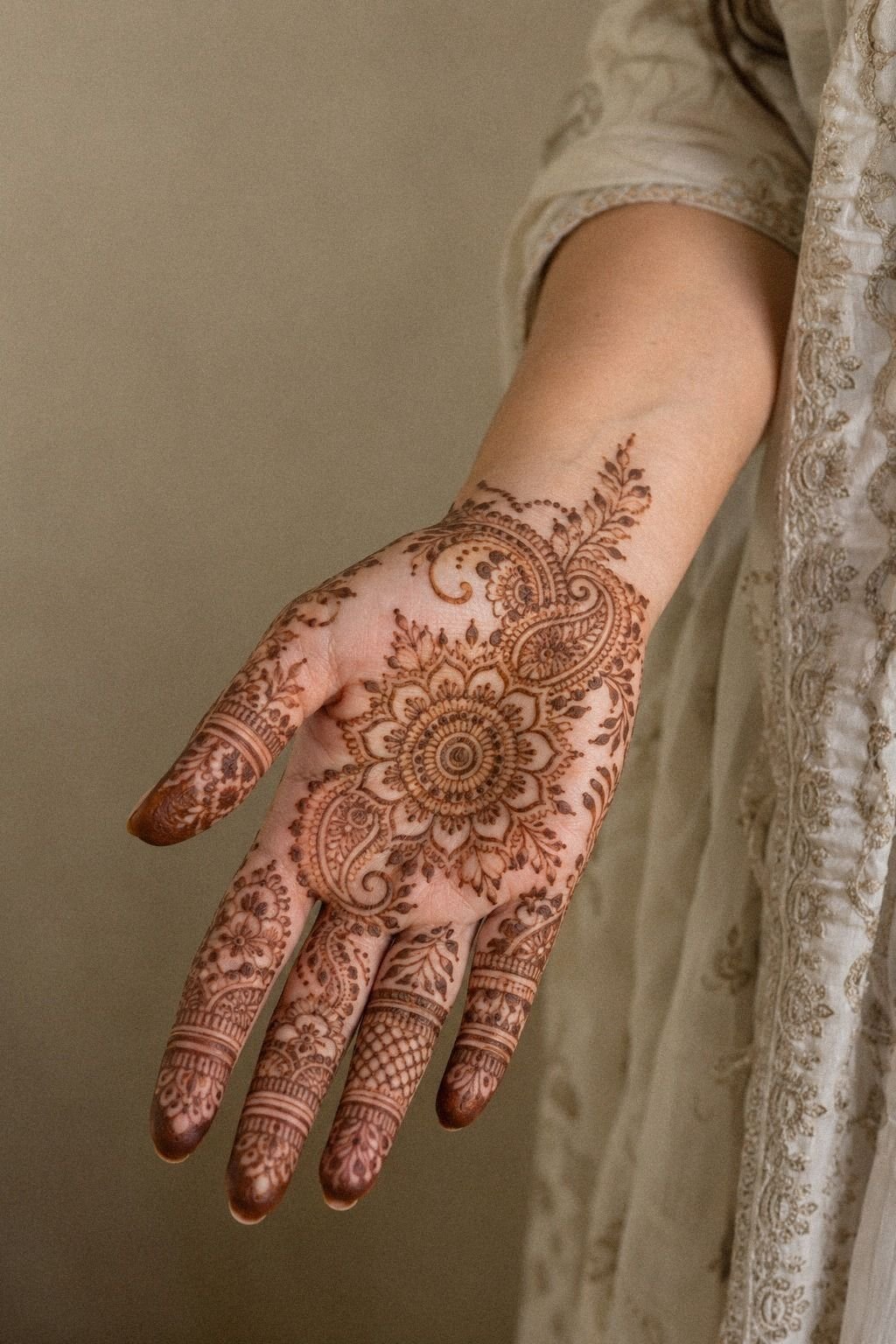
Start with bridal full-palm coverage only if you want a hand tattoo that feels formal, dense, and intentionally dressed up. On fair cool-pink skin, this kind of full coverage looks crisp when the center stays bold and the outer edges taper softer. You want your eye to land in the palm first, then travel into the fingers without getting lost.
I tell clients to keep the biggest shapes low in the palm and stop chasing micro filler between every line. That extra fuss is what makes a hand piece heal patchy or blur faster. If you want more reference angles before you commit, scroll through 23 full hand mehndi designs to show your artist first.
Use solid black linework for the anchor shapes, then let the lacey parts breathe. A hand tattoo takes more abuse than people think, so clean contrast matters. And yes, this one is spicy on the palm, but when the structure is simple enough, it heals nice.
2Rajasthani Full Hand Peacock Pattern
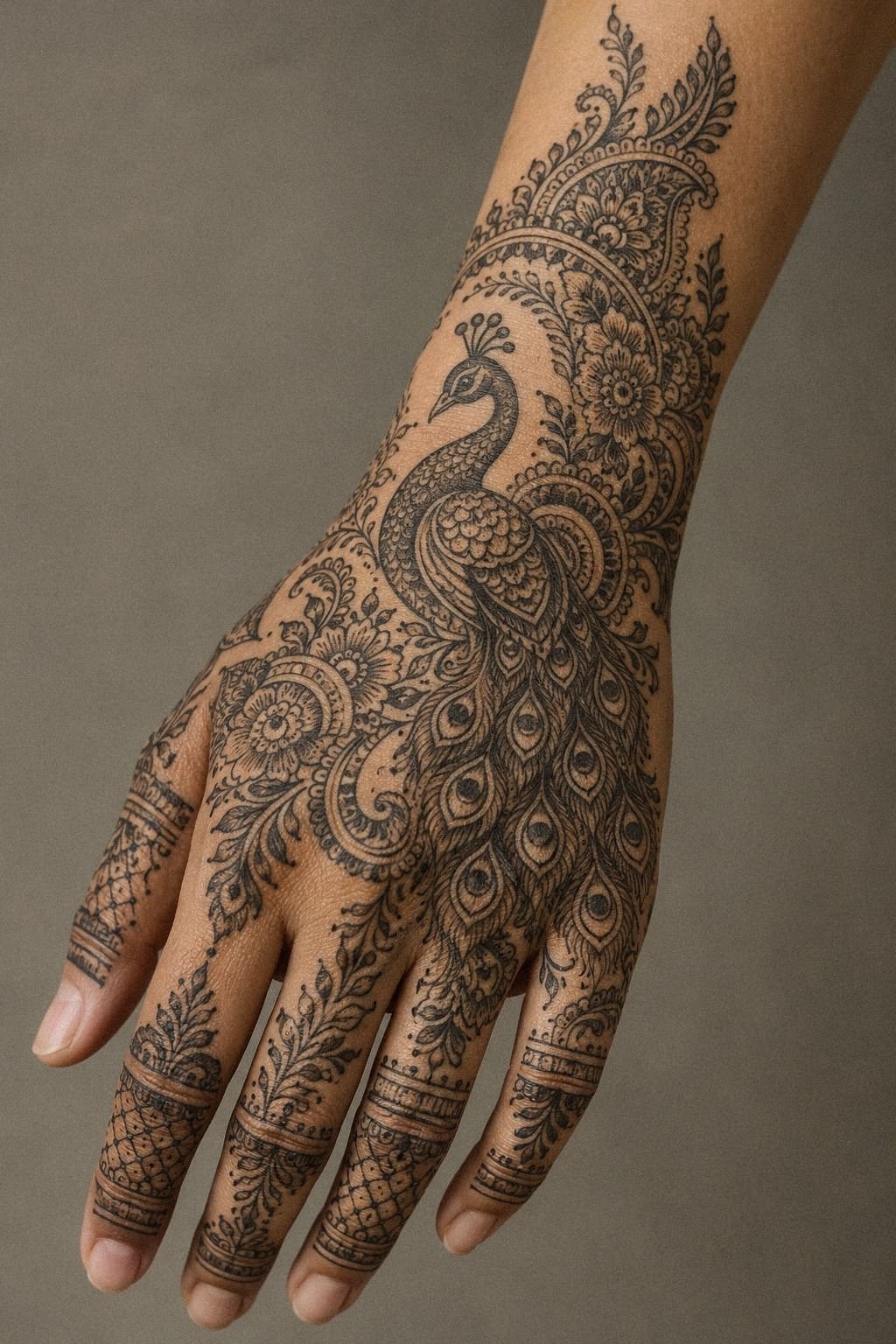
Build a Rajasthani peacock motif around one hero bird, not three competing ones. On medium warm ivory skin, that peacock neck and tail read best when the body stays dark and the feather eyes stay open instead of packed shut. You want the movement to spiral, not freeze.
The mistake I see all the time is artists shrinking every feather detail to prove they can draw. You do not need that.
One clean pull beats ten fuzzy ones. For more bird-forward references that stay elegant, I like sending people to peacock mehndi designs.
Choose fine black pigment with a little more weight in the outer contour than the inner filigree. That keeps the peacock readable once the skin settles. But if the tail gets too busy near the knuckles, bump some of that detail toward the wrist so it ages cuter on you.
3Let Arabic Vine Flow Across the Hand
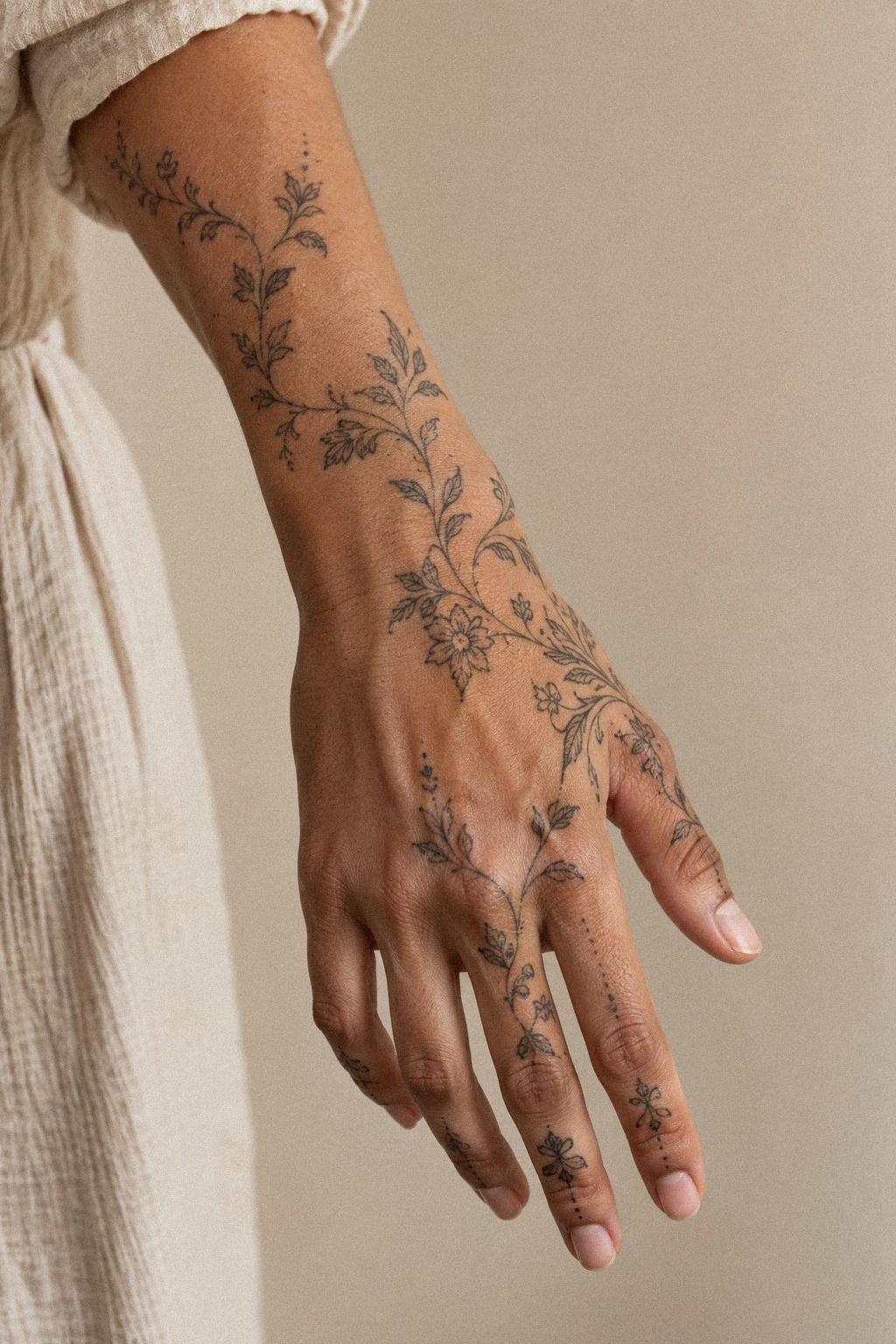
Let an Arabic vine layout climb instead of smothering the hand.
4Stylish Front Hand Mandala Design
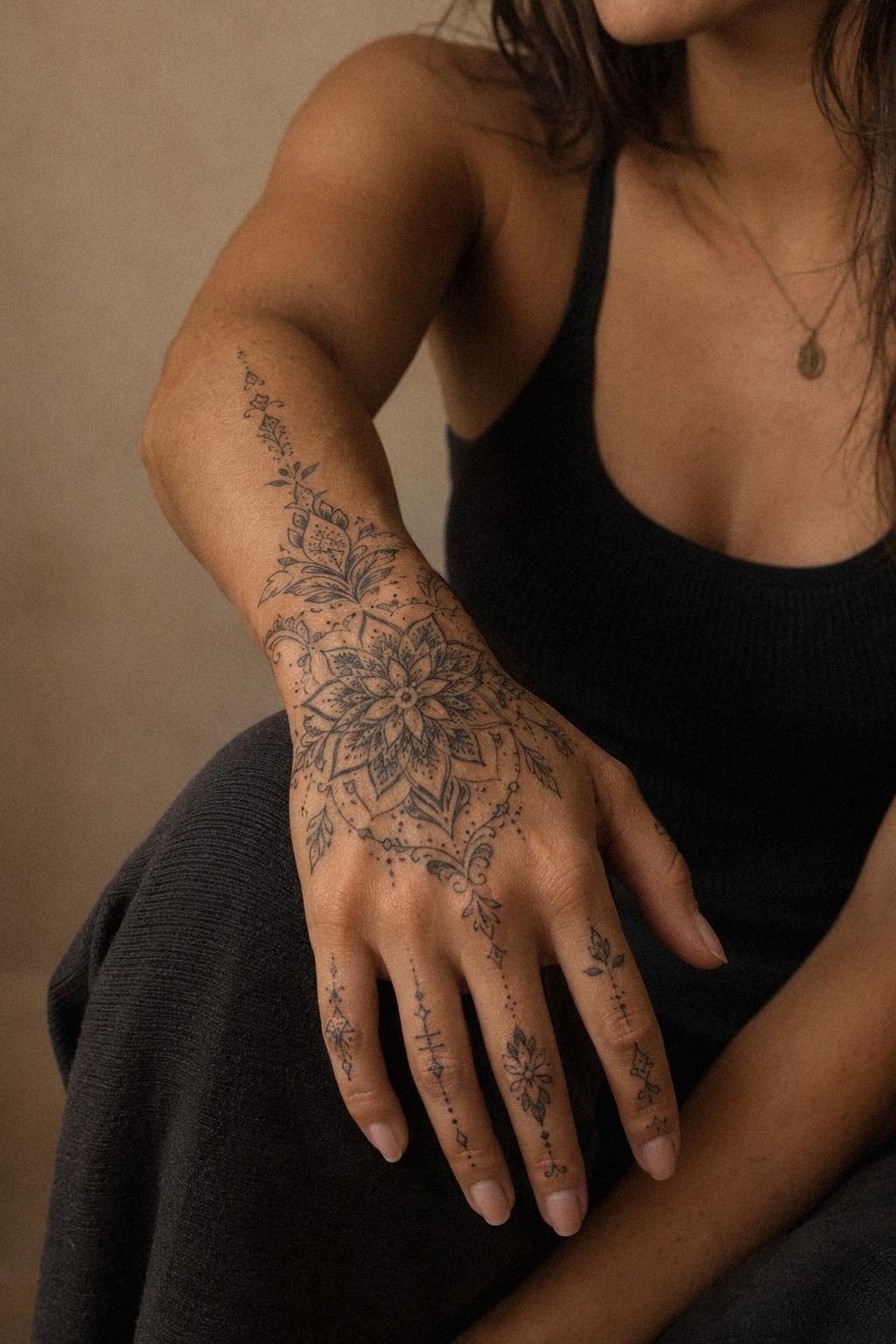
Anchor a front-hand mandala dead center only if the anatomy supports it. On golden tan skin, a centered geometric flower can look insanely clean, but the symmetry has to respect the tendons and finger spread. If that center drifts even a little, the whole tattoo feels off.
This is where stencil placement matters more than drawing flair. I make clients flex, relax, then flex again before I commit the stencil, because a hand lies to you when it’s tense. For more balanced layouts built for the top of the hand, 15 stylish mehndi designs for front hand that flow right is useful.
Keep geometric petals larger than you think you need, especially near the knuckles. Tiny points there get chewed up fast. But when the circles stay clean and the outer ring is simplified, this kind of mandala reads polished from the jump.
5Dense Finger To Wrist Henna
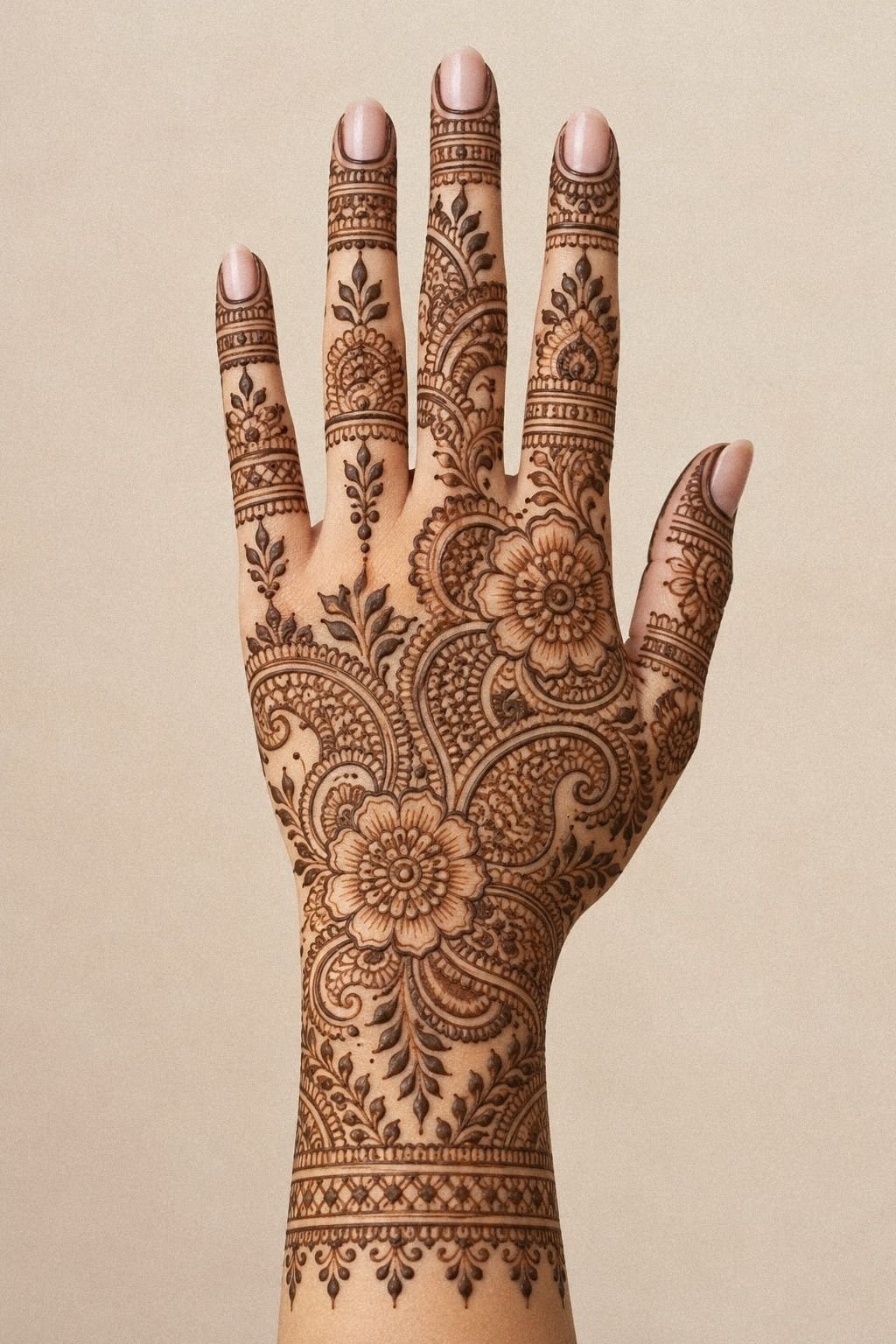
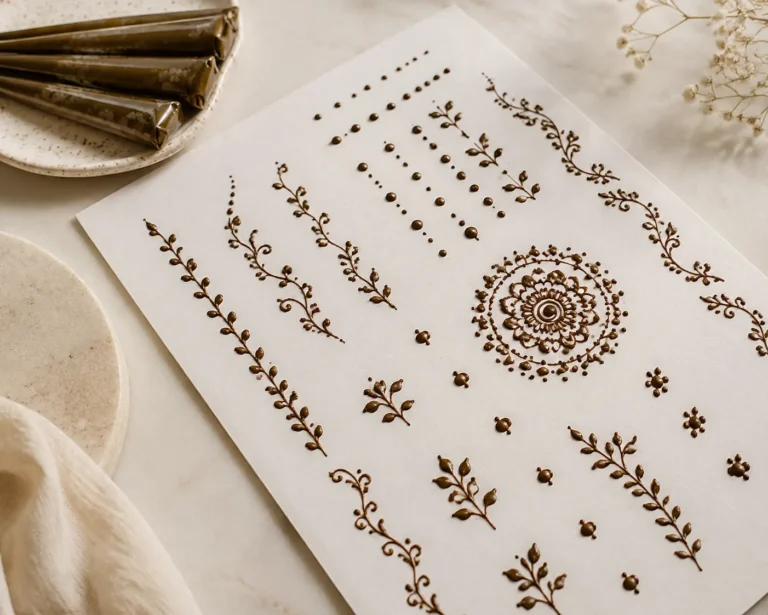
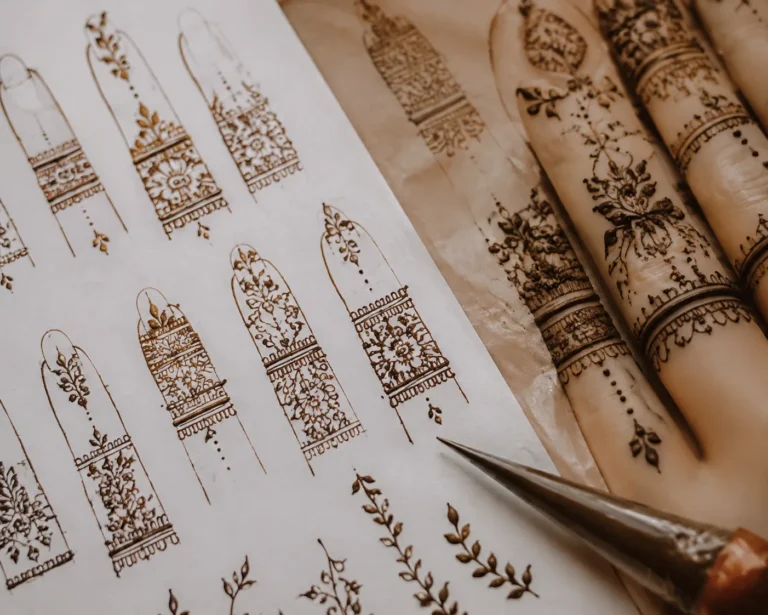
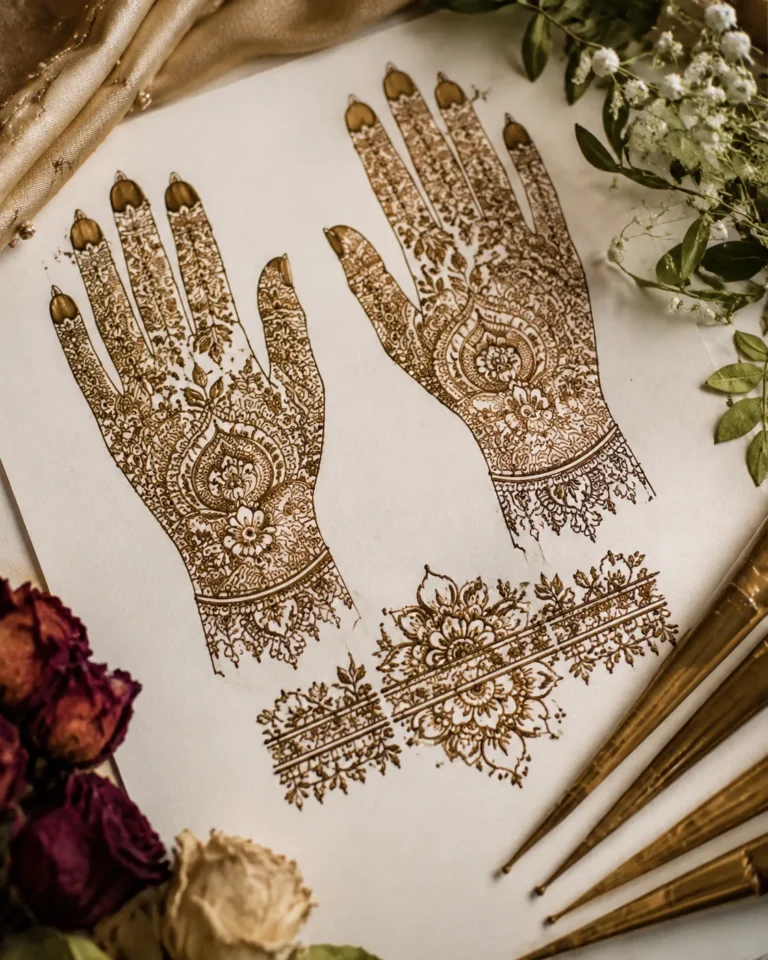
Treat a finger-to-wrist dense layout like flash first, custom second. When the concept shows up as a hand-drawn sheet on aged paper, that is your clue that rhythm matters more than realism. The best versions repeat shapes with confidence, then break the pattern once so your eye does not get bored.
I would not let every finger carry the same amount of detail. That’s how you end up with a stiff, glove-like tattoo that does not move with the hand. Pull inspiration from 18 simple mehndi designs front hand you can copy fast if you need to see where simplicity saves the design.
Use flash-style spacing to keep each finger cap, connector, and wrist band distinct. And if you are mixing dots, paisleys, and petals, give one of them the lead role. Too many equal voices turns the whole thing into soup.
6Use Negative Space for Expensive-Looking Contrast
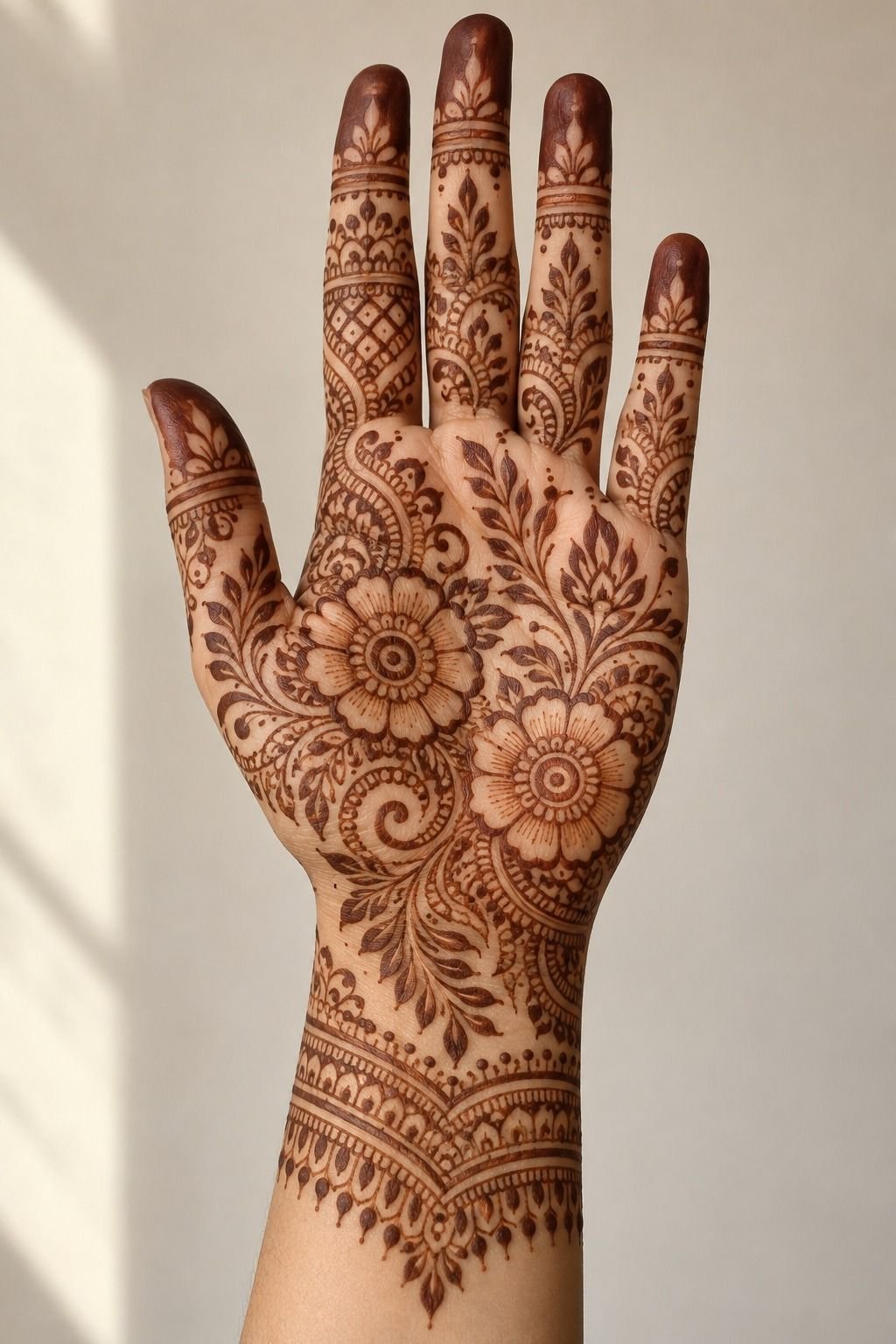
Use negative-space full coverage when you want drama without turning the hand muddy.
7Floral Bracelet Full Hand Design
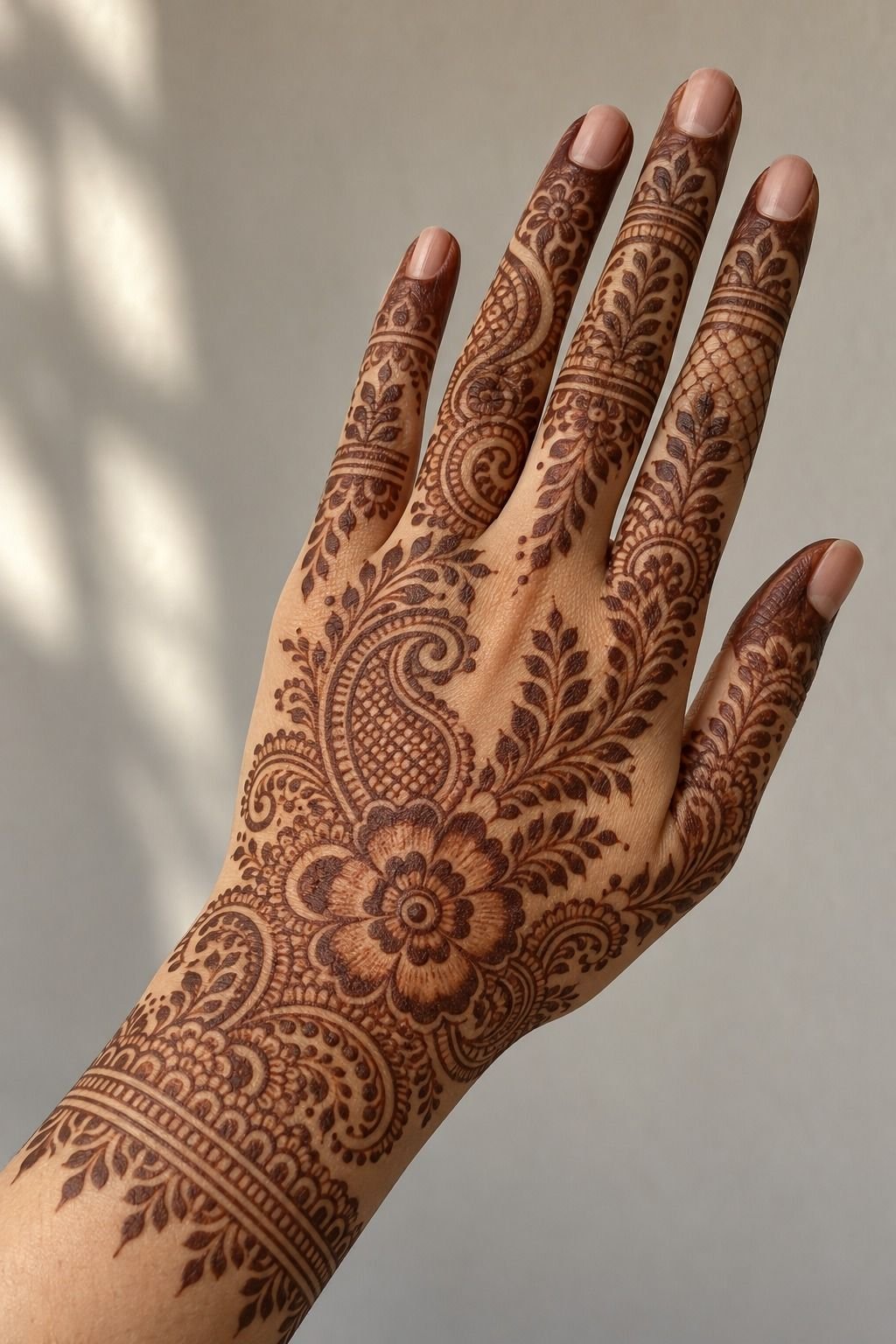
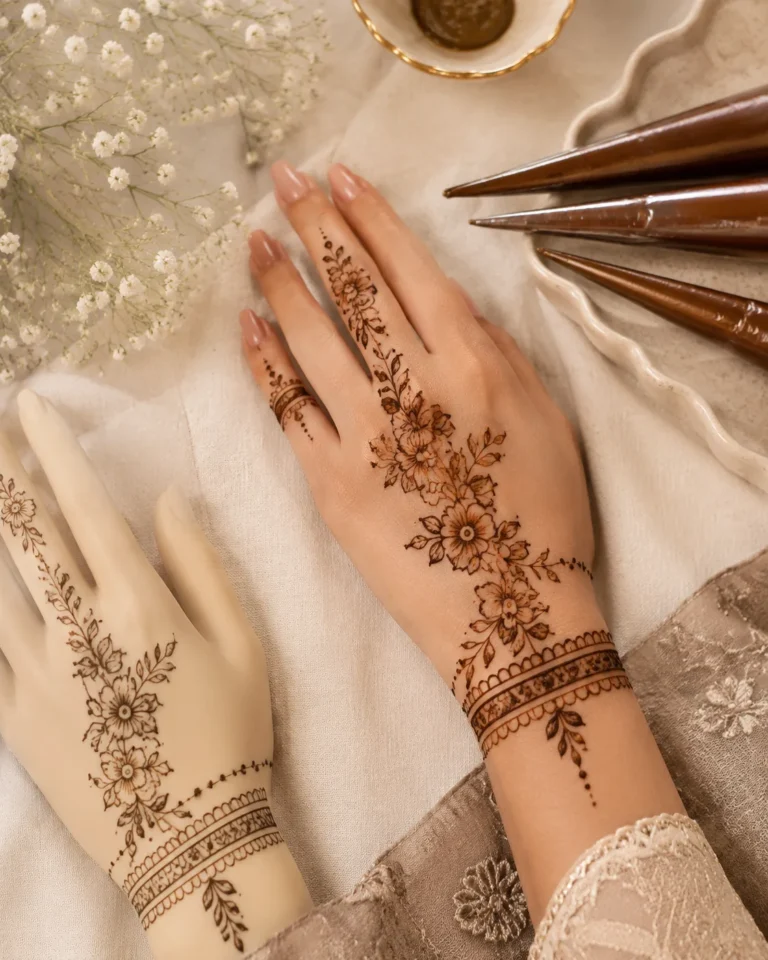
Wrap a floral bracelet layout around the wrist first, then let the hand grow out of it. On fair cool-pink skin, the macro view makes those petal edges and little bead connectors show every decision. If the bracelet base is weak, the rest of the tattoo feels like it floated in afterward.
I like bracelet-led mehndi tattoos because they give you an obvious stopping point. That’s huge if you might extend into the forearm later. For softer feminine layouts that still feel clean, back hand mehndi designs can spark good placement ideas even if you keep this one front-facing.
Pick fine floral linework with petals that overlap in twos and threes, not sixes and sevens. But keep the center of each bloom simple. When every flower has too many lines, you lose the softness and the tattoo starts looking scratchy.
8Paisley Packed Bridal Mehndi Hands
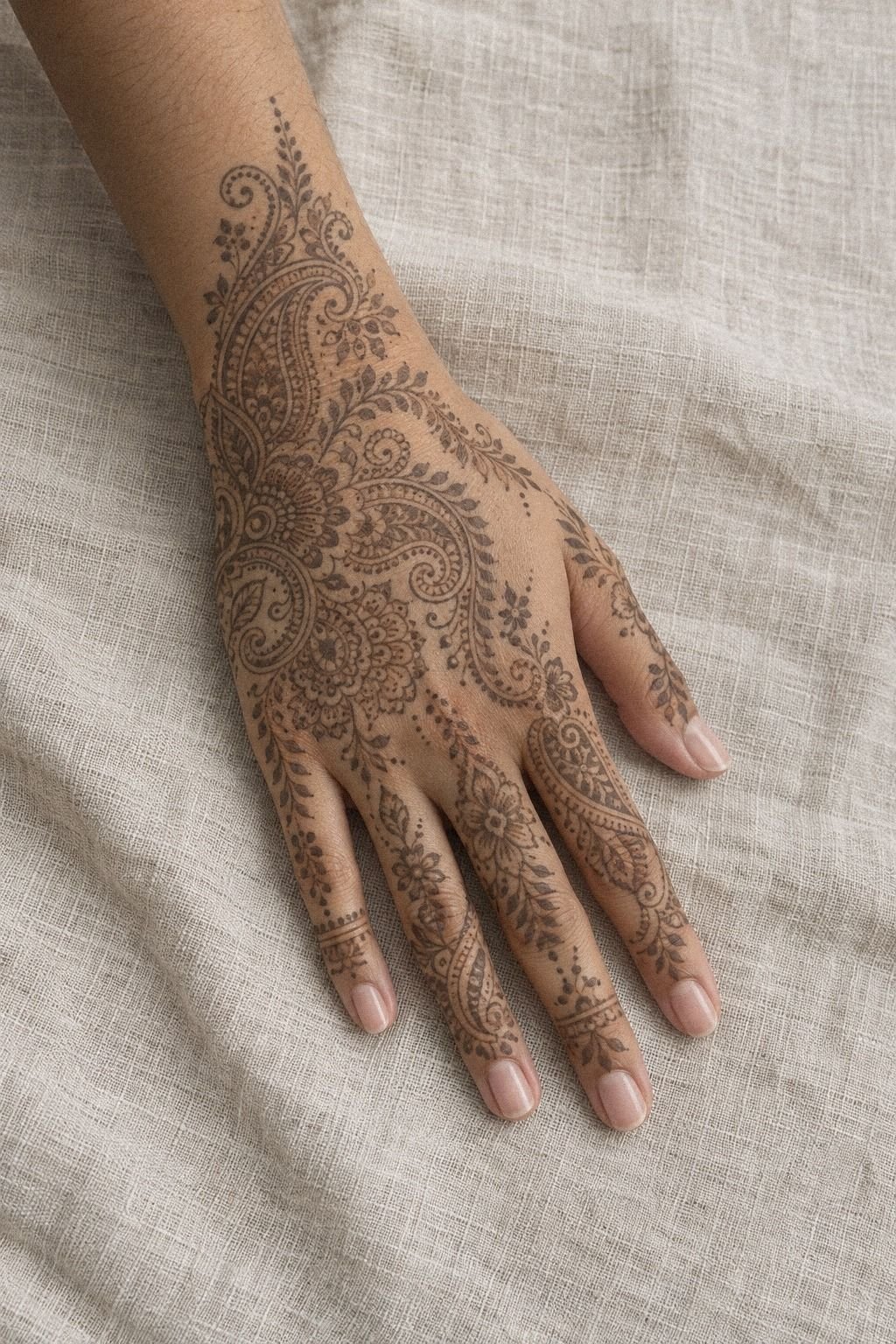
Stack a paisley-heavy bridal layout only when the artist knows how to grade density. On medium warm ivory skin, packed paisleys can look gorgeous, but you need one bigger paisley family, one medium rhythm, and one tiny accent rhythm. Same-size paisleys everywhere will flatten the whole hand.
I learned that lesson the hard way on an early sketch. It was clean, technically, but dead.
Once I opened the center and let the smaller paisleys trail off toward the wrist, that paisley hierarchy finally came alive. If you want more bridal-leaning references, 23 full hand mehndi designs to show your artist first is a good place to compare density.
Use packed black filigree around the hero paisleys, then leave tiny skin windows to stop the design from going flat. And yes, bridal work can be dense and still elegant. The move is scale control, not more filler.
9Fine Line Full Hand Mehndi
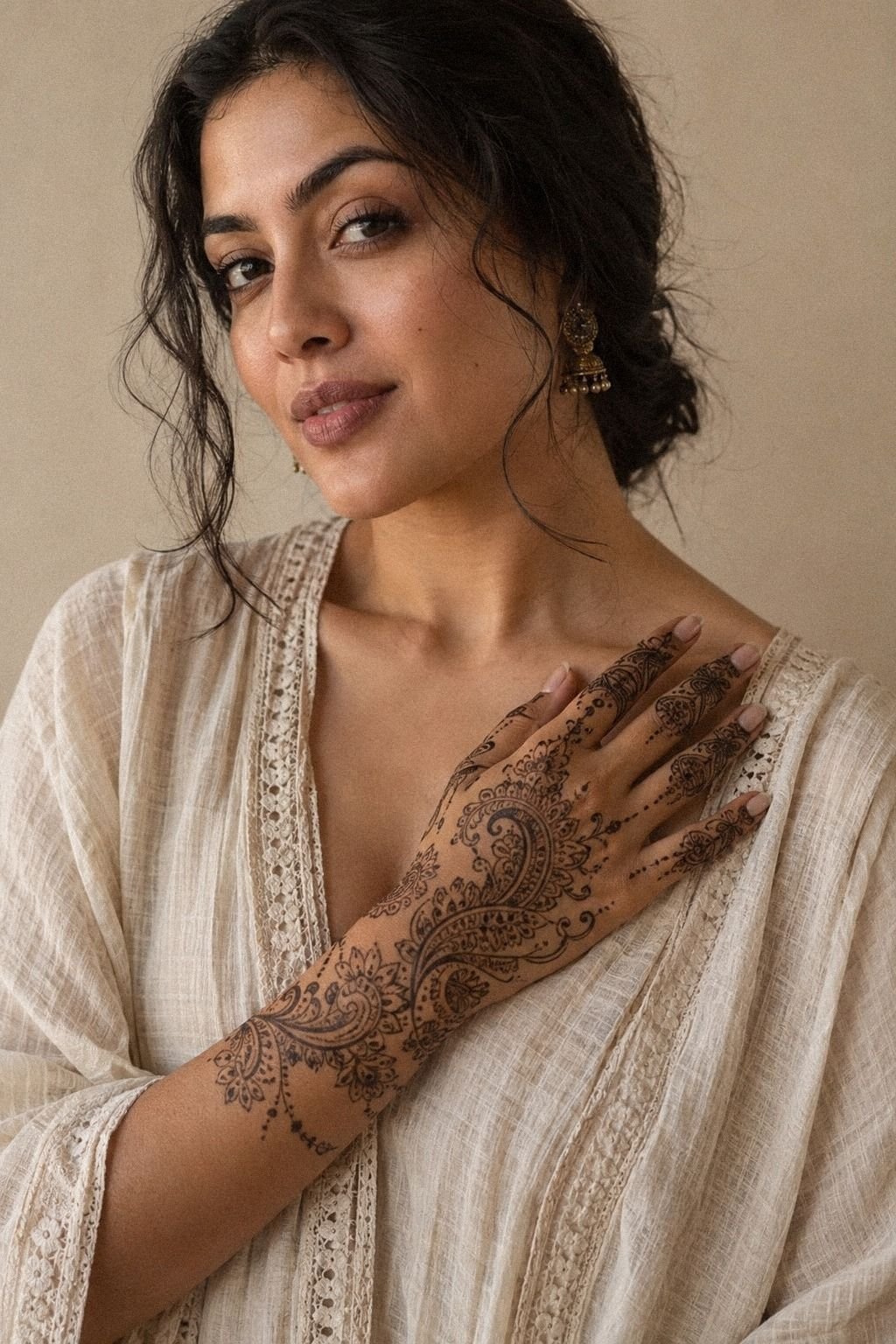
Keep a fine-line full-hand layout honest about what fine line can and cannot do. On medium olive skin, those slim lines look elegant when they arc with the hand bones and stop before the skin feels overworked. Fine line is not fragile by default, but tiny stacked detail on the hand can widen.
I tell people this style needs a grown-up conversation about maintenance. Hands fade faster.
Hands take touch-ups. If you’re okay with that upkeep, and the price of future touch-ups doesn’t scare you, go for it.
For more airy ideas built around clean spacing, front hand mehndi designs shows where fine line stays readable.
Ask for single-needle inspired linework only from an artist whose healed photos still look crispy. But don’t chase the thinnest line possible just to say you did. A slightly stronger line will heal better than a precious one that disappears.
10Lotus Centered Palm Henna Design
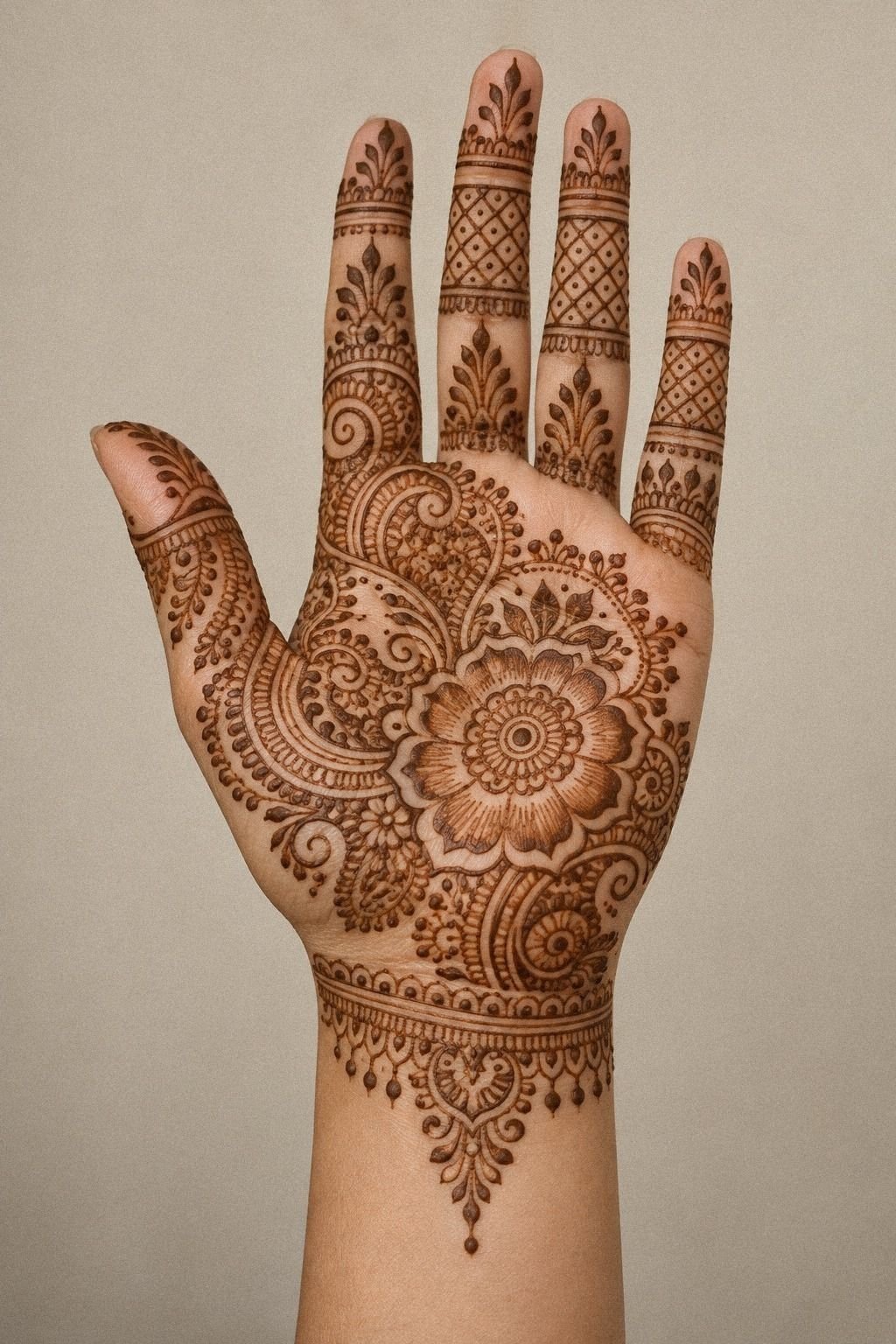
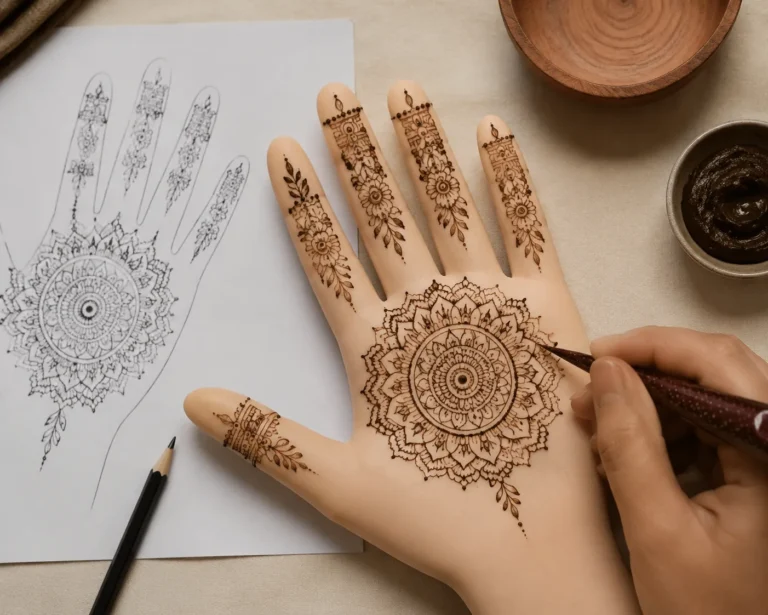
Center a lotus palm design if you want symbolism and structure in one move. In a split view where you see the stencil on paper and the healed tattoo on skin, the lesson is obvious: simple petals beat fussy petals once healing finishes. The palm swallows weak detail fast.
I like lotus builds because they give you a clean focal point with easy ways to extend into the fingers later. But the petals need clean hierarchy.
Inner petals tighter, outer petals broader, dot trails used sparingly. For more balanced symmetry ideas, mandala mehndi designs gives you adjacent references.
Use lotus petal geometry with a darker core and fewer fringe lines than your first draft wants. That choice keeps the design solid through the flaky stage and into silver skin. Less showing off, better tattoo.
11Jewelry Style Full Hand Mehndi
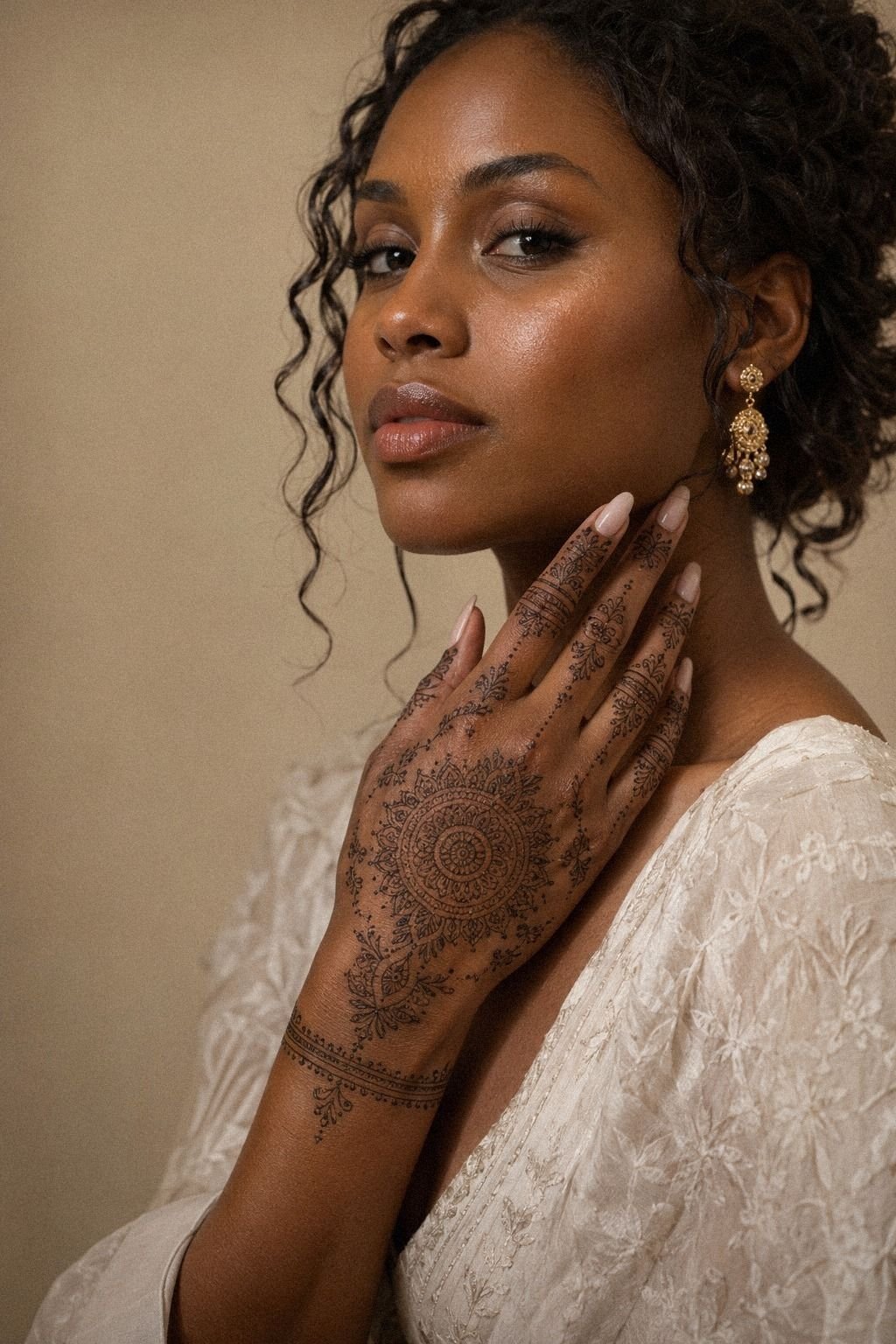
Build a jewelry-style hand tattoo like it belongs on skin, not like you’re tracing a bracelet catalog. On deep brown skin with a warm undertone, chain links, drops, and medallion shapes can look rich fast, especially when the drape follows the metacarpals instead of fighting them. You want ornament, not clutter.
This style works best when one chain path leads and the rest support it. I usually keep the fake ring connection lighter than the wrist portion so the fingers don’t look boxed in. If you love ornamental flow, modern mehndi designs shows that same dressy energy without overpacking.
Choose ornamental chain motifs with dots that punctuate, not smother. And skip hyper-tiny beadwork on high-wear knuckles if you hate touch-ups.
Pretty is good. Pretty that still reads after healing is better.
12Traditional Grid Full Hand Mehndi
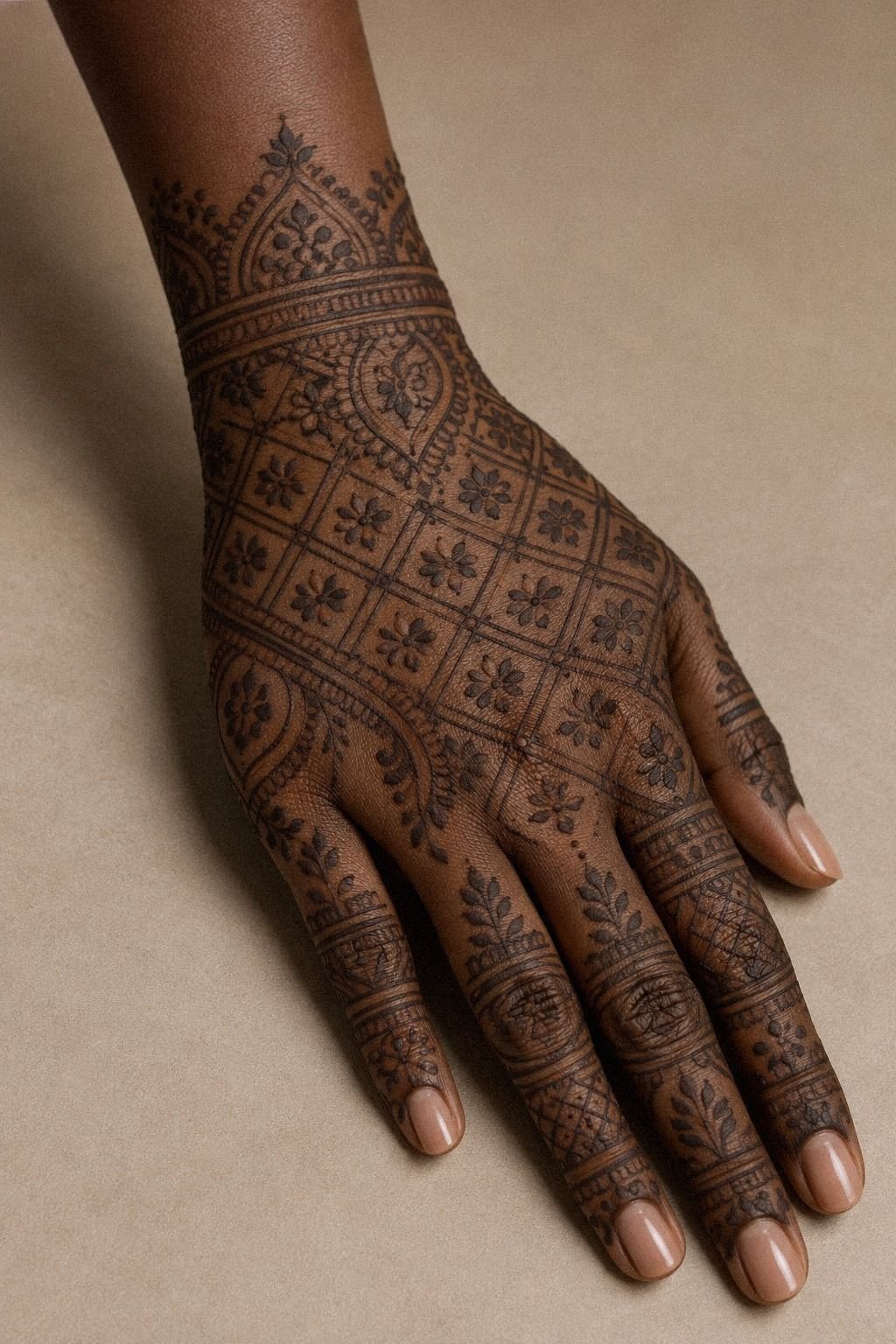
Use a grid-driven hand pattern only if you want discipline more than softness. The brief calls it traditional, but on deep ebony skin the macro feel is all about structure, repeat, and confident black placement. A grid can look bold as hell when the lines are even and the breaks are deliberate.
I wouldn’t force American trad moves into this if the goal is mehndi-inspired elegance. But I would borrow trad confidence.
Bold will hold. One darker frame line around each main cell can keep the whole layout from dissolving into visual noise.
Back hand mehndi designs can help you compare cleaner top-hand organization.
Pick grid-based black linework with repeating shapes that alternate dense and open cells. But leave at least a few quiet lanes across the hand.
Without them, the grid starts feeling like a stamped texture instead of a tattoo with intention. Bold will hold here!
13Cap the Fingertips, Keep the Palm Breathing
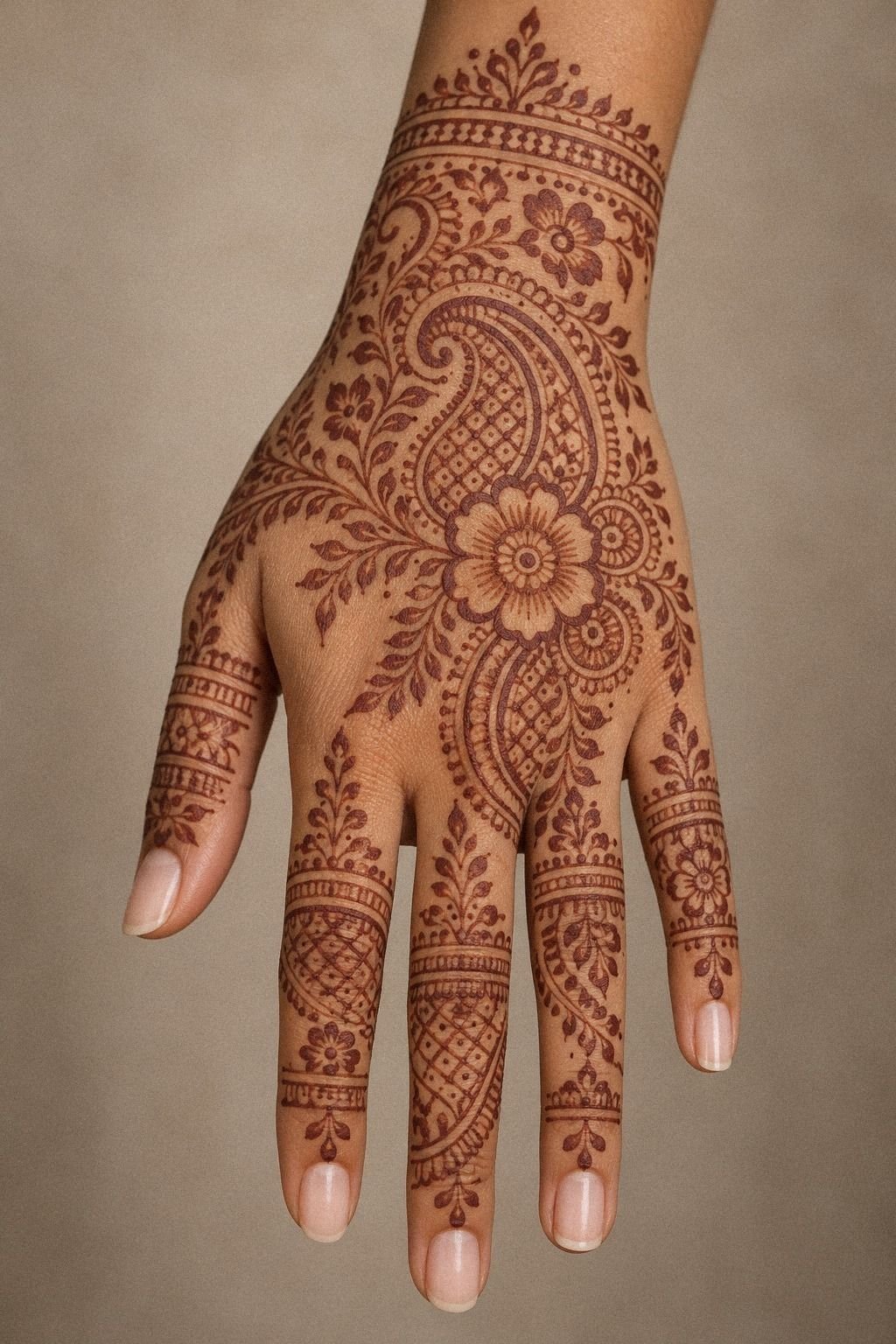
Cap the fingers with bold fingertip coverage when you want the ends of the hand to hit first.
14Modern Back Hand Mehndi Flow
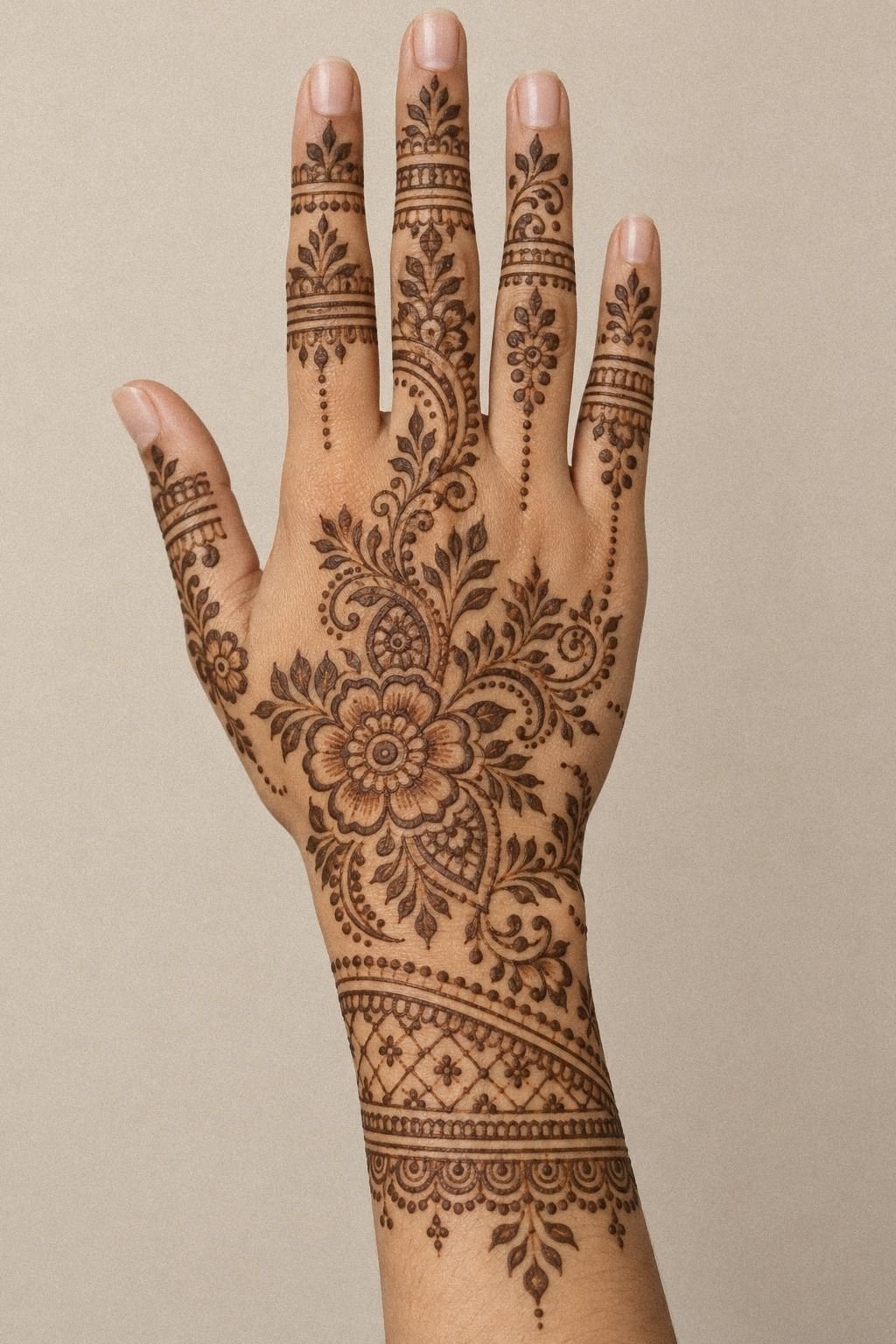
Let a modern back-hand flow travel like anatomy, even if the source mockup gets weird about placement. The idea still works: long lines should follow motion, curve around joints, and taper where the hand narrows. That’s what keeps the tattoo elegant instead of stiff.
I like this for clients who want Indian mehndi influence without looking bridal. You can keep it fresh, sharp, and a little graphic. For layouts that lean clean instead of crowded, back hand mehndi designs shows how back-hand flow carries detail better than the palm.
Ask for modern ornamental flow that uses one main path and two supporting paths, tops. But don’t let the design cross every finger at the same height. Staggered movement feels more natural on skin.
15Is Bridal Portrait Detail Worth It?
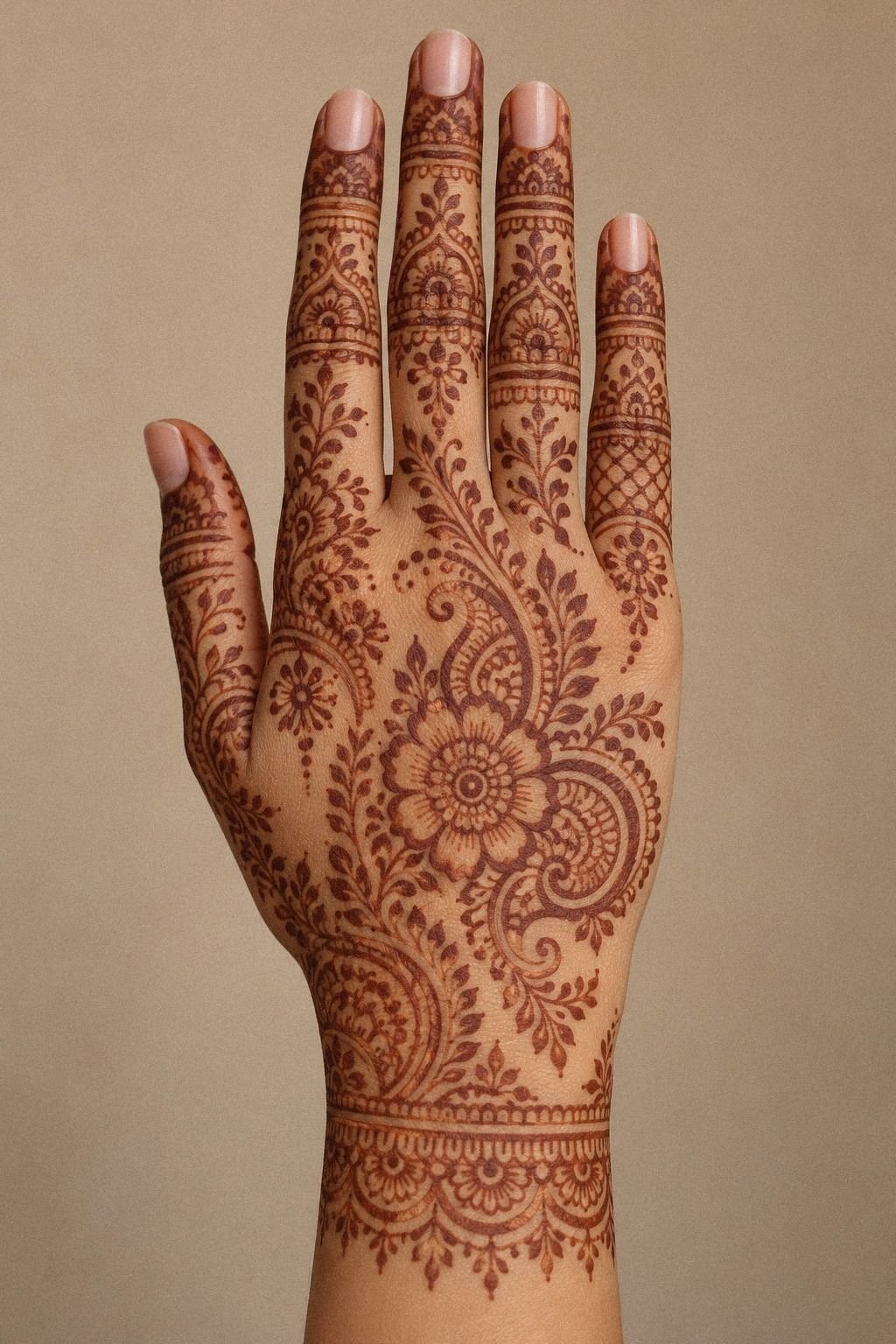
Treat a bridal portrait detail like collectible flash unless the artist has real portrait chops.
16Dotwork Full Hand Henna Pattern
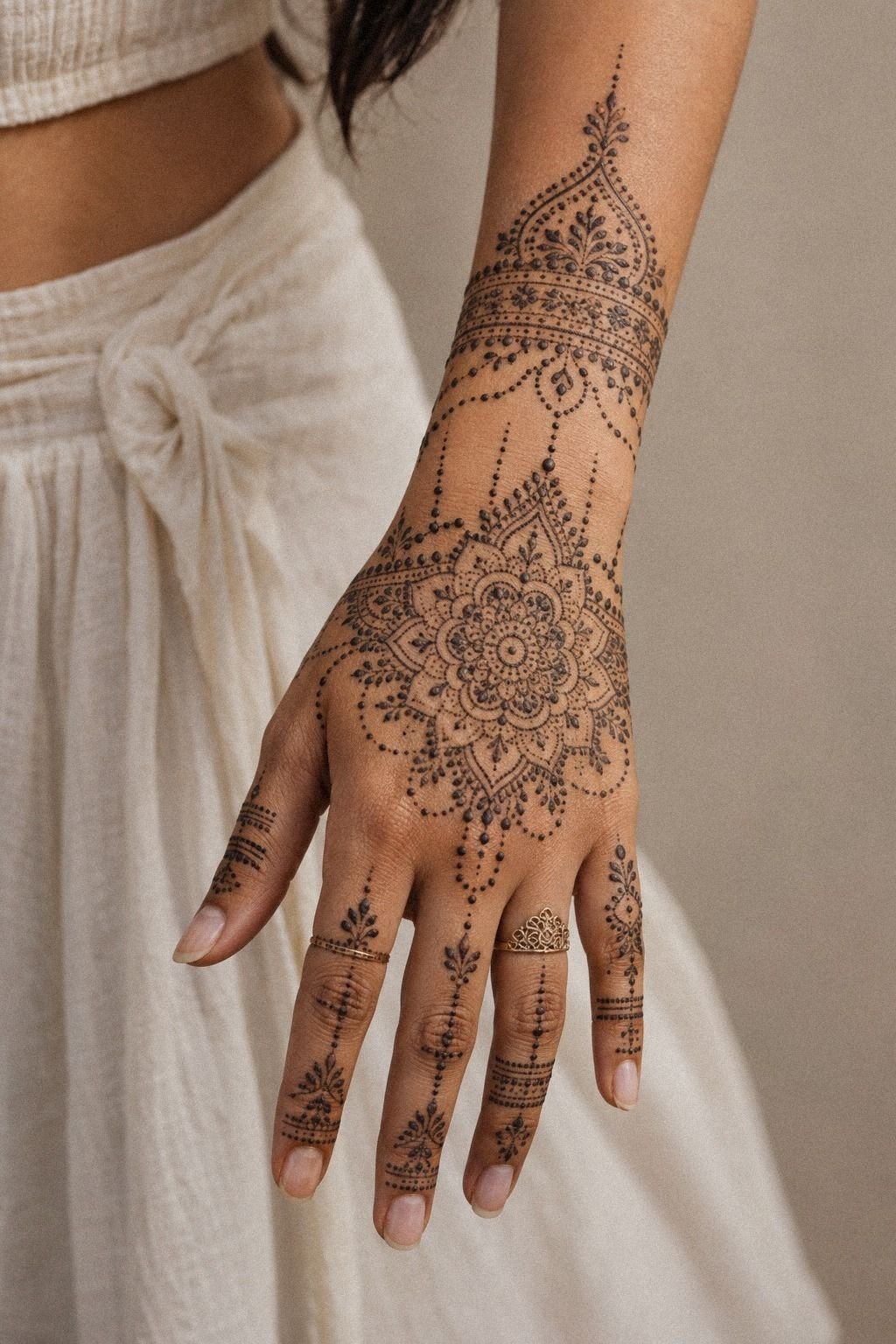
Build a dotwork hand pattern with patience or don’t build it at all. On golden tan skin, finished dotwork can look insanely soft and expensive because the texture sits like velvet when it’s done right. But lazy dot packing heals patchy, and patchy dotwork looks rough forever.
I like dotwork when a client wants fullness without heavy black slabs. It gives you tone while keeping the design airy. For adjacent layouts that mix softness and structure, mandala mehndi designs is a smart comparison set.
Choose clean dot saturation with deliberate spacing changes from palm to wrist. And tell your artist to stop before the skin gets overworked. Dotwork should feel soft, not like they scratched at you fifty times.
17Minimal Gaps Full Hand Mehndi
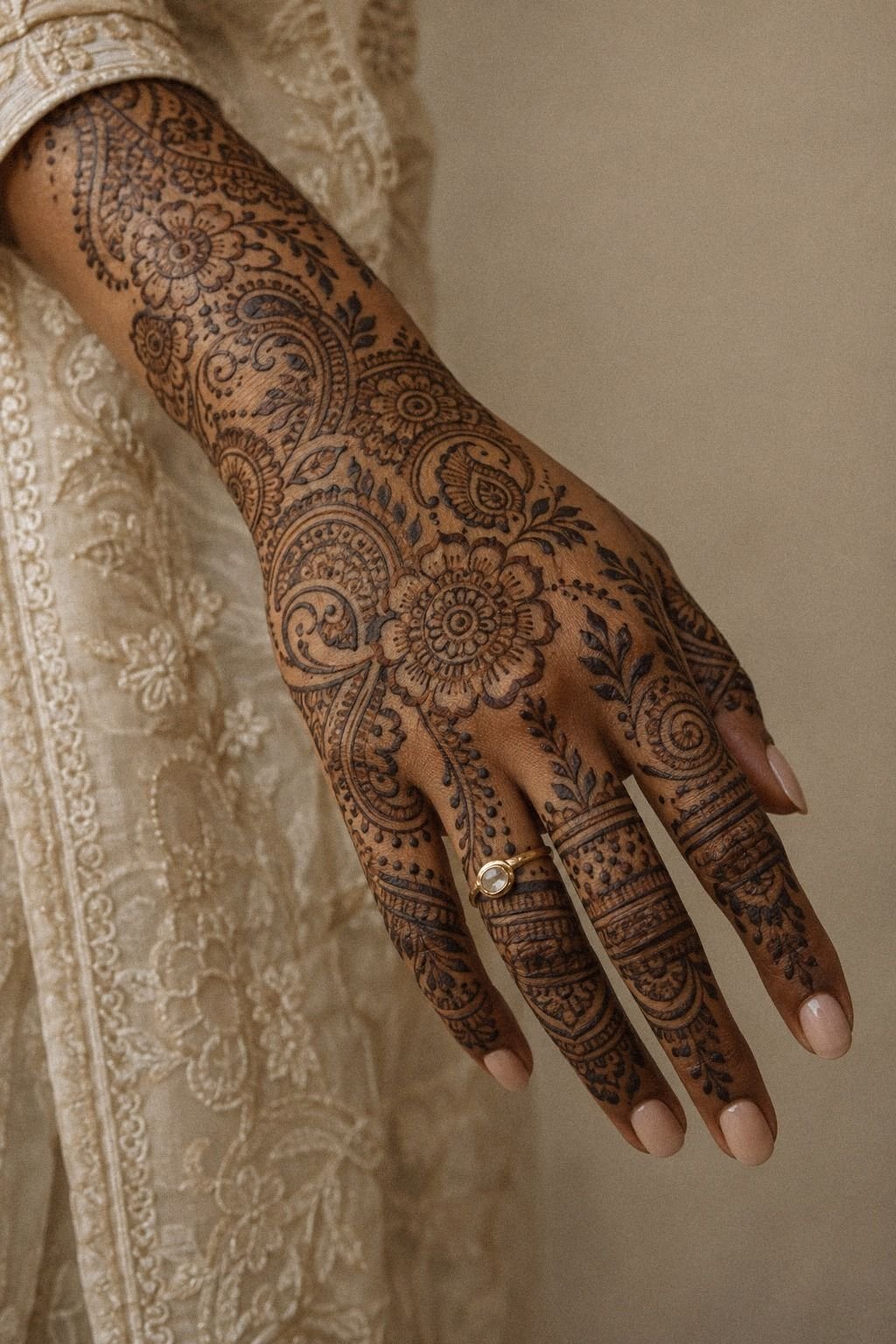
Pack a minimal-gap layout only if you still leave real exits for the eye. On deep brown skin with a warm undertone, macro fine line work can hold a ton of ornament, but the lines need enough separation that the skin can still show through in slivers and windows. That’s what keeps it luxe instead of muddy.
This is where strong planning beats freestyle confidence. I map big shapes first, then decide where the tiny fillers are earned. If you want to compare heavy layouts that still stay readable, 23 full hand mehndi designs to show your artist first helps.
Use tight ornamental spacing near the wrist and wider lanes near the knuckles, because knuckles already distort detail. But if you erase every gap, you erase the design’s rhythm too. Dense is fine.
Flat is not.
18Should You Mirror Both Halves?
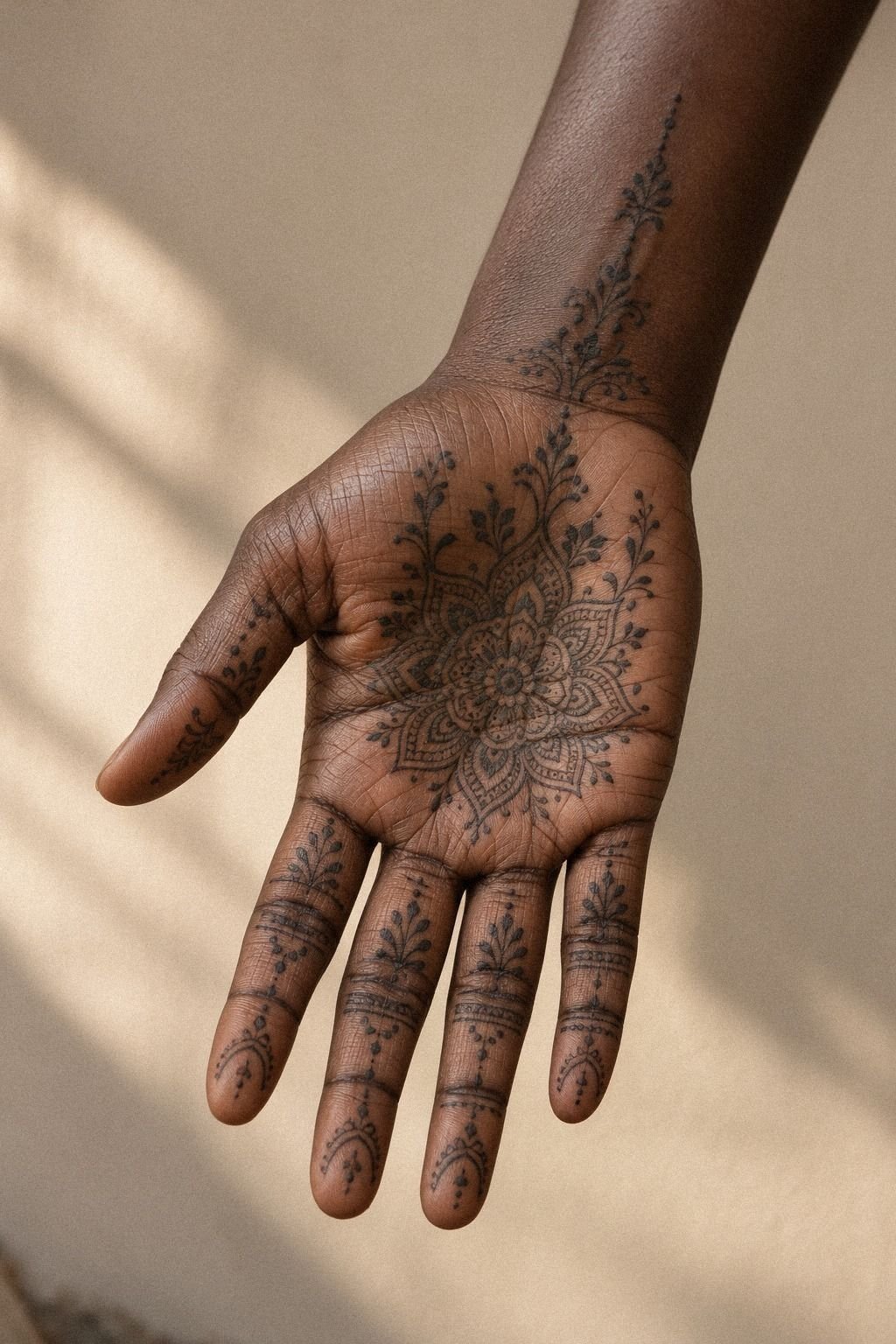
Mirror a symmetrical front-hand layout only if both halves can survive healing with equal clarity.
19Ornamental Wrist To Fingertip Mehndi
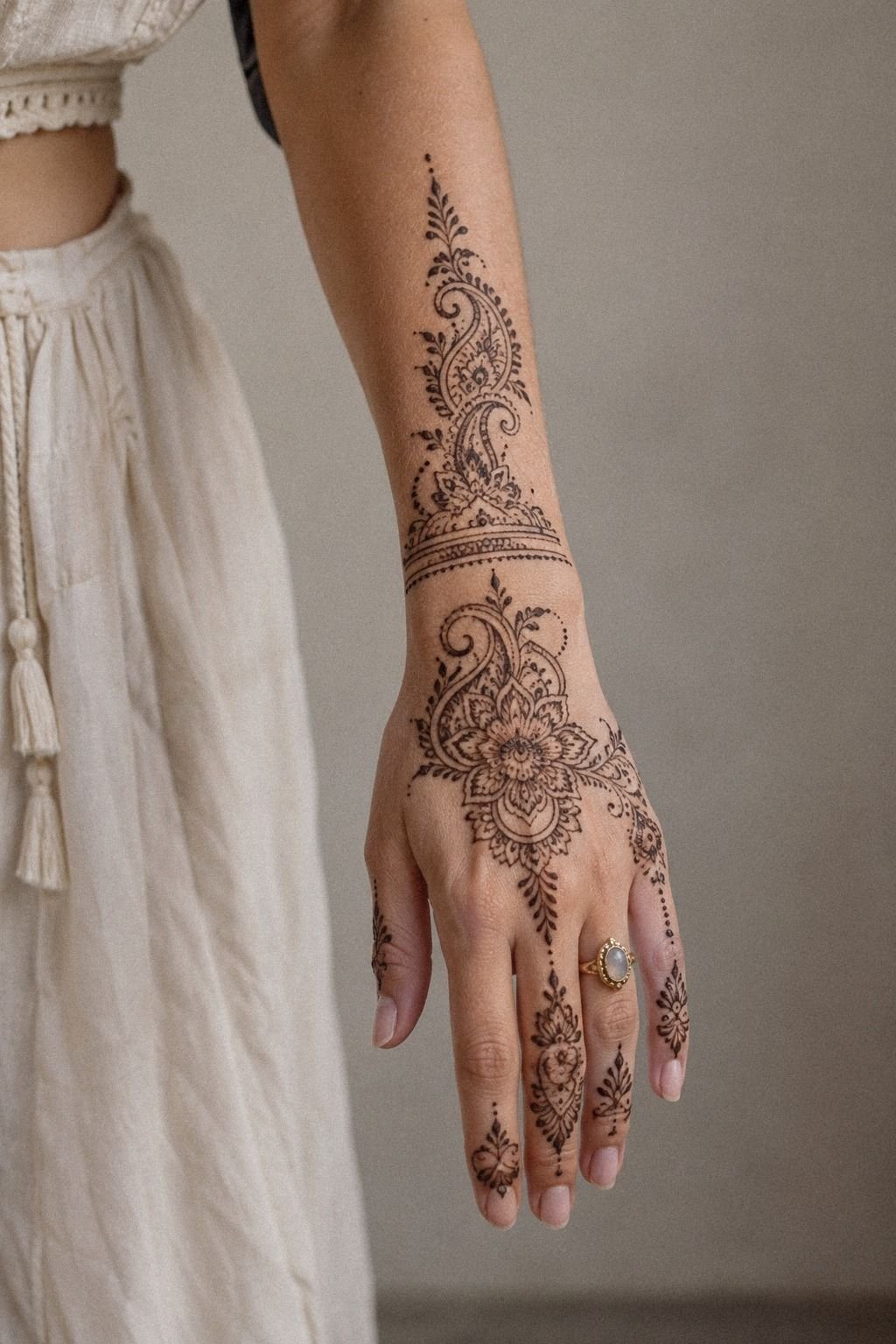
Run an ornamental wrist-to-fingertip flow when you want the whole hand to feel connected in one sentence. On fair cool-pink skin, a layout that starts at the wrist and threads into each finger can look long, graceful, and very intentional if the width expands and contracts in the right places. You want movement, not a stamp.
This is one of my favorite fancy mehndi designs because it flatters the hand even before it fully settles. But the center lane can’t be too skinny or too busy. For more top-hand references that keep that long pull, front hand mehndi designs is worth saving.
Use wrist-led ornamental linework with the darkest accents low, then lighten up as you move into the fingers. That grading helps the hand look elegant instead of bottom-heavy. And yes, it ages better when the finger ends stay simpler.
The Clean Read Rule
If you’re choosing between all 19, here’s my honest rule: build the hand tattoo for healed skin, not for the first-day photo. I’ve redrawn more mehndi-inspired hands than I can count because the client fell in love with tiny online detail that would’ve mushed out in real life.
Hands are gorgeous, but they are not forgiving. They bend, rub, wash, sunburn, and peel faster than calmer placements.
What saves you is structure. I want one main focal point, one support rhythm, and enough untouched skin that the design can breathe after the lines soften a hair.
That’s the difference between a piece that still looks clean at 2 to 3 weeks and one that already feels muddy by the time the flakes are gone. But people still come in asking for every fingertip packed, every knuckle bridged, every empty patch filled.
I get why. Dense mehndi is beautiful.
It just has to be designed like tattooing, not like ink on paper.
And this is where artist choice matters more than the exact motif. You want healed photos.
You want crispy lines. You want someone who knows when to say no.
If an artist can’t show you hand work on real skin tones, healed, in normal light, I’d keep looking. For more ways to compare flows before you book, modern mehndi designs and front hand mehndi designs are both solid starting points.
First few days, treat it like an open wound. Wash gentle unscented soap, thin layer of ointment, don’t suffocate it, and stay out of pools and hard sun. It’ll peel like a sunburn, then hit that silver-skin stage before it settles.
That’s normal. What kills these faster than anything?
Picking, UV, and pretending hands are low-maintenance. They aren’t.
But when the design is built smart, the payoff is huge!
The Bold Will Hold Rule
Here are the numbers I use when I set expectations for a mehndi-inspired hand tattoo in the US. This is the honest cost picture, the upkeep picture, and the long-term payoff question all in one.
Black is still your best friend for longevity, and simpler shapes hold better than tiny filler. If you’re asking whether full hand mehndi is worth it, my answer is yes when the design matches your maintenance tolerance and your artist’s actual skill. The lowest quote is not always the cleanest healed result.
A Few Things Worth Answering
How much does a Full Hand Mehndi Designs usually cost?
About $50 to $100 minimum gets you through most shop minimums, and detailed hand work often lands in the $100 to $250 hourly range. Your final price depends on detail, artist demand, and whether you’re booking one hand or both. For more references, 23 full hand mehndi designs to show your artist first helps you scope complexity.
Are Full Hand Mehndi Designs a good idea for a first tattoo?
Yes, if you choose clean linework and accept that hands are higher maintenance than calmer placements. You want a design that breathes, an artist with healed hand photos, and enough black contrast that the motif still reads after the flaky stage. If your pain tolerance or future upkeep feels tight, I’d start elsewhere.
How do I choose a tattoo artist for Full Hand Mehndi Designs?
Look for healed hand tattoos, not just fresh ones. Clean single-pass lines.
Real skin tones. Strong hygiene.
And if their portfolio only shows paper stencils or filtered close-ups, I’d keep moving. Back hand mehndi designs is useful for comparing placement approaches before you message anyone.
How much do Full Hand Mehndi Designs hurt?
Hands are pretty spicy, especially over tendons, knuckles, and the palm. Lines feel sharper, shading feels like a dull burn, and fingertip work can be the rudest part. If you need a chiller first tattoo, the outer forearm, thigh, or shoulder is usually easier.
How long does a Full Hand Mehndi Designs take to heal?
Surface healing is about 2 to 3 weeks, then the tattoo keeps settling for 2 to 3 months. Wash with gentle unscented soap, use a thin layer of ointment, and avoid sun, pools, and gym friction while it’s closing up.
What’s the best placement for Full Hand Mehndi Designs?
The top of the hand usually gives you better long-term readability than the palm, especially for fine line and ornamental work. Palms can look incredible, but they take more abuse. If you want cleaner longevity, keep the strongest motifs on the back of the hand and wrist.
The One-Line Rule
If I had to pick one, I’d start with Arabic Vine Full Hand Mehndi. The open gaps give the lines enough air to age instead of crowding themselves out. Pin that flow for later and compare it with front hand mehndi designs before you book.
{ “title”: “19 Full Hand Mehndi Designs You’ll Want to Copy in 2026”,