Butterfly tattoo meaning runs deeper than the obvious. The symbol works because it needs no explanation: something changes form, survives a fragile middle, and becomes visible. That same clarity lets it carry grief, freedom, softness, and recovery without saying a word.
Quick answer: A butterfly tattoo usually symbolizes transformation, rebirth, freedom, grief, femininity, beauty, and personal change. It can serve as a memorial, a recovery symbol, a first tattoo, or a decorative design depending on placement, color, and style.
Transformation and Rebirth
Why the Symbol Lands
The most common butterfly meaning is transformation. The symbol is not subtle, but it works because the life cycle is so visual. Caterpillar, cocoon, winged body. People choose it after a breakup, recovery, a move, loss, an identity shift, or a year that forced them to become someone else.
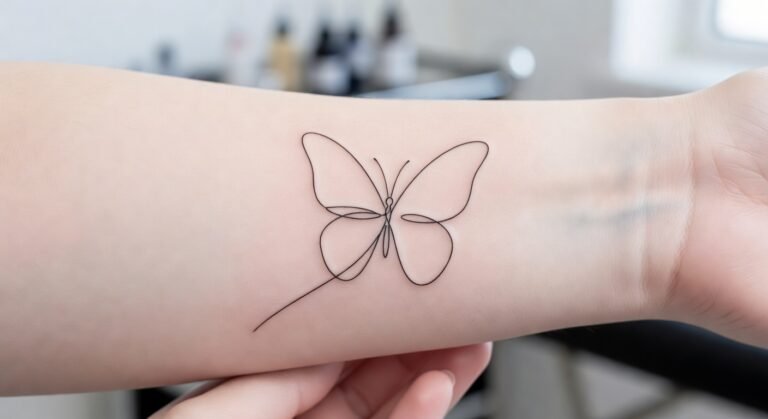
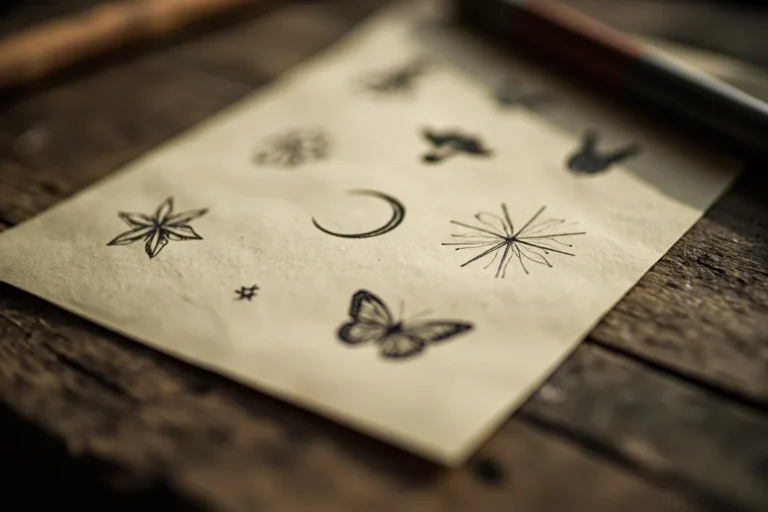
If you want the transformation meaning without a generic look, change the style. Consider a blackwork butterfly, fine line wings, a traditional butterfly, one half floral and one half geometric, or a small butterfly paired with a date.
Designing for the Story
The chrysalis-to-butterfly arc maps onto what many clients are actually living through. Divorce, sobriety, illness recovery, leaving a toxic situation. When someone sits in the chair for a butterfly, there is usually a real story attached, not just an aesthetic choice. That story is what makes the design land. A butterfly with cracked or emerging wings reads differently than a fully open one. The emerging version says you are still in the middle of it. The open, flying version says you made it.
Placement reinforces the meaning here. A butterfly on the sternum or over the heart ties the transformation to something internal and emotional. One on the wrist stays visible to the wearer as a daily reminder. Fine line black and grey tends to feel more introspective. Bold, saturated color reads more like a celebration. Talk with your artist about where you are in the process, then build the design around that.
Grief and Memorial Meaning
Private Loss, Visible Symbol
The butterfly earned its wings the hard way. So did you.
Butterflies often show up in memorial tattoos because they suggest presence without literal portrait work. A butterfly can stand for a person, a passing, or the feeling that someone is still near in a different form.
For memorial work, keep the design calm. A butterfly plus one initial, one birth flower, or one date usually reads better than a crowded tribute.
What Makes Memorial Butterflies Different
Memorial butterflies hit different than most grief tattoos because they do not look like grief from the outside. A name, a birth and death date, or a small portrait reads as memorial immediately. A butterfly lets the wearer carry that loss in a way that feels private and personal. Many clients choose the deceased person’s favorite color for the wings, or incorporate a birth flower. Those small details make the piece specific to one person and stop it from looking like a catalog design.
If the piece is honoring a child or a sudden loss, clients often want something soft. Black and grey with a light whip shade on the wings is a solid call. It heals well, ages gracefully, and keeps the mood quiet. Avoid heavy black fills if the client wants it to feel delicate. The wrist, inner forearm, or behind the ear are popular spots for grief butterflies because they are intimate placements the wearer can see and touch.
Color and Style Choices
How Color Changes the Mood
| Color | Meaning mood | Design note |
|---|---|---|
| Black | Elegance, grief, strength | Ages well when contrast is strong |
| Blue | Calm, freedom, dreamlike change | Needs enough saturation to hold |
| Red | Love, intensity, survival | Works best with simple wing shapes |
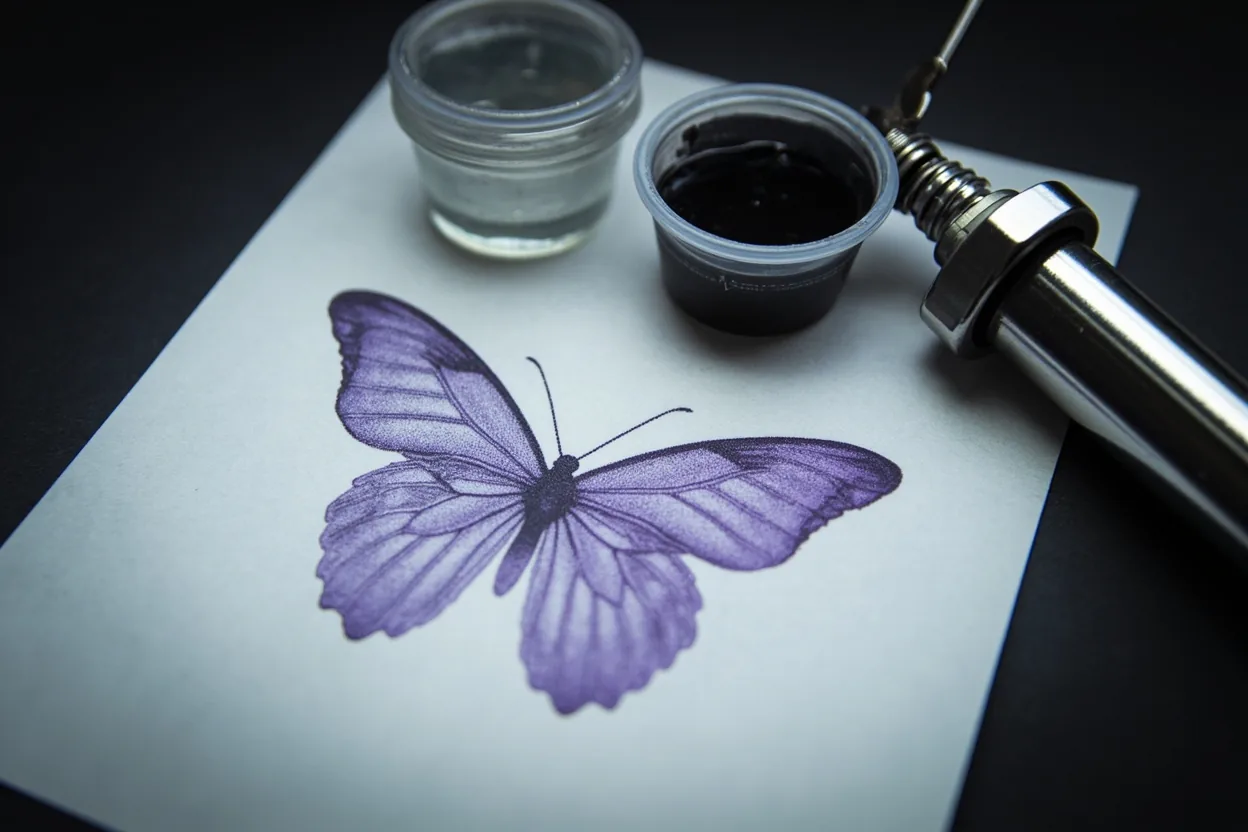
| Purple | Softness, spirituality, memory | Avoid too much tiny detail |
| Fine line only | Quiet change, subtle femininity | Placement matters for fading |
Color choice does heavy lifting on butterfly tattoos. Black and grey reads as elegant, timeless, sometimes melancholy. It is the go-to for memorial pieces and for clients who want the tattoo to age gracefully over decades. Bold saturated color, especially monarch orange or a bright blue morpho, reads as joyful and loud. It reads from across the room, which is exactly what some clients want. Watercolor-style butterflies look stunning fresh but need solid underlying linework or they will heal muddy and blow out fast.
Placement Affects Color Aging
Placement affects how color ages. High-wear zones like hands and fingers are rough on saturated pigment. Blues and purples fade fastest in sun-exposed areas. If you want a bright butterfly on the forearm, you need to know sunscreen is non-negotiable and a touch-up in three to five years is realistic. Inner arm and ribcage hold color better. Fine line butterflies with minimal color can look crispy and clean for years in a low-wear spot.
Placement and Technical Considerations
Where Butterflies Work Best
Butterflies need wing room. Forearm, shoulder, upper back, rib, hip, collarbone, and ankle work better than tiny finger placements. If the wings are too small, the inner detail can close up over time.
For sizing, compare small tattoo ideas for women and the tattoo placement chart.
Specific Placements Broken Down
Shoulder blade is the classic butterfly placement for a reason. The flat canvas lets the wings open fully without distorting, the design heals well since there is minimal friction, and it is easy to conceal or show depending on the situation. Spine placements are popular too but they hurt significantly and the skin moves a lot, so factor that into line weight. Go too fine on a spine butterfly and you will see blowout within a few years. Thicker linework holds up better in that zone.
Sternum and collarbone butterflies are common requests, and they sit beautifully when mapped correctly. The sternum has thin skin and sits over bone, so the vibration is intense. The collarbone has a similar issue but with the added challenge of the natural curve. A butterfly that looks centered when you are lying down may shift slightly when you stand. Your artist should mark the placement with you upright, breathing normally, arms at your sides.
Ribcage butterflies are popular with clients who want something private. The canvas is long and curved, which suits a butterfly in flight. The pain here is sharp and sustained because of the thin skin over bone, so plan for shorter sessions. Hip and lower abdomen placements are softer in terms of pain but be aware of how the design will interact with future body changes. A butterfly that looks balanced at twenty-five may stretch or compress over time.
Ankle and wrist butterflies are small, visible, and socially acceptable in most workplaces. The downside is that these areas move constantly and take longer to heal. Ankle tattoos rub against socks and shoes. Wrist tattoos catch on sleeves and watch bands. Both need extra care during healing and will likely require touch-ups to keep the detail crisp.
Historical and Cultural Context
What We Know and What We Guess
The butterfly as a symbol of the soul appears in multiple cultures, though the exact origins are often debated. In ancient Greek, the word for butterfly, psyche, was also the word for soul. This linguistic overlap is well documented, but it is worth noting that we do not have extensive records of Greeks tattooing butterflies specifically. The connection is more literary and symbolic than archaeological.
In Japanese tradition, the butterfly is often linked to the souls of the living and the dead, and sometimes to young women or marriage. Two butterflies together are traditionally seen as a symbol for a happy couple. Mexican and broader Latin American traditions, particularly around Day of the Dead, use the monarch butterfly as a symbol of returning souls. This is often linked to the actual migration patterns of monarchs, which arrive in Mexico around the same time as the holiday. The connection is cultural and observed rather than strictly ancient.
Celtic and Irish traditions sometimes associate butterflies with transformation and the otherworld, though again, direct evidence of tattooing practices is limited. What we do know is that the butterfly as a tattoo motif gained significant popularity in Western tattooing during the late twentieth century, particularly among women, and has remained a staple because of its adaptability rather than any single cultural claim.
Modern Meanings
Today, the butterfly tattoo is largely personal. Clients assign their own meanings, and the symbol has become broad enough to accommodate almost any story of change, loss, or becoming. That flexibility is its strength and its weakness. A butterfly can feel deeply specific or completely generic depending on the design choices. The difference is usually in the details: a species native to a meaningful location, a color tied to a specific person, a wing position that matches the emotional state.
What to Remember
A butterfly tattoo works because the symbol is already understood. Your job is to make it understood as yours. Start with the story, not the Pinterest board. Are you marking an ending, a beginning, a person, or a private reminder? The answer shapes everything: color, line weight, wing position, placement, and size.
Be realistic about aging. Fine line and watercolor look delicate and current, but they need the right placement and the right artist to hold up. Bold traditional work lasts longer but reads differently. Saturated color needs sun protection and future touch-ups. Black and grey is the safest bet for longevity and for a quiet, serious mood.
Talk to your artist about distortion. A butterfly is a symmetrical design on an asymmetrical, moving body. What looks perfect on paper may shift when you raise your arm, turn your head, or breathe deeply. A good artist will map the design on you standing, sitting, and in motion.
Finally, resist the urge to overdecorate. A butterfly with ten added elements usually says less than one with two meaningful details. The symbol is already doing the work. Your specifics are what make it belong to you.
Frequently Asked Questions
What does a butterfly tattoo mean?
A butterfly tattoo most commonly symbolizes transformation, rebirth, freedom, and personal change. It can also carry meanings of grief and memorial, femininity, beauty, and survival. The specific meaning depends on the wearer’s story, the design choices, and the placement.
Do butterfly tattoos have to be feminine?
No. While butterflies are often associated with femininity, the symbol itself is neutral. Blackwork, geometric styles, larger scales, and placements like the chest or forearm can read as masculine or gender-neutral. The meaning belongs to the person wearing it.
What is the best placement for a butterfly tattoo?
The shoulder blade is the most technically sound placement because the flat surface prevents wing distortion and heals well. The wrist, sternum, collarbone, ribcage, and hip are also popular but come with trade-offs in pain, visibility, and how the design ages with body movement.
How much does a butterfly tattoo cost?
In the US, a butterfly tattoo typically ranges from $150 to $400 depending on size, detail, color, and the artist’s rate. Small, simple designs may cost less. Large, detailed, or custom work by an experienced artist can cost more.
What colors work best for a memorial butterfly tattoo?
Black and grey with soft shading is the most common choice for memorial butterflies because it reads as quiet and ages well. Some clients choose the deceased person’s favorite color for the wings, or incorporate a birth flower for personal specificity. Avoid heavy black fills if you want a delicate feel.