The eagle is one of the most loaded symbols you can put on skin. It means power, freedom, and sharp-eyed clarity. People have been tattooing eagles for over a century, and the core meaning hasn’t drifted much. If you’re carrying an eagle, you’re saying something about strength and the refusal to be grounded.
That said, the specifics matter. A bald eagle clutching arrows reads differently than a screaming eagle on a chest piece or a fine-line golden eagle on a forearm. Placement, style, and add-ons shift the message. Here’s what eagle tattoos actually mean and what to know before you commit.
Core Symbolism: What the Eagle Stands For
The eagle represents freedom, power, vision, and courage. Those aren’t arbitrary picks. Eagles hunt from altitude, spot prey from ridiculous distances, and don’t hesitate. That translates directly to the idea of seeing the big picture, rising above obstacles, and acting decisively. People get eagle tattoos to mark a period of personal growth, a hard-won sense of independence, or just a lifelong identification with those traits.
Strength is the other big one. Eagles are apex predators. They don’t scavenge by nature. That’s why the symbol often reads as self-reliance. If you want a tattoo that says you handle your own business and answer to nobody, the eagle delivers that without being loud about it.
American and Patriotic Meaning
An eagle facing left signals war; facing right signals peace, most people never ask which way theirs flies.
The bald eagle is the national bird of the United States, officially adopted as the country’s symbol in 1782. That makes it the go-to patriotic tattoo for American vets, active military, and anyone who wants to fly that flag literally on their body. You’ll see bald eagles paired with the American flag, shields, stars, or the phrase ‘Freedom’ constantly. It’s a clean, readable statement of national pride.
Military branches use eagle imagery heavily. The Marine Corps Eagle, Globe, and Anchor is one of the most tattooed emblems in the world. Army and Air Force veterans often get screaming eagles referencing the 101st Airborne. For these folks the eagle isn’t decorative. It’s a marker of service, brotherhood, and sacrifice.
Native American Eagle Symbolism
In many Native American traditions, the eagle is a sacred messenger between the human world and the Creator. Eagle feathers are among the most honored objects in Indigenous culture, awarded for acts of bravery and used in ceremony. The eagle represents spiritual protection, wisdom, and a direct connection to the divine. This is a real, documented tradition across dozens of nations including the Lakota, Cherokee, Ojibwe, and many Plains tribes.
If you’re going for a Native-inspired eagle design, it’s worth being thoughtful. Borrowing sacred imagery without context can come across as disrespectful. That doesn’t mean the symbol is off-limits, but knowing the actual meaning deepens your piece and keeps it honest. A solid tattoo artist can incorporate feathers, geometric patterns, or traditional linework in a way that reads as respectful reference rather than costume.
Popular Eagle Tattoo Designs and Styles
American Traditional is the classic eagle format. Bold outlines, limited palette, a screaming eagle with wings spread. It’s built to last. The thick lines hold for decades, the saturated reds, yellows, and blues age predictably, and it reads from across the room even after years of sun and skin turnover. Old school eagle with a banner or skull underneath is a staple for a reason. It’s simple, iconic, and heals nice.
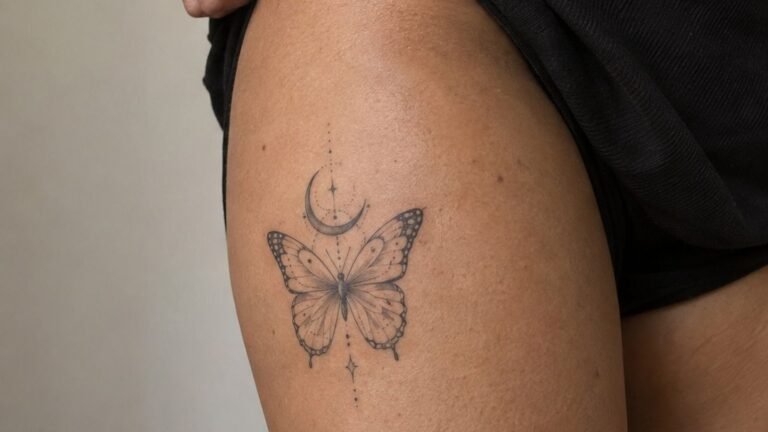
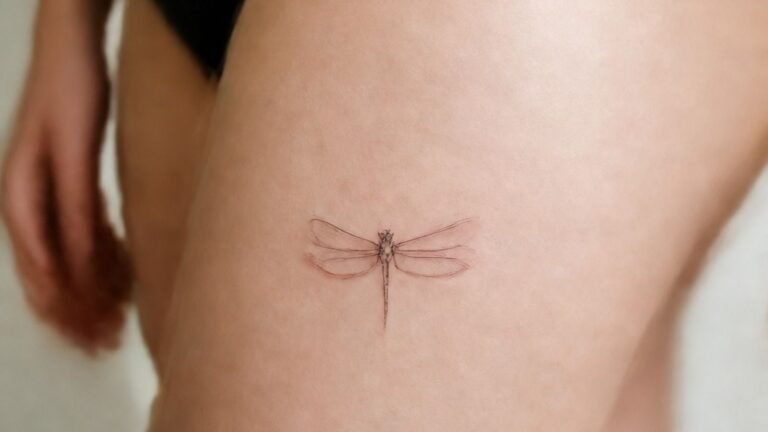
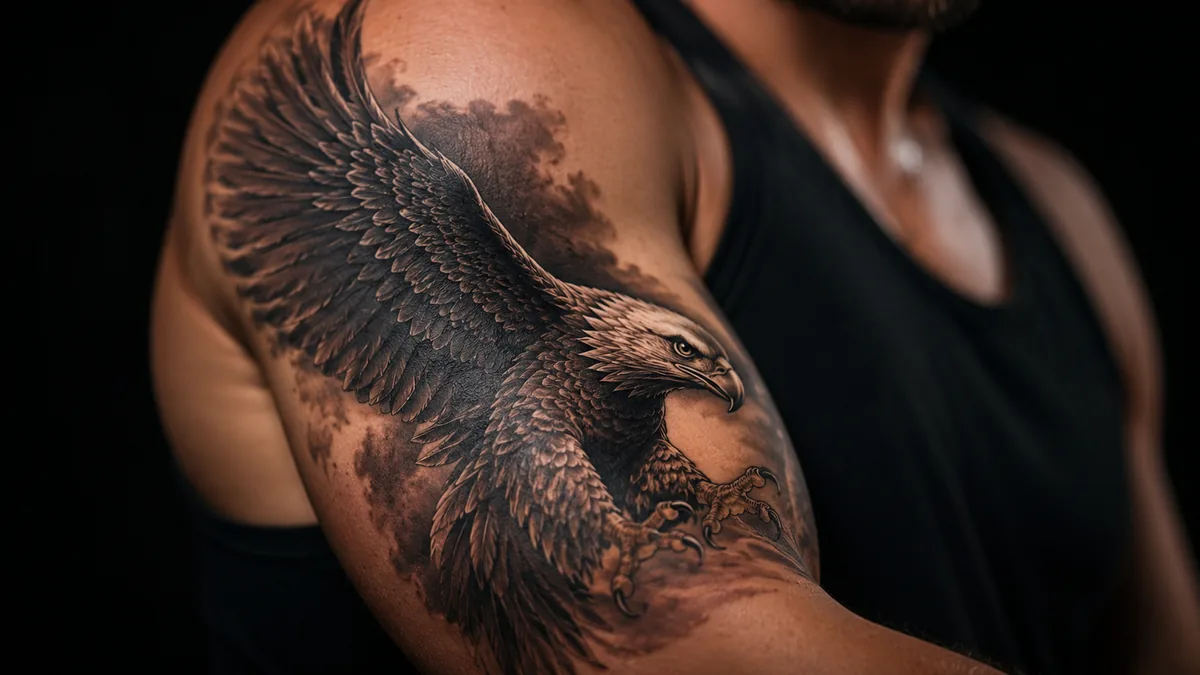
Black and grey realism is where modern eagle tattoos really shine. A hyper-detailed bald eagle portrait with feather texture, light catching the eye, and whip-shaded depth can be genuinely stunning. Fine line is popular too, particularly for golden eagles or profile views on the forearm or collarbone. Geometric eagles, dot-work, and neo-traditional interpretations are all solid options depending on your existing work and the artist’s strengths.
Color vs. Black and Grey
Color eagles are bold and iconic. The bald eagle’s white head and brown body translate well into saturated color work, especially in American Traditional or neo-traditional styles. Brown, gold, orange, and red tones create warmth and energy. Pairing a color eagle with an American flag background gives you maximum visual impact. Just know that color fades faster than black ink, especially in high-wear zones like hands, fingers, and feet.
Black and grey eagles age better overall. The contrast stays legible longer, fine feather detail holds in protected placements, and the whole piece tends to look more refined as it settles into the skin. For large back pieces or chest work, black and grey realism is usually the call. It gives the artist room to build real depth without the piece looking muddy after a few years.
Best Placements and How Eagles Age by Zone
The chest and back are the prime real estate for eagle tattoos. A full-spread eagle with wings open needs space, and the chest, upper back, or full back give you that canvas. These areas are also lower-wear, meaning the skin doesn’t flex and stretch as aggressively as elbows, knees, or hands. Work in these zones heals consistently and holds detail for a long time. Shoulder-to-chest wraps and half-sleeve eagles are also popular and work well with the anatomy.
Forearms and upper arms are solid mid-size placements for eagles in profile or folded-wing positions. They’re readable, easy to show off, and heal well. Avoid the inner elbow and back of the knee if you want crispy lines to stay that way. Those crease zones cause blowout and fading faster than almost anywhere else. Ribs are spicy and give great vertical space for a diving eagle, but be ready for the session.
Who Gets Eagle Tattoos and How to Make Yours Personal
Military veterans are the biggest demographic, no contest. After that, it’s people marking major life changes, overcoming addiction or hard times, or expressing a core identity around independence and strength. Eagles also appeal to people with spiritual frameworks around vision and divine guidance. The symbol is masculine-coded in popular culture but women get eagle tattoos regularly, often choosing sleeker designs like fine-line profile eagles or geometric interpretations.
Making your eagle personal comes down to what you add to it. Combine it with birth flowers, specific dates, a family crest, or imagery tied to your heritage. A golden eagle instead of a bald eagle shifts the meaning from patriotic to more universally primal. Adding prey in the talons, a mountain background, or a specific breed like a harpy or peregrine falcon makes the piece yours. Talk to your artist about what angle on the symbol fits your story.