The whale shark is the biggest fish in the ocean, and it doesn’t apologize for it. That energy carries straight onto skin. People get whale shark tattoos because they want something that reads massive in presence but gentle in nature. It’s a paradox that hits hard visually and personally.
The symbolism is layered but never pretentious. You’ve got raw size, quiet confidence, a nomadic spirit, and a deep tie to the sea. If you’re drawn to ocean themes or just love an animal that moves through the world on its own terms, this piece delivers meaning that’s hard to fake.
Core Meaning: Gentle Giant Energy
The whale shark’s defining trait is the contrast between its enormous size and its total lack of aggression. It filter-feeds on tiny plankton. The biggest fish alive, and it eats microscopic stuff. That contrast is the heart of the tattoo’s symbolism. People read it as confidence without cruelty, strength without the need to prove it. You don’t have to threaten anyone when you’re already the largest thing in the room.
A lot of wearers connect with that message personally. Maybe they’re big personalities who lead quietly. Maybe they’ve been through hard things and came out calm instead of bitter. The whale shark says: I’m powerful, I’m peaceful, and I don’t need your validation. That’s a solid statement to carry on your body for life.
Ocean Spirit and the Nomadic Life
The biggest fish in the ocean feeds on the tiniest things, that's the whole point.
Whale sharks are long-distance travelers. They follow warm currents across entire ocean basins, showing up in the Philippines, Mexico, Australia, the Maldives. Nobody fully tracks where they go. That mystery and freedom pulls at people who feel like they belong to the open water more than any one place. The tattoo becomes a marker for the wanderer, the diver, the person who can’t stay still.
It also connects to broader ocean symbolism: depth, the unknown, emotional fluidity. Water in tattoo culture often represents the subconscious, adaptability, moving through life without resistance. The whale shark carries all of that but adds size and specificity. It’s not just any ocean creature. It’s a presence you feel before you see it.
Cultural and Historical Context
Whale sharks don’t have a deep mythological history the way sharks or whales do separately. They weren’t embedded in ancient seafaring cultures because they’re hard to spot and never posed a threat. What does exist is regional reverence. In the Philippines, locals call them butanding and treat sightings as lucky omens. In parts of Southeast Asia and Central America, they’re connected to abundance and good fortune because they appear during plankton blooms tied to seasonal fishing.
More recently, the whale shark has become a symbol in ocean conservation communities. Getting this tattoo can signal environmental awareness and a commitment to protecting marine ecosystems. That’s a modern layer of meaning, not ancient mythology, but it’s real and it matters to a lot of people who get this piece.
Popular Design Variations and Styles
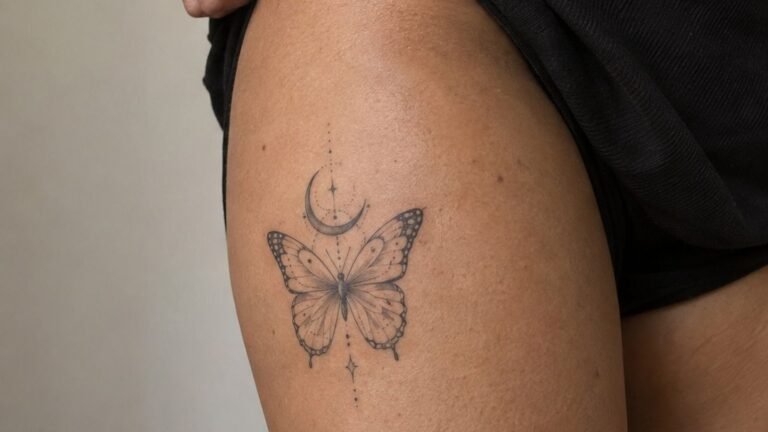
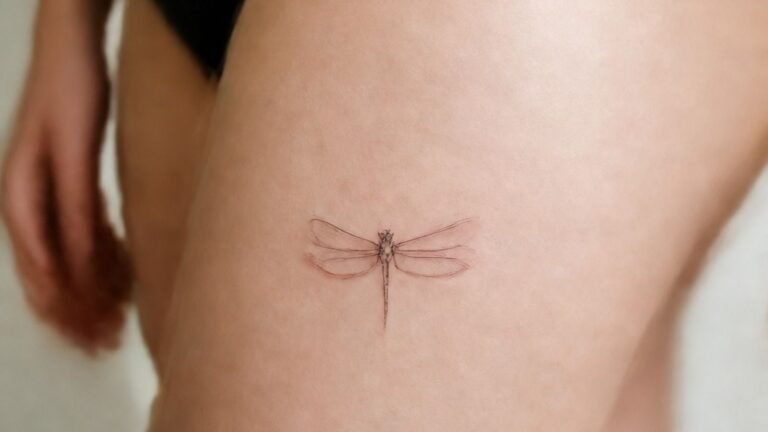
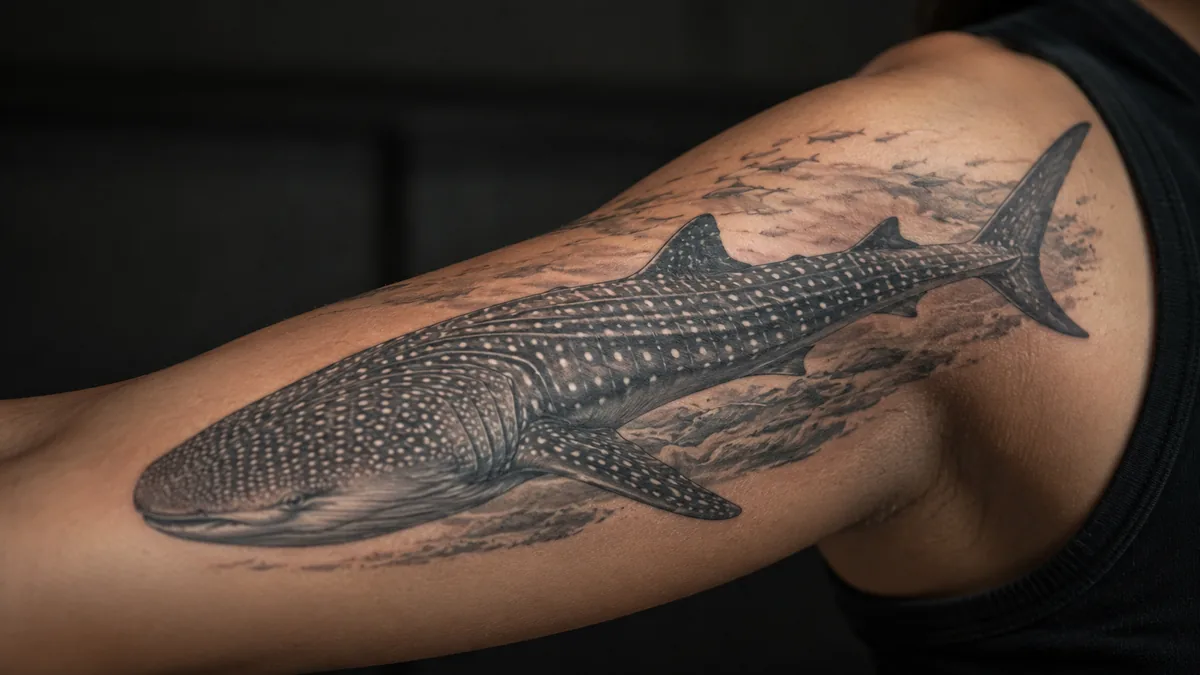
The most common approach is a large-scale realistic or neo-traditional whale shark, usually shown from below or in a three-quarter angle to capture those iconic white spots against the dark blue-grey body. The spot pattern is distinctive and beautiful. It translates well in black and grey with whip shading, or in full color with deep oceanic blues and teal. Fine line versions exist but you lose a lot of the creature’s imposing scale.
Neo-traditional is a strong choice because it lets the artist push the spot pattern into bold graphic shapes and pop some color into the pectoral fins without going full realism. Geometric styles work too, especially if you want a more minimal, modern read. Some people add ocean scenery, rays of sunlight from the surface, or silhouettes of divers nearby to give it scale and context. That storytelling works great on larger placements.
Color vs. Black and Grey
Full color whale shark tattoos are stunning. The natural color palette, deep charcoal body, pale yellow-white spots, and hints of indigo or teal in the water, gives an artist real material to work with. Saturated color heals nicely on most skin tones if the artist packs it properly. The contrast between the dark body and bright spots reads from across the room, which is exactly what you want on a big tattoo.
Black and grey is equally valid and arguably ages better, especially in high-wear zones. A skilled artist using whip shading and well-placed highlights can make the spot pattern glow without a single drop of color. It reads cleaner over time. If you’re putting this on your forearm, thigh, or anywhere that sees a lot of sun, talk to your artist about UV exposure and whether color is worth the touch-up commitment.
Placement and How It Ages
The whale shark needs room. This is not a wrist tattoo. Best placements are the back, thigh, ribcage, upper arm, or a full sleeve segment. The elongated body shape lends itself naturally to the thigh or along the ribs, following the body’s lines. The back gives you the most canvas and lets the artist show the full creature plus water environment without cramping anything. Bold will hold on a piece this size, so make sure the lines are clean and thick enough to last.
Avoid cramming it into tight spots. Fine line whale sharks on small areas lose the spot detail fast and can blowout on softer skin. The ribcage is spicy pain-wise, no sugarcoating that. The thigh and upper arm are more manageable. Wherever you place it, keep it out of direct sun as much as possible for the first year. Long-term, a piece with solid black and clear edges will still look crisp decades out.
Who Gets This Tattoo and How to Make It Personal
Divers, ocean people, and conservationists are the obvious crowd. But you don’t need to have swum with whale sharks to earn this tattoo. People get it for the symbolism alone: calm strength, wandering spirit, living large without needing to dominate. It also lands well with introverts who identify with being underestimated. The gentle giant narrative resonates with people who feel like their size, whether physical, emotional, or social, is often misread.
To make it yours, think about what angle matters most to you. Add a specific dive location or coordinates if you had a real encounter. Incorporate companion species like manta rays if you want to push the ocean ecosystem angle. Some people add a short phrase in a simple font nearby, nothing overworked. Let your artist know the feeling you’re going for. The spot pattern is your canvas within the canvas.