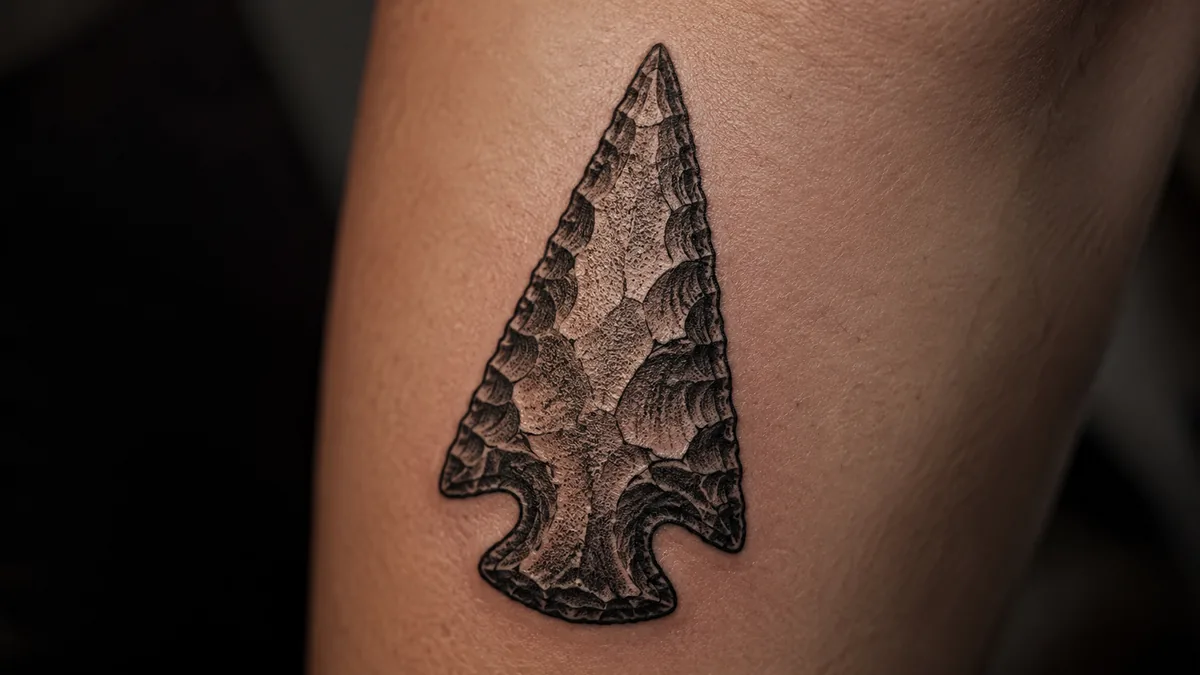
An arrowhead tattoo means different things to different people, but the core reads are pretty consistent: direction, protection, and survival. This is not a random shape people pick because it looks cool. It carries real weight, and most people who get one have thought about what they want it to say.
The arrowhead is one of the oldest human tools. It was made to keep someone alive, whether that meant hunting for food or defending a camp. That history is baked into the symbol. When you put it on your skin, you are carrying that lineage. Let’s break down exactly what it means and how to get it right.
Core Meaning: What an Arrowhead Tattoo Actually Symbolizes
The arrowhead most commonly represents direction and forward momentum. You have a point, you have a purpose, you are moving somewhere. A lot of people get this tattoo after a hard chapter closes and they are ready to move forward. It signals clarity after confusion. That reading is clean and it works on almost anybody.
Protection is the other big one. Arrowheads were defensive tools long before they were offensive ones. Carrying that symbol says you are guarded, grounded, and not easy to knock down. Strength and resilience follow naturally. If you have been through something rough and came out the other side, an arrowhead lands with real meaning.
Cultural and Historical Background
An arrowhead doesn't move forward, it leads the way.
Arrowheads carry genuine roots in Indigenous American cultures. Across many Native nations, the arrowhead was a sacred object, used in ceremony, hunting, and warfare. Finding one on the land was considered good luck and a sign of protection. The shape itself was deliberate, crafted from flint, obsidian, or bone with serious skill and intention.
If you are not Native American, that context matters. Most people who get arrowhead tattoos are drawing on the general symbolism of the tool, not claiming tribal affiliation. Be honest with yourself about that. A generic arrowhead is different from a culturally specific tribal design. Know what you are referencing and wear it with respect, not appropriation.
Direction, Focus, and Personal Growth
Beyond the historical layer, the arrowhead has become a modern symbol for personal direction. People get it to mark a turning point, a decision to stop drifting and start moving with purpose. It shows up a lot after sobriety milestones, career pivots, or getting out of toxic situations. The point is literal: this is where I am headed.
Some people add a compass rose or coordinate numbers to reinforce that navigation theme. Others keep it minimal, just the head, no shaft, no feather, to say the point is what matters. Both approaches work. The meaning holds either way. Strip it down or build it out, the core stays the same.
Popular Design Variations and Styles
Fine line arrowheads are everywhere right now. Single needle, delicate geometry, sometimes with dotwork shading. They look sharp when fresh and read well in small sizes on the wrist, forearm, or collarbone. The risk is longevity. Fine lines on high-wear zones can spread and blur in three to five years. Your artist needs to nail the spacing and depth to give it a fighting chance.
Blackwork and bold arrowheads hold up better over time. A solid filled shape with clean, crispy lines will still read clearly from across the room ten years out. Geometric variations with mandala elements or tribal line patterns add visual interest without overcomplicating the symbol. Watercolor fills work for some people but fade unevenly, so think hard before committing to that style.
Color Versus Black and Grey
Most arrowhead tattoos are done in black and grey, and honestly that is the right call for this symbol. The geometric shape is defined by contrast and sharp edges. Black ink lets the silhouette do the talking. Blackwork saturated deep into the skin holds for decades if placed correctly. It is a strong choice and it ages predictably.
Color works if you have a specific vision, earth tones like burnt orange, deep red, or ochre can reference the materials real arrowheads were made from. Turquoise reads as a nod to Southwest Indigenous aesthetics, though again, think about that choice carefully. Avoid bright novelty colors on this one. They clash with the weight the symbol carries and they will fade in ways that make the piece look muddy.
Best Placements and How It Ages
The forearm is the most popular spot for arrowheads and there is a reason for that. The shape is directional, so placing it pointing up the arm toward the elbow or down toward the wrist gives it purpose. The skin there is relatively stable, it gets sun but not constant friction, and the piece stays readable for a long time. Inner forearm is slightly more spicy for pain but holds ink beautifully.
High-wear zones like fingers, hands, and feet are risky for fine line arrowheads. The skin moves constantly and the ink migrates. You will be touching it up more often. The ribcage and sternum are popular for women wanting a vertical placement, that area is spicy, but the skin is thin and clean and heals nice. Behind the ear works for tiny minimalist versions, though blowout risk goes up with fine line work that close to cartilage.
Who Gets Arrowhead Tattoos and How to Make It Personal
This tattoo crosses every demographic. Hunters and outdoors people wear it literally. Veterans and first responders wear it for strength and protection. People in recovery wear it for direction. Athletes wear it for focus. It is genuinely versatile because the symbolism is broad enough to adapt without losing its meaning. That is actually a mark of a solid tattoo concept.
To make yours personal, think about what specific meaning you are locking in. Add a date, initials, or coordinates below the tip. Stack it with other elements that matter to your story. A broken arrowhead often represents peace, the weapon laid down. Two crossed arrowheads can mean friendship or alliance. Talk to your artist about what details will sharpen the personal reading without cluttering the design.