
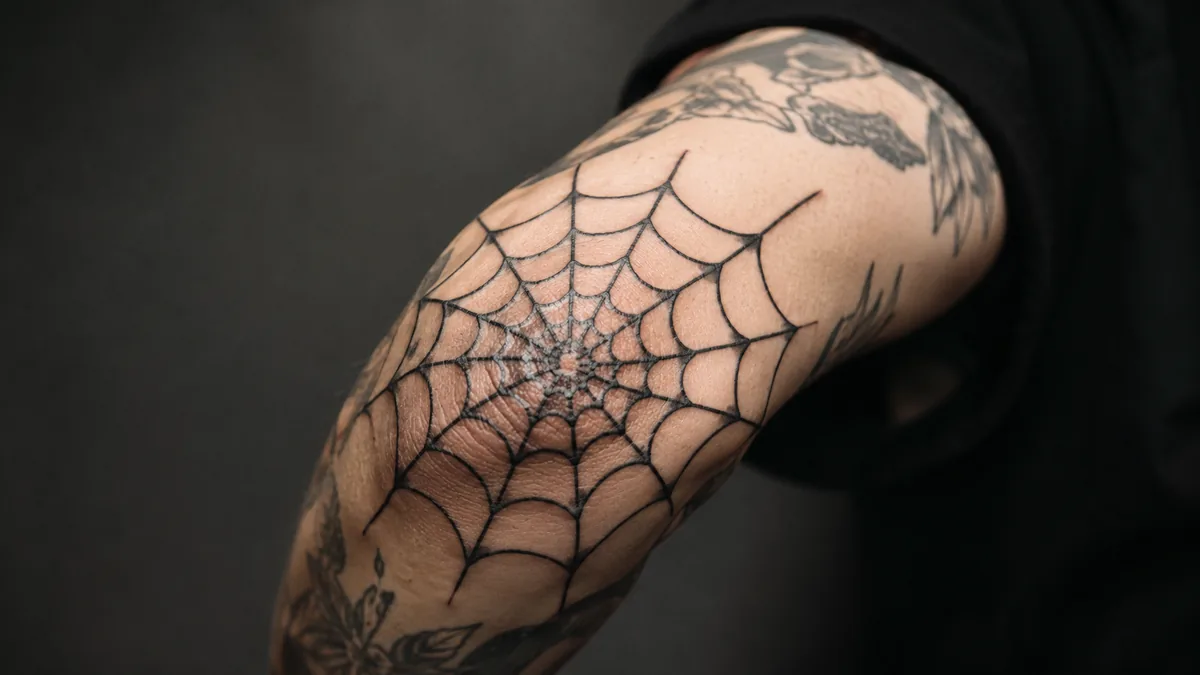
The cobweb elbow tattoo is one of those designs that carries real weight. It started with a specific meaning in a specific world, and even now that it’s gone mainstream, understanding that history matters before you commit.
These days the cobweb elbow shows up on everyone from old-school convicts to rockabilly kids to people who just love traditional flash. The meaning depends on who you ask and what era you’re looking at. Here’s what you actually need to know.
The Core Symbolism
A cobweb on the elbow traditionally signals that a person has done time. The spider web wraps around the joint, and the old reading is simple: you’ve been caught in the system, trapped like a fly in a web. Time passing slowly, stuck in a cell. That’s the foundational meaning, and it’s the one that gave this tattoo its weight.
Outside that prison context, the cobweb carries broader symbolism too. Feeling stuck in life, addiction, a bad relationship, a dead-end job. People use it to represent a period they got through, or one they’re still fighting. The web can mean entrapment, but for some it means survival.
Historical and Cultural Background
Wear the web, own the time it cost you.
The cobweb elbow became well documented in American prison tattoo culture through the mid-20th century. Convicts would get webs on elbows and knees to show time served. Some accounts tie the number of rings in the web to years inside. It spread through US penitentiaries and became a recognized code inside those walls.
European prison tattoo culture, especially in Scandinavia and Russia, adopted similar imagery. In Russian criminal tattoo tradition, the spider web carries parallel meaning around capture and incarceration. Outside prison walls, punk and rockabilly subcultures picked it up in the 1970s and 80s as a general symbol of rebellion, stripping it of its strictly criminal code.
How the Meaning Has Shifted
Today most people getting a cobweb elbow tattoo have no prison connection at all. The design became mainstream enough that shops tattoo it daily without any underlying criminal significance. For younger clients it often just reads as a traditional flash image, bold, timeless, and aesthetically strong on that part of the body.
That said, context still matters in certain circles. In some neighborhoods or communities, the association hasn’t faded entirely. It’s worth knowing the history so you’re going into the chair with full awareness. Most working tattoo artists will tell you straight: the meaning is what you make it, but know where it came from.
Design Variations and Styles
Traditional American style is the most common execution. Bold black outlines, solid fills, clean geometry radiating from the elbow point. The web reads from across the room, ages hard, and holds up because the lines are thick enough to survive the skin. Some artists add a spider sitting in the web, which ramps up the detail and gives the piece more personality.
Fine line cobwebs are trending but they’re a gamble on the elbow. The ditch and the outer elbow are high-wear, high-movement zones. Fine lines blowout or fade faster there than on a thigh or shoulder blade. Black and grey with whip shading gives the web dimension without sacrificing longevity. Saturated single-needle work looks crispy fresh but check back in five years.
Color Versus Black and Grey
Most cobweb elbow tattoos are done in solid black. It’s traditional, it’s clean, and black holds better on the elbow than color does. The joint flexes constantly, and color pigments, especially reds and yellows, tend to fade and shift faster in high-movement areas. A bold black web on the elbow can still look solid decades later if it was laid in right.
That said, some artists do gorgeous color cobwebs, deep purples, midnight blues, even white highlights over black for a textured look. If you want color, go with darker, more saturated pigments. Avoid pastels on the elbow entirely. Talk to your artist about what heals nice in that spot based on your skin tone and their experience with color retention on joints.
Placement and How It Ages
The elbow is the classic placement for a reason. The web fills the ditch and wraps naturally around the point of the elbow, following the body’s contours. It’s a self-contained piece that doesn’t need filler. Placed correctly, the center of the web sits right on the point, and the rings spread outward symmetrically. It works alone or as part of a full sleeve.
Aging on the elbow is real talk. The ditch is spicy to tattoo and slow to heal because of constant movement and friction. Blowout is a genuine risk if the needle goes too deep in that soft skin. An experienced artist who knows how to work the elbow will go conservative on depth. Once it heals, the bold will hold. Plan for a touch-up if you go fine line.
Pain Level and What to Expect
The elbow ditch is one of the spicier spots on the body. You’ve got thin skin, no muscle cushion, and nerve-dense tissue right there. Most clients rate it a solid 7 or 8 out of 10. The outer elbow point is slightly more manageable but still intense. Short sessions help. If your artist is rushing through it, that’s a problem.
Come in well-rested, hydrated, and fed. Wear a sleeveless shirt or something you can push past the elbow. The session for a standard cobweb is usually one to two hours max. Your arm will swell and feel stiff after. Keep it moisturized through the peel, avoid bending your elbow aggressively for the first week, and stay out of direct sun during healing.
Who Gets It and How to Make It Personal
The cobweb elbow attracts people who appreciate tattoo history, old-school flash collectors, people who’ve done time and own it, musicians, artists, and anyone who connects with the idea of being caught in something and getting through it. It’s a statement piece that signals you know your tattoo culture, or at minimum that you love a classic image.
To make it personal, work with your artist on proportions and extras. A spider with specific markings, initials hidden in the web, a year worked into the design subtly. Some people combine the web with a moth or skull for added symbolism. Keep the geometry tight and symmetrical. A sloppy web reads bad from day one. Find an artist who does traditional work well and let them nail the structure.









